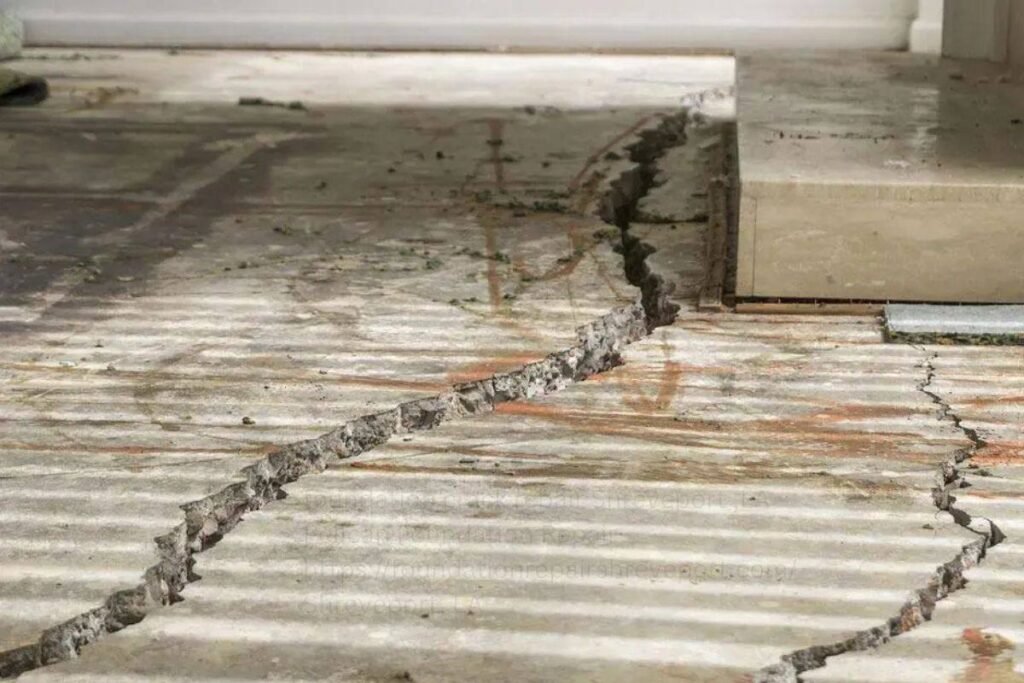
Street Creep: How Expanding Streets Damage Your Foundation
Street creep can crack your driveway, buckle your garage slab, and push against your foundation when summer heat expands the street and the pressure has nowhere else to go.
Street creep is what happens when concrete street slabs expand in the heat, run out of room at their joints, and shove everything in their path, curb, driveway, sidewalk, and garage slab, toward your house. The slow, silent force can crack a foundation wall or lift a garage floor before anyone realizes the street is the culprit.
Most Shreveport homeowners blame foundation damage on our famous expansive clay, and usually they are right. Clay that swells when wet and shrinks when dry moves houses all over Caddo and Bossier parishes. Street creep is the rarer cousin of that problem: it is not the soil moving under your house, but the street moving against it. Knowing the difference matters, because the fix is different, and treating street creep like settlement wastes money.
What Street Creep Actually Is
Concrete expands when it gets hot and contracts when it cools. Engineers know this, so concrete streets are built in slabs separated by expansion joints, gaps filled with a compressible material that gives each slab room to grow on a July afternoon. When those joints work, nothing dramatic happens. When they do not, trouble walks down the street one slab at a time.
Joints fail for ordinary reasons. The filler rots, crumbles, or gets packed solid with dirt and debris over the years. A street gets resurfaced or patched without restoring the joints. Tree roots, heavy truck traffic, or decades of freeze-and-thaw-free summers in north Louisiana, where heat does most of the work, close the gaps a little at a time. Once a joint can no longer absorb growth, the expanding slab pushes against its neighbor, and that neighbor pushes the next one. The chain ends wherever something gives: often the curb, the driveway apron, or the garage slab of the house at the end of the line.
That chain is why the damage shows up where it does. The street does not leap across your yard and attack the foundation directly. It pushes the driveway slab, which pushes the garage slab, which presses against the foundation wall or the garage stem wall. You see the results as a buckled driveway, a cracked garage floor, a sidewalk panel lifted at the street end, or a horizontal crack low on a garage wall. The foundation damage is real, but the street is the engine.
Street creep is most common on older concrete streets with long, uninterrupted runs and on streets where the houses sit close to the pavement. In Shreveport, that means older neighborhoods in Highland, South Highlands, Broadmoor, and parts of Bossier City, where concrete streets date back decades and driveways run straight from the curb to the garage. Newer subdivisions with asphalt streets rarely see it, because asphalt flexes instead of shoving. If your street is concrete and your driveway is concrete and they meet without a visible, working joint, you have the ingredients.
Signs Your Foundation Problem Might Be Street Creep
Street creep leaves a signature that looks different from settlement once you know what to look for. Settlement usually shows up as vertical or stair-step cracks, sloping floors, and doors that stick on one side of the house. Street creep shows up at the street end of the house, and it points inward, toward the foundation, like an arrow.
- A driveway slab that has buckled upward, cracked in a straight line, or shifted toward the garage.
- A sidewalk panel near the street that has lifted, tilted, or closed its joint completely shut.
- A garage floor slab that has cracked, heaved, or separated from the garage walls.
- A horizontal crack low on the garage foundation wall, or a wall that appears pushed inward.
- The gap between the driveway and the garage slab, or between the driveway and the curb, disappearing over time.
- Damage concentrated on the street-facing side of the house while the rest of the home looks stable.
- A neighbor with the same buckled driveway or lifted sidewalk on the same stretch of street.
One sign alone proves nothing. A buckled driveway can also come from tree roots or a washed-out base. But several of these signs together, all on the street side, all pointing the same direction, should make street creep a prime suspect. Photograph the joints, the cracks, and the gaps with a ruler or coin for scale, and date the photos. That record helps any inspector separate a one-time event from a slow push that is still going on.
Street Creep vs Settlement vs Heave: How to Tell Them Apart
Homeowners understandably lump every crack into one bucket labeled foundation trouble. The table below separates the three usual suspects in Shreveport, because each one calls for a different fix.
| Problem | Typical signs | Where it shows | Usual fix |
|---|---|---|---|
| Street creep | Buckled driveway, lifted sidewalk, horizontal garage-wall crack | Street-facing side only | Restore joints, relieve pressure, repair affected slabs and wall |
| Settlement | Stair-step or vertical cracks, sloping floors, sticking doors | Any side, often one corner or section | Piers, leveling, drainage correction |
| Heave (swelling clay) | Upward floor movement, cracks that widen in wet seasons | Center of slab or areas with trapped water | Moisture control, drainage, grading |
| Tree root pressure | Localized slab lift near a large tree | Near the tree, driveway or walk | Root barrier, slab repair, tree management |
Combinations happen. A Shreveport home can sit on expansive clay and face a creeping concrete street at the same time, and the two forces can amplify each other. That is why a expert inspection with elevation readings matters more than a guess from the curb: readings show whether the house is sinking, lifting, or being pushed, and that direction decides the repair.
What to Do If You Suspect Street Creep
Start with the street, not the house. Walk to the curb and look at the joints between the street slabs and between the street and your driveway apron. A healthy expansion joint is a visible gap with flexible filler. A failed joint is packed solid, crumbled away, or gone entirely, with slabs touching slab. Then look at the driveway apron and the garage slab for the same story: joints that have closed up, slabs that have shifted toward the house, or fresh cracks running across the slab.
Next, check the garage itself. Look low on the walls, where a pushing slab does its damage, for horizontal cracks or bowing. Check whether the garage floor has separated from the walls or cracked near the door. Then step inside and check the rooms nearest the street for doors that stick, cracks above door frames, or floors that slope toward the street side. If the damage stops at the garage and the rest of the house is quiet, street creep looks more likely. If the whole house shows settlement signs, you may have two problems, and the settlement still needs its own answer.
Do not try to fix the push yourself by grinding down a slab edge or pouring a patch over a buckled driveway. Grinding treats the symptom for a season while the street keeps pushing, and a patch over a moving slab cracks again. The real fix has two parts: relieve the pressure, and repair what it damaged. Relieving pressure usually means cutting or restoring expansion joints so the street can grow without shoving, sometimes with a concrete contractor saw-cutting a relief joint at the driveway or street interface. Only after the pressure is relieved does it make sense to repair the cracked wall or replace the buckled slab, or the same force will damage the new work.
Who pays for the street side is a fair question with an unsatisfying answer: it depends. The street itself belongs to the city or parish, and reporting failed joints to Shreveport or Bossier City public works is worth doing, especially if several neighbors show the same damage. But the driveway, garage slab, and foundation are the homeowner’s, and waiting on a municipal repair while the push continues is a bad trade. Get the foundation evaluated first, so you know exactly what is damaged and what is still moving, and let that report guide the conversation with the city.
Preventing Street Creep Damage
You cannot control the street, but you can keep the pressure path open. The single most useful habit is joint maintenance: keep the expansion joints at your driveway apron and garage entrance clean, and replace crumbled filler with a flexible polyurethane joint sealant made for concrete. It is a small job, it costs little, and it restores the gap that absorbs summer growth. Check the joints each spring, before the long hot season, and again after any street resurfacing near your home.
When a driveway or garage slab does need replacement, ask the contractor about isolation joints: a compressible barrier between the new slab and the foundation wall and between the driveway and the street. That barrier is the difference between a slab that can move a little on its own and a slab that transmits every push straight into your house. It is a detail that costs almost nothing at pour time and a great deal to add later.
Finally, keep the water story separate. Street creep and drainage problems often arrive together in the same Shreveport yard, because the same summer storms that swell the clay also wash out slab bases. Good grading, gutters that discharge away from the slab, and downspouts that do not dump at the driveway edge protect the concrete base and the foundation at once. The LSU AgCenter publishes Louisiana soil and moisture guidance that explains why our clay moves the way it does. Our drainage correction service covers that side of the job, and our foundation crack repair service covers cracks once the cause is known. If the wall itself is bowed or structurally compromised, our structural repair service explains the stronger fixes. For the settlement side of the comparison, see our posts on settlement versus heave in Louisiana and cosmetic versus structural cracks, and start at our homepage for the full service list.
- Street creep is a push, not a sink: the street expands and shoves slabs toward the house.
- Failed or packed-solid expansion joints are the usual trigger.
- Damage concentrates on the street-facing side: driveway, garage slab, low garage wall.
- Relieve the pressure first, then repair the wall or slab, or the damage returns.
- Joint maintenance and isolation joints are cheap prevention.
- Elevation readings separate street creep from settlement when both are possible.
Frequently Asked Questions
What is street creep?
Street creep is the slow pushing of concrete street slabs as they expand in heat. When expansion joints fail, the slabs shove the curb, driveway, and garage slab toward the house, and that pressure can crack or bow a foundation wall.
How do I know if my foundation damage is street creep or settlement?
Street creep damage concentrates on the street-facing side: buckled driveway, lifted sidewalk, horizontal garage-wall cracks. Settlement shows as stair-step cracks, sloping floors, and sticking doors anywhere in the house. Elevation readings during a expert inspection settle the question.
Can street creep really crack a foundation wall?
Yes. The force is large because a whole run of street slabs can push as one unit. Garage stem walls and low foundation walls take the brunt, and horizontal cracking or inward bowing is the classic result.
Is street creep common in Shreveport?
It is uncommon compared with clay settlement, but it happens on older concrete streets in neighborhoods like Highland, South Highlands, Broadmoor, and parts of Bossier City, where concrete streets and driveways meet without working joints.
Who fixes the street part of street creep?
The street belongs to the city or parish, and failed joints are worth reporting to public works, especially when neighbors share the damage. The driveway, garage slab, and foundation are the homeowner’s responsibility, and they should be evaluated promptly even while a municipal fix is pending.
Will piers fix street creep damage?
Not by themselves. Piers stabilize a sinking foundation, but street creep is a pushing force, not a sinking one. The pressure must be relieved, usually by restoring expansion joints, before or alongside any wall or slab repair, or the damage will return.
How can I prevent street creep damage?
Keep expansion joints at the driveway apron and garage entrance clean and sealed with flexible joint sealant, check them each spring, and insist on isolation joints between any new slab and the foundation wall. Good drainage and grading protect the slab base at the same time.
Pelican Foundation Repair
6118 Fairfield Ave, Shreveport, LA 71106, USA
318-585-2003
https://foundationrepairshreveport.com/