 Skip to main content
Steel Push Pier Installation in Shreveport, LA
Steel push piers are heavy-duty steel columns we drive deep underground until they reach dense, stable load-bearing soil. A steel bracket connects each pier to your foundation, and then we use the piers to lift your home back toward level — permanently. If your house is settling, piers move its weight onto ground that won’t move. Here’s how steel push pier installation Shreveport LA projects work, from free inspection to final lift.
Push piers stop settlement at its source. Most pier jobs cost $3,500–$15,000+, and a free inspection will tell you whether your home needs them.

Northwest Louisiana clay is tough on foundations: it swells when spring rains soak it, then shrinks when summer heat bakes it dry. That yearly swell-and-shrink — soil heave — shifts the ground your footings sit on.
At Pelican Foundation Repair, we install both steel push piers and helical piers — so we recommend whichever system your soil and structure readings support. Every job starts with a free inspection, and qualifying repairs carry our 20-year structural warranty.
What Kind of Soil Do Push Piers Have to Reach in North Louisiana?
A push pier’s whole job is to get past the active zone — the upper layer where North Louisiana clay does its damage. Spring rains swell it, pushing up against your footings; summer dries it out, and it shrinks, letting the foundation drop. Year after year, that cycle moves your home.
How deep? It varies lot to lot — even within the same Shreveport neighborhood, one street can need deeper piers than the next. We work all Shreveport ZIPs, including 71104, 71105, 71118, and 71129, plus Bossier City (71111) — and we never quote a fixed depth for steel push pier installation. The pressure gauge tells us when we’ve arrived. (The USDA’s soil survey tools show mapped soil data for any address — a starting point, not a diagnosis.)
How Steel Push Piers Work
Think of a steel push pier — also called a resistance pier — as a new, deeper footing for your home. Your foundation sits on shallow soil that moves; the pier goes right past it. We attach a steel bracket to your foundation, then use a hydraulic press to drive interlocking steel sections straight down, one at a time, until each pier reaches refusal in dense, stable load-bearing soil that doesn’t shift with the weather. In other words, piers anchored into stable soil layers.

Call (318) 585-2003 – Free Inspection
Signs Your Home Needs Piers
Settlement doesn’t fix itself — it gets worse slowly, then all at once. Call us for a free inspection if you notice any of these:
- Stair-step cracks in brick or block. Cracks that zigzag along mortar joints are the classic sign of settlement.
- Doors and windows that stick. A door that used to swing freely now rubs or won’t latch — the frame has shifted.
- Sloping or uneven floors. A ball rolling across the floor on its own means the floor isn’t level.
- Gaps where walls meet ceilings or floors. Part of the structure is moving away from the rest.
- Leaning chimneys. A chimney pulling away from the house is a serious sign of movement underneath.
- Cracks in your slab or foundation walls. Not every crack means settlement, but wide or growing cracks deserve a look — our foundation crack repair page can help you tell the difference.
One sign can have another explanation; several together almost certainly mean the ground under your home is moving — the same warning signs InterNACHI’s Standards of Practice (PDF) ask inspectors to document.
Steel Push Piers vs Helical Piers: Which Does Your Home Need?
Here’s the honest breakdown — pros, cons, and cost.
| Steel push piers | Helical piers | |
|---|---|---|
| How they go in | Driven straight down by hydraulic press, using your home’s weight as the pushing force | Screwed in like giant screws |
| Best for | Heavy structures — brick and two-story homes — where stable soil sits deep | Lighter structures, porches, decks, and new construction (they can go in before a foundation is poured) |
| How we verify bearing | Downward pressure at refusal — the pier stops when the ground won’t give | Installation torque readings |
| Cost | National cost guides report roughly $1,000–$3,000 per pier for either type — pier count matters more than pier type | Same range; the project total depends on count and depth |
Here’s what matters most: we install both systems. Our crew takes soil readings at your property, looks at the weight and type of your structure, and recommends the pier the data supports — see our page on helical pier installation for the full rundown.
Nobody can name the right system or the right price without seeing your soil and your structure — which is exactly why the inspection comes first.
Call (318) 585-2003 – Free Inspection
Can Push Piers Lift a Settling House Back to Level?
Yes — that’s one of their main jobs. Once the piers are driven to stable soil and load-tested, hydraulic jacks lift the foundation back toward its original position. The lift itself — sometimes called house jacking — is slow and monitored: we watch the gauges and the structure the whole time, and we lift as far as the structure safely allows, usually very close to level.
Two goals, in order: stabilization, then recovery. Stabilization is the sure part — piers at refusal rest on ground that doesn’t move with the seasons. Recovery is the lift back toward level: a home that’s settled an inch or two often comes back nearly all the way, while one that’s been moving for decades may not, because the framing has adapted to the crooked position.
Plan for what the lift leaves behind: cracked brick won’t un-crack, and doors trimmed to fit a crooked frame may need adjusting once the frame is straight.

Steel Push Pier Installation Shreveport LA: Our Process
There’s no jackhammering your floors and no weeks of disruption. Here’s what steel push pier installation looks like, step by step.
1. Free inspection and elevation survey
We measure floor elevations, examine cracks and soil, and pinpoint where and why your home settled. You get a written plan with pier locations and firm pricing before work starts — it begins with a free foundation inspection.
2. Excavation at each pier point
We dig small access pits — typically about 3 feet square — at each pier location, usually along the outside of your foundation. Just big enough to work in; we’re not tearing up your whole yard.
3. Bracket installation
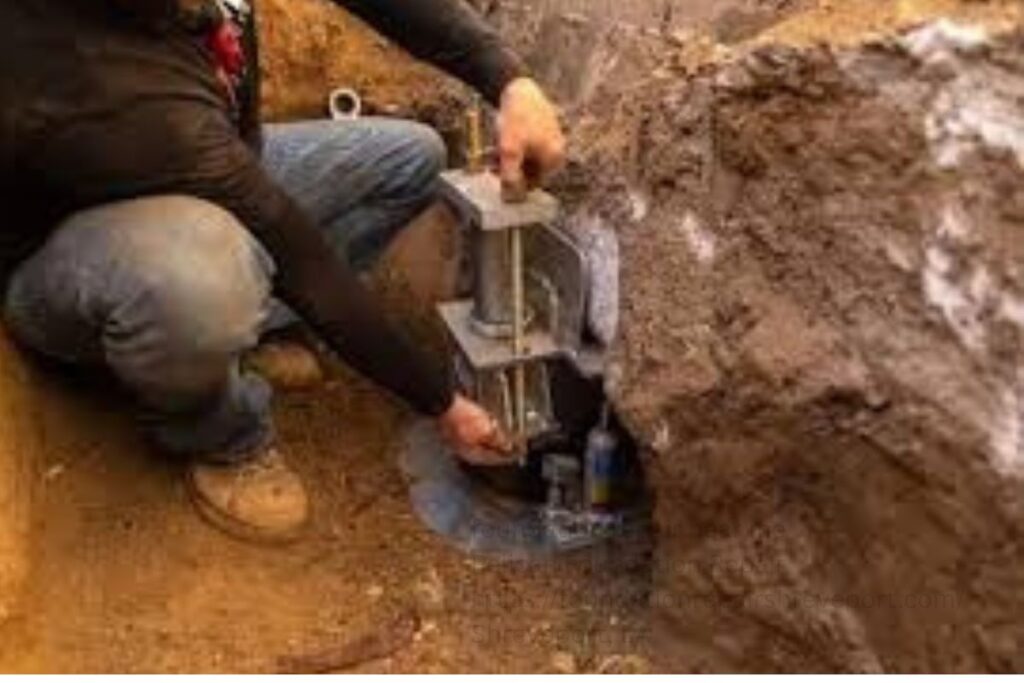
A steel bracket is secured to the base of your foundation at each pier point, connecting your home to the pier and carrying the load.
4. Driving the piers
Steel pier sections are driven straight down with a hydraulic press until each pier reaches refusal — in parts of Shreveport that can be quite deep, which is exactly why piers work where shallow repairs don’t. We use steel rated for underground use, and we’ll show you the pier sections before we drive the first one.
5. Load test with pressure gauge
Once a pier reaches refusal, we load-test it and watch the pressure gauge confirm it’s carrying weight. Every pier gets tested — no exceptions.

6. Lift with hydraulic jacks
With all piers tested and locked in, hydraulic jacks slowly lift the foundation back toward its original elevation — as close to level as the structure safely allows.
7. Backfill and cleanup
We backfill the access pits, compact the soil, and clean up. Inside, you may notice doors closing better and cracks narrowing right away.
Call (318) 585-2003 – Free Inspection
How Much Does Steel Push Pier Installation Cost?
Most residential steel push pier installation Shreveport LA projects run $3,500–$15,000+, depending on scope. Smaller crack repair jobs typically fall in the $400–$1,500 range.
National cost guides report roughly $1,000–$3,000 per pier — but per-pier math is misleading without a pier count, and only an on-site inspection sets that number. Treat per-pier figures as context, not a quote.
What drives the price up or down:
- Number of piers. Four piers on one corner costs far less than a full perimeter needing twenty.
- Depth to bearing soil. Deeper stable soil means more steel per pier — and more material cost.
- Access. Tight spaces, landscaping, patios, or interior piers under a slab add labor.
Be wary of any contractor who quotes a pier job over the phone — pier count, depth, and lift all depend on what’s under your house, and that takes an on-site inspection to know.
How Long Does the Installation Take?
Most residential pier jobs take two to four days. Day one is excavation and bracket installation. Day two (and three, on bigger jobs) is driving the piers to refusal, load-testing each one, and performing the lift — then backfill, compaction, and cleanup.
A handful of piers on one corner can finish in a single day; a full perimeter runs closer to four or five. Heavy rain can pause excavation, but North Louisiana’s mild winters mean we install year-round — and you can stay home the whole time.
Call (318) 585-2003 – Free Inspection
What Does the 20-Year Structural Warranty Cover?
Qualifying steel push pier installations are backed by our 20-year structural warranty: if a pier we installed settles or fails within 20 years, we come back and make it right. It covers the pier work itself — not unrelated issues like new settlement in an area we never touched.
“Qualifying” matters: we document exactly what’s covered — pier count, locations, and warranty terms — in writing before work starts. Asked a lot: what happens to coverage if you sell the home? The exact terms are in that paperwork — we’ll show you the language during the inspection. One honest note: piers protect against settlement, not water. If drainage around your home changes after the job, new problems can appear that piers alone can’t prevent — which is why we also offer drainage correction wherever water is part of the story.
Do You Need a Permit for Foundation Piers?
Usually, yes. Most structural foundation work in Shreveport and the surrounding cities and parishes requires a building permit, and the exact rules vary by city and parish. We’ll confirm what your property needs during your free inspection.
Call (318) 585-2003 – Free Inspection
Steel Push Pier FAQs
What is a push pier, exactly?
A push pier is a steel column we drive deep underground until it hits dense, stable load-bearing soil. A bracket connects it to your foundation, transferring your home’s weight off shifting clay and onto ground that doesn’t move.
How deep do push piers go?
It depends on your soil — we drive each pier until it reaches refusal in dense, stable load-bearing soil.
Are push piers or helical piers better?
Neither, universally — it depends on your home and soil. Push piers suit heavy structures where stable soil sits deep; helical piers suit lighter structures and new construction. We install both, so the recommendation follows your soil readings.
What’s the difference between piles and piers?
In residential work, nothing meaningful. “Piles” is the commercial deep-foundation term for the same idea — columns driven to stable soil. Residential contractors say “piers.”
How much does foundation repair cost per pier?
National cost guides report roughly $1,000–$3,000 per pier — but that’s context, not a quote. Our Shreveport-area pier jobs run $3,500–$15,000+ total, and the pier count, set only by an on-site inspection, is what really drives the price.
Will installation tear up my yard?
We dig small access pits at each pier location and backfill them when we’re done. Your yard won’t look like a construction site when we leave.
How do I know the pier reached stable soil?
Every pier is driven to refusal, then load-tested while we watch the pressure gauge. If a pier won’t hold the required pressure, we keep driving — we never lock in a pier that isn’t carrying its share.
What kind of warranty do you offer?
Qualifying installations are backed by our 20-year structural warranty. We’ll explain exactly what’s covered during your free inspection.
Will lifting damage my walls or plumbing?
The lift is slow and monitored — we watch the gauges and the structure the whole time. Decades-old brick or drywall can still develop hairline cracks, and it’s smart to have plumbing connections checked afterward if your home moved significantly.
Do I need to move out during installation?
No — the work happens outside, along the foundation. You’ll hear equipment during the day, but your house stays fully livable.
Get a Free Inspection
If your home is showing signs of settlement, don’t wait. Settlement doesn’t stop on its own, and the longer it goes, the more piers it takes to fix. For steel push pier installation Shreveport LA homeowners rely on, start with a free inspection — we’ll tell you honestly what your home needs.
Pelican Foundation Repair serves Shreveport, Bossier City, Blanchard, Greenwood, Keithville, Benton, Stonewall, Haughton, Red Chute, Eastwood, Mooringsport, Minden, and Ruston — from the Red River to Caddo Lake — see all of our service areas. Call (318) 585-2003 to schedule your free inspection. We’ll tell you honestly whether your home needs piers — and if it doesn’t, we’ll tell you that too.
Pelican Foundation Repair
6118 Fairfield Ave, Shreveport, LA 71106, USA
318-585-2003
https://foundationrepairshreveport.com/