 Skip to main content
Foundation Repair Shreveport, LA | Pelican Foundation Repair

Call (318) 585-2003 – Free Inspection
A Quick Note: This Page Is About Structural Walls
A note: this page covers structural walls — foundation walls (poured concrete, concrete block, brick) and retaining walls, not drywall or cosmetic repairs. If a crack runs through your foundation wall or a wall is bowing inward, that’s what we do.
Wall Cracks: Reading What Your Walls Are Telling You
Most wall cracks are harmless — some are warnings. In Shreveport, cracks follow the seasons: spring rains swell the clay against your walls; summer heat shrinks it, pulling unevenly on the foundation.
Vertical Cracks
Vertical cracks are the most common and usually the least scary — they typically form as concrete cures and shrinks. A thin vertical crack (hairline to 1/8 inch) that hasn’t grown is usually cosmetic, or at most a path for water seepage; we seal these with epoxy or polyurethane injection.
When to worry: wider than 1/4 inch, growing, or one side shifted — that can signal settlement.
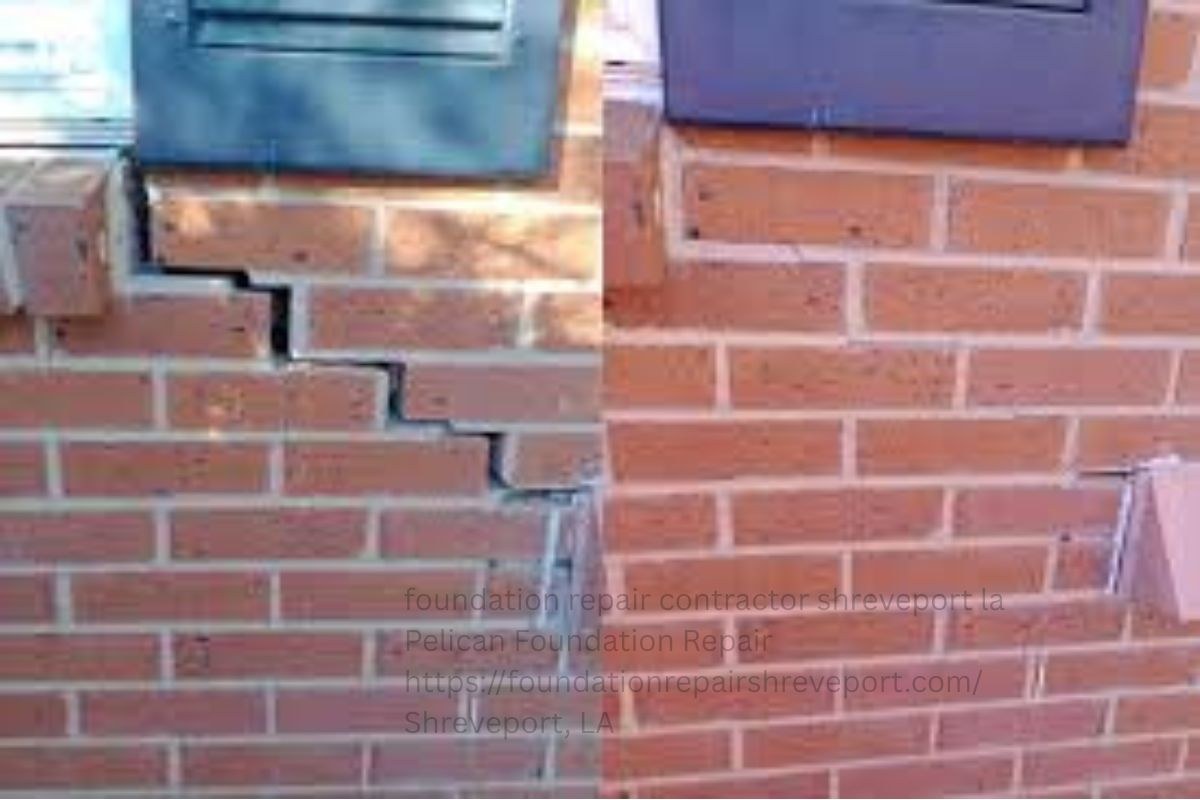
When a crack runs through brickwork like this, the movement is coming from below.
Horizontal Cracks
A horizontal crack should get your full attention — it almost always means lateral soil pressure, the soil outside pushing inward harder than the wall can resist. These often appear midway up the wall, paired with bowing — structural, not cosmetic, and worse with every heavy rain.
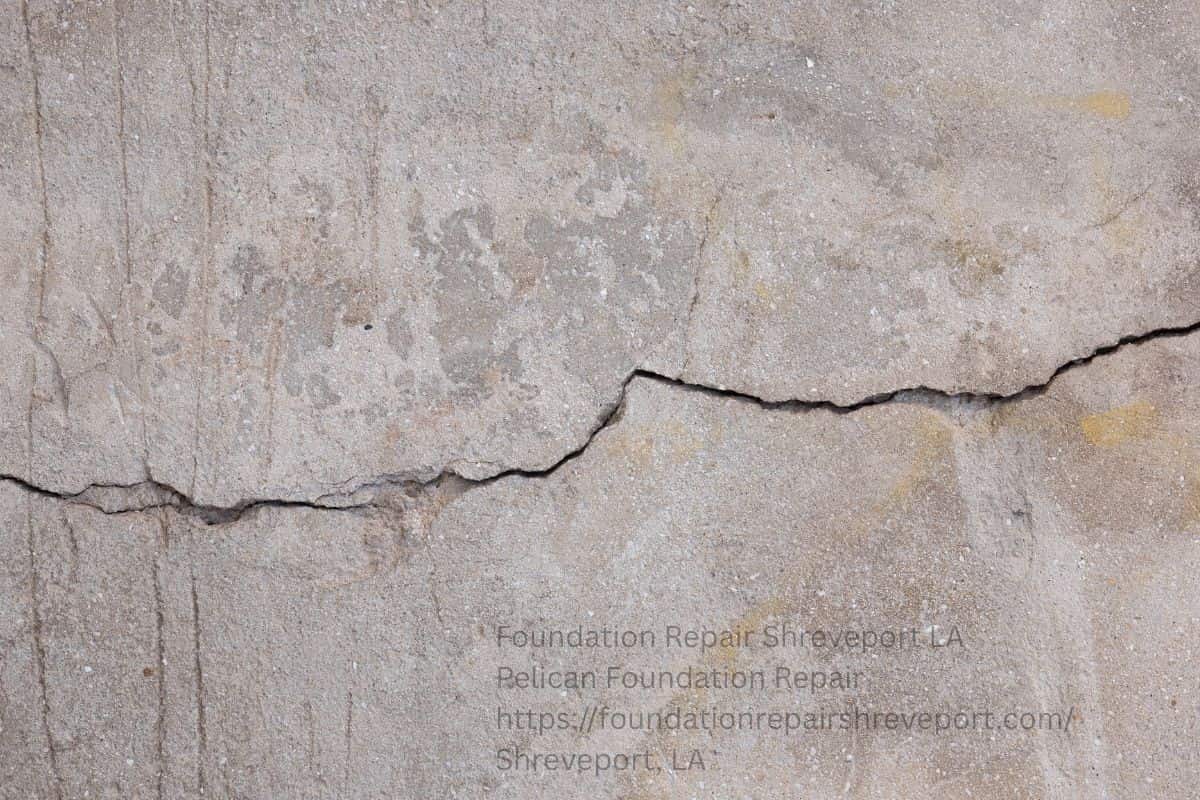
A crack running sideways along the wall is worth checking sooner rather than later.
Stair-Step Cracks
Stair-step cracks zigzag through mortar joints in concrete block or brick walls — usually differential settlement, one part of your foundation sinking faster than the rest. Repointing only hides the symptom; the real fix is stopping the settlement underneath, which is why we start with a free foundation inspection before recommending anything.
Call (318) 585-2003 – Free Inspection
Bowing Walls: Shreveport’s Expansive Clay Problem
Much of northwest Louisiana sits on dense, heavy clay — vertisols that swell when moist and crack open when dry, which the LSU AgCenter confirms makes building foundations difficult. In our humid subtropical climate, that cycle never lets up: spring storms saturate the ground, summer heat bakes it dry, and soil shifting repeats year after year.
When the clay saturates, it expands and pushes against your foundation walls with enormous force — lateral soil pressure, the number one cause of bowing walls here. Near Cross Lake and the Red River, high water tables keep soil wet longer; after flooding rains, moisture accumulation behind the wall adds hydrostatic pressure — water pressing against the wall and forcing through cracks and pores.
Here’s the slow ratchet: spring saturation pushes the wall inward a fraction of an inch. Summer drying shrinks the soil back, but the wall doesn’t spring back — the bow stays. Repeat for a decade in a Broadmoor or Southern Hills ranch and the bow grows until the wall fails.
Signs your wall is bowing:
- The wall curves or bulges inward (sight along it from the end)
- Horizontal cracking, often at the same height as the bow
- Dampness or water staining near the bowed section
Catch it early and we can stabilize it with anchors or straps; wait too long and it becomes a rebuild — which is why we often pair stabilization with drainage correction to relieve the pressure for good.
How We Repair Damaged Walls
At Pelican Foundation Repair, we don’t sell one method — we match the repair to the wall.
Epoxy and Polyurethane Injection
For stable, non-structural cracks, we inject epoxy or polyurethane directly into the crack. Epoxy bonds concrete back together; polyurethane expands to fill the void and stays flexible — our go-to for cracks actively leaking during a storm. Typical cost: $400–$1,500.
Tuckpointing and Mortar Repair
When mortar joints crumble but the blocks are sound, we grind out the failed mortar and pack in fresh — tuckpointing. It’s the right fix for weathered joints and minor stair-step cracking where the wall hasn’t moved.
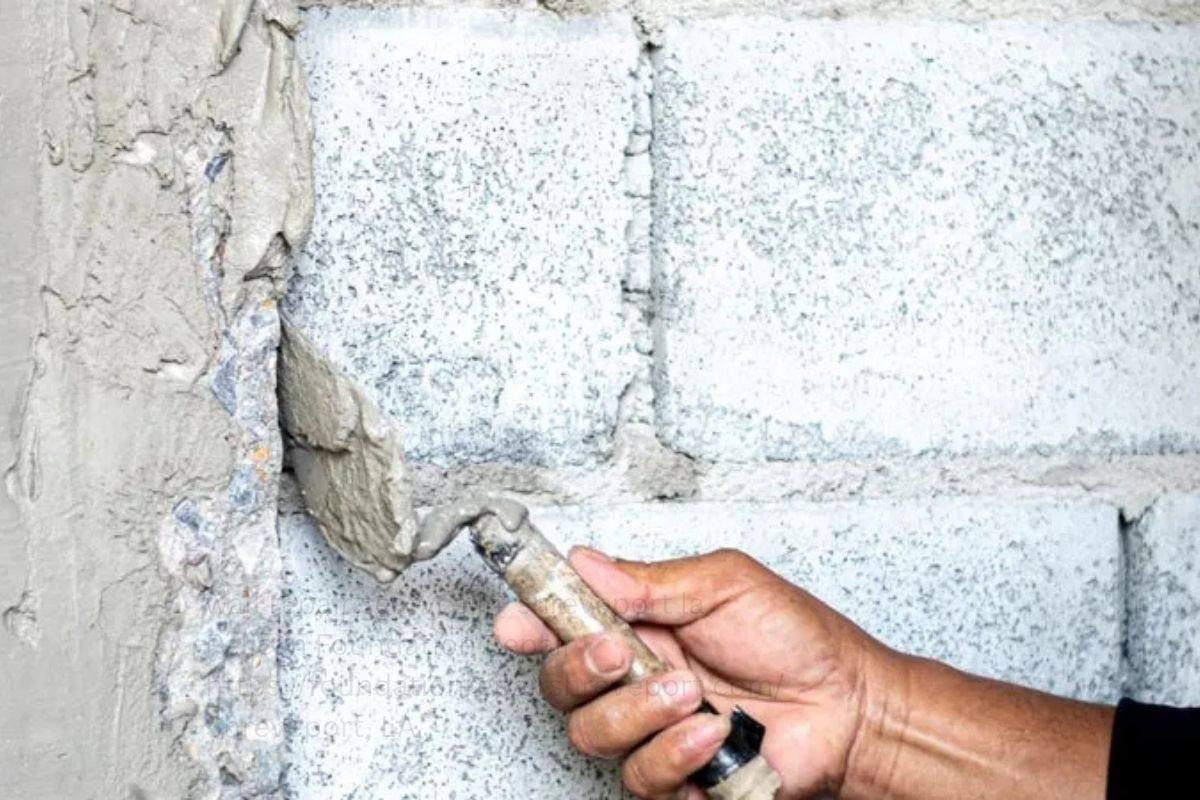
Fresh mortar and proper tuckpointing restore a block wall’s strength.
Carbon Fiber Straps
Carbon fiber straps bond to the inside face of a bowing wall with structural epoxy. They won’t straighten a bowed wall, but they lock it in place — a good fit for minor movement (under about 2 inches) once soil pressure is addressed. We grind and clean the wall face first; the bond is only as good as the surface prep.Wall Anchor Installation, Step by Step
For significant bowing, wall anchors are the workhorse — the method that actually straightens walls, and the process most competitors never explain: Step 1 — Excavate. We hand-dig a narrow pit beside the wall, down to footing level — one pit per anchor, spaced every few feet along the bowed section. Step 2 — Set the earth anchor. A steel anchor plate (a “deadman”) goes into solid, undisturbed soil — not the loose backfill against your wall. The plate has to hold for decades. Step 3 — Drill through the wall. We core a clean hole through the foundation wall for the rod. Step 4 — Connect the rod. A galvanized steel rod links the buried plate to a steel wall plate inside. Step 5 — Tighten, backfill, re-tighten. We torque the rod to pull the wall toward plumb, then backfill and grade. We come back in 6–12 months to tighten again — each round pulls the wall a little straighter. Wall anchors need enough yard space for the buried plates. Where they fit, they’re the most powerful option short of a rebuild.Partial Rebuild
Sometimes a wall is too far gone — severely bowed, crumbling, or collapsing. When the blocks themselves are disintegrating, patching won’t save it: we dismantle the failed section and rebuild it, fixing the soil and drainage behind the failure. Rebuilds carry our 20-year structural warranty on qualifying work. Concrete walls can also fail from the inside out: water reaches the steel rebar, the rebar rusts and expands, and blows the concrete off in chunks — called spalling. Once rebar is exposed and rusting, patching won’t hold. The damaged section has to be cut out and rebuilt.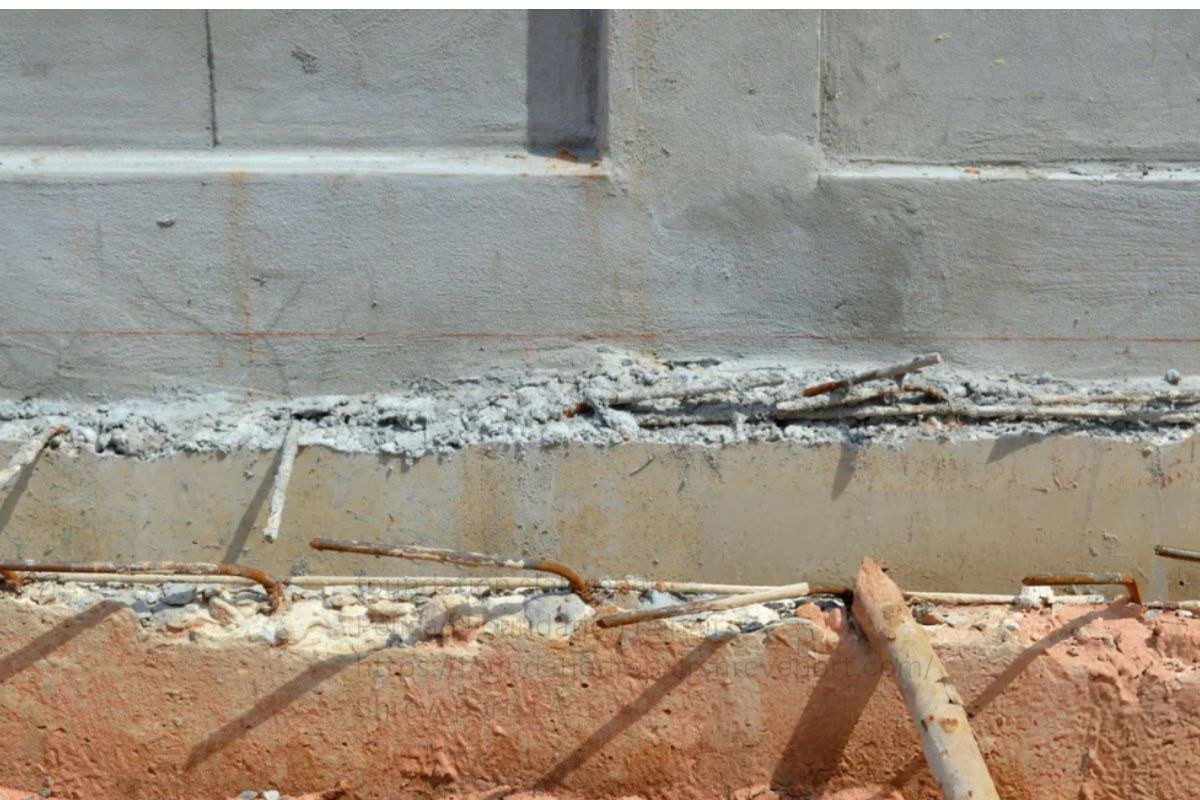
Exposed, rusting rebar means the concrete has failed around it — this needs structural repair.
Call (318) 585-2003 – Free Inspection
Should Your Wall Be Repaired or Rebuilt?
Here’s how we weigh it during a free inspection: Repair it when cracks are stable, the bow is under about 2 inches, the blocks or concrete are sound, and we can fix the cause — usually soil pressure or drainage — along with the symptom. Anchor it when the bow is significant but the wall material is sound (anchors straighten; straps only hold). Rebuild it when the bow is severe, the wall is leaning or rotating off its footing, blocks are crumbling, a section has collapsed, or rebar is exposed and rusting. At that point, no strap or anchor has anything solid to work with.Retaining Wall Repair in Shreveport
Retaining walls hold back tons of soil around the clock. When they fail, they tend to fail suddenly — leaning, bulging, or collapsing after a heavy rain saturates the soil behind them. Common retaining wall problems we fix:- Leaning, tilting, or bulging — water pressure building up behind the wall with nowhere to go
- Crumbling mortar or blocks — age and water wear walls down; most retaining wall failures are really drainage failures
Drainage: The #1 Retaining Wall Killer
Ask what destroys most retaining walls in Shreveport and the answer is always trapped water. A properly built retaining wall is really a drainage system with a wall in front of it — perforated drain tile, gravel backfill, weep holes, and filter fabric. Most older walls were built with little or none of that — and ten years of spring rains turn the soil behind them into a saturated wedge of clay pressing outward. When we repair or rebuild a retaining wall, proper drainage is non-negotiable. On finished retaining walls, a crack splitting tile or stucco is often the first sign of movement behind the wall — don’t just re-tile.
When the crack runs through tile and substrate, the wall itself is moving.
A slight lean can sometimes be stabilized with anchors. A wall that’s actively moving usually needs a rebuild — with proper drainage so it doesn’t happen again. As a structural repair contractor, we handle timber, block, poured concrete, and stone retaining walls throughout Shreveport, Bossier City, Haughton, Benton, Minden, Mansfield, and Caddo Parish. Timber walls last 15–20 years before rot takes them, so a failing timber wall usually wants replacing with block or stone, not repairing.Call (318) 585-2003 – Free Inspection
What Wall Repair Costs in Shreveport
Nobody in Shreveport publishes per-anchor or per-strap prices — and you should be suspicious of anyone who quotes them without seeing your wall:- Crack injection (epoxy or polyurethane): $400–$1,500 per crack, depending on length and access.
- Major stabilization and rebuilds: $3,500–$15,000+, depending on wall length, height, and materials.
- Carbon fiber straps and wall anchors: priced by the job, not by a menu — strap/anchor count, wall height, how far the bow has gone, soil conditions, and drainage needs all move the number.
- Access. An open wall is quick work; a finished wall with drywall, plumbing, and cabinets in front of it costs more.
- Cause vs. symptom. Sealing a crack is one price; sealing it and fixing the drainage that caused it is higher — but only the second quote ends the problem.
- Height and length. A 4-foot garden wall is not the same job as a 9-foot wall running 40 feet.
- Materials. Matching older Shreveport brick is slower and pricier than stacking standard block.
Frequently Asked Questions
What are the common methods used for foundation wall repair?
Five real options: epoxy or polyurethane injection for stable cracks; tuckpointing for failing mortar; carbon fiber straps to lock a mildly bowed wall in place; wall anchors to gradually straighten significant bowing; steel beams where anchors won’t fit; and partial rebuild when the wall is too far gone. The right method depends on the wall, the damage, and the cause.What causes foundation walls to bow in Shreveport, LA?
Expansive clay plus water. Our heavy clay swells every spring and shrinks every summer; saturated soil pushes inward while trapped water adds hydrostatic pressure. Near Cross Lake and the Red River, high water tables keep soil wet longer, and tree roots dry the clay unevenly. That slow ratchet bends walls inward over the years.How do you repair a foundation wall crack?
Start by reading the crack: thin, stable, and dry means a DIY epoxy kit or pro polyurethane injection ($400–$1,500) will seal it. Wide, growing, leaking, or horizontal means the wall is moving — and no kit fixes movement. That’s when to call a pro.How do you fix a foundation wall that is leaning?
A leaning wall needs mechanical stabilization, not patching. Wall anchors — steel plates inside and out, connected by a rod through the soil — pull it back toward plumb in stages. Carbon fiber straps lock a mildly leaning wall where it is but can’t straighten it. Severe lean or crumbling material means rebuilding — get a free inspection first.How do you repair a basement wall that is leaking?
First find the water source — most “leaking walls” are drainage problems. We seal active leaks with polyurethane injection, then fix the cause: gutters, grading, or drain tile. Paint-on sealants won’t stop hydrostatic pressure, and a leak through a horizontal crack needs structural repair first.How do you repair a stone foundation wall?
Old stone foundations are usually repaired by repointing — grinding out failed mortar and packing in fresh — then fixing the drainage that washed it out. If stones are loose or the wall is bulging, we rebuild the failed section stone by stone with proper drainage behind it. Get a free inspection and an honest quote.How do you replace or rebuild a foundation wall?
Rebuilding means excavating beside the failed section, supporting the structure above, dismantling the bad wall, building a new one, waterproofing it, and backfilling with proper drainage. A typical section takes 3–5 days and carries our 20-year structural warranty on qualifying work.How long does the work take?
Crack injections: half a day. Straps: a day. Anchors: 1–2 days. Rebuilds: 3–5 days. Your quote includes a firm timeline.Does homeowners insurance cover this work?
Usually not for gradual issues like soil pressure or settlement — those count as maintenance. Sudden damage (a vehicle hitting your retaining wall) may be covered. We’ll document damage for your claim.Do you warranty your wall work?
Yes. Straps are epoxied structural composite; our anchors are galvanized steel rated for decades underground. Qualifying structural repairs carry our 20-year structural warranty — explained in plain language, in writing, during your free inspection.Call (318) 585-2003 – Free Inspection
Get a Free Wall Inspection
Spotted a crack, a bow, or a lean? Call Pelican Foundation Repair at (318) 585-2003 (Mon–Fri 7:00–6:00, Sat 8:00–2:00). The inspection is free, the advice is straight — and if your wall is fine, we’ll tell you that too.Pelican Foundation Repair 6118 Fairfield Ave, Shreveport, LA 71106, USA 318-585-2003
home