House Leveling in Ruston, LA: Methods, Signs, and When Your Home Needs It
House leveling in Ruston, LA lifts a settled home back toward level and steadies it on sound supports. Here are the signs, the methods, and when to act.
House leveling in Ruston, LA is the work of raising the low parts of a home back toward level and supporting them so they stay put. A crew measures the floors, finds where the house has dropped, then lifts it in small steps with jacks and piers, shims, or new beams until the floors read true again.
Ruston sits in Lincoln Parish, east of Shreveport on I-20, and its homes deal with the same clay soil that moves houses all across north Louisiana. The town has a lot of older pier-and-beam houses, the kind with a crawl space under the floor, alongside newer slab homes near Louisiana Tech University.
Signs Your Ruston Home Needs Leveling
Most homes do not sink all at once. They drop a little at a time, in one corner or along one wall, and the signs show up in everyday places first.
Sticking Doors and Windows
When a house settles unevenly, the frames around doors and windows twist out of square. A door that sticks at the top corner, or a window that will not slide shut the way it used to, is often the first clue. One sticky door in a damp week may mean nothing.
Sloping and Bouncy Floors
Pay attention to what your feet tell you as you walk through each room. A floor that slopes toward one wall, a hallway that feels like a gentle ramp, or a spot where a chair rocks on its own all point to movement below. In a pier-and-beam home, a floor can also feel bouncy underfoot when a beam has sagged or a pier has settled.
Chimney Separation and Wall Cracks
A chimney that pulls away from the house is one of the clearest signs of settlement. Look for a gap opening between the chimney and the siding, or a crack where the two meet. The chimney sits on its own footing, so when the ground under it moves differently from the ground under the house, the two part ways. A crack in a stair-step pattern through brick, or one above a door that keeps coming back after you patch it, means the wall is still moving.
- A door or window sticks in the same spot through wet and dry weather.
- Floors slope toward one wall, or a ball always rolls the same way in one room.
- A floor feels bouncy underfoot in one part of the house.
- A chimney is pulling away from the house, with a gap at the joint.
- Cracks above doors or in brick keep growing or come back after patching.
Why Ruston Homes Settle: Clay Soil, Weather, and Older Pier-and-Beam Stock
Ruston homes do not settle because they were built badly. They settle because the ground under them moves, and in Lincoln Parish the ground moves a lot.
Expansive Clay Under Lincoln Parish
Ruston sits on the same expansive clay soil as the rest of north Louisiana. Clay acts like a sponge. When it soaks up water it swells and pushes up on a foundation, and when it dries out it shrinks and leaves gaps under slabs and piers. One lot can hold more clay than the lot next door, so two houses on the same street in ZIP 71270 can move in different ways.
The Wet-Winter and Dry-Summer Swing
The yearly weather pattern does the real damage. Winter rain keeps the ground wet for weeks, and the clay swells. Then summer heat dries the soil hard, the clay shrinks, and the house drops where the support has gone. Mid-November 2026 showed the pattern: only a trace of rain fell at Shreveport Regional Airport on November 15, and November 16 stayed dry and clear with a high near 64 degrees. The National Weather Service Shreveport page tracks local rain and drought for the area.
Older Pier-and-Beam Homes Near Louisiana Tech
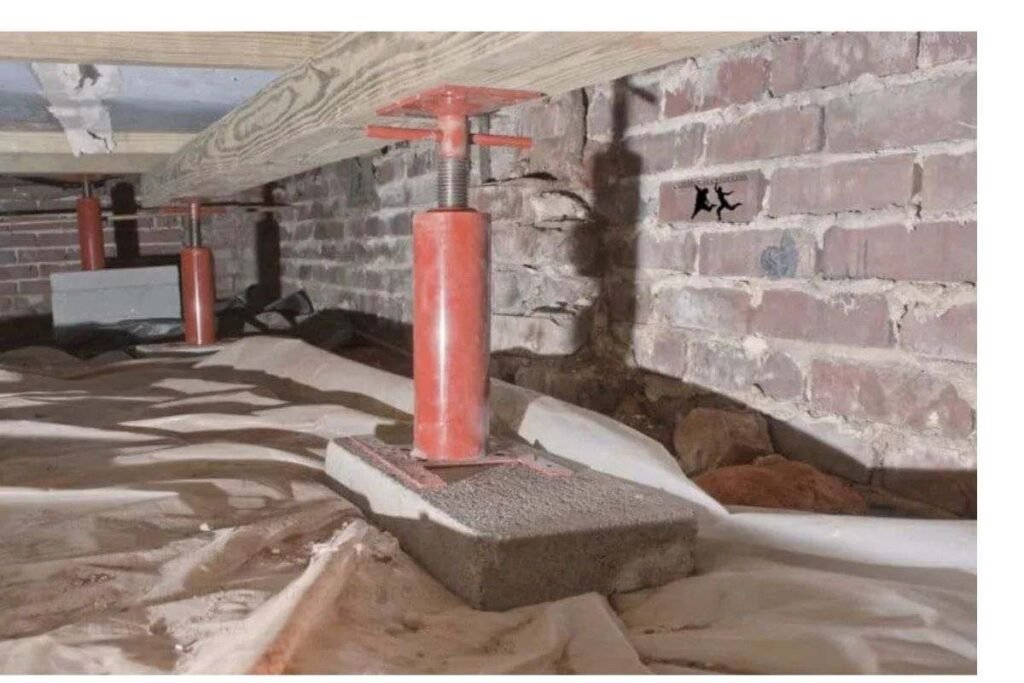
Much of Ruston’s housing stock is older, and many of those homes sit on pier-and-beam foundations with concrete block piers and wooden beams. These are sturdy systems when they are cared for, but time works on them. Piers can settle into soft clay, wooden beams can sag or rot where a crawl space stays damp, and shims can crush or slip out of place. Homes near Louisiana Tech University and in the older neighborhoods close to downtown Ruston are the most likely to have this kind of foundation.
House Leveling Methods Compared
There is no single way to level a house. The right method depends on the foundation type, how far the house has dropped, and what the soil under it is doing. A good crew measures first, then picks the method that fits the house.
| Method | Best for | How it works |
|---|---|---|
| Steel push piers | Slab homes and heavy settlement | Steel piers are driven to firm soil, then the house is lifted and held on them |
| Shimming | Small drops in pier-and-beam homes | The beam is jacked up and shims fill the gap over the pier |
| Beam replacement and sistering | Sagging, rotted, or cracked beams | A damaged beam is replaced, or a new beam is fixed alongside it |
| Pier replacement | Failed, leaning, or crumbling piers | The old pier is removed and a new concrete block pier is built |
Steel Push Piers
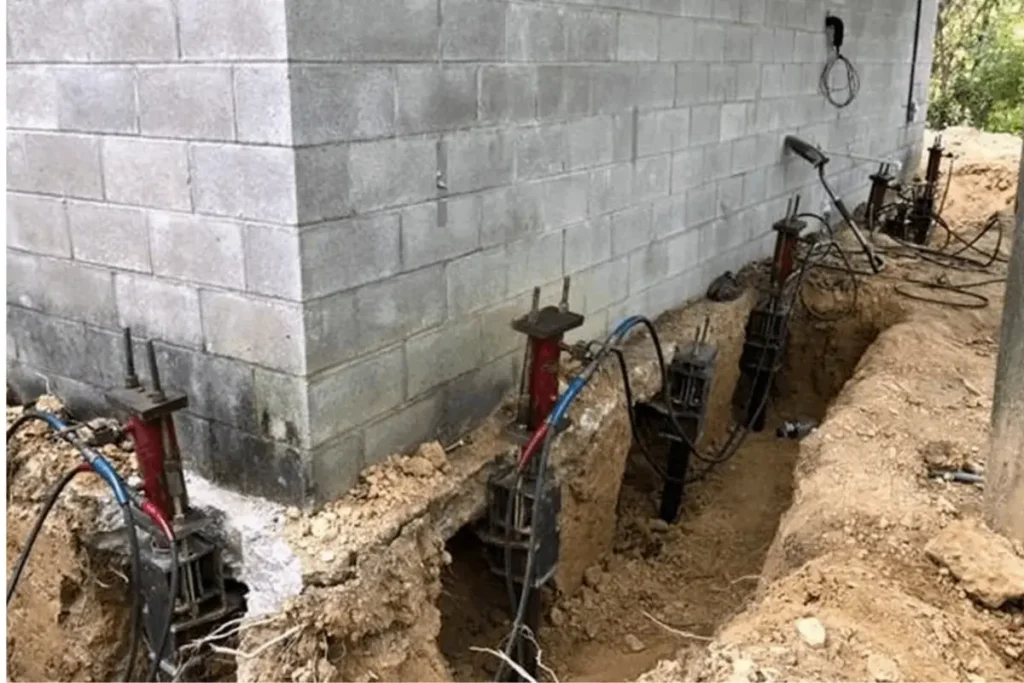
Steel push piers are the heavy-duty option, and they are the usual answer for a slab home that has settled or a pier-and-beam home with a big drop. The crew drives sections of steel pipe down through the soil until they reach firm ground that can carry the weight of the house. Then jacks lift the settled part of the house back toward level, and the weight is transferred onto the piers. Push piers reach past the moving clay layer, so the repair is designed to hold even when the soil swells and shrinks again.
Shimming: The Small-Drop Fix
Shimming is the simplest leveling method, and it fits pier-and-beam homes with a small drop. The crew jacks the beam up a little at a time, then slides wood or steel shims into the gap between the beam and the pier to hold the new height. It works well when the piers themselves are still sound and the beam is in good shape. Shimming is not the answer when the piers are sinking or the beam is rotted, because shims on a failing pier will only need redoing.
Beam Replacement and Sistering
Sometimes the beam itself is the problem. A wooden beam that has sagged over decades, rotted where a crawl space stayed damp, or cracked under load cannot be fixed with shims alone. The crew has two choices: replace the beam, or sister it, which means fixing a new beam tight alongside the old one so the two carry the load together. Sistering is common when the old beam is still partly sound and the crew can reach it in the crawl space. Full replacement is the call when the beam is too far gone. For a closer look at the trade-offs, see our guide on house leveling methods compared.
When Leveling Is Needed vs When Monitoring Is Enough
Not every uneven floor needs a crew and a set of jacks. Some movement is old, stable, and harmless, and the smart move is to watch it rather than fix it. The difference between leveling now and watching for a while comes down to whether the house is still moving.
Level Now: Active, Growing Movement
Book leveling work when the signs are active and getting worse. A floor that has dropped further in the last six months, a crack that has grown wider since you last measured it, a door that stuck a little last year and will not close at all this year, or a chimney gap that keeps opening are all signs of a house that is still moving. Our post on whether house leveling is worth it walks through how to judge your own home.
Monitor First: Old, Stable, and Small
Watching is the right call when the movement is old and has not changed. A floor that slopes a little but has read the same for years, a hairline crack that has stayed the same width through a wet winter and a dry summer, or a door that sticks only in the dampest weeks and loosens when the weather dries are all signs of a house that has settled into its place. If nothing changes over a full wet-dry cycle, the house is stable. See FEMA guidance on protecting your home for more on water and foundation risk.
- Level now if floors, cracks, or doors have changed in the last six months.
- Level now if a chimney gap is still opening or a crack keeps growing.
- Monitor if the slope and cracks have read the same for a full year or more.
- Monitor if a door sticks only in damp weather and loosens when it dries.
What to Expect During a House Leveling Job in Ruston
A leveling job follows a steady order, and knowing it takes the mystery out of the work. Most jobs run a few days, depending on the size of the house and how far it has dropped.
Inspection, Measurements, and the Written Estimate
The job starts with an expert inspection. The specialist runs a level across the floors room by room, checks the crawl space or slab edge, looks at the piers and beams, and notes the drainage around the house. The readings show which way the house is tilting and by how much. From there you get a written estimate that names the method, the areas to be lifted, the timeline, and the warranty terms.
The Lift, the Supports, and the Follow-Up
On lift day, the crew jacks the house up slowly, a little at a time, because a fast lift can crack plaster and pop tiles. As the floors come up, the crew sets the supports: piers driven to firm soil, shims over sound piers, or new beams where the old ones failed. Then the house is lowered onto its new supports and the floors are checked again. After the work, fix the drainage that helped cause the trouble and keep water moving away from the house. For Ruston homeowners, the house leveling service page lays out what Pelican does on every job, and the Ruston, LA service area page covers the neighborhoods and ZIP 71270 and 71273 areas Pelican serves. The Pelican Foundation Repair homepage shows the full range of services across Shreveport and Lincoln Parish, and our post on house leveling in Blanchard, LA covers the same work in a nearby town.
Frequently Asked Questions
How much does house leveling cost in Ruston, LA?
The cost depends on how far the house has dropped, the foundation type, the method needed, and the size of the home. Your exact figure comes from a written estimate after an expert inspection.
How long does house leveling take?
Most leveling jobs take a few days, depending on the size of the house and how far it has dropped. A small shimming job may take a day, while a pier job with a big lift takes longer.
Can I stay in my home during house leveling?
In most cases, yes. The crew lifts the house in small steps, and the work happens under the floor or around the edges of the house. There will be noise and some dust, but most families stay home through the job.
Will house leveling fix my sticking doors and sloping floors?
Leveling often fixes both, because sticking doors and sloping floors usually come from the same uneven settlement. As the floors come back toward level, door frames square up and floors flatten out.
Is house leveling worth it for an older pier-and-beam home in Ruston?
For many older Ruston homes, yes. A pier-and-beam house that is still sound in its bones can be leveled and steadied for years with the right piers, shims, or beams.
How do I know if my house needs leveling or just monitoring?
Measure and watch. If floors, cracks, or doors have changed in the last six months, the house is still moving and leveling is the likely answer. If the readings have stayed the same through a full wet winter and dry summer, monitoring is reasonable.
Does house leveling come with a warranty?
Qualifying repairs from Pelican Foundation Repair carry a 20-year structural warranty. The written estimate for your home will name the warranty terms that apply to your job
Pelican Foundation Repair
6118 Fairfield Ave, Shreveport, LA 71106, USA
318-585-2003
https://foundationrepairshreveport.com/