House Leveling in Eastwood, LA: Methods, Signs, and When Your Home Needs It
House leveling in Eastwood, LA lifts and steadies older pier-and-beam homes with steel piers, shimming, or beam work, matched to Bossier Parish clay and moisture.
House leveling in Eastwood, LA is usually the right call when floors slope, doors stick, or gaps open at the baseboards, and the fix depends on what moved underneath. Steel piers suit homes that keep settling, shimming corrects small drops, and beam replacement fits rotted or sagging framing. An expert inspection measures the floors first and sets the plan.
Eastwood is a community of established neighborhoods just east of Shreveport, in Bossier Parish, and most of the older homes here sit on pier-and-beam foundations. That means the house rests on wood beams carried by concrete block or brick piers, with a crawl space underneath. It is a solid way to build, but it leaves more parts that can shift, settle, or wear out than a slab does. Below are the signs Eastwood homeowners see most, the leveling methods that fit each one, and the clay and moisture factors that decide which fix lasts.
Why Eastwood Homes Go Out of Level: Clay, Moisture, and Older Pier-and-Beam Stock
Most Eastwood homes that need leveling are not new. The pier-and-beam homes in the established neighborhoods have stood through decades of wet springs and hot, dry summers, and the soil under their piers has moved a little with every season. Over time, those small moves add up to a sloping floor or a sticking door.
Bossier Parish Clay Under Eastwood Homes
The clay under Eastwood is the same expansive clay found across Bossier Parish and northwest Louisiana. It swells when it soaks up water and shrinks when it dries out, and that cycle repeats through the year. A wet spring can leave the ground swollen for weeks, then a hot, dry summer pulls the moisture back out. Piers sit in that moving soil, and when one pier rides up while another sinks, the floor above it tilts. The movement is slow, often a fraction of an inch at a time.
Moisture, Rain, and Drainage Around the Piers
North Louisiana weather adds a second push. Heavy rain soaks the ground around a house, and the flat lots common in Eastwood can hold water near the piers instead of shedding it away. Moisture under the house also works on the wood: beams and joists stay damp, and damp wood softens over time. A downspout that dumps beside the house or a low spot that holds water can leave the soil under one corner wetter than the rest. The National Weather Service Shreveport page tracks the wet and dry spells that drive this cycle across Bossier Parish.
Signs Your Eastwood Home Needs House Leveling
Most leveling trouble in Eastwood shows up inside the house first, because the floors sit on the beams the piers carry. One sign alone may mean little, but two or three together usually mean the house has moved.
Signs Inside the House
Start with the floors. Walk barefoot across the room and feel for a slope or a dip, and watch a marble or a small ball: if it rolls the same way every time, the floor has tilted. Doors that stick, rub at the top, or will not latch are a classic sign, and so are cracks where walls meet the ceiling or gaps where baseboards pull away from the floor. A chimney that pulls away from the house is a stronger warning, since it points to movement at one corner rather than a single door or window.
Signs Outside and Under the House
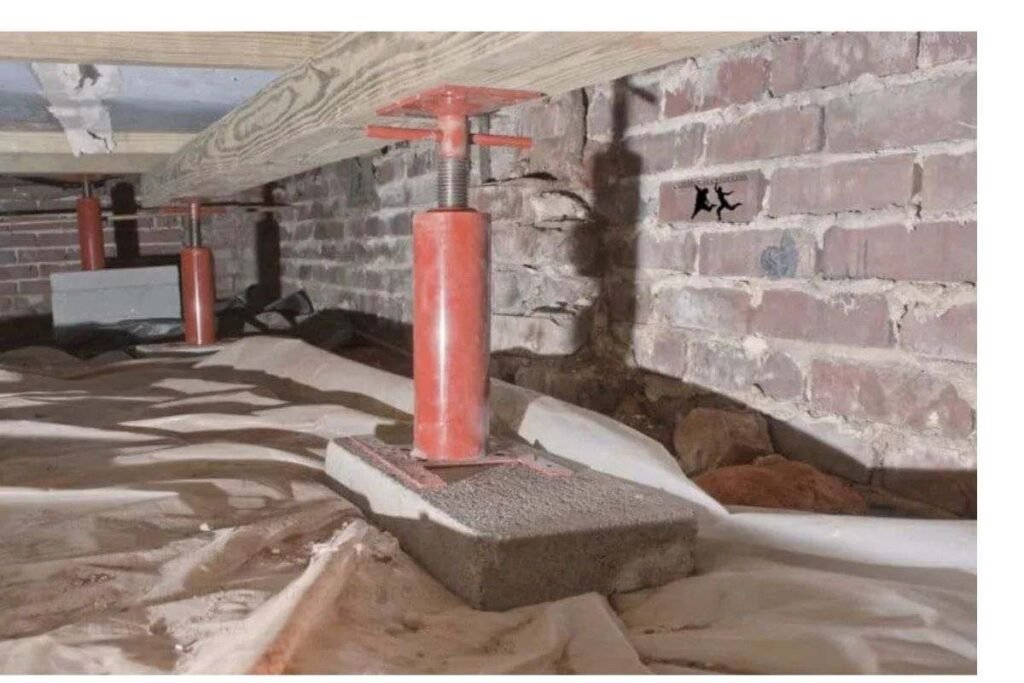
Outside, look at the brick and the foundation line. A stair-step crack in the brick, a gap between the chimney and the wall, or a porch that has dropped away from the house all point to settlement below. Under the house, a pier that leans, a beam that sags between supports, or a shim that has slipped out tells the same story. Our crawl space repair guide for Eastwood, LA covers what to look for under a pier-and-beam home.
- Floors slope or dip, and a marble rolls the same way every time.
- Interior doors stick, rub at the top, or will not latch.
- Cracks open where walls meet the ceiling or at window corners.
- Baseboards pull away from the wall or a gap opens along the floor.
- A chimney pulls away from the house or a gap opens beside it.
- Stair-step cracks show in the brick outside or in the mortar.
- A pier under the house leans, or a beam sags between supports.
- A porch or step has dropped away from the house.
House Leveling Methods in Eastwood, LA
There is no single fix for every Eastwood home, because the right method depends on what moved and why. A home that keeps settling needs support that reaches past the moving soil. A home with a small, stable drop needs a careful lift, not a full rebuild. A home with rotted framing needs new wood before any lift will hold.
Steel Piers for Homes That Keep Settling
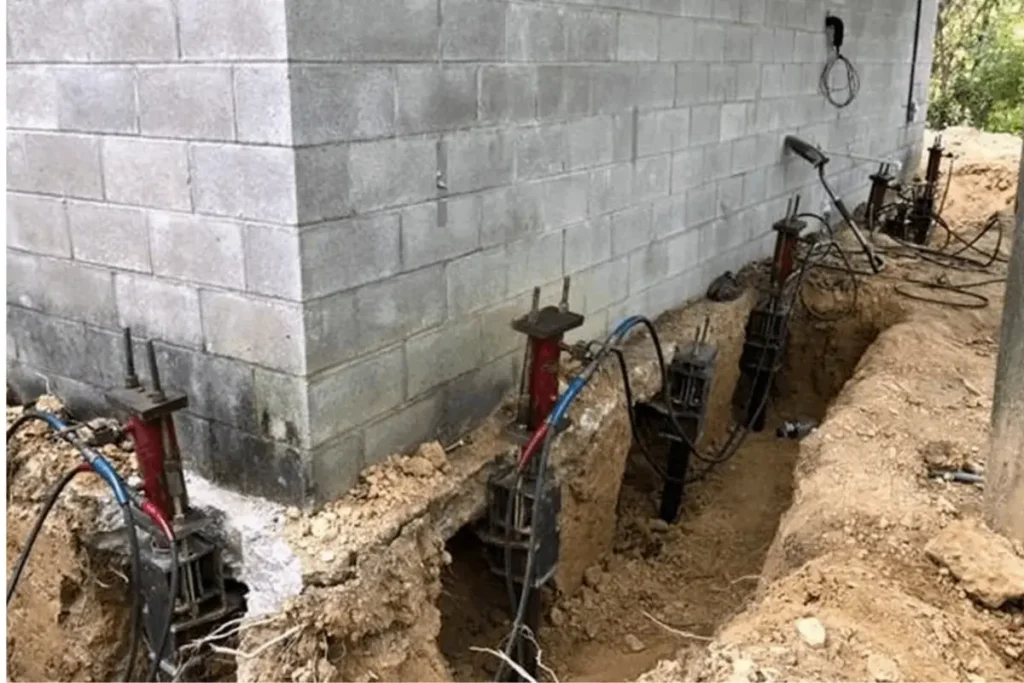
Steel piers are the fix when a home keeps settling or has dropped too far for a simple lift. The crew drives steel piers down through the clay to a firm layer below, then uses them to lift and hold the house in place. Piers fit Eastwood homes where one corner keeps dropping, or where doors and cracks come back after a smaller job. For the full picture of this service, see the house leveling service page.
Shimming for Small, Stable Drops
Shimming corrects small drops by adding steel shims between the piers and the beams, raising the low spots back toward level. It fits homes where the piers are still sound and the settlement has stopped, and it is the least involved of the three methods. Shimming only works when the wood above it is solid and the soil below has settled into a stable pattern, so it is not the answer for a home that is still moving.
Beam Replacement for Rotted or Sagging Framing
Beam replacement fits homes where the framing itself has failed: a beam rotted by years of crawl space moisture, a joist damaged by termites, or a beam that has sagged past what sistering can correct. The crew supports the floor, removes the failed wood, and sets a new beam on sound piers. It is the most involved fix of the three, and it is the right one when the wood, not the soil, is the problem.
| Method | Best for | Limit |
|---|---|---|
| Steel piers | Homes that keep settling or have dropped far | Most involved job; needs access under the house |
| Shimming | Small, stable drops on sound piers | Does not fix a home that is still moving |
| Beam replacement | Rotted, sagging, or damaged framing | Most involved fix; floor must be supported first |
What a House Leveling Visit Covers in Eastwood
A leveling visit should start with the whole house, not just the worst room. The specialist walks the full floor, measures the high and low spots, checks every door and window that sticks, and looks at the piers and beams underneath.
The Expert Inspection
During the inspection, the specialist measures floor levels room by room, notes where the slope runs and how far it drops, and checks the piers, beams, and joists under the house. The specialist also looks for water sources that feed the clay: a downspout that dumps beside the house, a low spot that holds water after rain, or a plumbing leak under the floor. Homeowners in ZIP codes 71037 and 71067 can read more about the wider area on the Eastwood, LA service area page.
The Written Estimate After the Inspection
After the inspection, you should receive a written estimate that lists the work area by area, the method for each one, and the warranty terms on qualifying repairs. Ask how long each room will be out of use, what happens if a leveled section settles again, and whether drainage work is part of the plan or a separate step.
What Affects the Cost of House Leveling in Eastwood?
The cost of house leveling in Eastwood depends on how much of the house needs work, how far it has dropped, which method fits the problem, and whether beam or drainage work is part of the plan. A home that needs shimming in two rooms is a smaller job than a home that needs steel piers under a full corner. No honest figure exists before the floors are measured and the piers are checked, and any number given without that inspection is a guess. Your exact figure comes from a written estimate after an expert inspection.
Two things push the figure up more than any others: the number of piers or beams involved, and whether the wood framing needs replacing along with the lift. For a related look at whether the work pays off, see our guide on whether house leveling is worth it, and our house leveling guide for Blanchard, LA shows how the same methods apply in a nearby town.
Keeping Your Eastwood Home Level After the Work
Leveling is only half the job. The other half is keeping water from reaching the clay under the piers again, because wet and dry cycles are what moved the house in the first place. That upkeep is mostly watching and small habits: check the soil line after rain, keep the gutters clear, and keep an eye on any door that starts sticking again.
- Keep gutters clear and run downspouts well away from the piers.
- Grade the yard so rain runs away from the house, not toward it.
- Fix plumbing leaks fast, since a slow leak swells the clay from below.
- Recheck doors and floors twice a year, after wet and dry seasons.
- Keep trees and large shrubs from growing roots against the piers.
- Watch the crawl space after heavy rain for standing water or damp soil.
For Eastwood homeowners, the Pelican Foundation Repair homepage shows the full range of services across Shreveport and northwest Louisiana. The LSU AgCenter also offers guidance on soil and moisture management around Louisiana homes.
Frequently Asked Questions
How do I know if my Eastwood home needs house leveling?
Book an inspection when floors slope or a ball rolls the same way every time, when doors stick or will not latch, when gaps open at the baseboards, or when a chimney pulls away from the house. One sign can be a quirk, but two or three together usually mean the house has moved.
Can an older pier-and-beam home in Eastwood be leveled?
Yes, in most cases. Steel piers can lift and hold a settling home, shimming corrects small drops, and beam replacement fixes rotted or sagging framing. The method depends on what moved underneath, which is why the inspection measures the floors before any work is planned.
What causes houses in Eastwood to settle out of level?
Expansive clay soil is the main cause: it swells when wet and shrinks when dry, moving the piers unevenly. Poor drainage, water pooling near the piers, plumbing leaks under the floor, and moisture-rotted beams add to the problem.
How much does house leveling cost in Eastwood, LA?
The cost depends on how much of the house needs work, how far it has dropped, the method used, and whether beam or drainage work is part of the plan. Your exact figure comes from a written estimate after an expert inspection.
How long does house leveling take in Eastwood?
Shimming and small beam jobs often take a day or two, depending on access under the house and the number of piers involved. Steel pier jobs take longer, since the piers must be driven to firm ground and the house lifted in stages. The schedule comes from the inspection.
Will my floors be perfectly level after house leveling?
Floors usually come back close to level, but a home that has settled for years rarely returns to perfect. A good job gets the floors noticeably flatter, stops doors from sticking, and holds the house steady so it does not keep moving.
When should I book a house leveling inspection in Eastwood?
Book one when floors slope, doors stick, cracks open where walls meet the ceiling, a chimney pulls away from the house, or a pier under the house leans or a beam sags. The sooner the movement is measured, the simpler the fix tends to be.
Pelican Foundation Repair
6118 Fairfield Ave, Shreveport, LA 71106, USA
318-585-2003
https://foundationrepairshreveport.com/