Foundation Crack Repair in Blanchard, LA: Which Cracks Matter and How They Are Fixed
A crack in your Blanchard foundation can be a harmless hairline or a sign the house is moving, and knowing which one you are looking at is the first step.
Foundation crack repair in Blanchard, LA starts with reading the crack itself. A thin vertical line often needs only a seal, while a stair-step or horizontal crack can mean the house has settled on shifting clay. An expert inspection measures the crack, checks the floors and doors, and matches the fix to the cause, whether that is injection or piers.
Blanchard sits in Caddo Parish, ZIP code 71012, just north of Shreveport, and most homes here rest on the same expansive clay that moves houses all across the ArkLaTex. When that clay soaks up rain it swells and pushes against the foundation, and when it dries out it shrinks and pulls away from the footing.
Most Blanchard homeowners first notice a crack in one of three places: a line running down the brick outside, a crack across the drywall above a door frame, or a damp line along the foundation wall in the crawl space. This guide covers each crack type, how injection works, and when a crack calls for piers.
Which Cracks Matter Most in Blanchard Homes
Not every crack is a problem, but every crack is a clue. The direction, width, and location of a crack say more than its length does.
- A thin vertical crack, often just concrete shrinkage from when the wall cured.
- A horizontal crack, often a sign that soil pressure is pushing the wall inward.
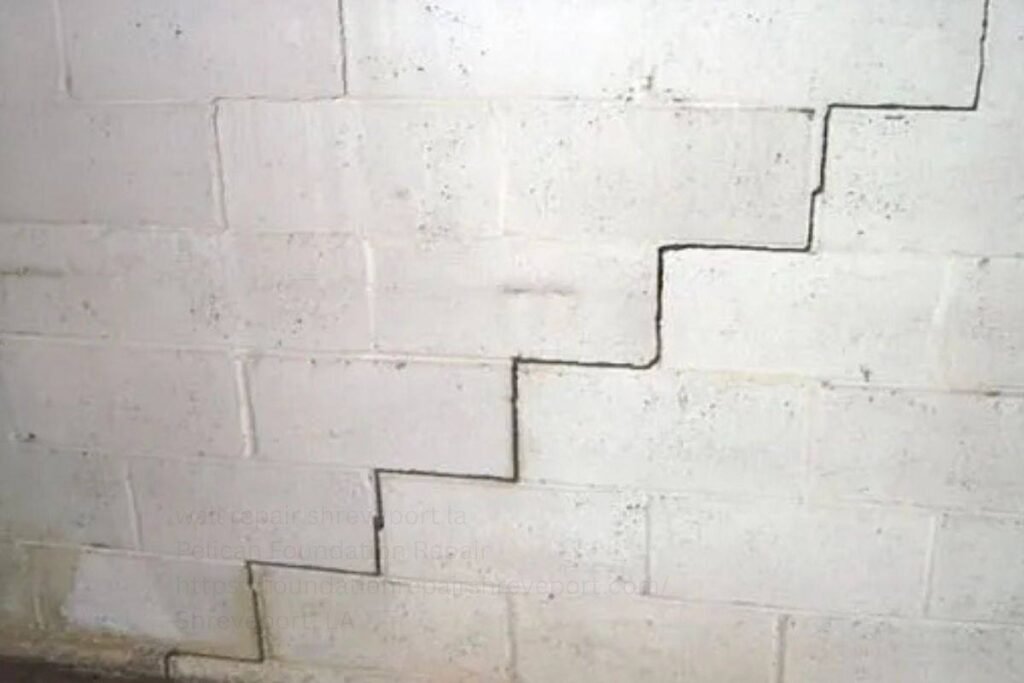
- A stair-step crack, often a sign that one part of the house has settled.
- A crack wider than a pencil, or one that keeps growing between checks.
- A crack that lets water in, or one paired with a sticking door or a sloping floor.
Vertical Cracks: The Most Common and Often the Least Serious
A vertical crack runs straight up and down a foundation wall, and in Blanchard it is the crack homeowners spot most often. Many are shrinkage cracks, lines that opened as the concrete cured and dried in the first months after the house was built. A thin vertical crack that has not changed in a year or two is usually stable, and the fix is often a simple injection seal that keeps water out. Measure the crack, mark the ends, and look again in a few months.
Horizontal Cracks: Soil Pressure Pushing the Wall Inward
A horizontal crack runs sideways along a foundation wall, and it deserves more attention than a vertical one. In Blanchard, horizontal cracks often come from the clay outside the wall swelling after rain and pressing inward, a force that builds up over wet seasons and does not let go on its own. A wall with a horizontal crack can start to bow inward, and a bowing wall is a structural problem, not a cosmetic one. If you can see the wall leaning in, or if the crack runs along a long stretch of the wall, book an expert inspection soon.
Stair-Step Cracks: The Classic Sign of Settlement
A stair-step crack follows the mortar joints in a brick or block wall, stepping up and across like a staircase, and it is the classic sign that one part of the house has settled. In Blanchard, stair-step cracks often show up where the clay under one corner of the house has dried and shrunk more than the clay under the rest, so that corner drops. A short stair-step crack near a corner may only need sealing and monitoring, but a long one, or one that comes with a sticking door or a sloping floor, points to settlement that injection alone will not fix.
Why Blanchard Clay Moves Foundations
Blanchard homes move because the ground under them moves. The expansive clay soils of Caddo Parish swell when they soak up water and shrink when they dry out, and that cycle repeats with every season.
Expansive Clay in Caddo Parish
The clay under Blanchard is the same heavy, sticky clay found across the Shreveport area, and it is the main reason foundations here crack. When the clay is wet it expands and pushes hard against foundation walls and footings, and when it dries it shrinks and pulls away, leaving gaps where the soil no longer supports the footing. A house that is wet on one side and dry on the other moves unevenly, and uneven movement is what cracks walls and sticks doors. The LSU AgCenter publishes guidance on Louisiana soils and moisture swings around homes built on clay.
The Dry Autumn and What It Did to the Soil
The dry autumn in the ArkLaTex left rainfall several inches below normal since September 1, and that long dry stretch pulled moisture out of the clay under Blanchard homes. As the soil dried it shrank, and where it shrank unevenly, gaps opened along footings and cracks widened in walls that had been stable through the summer. Light rain around November 22 wet the top layer of soil again, but a light rain does not re-wet clay that has dried deep down.
How Epoxy and Polyurethane Injection Work
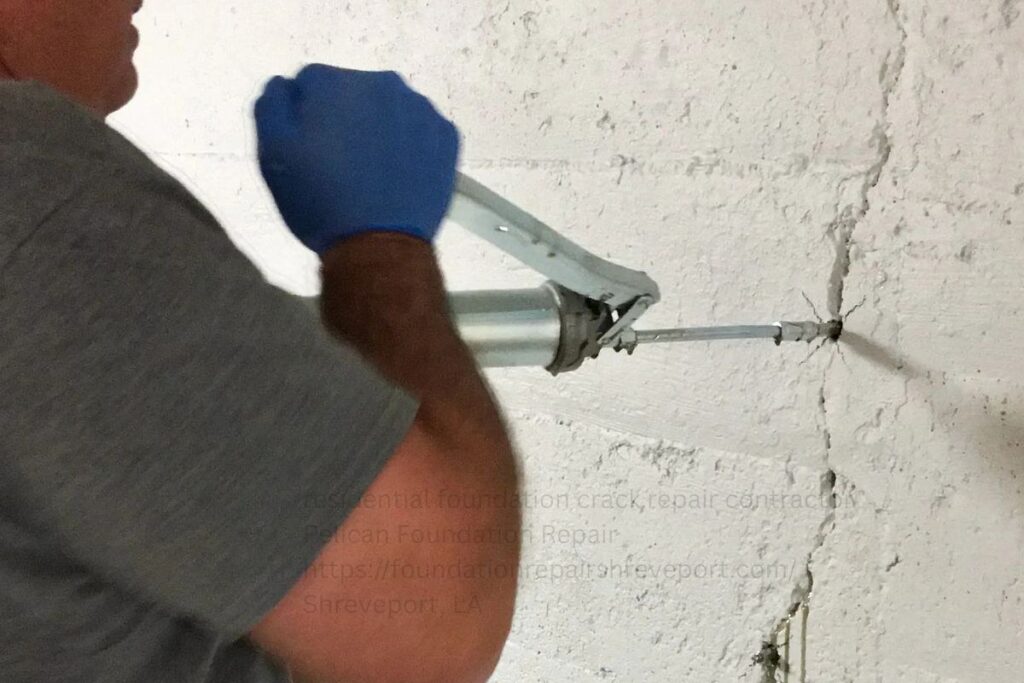
Injection is the most common fix for a crack that is stable and needs sealing, and it works from inside the wall. A technician fills the crack with a liquid material that hardens in place, bonding the two sides together and blocking water.
Epoxy Injection: Bonding the Wall Back Together
Epoxy injection is the fix for a crack in a wall that is not still moving. The technician cleans the crack, seals the surface, and injects a low-viscosity epoxy deep into the opening, where it flows into the narrowest parts and hardens into a bond that is stronger than the concrete around it. Epoxy is rigid when it cures, so it works best on a crack that has stopped moving, such as a shrinkage crack or a crack in a wall that has been stabilized. The job usually takes a few hours for a single crack; compare the materials in our guide on epoxy versus polyurethane crack injection.
Polyurethane Injection: Sealing Out Water That Keeps Coming
Polyurethane injection is the fix for a crack that leaks, or one that may still move a little. The material is a foam that expands as it is injected, filling the crack and pushing into the small voids around it, and it stays flexible after it cures, so it can move a little with the wall instead of cracking again. That flexibility is why it is the usual choice for a crawl space wall that takes on water after rain.
When a Crack Means Piers Instead of a Patch
Injection seals a crack, but it does not lift a house that has settled, and that is the line between a patch and a structural repair. When the ground under a corner of the house has dropped, the wall above it will keep cracking no matter how well the last crack was sealed.
| What you see | What it usually means | Typical fix |
|---|---|---|
| Thin vertical crack, unchanged for a year | Concrete shrinkage, wall is stable | Epoxy or polyurethane injection seal |
| Horizontal crack or bowing wall | Soil pressure pushing the wall inward | Wall anchors or braces plus a seal |
| Stair-step crack with sloping floors | One part of the house has settled | Piers under the settled section |
| Crack that keeps growing, doors sticking | The house is still moving | Expert inspection, then piers or drainage work |
Signs That Point to Piers
Several signs together point toward piers rather than a patch. A stair-step crack that runs a long way through brick or block is one. Floors that slope toward one corner, doors that stick in the same part of the house, and gaps where the wall meets the ceiling or the floor are others. Our guide to cosmetic cracks versus structural cracks walks through how to tell the two apart before you book a visit.
What Piers Do That Injection Cannot
Piers are steel supports driven or screwed down through the moving clay to stable soil below, and the house is then lifted or stabilized onto them. Steel push piers are driven down by the weight of the house itself, while helical piers are screwed into the ground like a large anchor. Either way, the weight of the settled section transfers from the shrinking clay to the pier, so the next dry season cannot drop that corner again. After the piers are in place, the cracks above them can be sealed with injection, and this time the seal holds, because the wall is no longer moving.
What a Crack Repair Visit Looks Like in Blanchard
A crack repair visit follows a clear order, and the inspection comes before any repair. Nobody should seal a crack or install a pier without first measuring the house and reading the ground.
The Inspection Comes First
The visit starts with an expert inspection of the whole house. The specialist measures floor elevations room by room, maps every crack by location, direction, and width, and checks doors and windows for sticking. Then comes the crawl space or the slab edge, where piers, beams, and joists get a look, and the yard outside, where grading, gutters, and downspouts are checked for water pooling against the walls.
Repair Day: What to Expect
On repair day, the crew starts by protecting the floors and the yard around the work area, then gets to the crack or the pier location. An injection job usually takes a few hours: the crack is cleaned, sealed at the surface, and filled from the lowest point upward so the material reaches the full depth of the wall. A pier job takes longer, often a day or more, because each pier has to be driven to stable soil and then loaded before the house is stabilized onto it.
Keeping Cracks From Coming Back
A repair is a fresh start, and the habits that follow decide whether the next few years stay quiet.
- Keep gutters clear and run downspouts well away from the house.
- Keep the yard graded so water flows away from the walls on all sides.
- Water the soil evenly around the footing during long dry spells.
- Recheck every sealed crack twice a year, after the wet and dry seasons.
- Trim large tree roots that pull moisture from the clay near the footing.
- Watch doors and floors for new sticking or sloping between visits.
The FEMA website offers guidance on water damage and foundation protection for homes in low-lying areas. The full range of work is listed on the services page, the foundation crack repair service page lays out the repair options, and the Blanchard, LA service area page covers what Pelican Foundation Repair does in ZIP code 71012.
Frequently Asked Questions
How much does foundation crack repair cost in Blanchard, LA?
The cost depends on the crack type and size, whether the wall is still moving, and whether the fix is an injection seal or piers. Your exact figure comes from a written estimate after an expert inspection.
What is the difference between a vertical crack and a horizontal crack?
A vertical crack runs up and down and is often just concrete shrinkage, while a horizontal crack runs sideways and usually means soil pressure is pushing the wall inward. Horizontal cracks deserve a closer look from a specialist.
Can a stair-step crack in Blanchard be fixed with injection?
A short stair-step crack can sometimes be sealed with injection, but a long one, or one paired with sloping floors and sticking doors, usually means the house has settled. That kind of crack often needs piers, not just a seal.
How long does epoxy or polyurethane injection take?
Most single-crack injection jobs take a few hours, and polyurethane often cures the same day. Bigger jobs take longer.
When does a foundation crack mean I need piers?
You likely need piers when a stair-step crack is long, floors slope toward one corner, doors stick in the same part of the house, or a sealed crack opens again.
Should I worry about a hairline crack in my Blanchard home?
A thin hairline crack that has not changed in a year is usually nothing to worry about, but it is still worth measuring and rechecking. If it grows wider or longer, or starts letting water in, book an expert inspection.
How do I keep foundation cracks from coming back in Blanchard?
Keep gutters clear, run downspouts away from the house, keep the yard graded away from the walls, water the soil evenly in dry spells, and recheck sealed cracks twice a year.
Pelican Foundation Repair
6118 Fairfield Ave, Shreveport, LA 71106, USA
318-585-2003
https://foundationrepairshreveport.com/