Uneven Concrete and Trip Hazards: A Homeowner’s Liability Guide
Uneven concrete turns a normal walk into a fall risk. Here is what counts as a trip hazard, who pays when someone falls, and how Shreveport homeowners fix it.
Yes, you can be held responsible if someone trips on uneven concrete on your property, especially if you knew about the raised edge and did nothing about it. The good news is that most trip hazards are cheap to fix, and a simple concrete leveling job often removes the risk before anyone gets hurt.
A raised slab edge does not look like a legal problem. It looks like a small bump on the sidewalk or a lip where the driveway meets the garage. You step over it every day without thinking. But the first time a guest or a delivery driver catches a toe on it, that small bump becomes a fall.
This guide explains what counts as a trip hazard, why Shreveport concrete moves so much, who is responsible when someone falls, and what your fix options cost compared to each other.
What Counts as a Trip Hazard?
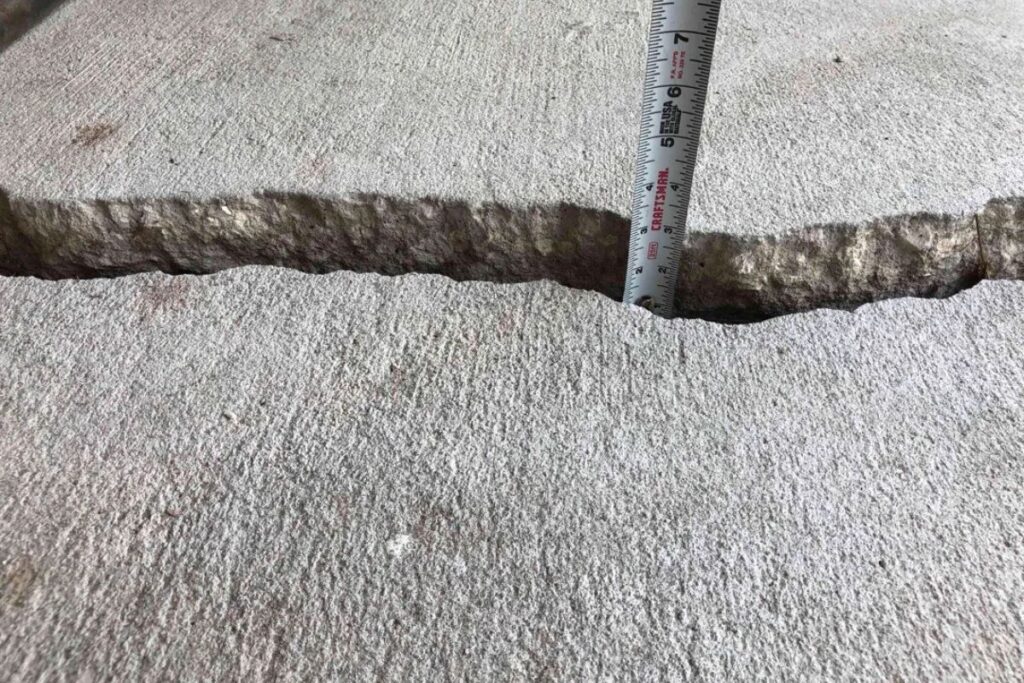
A trip hazard is any sudden change in the walking surface that can catch a foot. The most common one is a raised slab edge, where one concrete panel sits higher than the one next to it. The danger is not the size of the defect. It is the surprise. A half-inch lip on flat ground is more dangerous than a gentle slope, because feet do not expect it.
There are two numbers worth knowing. The Americans with Disabilities Act guidance says that changes in level over 1/4 inch need treatment, such as a beveled edge, so wheelchairs and walkers can pass safely. In everyday injury discussions, a lip of 1/2 inch is the height most often cited as a clear trip threshold. You can learn more from the Americans with Disabilities Act guidance. Neither number is a magic line. A quarter-inch edge in a dark walkway can still trip someone, and an adjuster looks at the whole picture, not just the ruler.
To measure a lip, lay a straight board or a level across the joint and measure the gap at the low side with a tape measure or a ruler. Write the number down and take a photo with the ruler in the frame. That photo is useful later, whether you call a contractor or talk to your insurer.
Trip hazards hide in more places than the front sidewalk. Check the driveway where it meets the garage floor, the walkway to the back door, the patio, the pool deck, and the porch steps. Older homes in Highland and Cedar Grove often have narrow walks poured decades ago, and the joints have moved a little every year. In Queensborough and Broadmoor, long driveways cross tree roots that push one section up while the rest stays put.
Why Shreveport Concrete Lifts and Sinks
Shreveport concrete does not sit still. Much of Caddo and Bossier parishes sits on heavy clay soil that swells when it soaks up water and shrinks when it dries out. A wet spring pushes the soil up under a slab, and a dry summer pulls it back down. The slab rides that cycle year after year, and the movement is almost never even. The sunny side of a driveway dries faster than the shaded side.
Tree roots are the other big mover in Shreveport neighborhoods. The mature oaks that shade South Highlands, Broadmoor, and the streets near Fairfield Ave and Line Ave have root systems that spread far wider than their canopies. A root the thickness of your wrist can lift a sidewalk panel by an inch or more. Cutting the root is rarely a good fix, because it can harm or kill the tree.
Water makes both problems worse. Gutters that dump water at the base of a wall soak one patch of clay while the rest stays dry. A broken sprinkler head can wash soil out from under a slab, leaving a hollow that the slab eventually drops into. Poor grading that lets rain pool against the driveway edge softens the soil under it. In ZIP codes 71106, 71105, 71104, and 71107, the same cycle runs on nearly every street.
Who Is Responsible When Someone Trips?
As a homeowner, you have a duty to keep the parts of your property that visitors use reasonably safe. That duty covers the walkway to your front door, the driveway, the porch, and the patio where guests sit. If someone is hurt because of a hazard you knew about, or should have known about, and did not fix or warn about, you can be held responsible for their medical bills.
The line between your property and the city’s property is where this gets tricky. The sidewalk in front of your house may sit on a city easement, and responsibility for public sidewalks varies by location. In some places the city maintains them, in others the homeowner does. Do not assume the city will fix a lifted sidewalk in front of your house. Check with the City of Shreveport to find out who is responsible for the sidewalk at your address, and get the answer in writing if you can.
Who falls matters too. A guest you invited for dinner is owed a higher duty of care than a stranger cutting across your lawn. A delivery driver, a mail carrier, or a repair worker is on your property for business, and you are expected to keep the path they use safe. Commercial visitors bring their own rules. Ask your insurer about extra coverage if you rent out the home or run a business from it.
Why Notice Matters More Than the Crack
In trip-and-fall claims, the size of the lip is only half the story. The other half is notice: how long the hazard existed, and whether you knew about it. A slab that lifted last week in a storm is a different case from a lip that has been there for two years while everyone in the house stepped over it.
Notice comes in two forms. Actual notice means you knew: you saw the lip, a family member mentioned it, a guest tripped on it before, or a contractor pointed it out during a visit. Constructive notice means you should have known: the hazard was visible and had been there a long time. A prior trip, even a minor one with no injury, is strong evidence of notice.
That is why writing things down helps you. When you first notice a raised slab, take a dated photo with a ruler showing the height. If you call a contractor for a quote, keep the quote and the date. These records show that you acted promptly once you knew, and they protect you if someone falls before the repair is done.
Fix Options Compared: Grinding, Leveling, or Replacement
There are three common ways to fix a raised slab, and the right one depends on how high the lip is and why the slab moved. Grinding shaves the high edge down until it is flush with its neighbor. Concrete leveling, also called mudjacking, pumps material under the low slab to raise it back to level. Full replacement means tearing out the old panels and pouring new concrete.
Grinding works best for small lips, usually under an inch, on a slab that is otherwise sound. It is the lowest-cost option, and it can be done in a few hours with little mess. Its weakness is that it does not fix the cause: if the slab keeps moving, the lip comes back.
Concrete leveling works best when a slab has sunk, leaving the neighbor high by comparison. A crew drills small holes, pumps a leveling material underneath, and raises the low slab until it matches. It costs more than grinding but far less than replacement, and most jobs finish in a day. Our concrete leveling service explains the process, and our post on concrete leveling costs in Shreveport covers what affects the price. If you are weighing leveling against starting over, our post on whether to level concrete or replace it walks through the decision.
Full replacement is the right call when the concrete is badly cracked, crumbling, or has moved so far that leveling cannot bring it back. It is the highest-cost option by a wide margin, and it takes the longest: the old concrete comes out, the base is rebuilt, new concrete is poured, and it needs days to cure. But it is also the longest-lasting fix, because you get a fresh slab on a prepared base. The American Concrete Institute publishes guidance on concrete repair.
| Fix option | Relative cost | Best for | How long it lasts |
|---|---|---|---|
| Grinding | Low | Small lips under an inch on sound slabs | Until the slab moves again |
| Concrete leveling / mudjacking | Medium | Sunken slabs that need to be raised to match | Years, if the cause is also addressed |
| Full replacement | High | Badly cracked or crumbled concrete | Decades with a proper base |
Costs are priced per job after a expert inspection, because the price depends on how many panels are affected, how far they have moved, and what caused the movement. A national industry range for leveling is often quoted in the hundreds to low thousands of dollars per job, but that is a national range, not a Shreveport price. A single fall claim can cost far more than any of the three fixes.
Prevention Checklist for Shreveport Homeowners
The cheapest trip hazard is the one that never forms. Most slabs move slowly, and a yearly walk of your property can catch a small lip while it is still a grinding job instead of a replacement job. The best time to check is late summer, when the clay has dried and shrunk as far as it will go.
Keep the water moving away from your concrete. Clean the gutters so they do not overflow onto the walkway. Make sure downspouts carry water several feet from the slab, not onto it. Fix sprinkler heads that spray the driveway instead of the lawn. Fill low spots in the soil next to a slab so rain runs away from it.
- Walk every path a visitor uses, from the street to the front door.
- Measure any lip with a ruler and photograph it with the date.
- Mark a hazard with bright paint or a cone until it is fixed.
- Clean gutters and extend downspouts so water runs away from the concrete.
- Check for tree roots pushing up near walkways, especially under mature oaks.
- Look for hollow or rocking panels, which mean soil has washed out underneath.
If you find a hazard, the order of work is simple: mark it, measure it, get a quote, and fix it. For sidewalks, driveways, and patios, our concrete sidewalk repair and concrete driveway repair pages cover the services, and a expert inspection will tell you whether grinding, leveling, or replacement is the right call. Pelican Foundation Repair offers expert inspections across Shreveport and Bossier City, and qualifying repairs carry a 20-year structural warranty.
- Call for a expert inspection and get the lip measured by a professional.
- Ask what caused the movement, not just how to fix the surface.
- Get the quote in writing, with the fix option and the warranty spelled out.
- Keep photos and receipts from the repair for your insurance records.
- Recheck the repaired area after the next wet and dry cycle.
Frequently Asked Questions
How high does a concrete lip have to be before it is a trip hazard?
There is no single legal number, but two figures are used most often. ADA guidance says changes in level over 1/4 inch need treatment, and a lip of 1/2 inch is commonly cited as a clear trip threshold.
Am I responsible if someone trips on the sidewalk in front of my house?
It depends on where you live and who maintains that sidewalk. Responsibility for public sidewalks varies by location, and in some places it falls on the homeowner even though the sidewalk sits on a city easement. Check with the City of Shreveport for your address, and until you know, report the hazard and mark it.
Does homeowners insurance cover a trip and fall on my property?
Most homeowners policies include liability coverage that can help pay medical bills and legal costs if someone is hurt on your property, but coverage limits and exclusions vary widely. Check your own policy and ask your agent whether your liability limits are enough.
Is concrete leveling cheaper than replacing a sidewalk?
Usually, yes. Leveling costs more than grinding but far less than full replacement, and most leveling jobs finish in a day. Replacement means tearing out the old concrete, rebuilding the base, and pouring new panels, which takes longer and costs more.
Can tree roots lifting my sidewalk be fixed without cutting the tree?
Often, yes. Leveling can raise the sunken panels to match the lifted one, or grinding can take the high edge down, without touching the root. Cutting a large root can harm or kill the tree, so most contractors try to work around the root first.
What should I do right after someone trips on my concrete?
First, help the person and call for medical help if they need it. Then take photos of the hazard with a ruler showing the height, write down the date and time, and note the names of anyone who saw it happen.
How can I prevent trip hazards from forming on my driveway?
Keep water away from the concrete, because water drives the soil movement that lifts and sinks slabs. Clean your gutters, extend downspouts away from the driveway, fix leaking sprinklers, and fill low spots beside the slab so rain runs off. Walk the driveway once a year and fix small problems before they grow.
Pelican Foundation Repair
6118 Fairfield Ave, Shreveport, LA 71106, USA
318-585-2003
https://foundationrepairshreveport.com/