Foundation Crack Repair in Bossier City, LA: Which Cracks Matter and How They Are Fixed
Foundation crack repair in Bossier City, LA sorts harmless hairline cracks from the ones that mean movement, then seals or supports the wall so the clay soil stops winning.
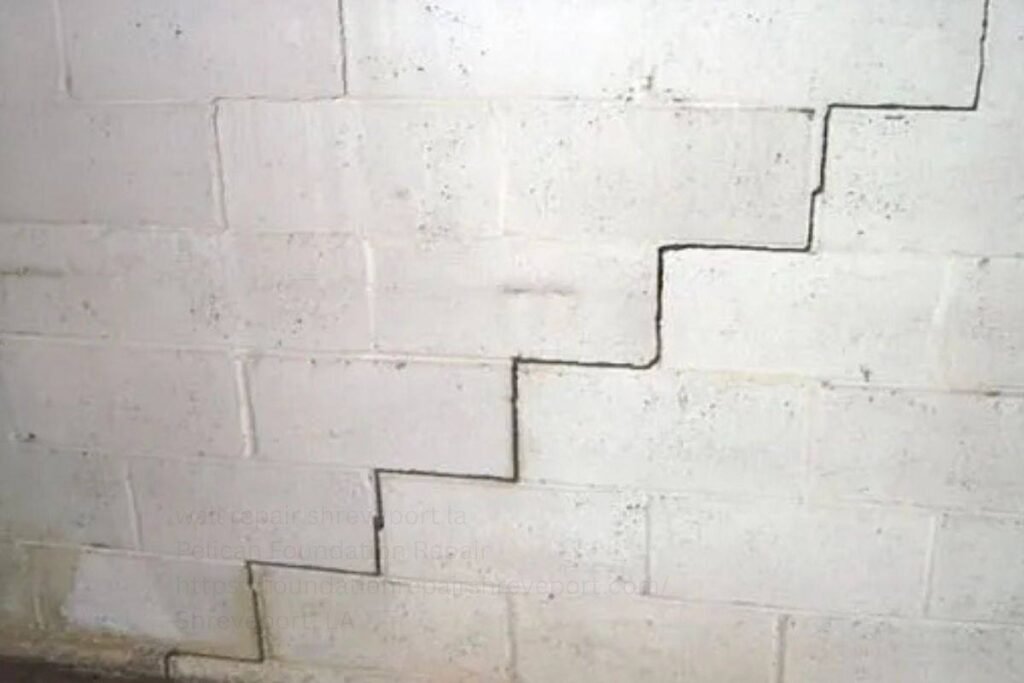
Foundation crack repair in Bossier City, LA starts with the crack itself: a thin vertical crack is often just shrinkage, while a wide horizontal crack or a stair-step crack through the mortar means the wall is moving. The first kind gets sealed with epoxy or polyurethane injection; the second needs a specialist to check whether piers are called for.
Bossier City sits in Bossier Parish, ZIP codes 71111 and 71112, just across the Red River from Shreveport and next door to Barksdale Air Force Base. The same expansive clay that moves houses in Shreveport moves them here too, swelling with every wet spell and shrinking in every dry one. That is why a crack that looks small in spring can look wider by fall.
Most homeowners here spot their first crack the same way: a line on the foundation wall they had never noticed, or a crack in the brick outside that was not there last year. This guide covers what each crack shape means, how injection repairs work, and when a crack is a sign the house needs piers.
Which Foundation Cracks Show Up in Bossier City Homes
Not every crack is a problem, but every crack is a clue. The direction, width, and growth of a crack tell a specialist more than the crack alone. Here is how to read the three shapes seen most in Bossier City.
Vertical Cracks: Usually Shrinkage, Worth Watching
A vertical crack runs straight up and down the wall, and it is the most common crack in a poured concrete foundation. Concrete shrinks as it cures, and that often opens a thin vertical line in the first few years. A hairline vertical crack that never changes width is usually a waterproofing issue, not a structural one. It still needs sealing, because water finds any opening, but the wall is rarely failing.
Horizontal Cracks: The One to Take Seriously
A horizontal crack runs sideways along the wall, and it worries specialists most. It usually means soil pressure is pushing the wall inward from clay that swells after heavy rain. A horizontal crack, especially one near the middle of the wall or one that comes with bowing, is a sign the wall is under real stress. This is the crack that should never wait.
Stair-Step Cracks: Settlement Showing in the Mortar
A stair-step crack zigzags up a block or brick wall, following the mortar joints like a set of stairs. It means one part of the foundation has dropped, and the wall is cracking along its weakest lines. Stair-step cracks here often trace back to clay that dried and shrank under one corner while the other side stayed wet. Our guide to cosmetic cracks vs structural cracks explains how to tell the two apart.
- A thin vertical hairline crack in a poured concrete wall.
- A wide crack you can fit a coin into.
- A horizontal crack running sideways along the wall.
- A stair-step crack zigzagging through mortar joints.
- A crack that keeps growing from one season to the next.
- A crack with water seeping through after heavy rain.
- A crack paired with a sticking door or a sloping floor.
- A crack near a corner where the wall leans or bows inward.
Why Bossier City Clay Cracks Foundations
Bossier City foundations do not crack by accident. They crack because the ground under them moves, and northwest Louisiana clay moves more than most soils. Knowing the cause keeps a repair from failing.
Expansive Clay Under Bossier Parish
The soil under Bossier City is heavy, expansive clay. When it gets wet it swells and pushes against the foundation walls; when it dries out it shrinks and pulls away from the footing. That swell-and-shrink cycle repeats with the seasons, and each cycle works the wall harder. The LSU AgCenter offers guidance on Louisiana soils and moisture swings around homes built on clay.
Red River Weather Swings
Bossier City sits beside the Red River, and the weather here swings hard between wet and dry. A long dry stretch leaves the clay shrunken and cracked, then heavy rain soaks it back up fast. That sudden swing is when cracks most often open or grow wider, and it is why a crack measured in August can look different by November.
Older Neighborhoods and Barksdale-Area Homes
Many homes near Barksdale Air Force Base and in the older neighborhoods off Airline Drive and Barksdale Boulevard were built decades ago, when foundations were poured thinner and drainage was simpler. Those walls have lived through decades of clay cycles, and the cracks show it. Newer homes in 71112 sit on the same clay, so they are not immune.
Epoxy vs Polyurethane Injection: How Cracks Are Sealed
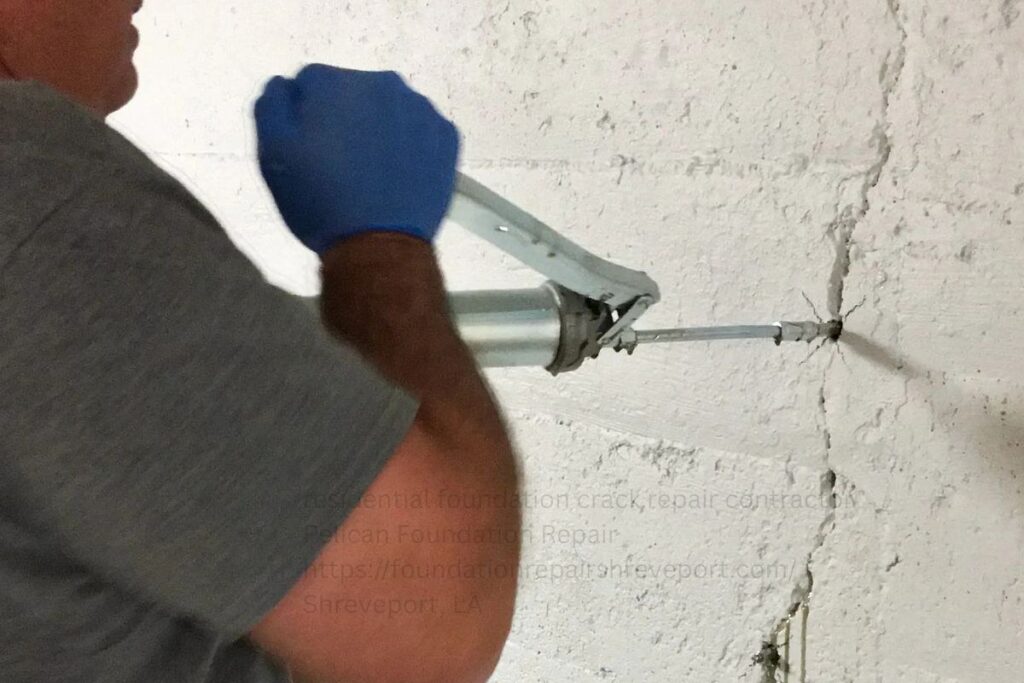
Most non-structural cracks are sealed from the inside with injection, using epoxy or polyurethane. They look similar once the job is done, but they work differently, and picking the wrong one is how a sealed crack starts leaking again.
Epoxy Injection: Bonding the Wall Back Together
Epoxy injection fills a crack with a rigid resin that bonds the two sides of the concrete back together. Once it cures, the repaired section is often stronger than the concrete around it, which makes epoxy the right pick for a dry, stable crack. The wall must be dry, because epoxy does not bond well to wet concrete.
Polyurethane Injection: Sealing the Leaks That Keep Coming
Polyurethane injection fills a crack with a foam that expands as it cures, chasing water through the crack and sealing it from the inside out. It stays flexible after it sets, so it can handle a little movement. That makes it the right pick for a crack that leaks after rain or a wall that still moves slightly with the seasons. Our epoxy vs polyurethane crack injection guide compares the two methods in more detail.
| Method | How it works | Best for | Limit |
|---|---|---|---|
| Epoxy injection | Rigid resin bonds the concrete together | Dry, stable cracks in walls that stopped moving | Needs a dry crack; will not bond when wet |
| Polyurethane injection | Expanding foam seals the crack, stays flexible | Leaking cracks and walls that still move | Does not restore the wall’s original strength |
| Exterior waterproofing membrane | A barrier applied to the outside wall | Cracks that keep leaking after injection | Needs digging beside the wall |
| Carbon fiber straps | Straps bonded to the wall hold it in place | Walls starting to bow inward | Stops bowing; does not lift a corner |
| Steel push piers | Piers driven to firm ground hold the house | Settlement cracks where the footing dropped | A structural job; needs an inspection first |
When a Crack Means Piers Instead of a Patch
Injection seals a crack, but it does not fix the ground under the house. When the crack comes from settlement, the wall will crack again in the same place. Knowing the difference saves a homeowner from paying twice.
Signs That Piers Are Needed
Piers come into the picture when the house itself has moved. A corner that has dropped enough to slope the floor, a stair-step crack that keeps growing after sealing, or a wall that leans inward all point to soil that has given way beneath the footing. If the same crack reopens within a year of being sealed, the movement has not stopped, and the cause is below the wall.
What Piers Do That Injection Cannot
Piers are driven through the shifting clay down to firm ground, and the house is lifted and held on them. That stops the settlement at its source instead of sealing the crack. Steel push piers are the usual choice in Bossier City, because the firm bearing layer sits well below the active clay. Drainage work still matters alongside piers, because clay that keeps swelling and shrinking will keep testing them.
What a Crack Repair Visit Covers in Bossier City
A good crack repair visit starts with the whole house, not just the crack. The specialist reads it alongside the doors, floors, and ground around the home.
The Expert Inspection
During the inspection, the specialist measures the crack, checks whether the wall is bowing or leaning, and walks the house for sticking doors, sloping floors, and gaps at the baseboards. Outside, the specialist looks at the grading, the gutters, and where water gathers after rain. Homeowners in ZIP codes 71111 and 71112 can read more on the Bossier City, LA service area page, and the foundation crack repair service page covers the full range of methods.
The Written Estimate After the Inspection
After the inspection, you should receive a written estimate that names the crack type, the repair method, and the warranty terms. Ask whether the estimate covers injection only or whether piers or drainage work are part of the plan.
What Affects the Cost of Foundation Crack Repair in Bossier City?
The cost of foundation crack repair in Bossier City depends on the crack type, how many cracks need sealing, whether the wall is still moving, and whether piers are part of the plan. A single hairline crack is a smaller job than a bowing wall that needs straps and drainage work. No honest figure exists before the wall is seen. Your exact figure comes from a written estimate after an expert inspection.
Two things push the figure up most: the number and size of the cracks, and whether the repair is a seal or a structural fix. A wall with several leaking cracks costs more than one with a single dry hairline, and a job that needs piers costs more than injection alone. The FEMA website offers guidance on water damage and foundation protection for homes in low-lying areas.
Keeping Cracks From Coming Back After the Repair
Sealing a crack is only half the job. The other half is keeping the clay around the house steadier, because a wall that keeps cycling through wet and dry will crack again.
- Keep gutters clear and downspouts running away from the house.
- Walk the yard after heavy rain and look for puddles against the walls.
- Keep the soil grade sloping away from the walls.
- Fix plumbing leaks fast, since a slow leak swells the clay.
- Water the soil evenly in long dry spells so it does not shrink away.
- Recheck repaired cracks twice a year, after the wet and dry seasons.
- Watch doors and floors for new sticking or sloping.
- Keep trees and large shrubs from rooting too close to the house.
The Pelican Foundation Repair homepage shows the full range of services, and the services page lists every repair method available.
Frequently Asked Questions
How do I know if a foundation crack in my Bossier City home is serious?
A crack is serious when it is wide, horizontal, stair-stepped, growing, or paired with sticking doors and sloping floors. A thin vertical hairline that never changes is usually just shrinkage. When in doubt, book an expert inspection.
What causes foundation cracks in Bossier City, LA?
The main cause is the expansive clay under Bossier Parish, which swells when wet and shrinks when dry, pushing and pulling on the foundation with every season. Poor drainage, plumbing leaks, and nearby tree roots make it worse.
Is epoxy or polyurethane better for foundation crack repair in Bossier City?
Epoxy is better for a dry, stable crack because it bonds the concrete and restores strength. Polyurethane is better for a leaking crack or a wall that still moves a little, because the foam expands to chase the water.
How long does foundation crack repair take in Bossier City?
Most injection repairs take a few hours, and the crack can be sealed in a single visit. A job that needs carbon fiber straps or piers takes longer, since the wall must be prepared and the work done in stages.
Will a repaired foundation crack open up again?
A properly sealed crack in a stable wall should stay sealed, but one can reopen if the wall keeps moving. That is why the inspection matters: if the cause is settlement or clay movement, the repair plan has to address the cause, not just the crack.
How much does foundation crack repair cost in Bossier City, LA?
The cost depends on the crack type, how many cracks need sealing, and whether piers are part of the plan. Your exact figure comes from a written estimate after an expert inspection.
When should I book a foundation crack repair inspection in Bossier City?
Book one when a crack is wide, horizontal, or stair-stepped, when it keeps growing, when water seeps through it, or when doors start sticking.
Pelican Foundation Repair
6118 Fairfield Ave, Shreveport, LA 71106, USA
318-585-2003
https://foundationrepairshreveport.com/