 Skip to main content
Foundation Inspection Cost: What Shreveport Homeowners Actually Pay
A foundation inspection costs nothing at Pelican Foundation Repair — ours are always free, with written findings and a no-pressure quote. Elsewhere, paid foundation inspections commonly run $300–$500, depending on the inspector, the home’s size, and whether you get an engineer’s report. Free or paid, every inspection should cover the same core checks.
Pelican’s foundation inspections are always free — a thorough paid inspection elsewhere typically runs $300–$500, so never pay before you know exactly what you’re getting.
Call (318) 585-2003 – Free Inspection
📊 Foundation Inspection Cost at a Glance
$0
What our inspection costs — free
Written
Report with photos included
No pressure
Honest answers, no obligation
How Much Does a Foundation Inspection Cost?
Let’s answer the money question first, because it is the whole reason you are here.
At Pelican Foundation Repair: $0. Always. There is no catch, no obligation, and no “free inspection” that turns into a high-pressure sales pitch in your living room. When you book a free foundation inspection, we come out, we look at your foundation thoroughly, we tell you what we found in plain language, and if work is needed, we give you a written quote. If nothing is wrong, we tell you that too — and we leave.
Elsewhere in the industry: commonly $300–$500. Some companies charge a flat inspection fee; structural engineers charge more for a stamped engineering report — a formal document with a professional seal. That matters when a lender, buyer, or court specifically requires an engineer’s letter.
When is paying worth it? For most homeowners, a free inspection from an experienced contractor answers everything that matters: Is my foundation moving? What is causing it? What will it cost to fix? You only need the paid engineering route when someone specifically requires a stamped report.
Watch out for companies that advertise a “free inspection” then add a “trip fee” or “diagnostic fee,” or waive the fee only if you sign that day. That is not a free inspection. Ours is free whether you hire us or not — ask any contractor to confirm the same, in writing.
What a Proper Foundation Inspection Includes
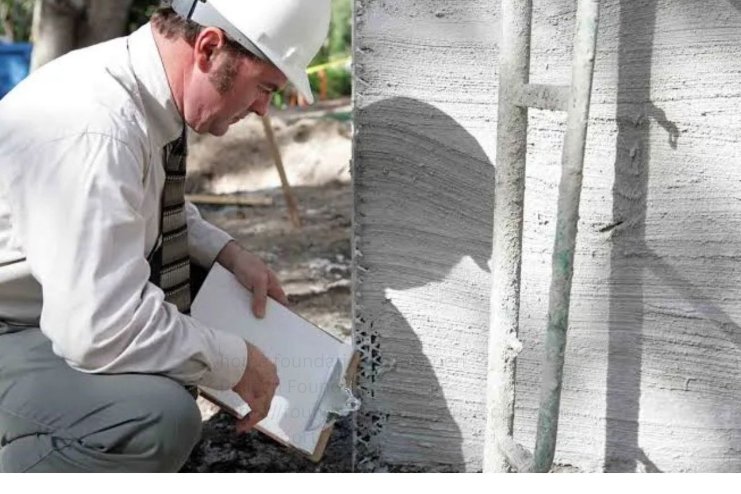
Whether it is free or paid, a foundation inspection should be a real investigation, not a five-minute glance. Here is what a thorough inspection looks like when our crew does one — this is the same checklist whether the home is a 1920s pier-and-beam in Highland or a new slab in Benton.
It starts with your story. We ask what you have noticed — sticking doors, cracks, sloping floors, crawl space water — and when it started. Your observations tell us where to look first.
Then the exterior walk. We circle the house checking foundation walls and slab edges for cracks, brick veneer and mortar joints for stair-step cracking, soil grade, gutters, and downspouts — anywhere water collects or flows toward the house.
Then the interior. We check floors for slope, doors and windows for sticking or gaps, and walls and ceilings for cracks — especially diagonal cracks above door frames, classic settlement signals.
Then below. In a crawl space, we check piers, beams, joists, moisture, and drainage. For slab homes, we check accessible plumbing areas and the perimeter.
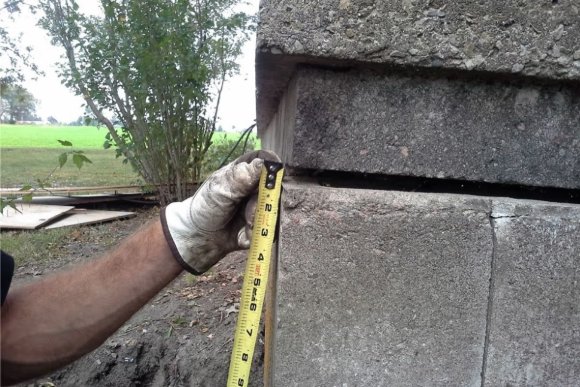
Then elevation readings. This separates a real inspection from a guess. Floor elevation measurements show exactly where the foundation has dropped or heaved and by how much — a sixteenth of an inch is normal; an inch or more of differential tells a story.
Then the report. We put it all together: what we found, what it means, what we recommend, and what it costs. Written, in plain language, with photos. You keep it whether you hire us or not. Our checklist lines up with the structural evaluation guidelines published by professional inspection organizations like InterNACHI.
Call (318) 585-2003 – Free Inspection
What We Check Outside Your Home
The outside of your house tells us about water, and water tells us about foundations. In Shreveport, most foundation trouble starts with moisture working against Louisiana’s expansive clay soils — too much water in the wrong place, or too little of it after a dry summer.
Grading comes first: soil should slope away from the house, not toward it. In older neighborhoods like Broadmoor and South Highlands, years of settling often reverse the grade, funneling every rainstorm straight to the foundation walls — creating the hydrostatic pressure that pushes walls inward.
Next, gutters and downspouts. A downspout dumping roof water two feet from the foundation is one of the most common causes of localized settlement we find — often fixed with a simple extension, though years of concentrated water can do real damage.
We examine brick veneer and mortar joints for stair-step cracks, slab edges and walls for cracking, and driveways and patios — concrete tilted toward the house is both a trip hazard and a water director.
If the inspection turns up drainage problems driving the foundation issues, that is a separate fix — but it is often the fix that makes everything else last. Our drainage correction work addresses exactly this: getting water away from the house so the foundation stops moving.
What We Check Inside Your Home
Inside, we are looking for the symptoms that the foundation is telling on itself.
Doors and windows are the early warning system. A door that now sticks, or a window with a new gap at the top, often means the frame racked because the foundation moved. We check them all and note which side of the house they are on — the pattern matters.
Floors come next: we check for slope, bounce, or softness signaling failing piers or damaged joists — and in slab homes, cracked tile or separations at the baseboard.
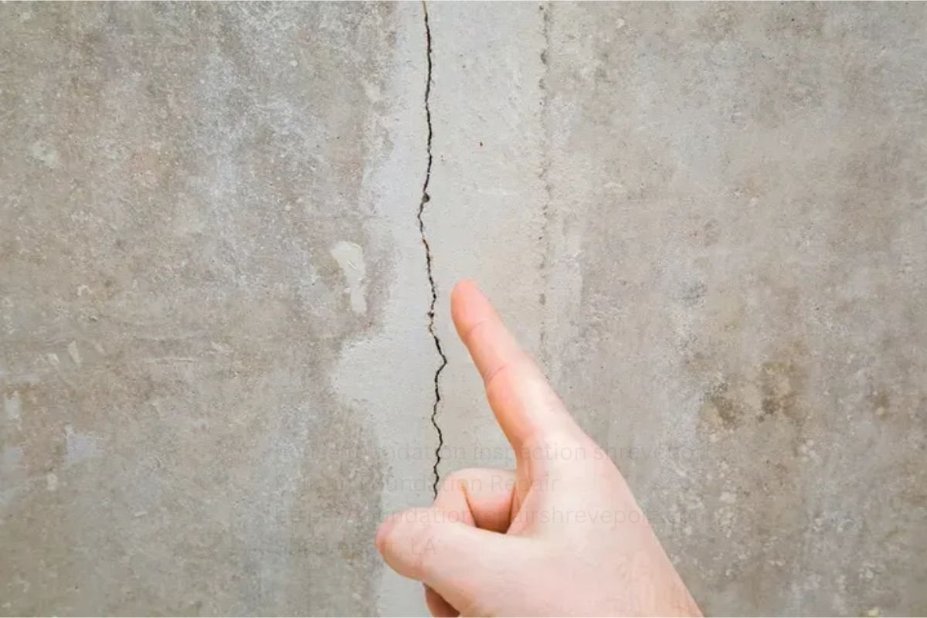
Then walls and ceilings. Hairline cracks in drywall at the corners of doors and windows are common and often just cosmetic — houses shift a little with the seasons. But diagonal cracks wider than a hairline, cracks that run from floor to ceiling, or cracks paired with nail pops across a whole room get our full attention. (If those cracks trace back to the foundation wall itself, that is foundation crack repair territory.)
We also ask about musty smells or rooms that always feel damp — in Shreveport’s climate, that often points to crawl space moisture feeding up into the living space.
Call (318) 585-2003 – Free Inspection
The Crawl Space Check: Where Hidden Problems Live
A huge share of Shreveport’s housing stock sits on piers and beams — especially in older neighborhoods and out in the parish — and the crawl space is where the real story is. Homeowners almost never go down there, so problems can develop unseen for years.
This is also where the “how to detect hidden foundation problems” question gets its answer. Here is what we find under houses, and what it means:
Standing water means drainage is failing. Even a thin layer under the house raises humidity, feeds mold, and softens soil around piers.
Mold and mildew on joists show up as black, green, or white staining, with a damp, earthy smell that hits you first. Mold does not just smell bad; it eats wood over time.
Sagging or damaged beams and joists. We check every beam for rot, insect damage, and sagging between piers. A beam that has dropped even an inch can telegraph all the way up to a sloping kitchen floor.
Failing piers. Brick piers crumble. Concrete block piers shift. Wood posts rot at the ground line. We check each one — and in a typical Shreveport crawl space, there can be dozens.
Falling insulation and vapor barrier damage. Insulation that has fallen or gotten soaked is both a symptom of moisture problems and a cause of higher energy bills.
We photograph everything and show you. Most homeowners are surprised — sometimes relieved, sometimes not — by what is actually down there.
When to Get a Foundation Inspection
You do not need to wait for a crisis. Here are the situations where an inspection is the smart move:
You are buying a home. A standard home inspection touches on the foundation; a specialist goes deeper — elevation readings, crawl space, drainage. In Shreveport’s clay soil, get the foundation checked before you commit anywhere in Caddo, Bossier, Webster, Lincoln, or DeSoto parish.
You are selling a home. Finding out about foundation issues from a buyer’s inspector — mid-negotiation — is the worst possible timing. An inspection beforehand lets you address problems on your schedule or price the home honestly.
You see warning signs. Sticking doors, new cracks, sloping floors, water in the crawl space, gaps around window frames — any of these merit a look. Earlier is always cheaper than later with foundation work.
After extreme weather. Spring storms and summer droughts are the cycle that moves foundations. If your area got hammered or baked and you notice new symptoms, get checked.
It has just been a while. If you own an older home — especially pier-and-beam — and nobody has been under it in years, an inspection is cheap insurance. Remember: ours is free, so “it has been a while” is reason enough.
Homeowners in Red Chute, Haughton, and the growing subdivisions along I-20 call us most often during buying season and after big storms. Both are smart times.
Call (318) 585-2003 – Free Inspection
How Long Does a Foundation Inspection Take?
Most residential inspections take 45 to 90 minutes. A small slab home with easy access might be on the shorter end. A large pier-and-beam home with a tight crawl space, or a property with extensive concerns, takes longer — and that is fine. We would rather be thorough than fast.
What slows an inspection down: cluttered crawl space access, locked gates or outbuildings we need to see around, finished basements or additions where the foundation is hidden, and heavy vegetation against the foundation walls. If you can clear access to the crawl space entry and make sure we can walk the full perimeter, you will speed things along.
One thing that should never happen: a contractor who “inspects” from the driveway in ten minutes and hands you a quote. That is not an inspection; it is a sales call. A real inspection involves getting under, around, and through the house.
Can You Check Your Own Foundation?
Do a first pass yourself: walk the perimeter for new or growing cracks, check doors and windows for sticking, roll a marble on hard floors to find slope, and look for stair-step patterns in brick mortar joints.
Mark any cracks you find with a pencil line at each end and write the date next to it. Check back in a month. If the crack has grown past your marks, it is active — and that is worth a professional look.
But know the limits. You cannot take elevation readings without the right equipment, and you cannot diagnose the cause — a crack is a symptom, and telling soil, water, and structural causes apart is what experience buys you.
That is the real value of a free professional inspection: you get the diagnosis without the guesswork, and without paying for the privilege.
Call (318) 585-2003 – Free Inspection
Frequently Asked Questions
What does a foundation inspection cost?
At Pelican Foundation Repair, foundation inspections are always free — no fee, no obligation, and no strings attached. Elsewhere in the industry, paid foundation inspections commonly run $300–$500, and structural engineers typically charge more for a stamped engineering report. You generally only need a paid engineering inspection when a lender, buyer, or court specifically requires a stamped report.
How long does a foundation inspection take?
Most residential foundation inspections take 45 to 90 minutes. Smaller slab homes with easy access are quicker; larger pier-and-beam homes with tight crawl spaces take longer. Clearing access to your crawl space entry and making sure the full perimeter of the house is walkable will help the inspection go smoothly.
Who should I call for a foundation inspection?
Call a local foundation repair contractor with real experience in your area’s soil — in Shreveport, that means someone who understands expansive clay, high water tables, and the local housing stock. Pelican Foundation Repair offers free inspections across Shreveport, Bossier City, and the surrounding parishes. If you need a stamped engineering report for a real estate transaction or legal matter, ask for a licensed structural engineer.
When should I get a foundation inspection?
Get one when you are buying or selling a home, when you notice warning signs like sticking doors, new cracks, or sloping floors, after seasons of extreme weather, or simply when it has been years since anyone looked. In Shreveport, spring storm season and late summer drought are the two times foundations move most, so inspections after those periods are especially worthwhile.
What happens after the inspection?
You get a written summary of what we found — with photos — plus our recommendation and a straight quote if work is needed. There is no obligation and no pressure. Many inspections end with good news: the foundation is fine, or the issue is minor and just needs monitoring. If work is needed, you will know exactly what and what it costs before deciding anything.
Should I get more than one inspection or quote?
For major work like pier installation, getting a second opinion is smart — and since our inspections are free, there is no cost to comparing. Be wary of any contractor who pressures you to sign the same day, will not put findings in writing, or cannot explain in plain language what is wrong and why their fix addresses it. Our guide to choosing a foundation repair contractor in Shreveport walks through the questions to ask and the red flags to avoid.
Book Your Free Foundation Inspection Today
Here is the bottom line on foundation inspection cost: at Pelican Foundation Repair, it is zero. Free inspections, honest findings, written quotes, no pressure — that is how we have always done it, and that is how we will keep doing it.
If you are in Shreveport, Bossier City, Blanchard, Greenwood, Keithville, Benton, Stonewall, Haughton, Red Chute, Eastwood, Mooringsport, Minden, or Ruston, call us at (318) 585-2003 to schedule yours. It takes less than an hour, it costs nothing, and you will know exactly where your foundation stands.
Pelican Foundation Repair
6118 Fairfield Ave, Shreveport, LA 71106, USA
318-585-2003
https://foundationrepairshreveport.com/