Foundation Inspection in Stonewall, LA: What It Covers and When to Book One
A foundation inspection in Stonewall, LA checks elevation, cracks, and drainage so you know whether your home is holding steady on DeSoto Parish clay or starting to move.
A foundation inspection in Stonewall, LA is an expert visit where a specialist measures floor elevations, maps every crack, checks the crawl space and drainage, and gives you a written report that says what is sound, what needs watching, and what needs repair. The report turns worry into a clear plan.
Stonewall sits in DeSoto Parish, ZIP code 71078, just south of Shreveport along I-49 and US-171, with Keithville to the north and the Mansfield area further south. It is a quiet town of newer subdivisions and older homes alike, and both sit on the same expansive clay that moves houses all over the Shreveport area, swelling when it soaks up rain and shrinking when it dries out.
Most Stonewall homeowners book an inspection for one of three reasons: they are buying or selling a house, they have spotted a new crack or a door that suddenly sticks, or they want to know where their home stands after another wet winter. This guide covers what the inspection looks at, when to book one, and how to read the report.
What a Foundation Inspection Covers in Stonewall, LA
A good foundation inspection in Stonewall, LA looks at the whole house, not just one crack. The specialist reads the floors, the walls, the crawl space, and the ground outside together, because no single clue tells the full story. Here are the ten checks that make up a typical visit.
- Floor elevation readings taken room by room with a level.
- Crack mapping on foundation walls, brick veneer, and interior drywall.
- Door and window checks for sticking, rubbing, or gaps at the frames.
- Crawl space entry and a look at piers, beams, and joists.
- Moisture and standing water checks under the house.
- Grading and drainage check around the outside walls.
- Gutter and downspout check for water dumping near the footing.
- Plumbing leak check where pipes pass through or under the slab.
- Exterior walk for leaning walls, bowing, and soil pulling away.
- Written report with findings, photos, and repair recommendations.
Elevation Readings: How Much Has the House Moved
Elevation readings are the heart of the inspection. The specialist sets up a level and takes readings across the floors in every room, then compares them to find high and low spots. A floor that drops an inch from one side of a room to the other tells a different story than a floor that is flat but cracked. The readings show whether the house has settled evenly or dropped at one corner. Without them, any talk of piers is guesswork.
Crack Mapping: Reading What the Cracks Say
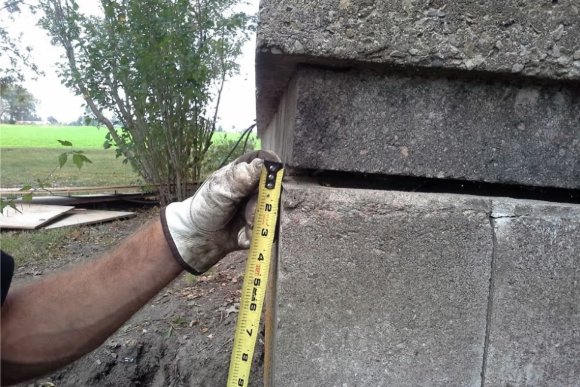
Every crack gets measured, photographed, and noted by location, direction, and width. A thin vertical hairline in a poured wall is often just shrinkage from when the concrete cured. A stair-step crack through the mortar of a brick wall means one part of the house has dropped. A horizontal crack means soil pressure is pushing the wall inward. A crack that is growing between visits is a moving house, while one that has stayed the same for years is usually settled. Homeowners who want more detail can read our guide to what to expect during a foundation inspection before the specialist arrives.
Drainage Check: Where the Water Goes After Rain
Drainage is the third leg of the inspection, and in Stonewall it matters as much as the walls themselves. The specialist walks the yard and checks the gutters, looking at whether the ground slopes away from the house or toward it, and whether water pools against the walls after a storm. Clay that stays wet on one side of a house and dry on the other is the classic recipe for uneven movement. The LSU AgCenter publishes guidance on Louisiana soils and moisture swings around homes built on clay.
When to Book a Foundation Inspection in Stonewall
There is no wrong time to get an inspection, but some moments matter more than others. A house that has never been inspected is a question mark, and the longer the question sits, the more expensive the answer can get.
When You Are Buying a Home in Stonewall
Buying a home is the most common reason to book a foundation inspection in Stonewall, LA. A general home inspector will flag a crack or a sloping floor, but a foundation specialist measures it and tells you what it means. That matters most with older homes off US-171, where decades of clay cycles have had time to work. The report gives you facts to take back to the seller: what is sound, what needs a repair, and what should be watched.
When You Are Selling a Home in Stonewall
Sellers book inspections too. A report in hand before listing means no surprises when the buyer’s inspector shows up, and it lets you fix a small issue on your own schedule instead of under a contract deadline. In ZIP code 71078, where buyers compare homes across DeSoto Parish and into Shreveport, a clean inspection report is a quiet selling point. If the report does find movement, you can price the home honestly and avoid a deal falling apart late in the process.
After a Wet Winter or When New Cracks Appear
The third moment is the one most homeowners wait for, and it is the one that should not wait. A wet winter soaks the clay, then a dry spring shrinks it back, and that swing is when new cracks open and old ones grow. If a crack appears where there was none, if a door that used to swing fine now sticks, or if a floor starts to slope, book the inspection now. Movement caught early is a smaller job than movement left to run.
What Happens on Inspection Day in Stonewall
An inspection follows a clear path through the house. Here is how a typical visit runs in a Stonewall home.
Inside the House: Floors, Doors, and Walls
The visit usually starts inside. The specialist walks every room with a level, taking elevation readings and noting where the floor rises or falls. Doors and windows get tested for sticking and rubbing, and frames are checked for gaps at the top or the bottom. Walls are scanned for cracks in the drywall, especially around door frames and room corners, where movement shows first.
Outside the House: Walls, Grade, and Gutters
Outside, the specialist walks the full perimeter of the home. Brick veneer and foundation walls are checked for cracks, bowing, and leaning, and the ground is checked for gaps where soil has pulled away from the footing. Gutters and downspouts get a look to see whether water is carried away from the house or dumped beside it. The yard grade is checked too: soil should slope away from the walls, not toward them.
Under the House: The Crawl Space Tells the Truth
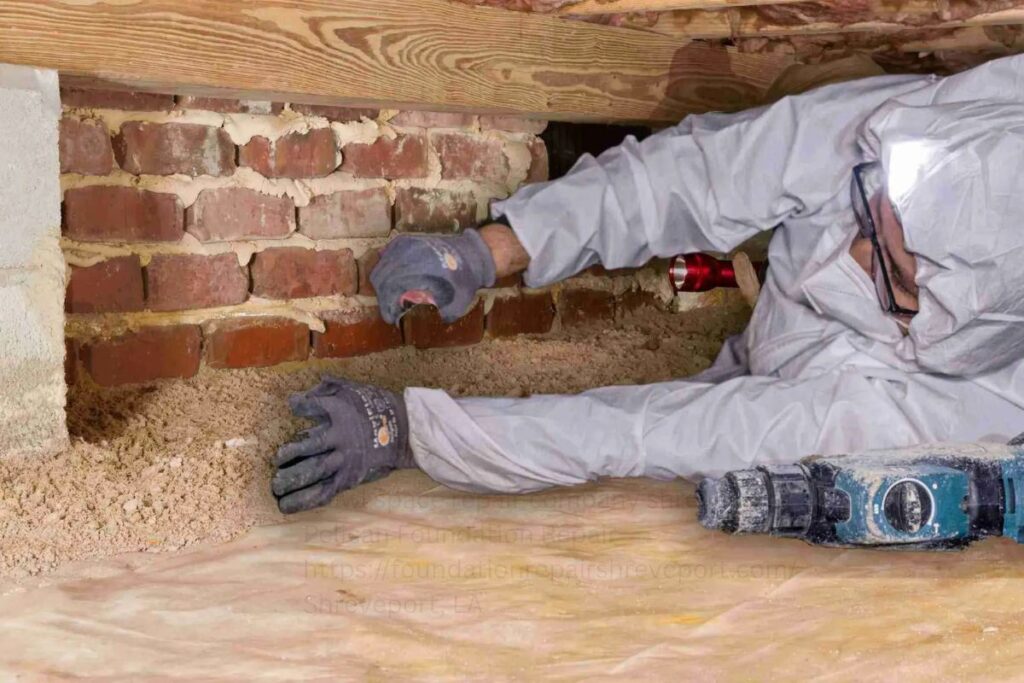
If the home has a crawl space, the specialist goes in. This is where the real story often lives. Piers are checked for leaning, cracking, or sinking into soft soil. Beams and floor joists are checked for sagging, rot, and moisture damage. Standing water, damp soil, and musty air all point to drainage trouble that feeds the movement above.
What the Inspection Report Tells You
The report is the reason the inspection exists. It turns a two-hour visit into a document you can keep, share with a buyer or a lender, and use to plan repairs. Our foundation inspection report explained guide walks through how to read it.
Findings, Photos, and a Clear Verdict
Every report should list what was found, where it was found, and what it means. Elevation readings come with a simple sketch or table showing the high and low points. Cracks come with photos and measurements. Drainage problems come with notes on where the water sits and what should change. The verdict should be plain: the foundation is sound, it needs monitoring, or it needs repair.
| Finding | What it usually means | Typical next step |
|---|---|---|
| Hairline vertical crack, no change | Concrete shrinkage, wall is stable | Seal it and recheck it twice a year |
| Stair-step crack in brick or block | One part of the house has settled | Get a repair plan with pier options |
| Sloping floors, sticking doors | The house has moved unevenly | Compare elevation readings to past visits |
Repair Recommendations and What Comes Next
After the findings, the report should name the repair options in order of priority. Some findings call for simple fixes, like sealing a crack or regrading a low spot. Others call for structural work, like piers under a settled corner or straps on a bowing wall. The report should say which findings are urgent and which can wait. Qualifying repairs from Pelican Foundation Repair are backed by a 20-year structural warranty, stated plainly in the estimate.
What Affects the Cost of a Foundation Inspection in Stonewall?
The cost of a foundation inspection in Stonewall depends on the size of the home, whether it has a crawl space or a slab, and how reachable the foundation is. A small slab home with easy access is a shorter visit than a large pier-and-beam home with a tight crawl space. A home with several cracks takes longer to document than one with a single hairline crack.
No honest figure exists before the home is seen, and your exact figure comes from a written estimate after an expert inspection. The same is true of any repair the inspection finds: the cost depends on what is moving, how far it has moved, and whether the fix is a seal, a drainage job, or piers. The FEMA website offers guidance on water damage and foundation protection for homes in low-lying areas. Homeowners in nearby Minden can compare notes in our foundation inspection guide for Minden, LA.
Keeping Your Stonewall Foundation Steady After the Inspection
An inspection is a snapshot, not a cure. What you do after it decides whether the next snapshot looks better or worse. The habits below keep a sound foundation sound through the wet and dry seasons.
- Keep gutters clear and downspouts running well away from the house.
- Walk the yard after heavy rain and look for puddles against the walls.
- Keep the soil grade sloping away from the foundation on all sides.
- Water the soil evenly in long dry spells so it does not shrink away from the footing.
- Recheck any mapped cracks twice a year, after the wet and dry seasons.
- Watch doors and floors for new sticking or sloping between visits.
Stonewall homeowners can find the full range of services on the services page, and the Stonewall, LA service area page covers what Pelican Foundation Repair does in ZIP code 71078. The foundation inspection service page lays out the visit in full.
Frequently Asked Questions
How much does a foundation inspection cost in Stonewall, LA?
The cost depends on the size of the home, whether it has a crawl space or a slab, and how reachable the foundation is. Your exact figure comes from a written estimate after an expert inspection.
How long does a foundation inspection take in Stonewall?
Most inspections take a couple of hours, depending on the size of the home and whether the crawl space is reachable. The written report follows within a few days.
What does a foundation inspection cover in Stonewall, LA?
It covers floor elevation readings, crack mapping, door and window checks, a crawl space look at piers and beams, moisture checks, and drainage and grading around the outside walls.
Do I need a foundation inspection before buying a home in Stonewall?
Yes. A general home inspector flags problems, but a foundation specialist measures them and tells you what they mean, so you know what a repair involves before you sign.
What causes foundation problems in Stonewall, LA?
The main cause is the expansive clay under DeSoto Parish, which swells when wet and shrinks when dry, pushing and pulling on the foundation with every season. Poor drainage, plumbing leaks, and tree roots make it worse.
Will the inspection report tell me if I need piers?
Yes. The elevation readings and crack map show whether the house has settled and where, and the report names the repair options in order of priority, including piers when a corner has dropped.
How often should I get a foundation inspection in Stonewall?
Book one when you buy or sell, when a new crack appears, when doors start sticking, or after a wet winter. A home with a known issue should be rechecked once a year.
Pelican Foundation Repair
6118 Fairfield Ave, Shreveport, LA 71106, USA
318-585-2003
https://foundationrepairshreveport.com/