 Skip to main content


Is Foundation Repair Tax Deductible? What Louisiana Homeowners Should Know
Foundation repair on your personal Louisiana home is generally not tax deductible, though it may increase your cost basis. Rental properties follow different rules.
Is foundation repair tax deductible? For most Louisiana homeowners, the short answer is no — repairs to your personal residence generally cannot be deducted as an expense. But the money can still help later by increasing your home’s cost basis, which may lower the tax you owe when you sell.
And if you own rental property, the rules look very different — we will get to that below. But first, one honest disclaimer: we fix foundations, we are not tax professionals. This article is general information to help you ask smarter questions — it is not tax advice, and tax rules change. Always confirm your situation with a licensed tax professional or CPA before making decisions based on taxes.
The Short Answer for Your Personal Home
If the house you are repairing is the one you live in, the IRS generally treats foundation repair the way it treats most home maintenance: it is a personal expense, and personal expenses are not deductible. Fixing a leaking roof, repainting the siding, or stabilizing a settling foundation in Broadmoor all fall in the same bucket. It does not matter that the repair was necessary, expensive, or urgent — necessity does not create a deduction.
This surprises a lot of homeowners, because a $12,000 pier job feels like it ought to count for something. And in a way, it does — just not as a yearly deduction. The key concept is cost basis, which we will explain below. The other thing to know: there is no special IRS carve-out for Louisiana’s clay soil or our drought-then-deluge weather, even though those are exactly what keep Shreveport-area foundations moving. Fair or not, the rules do not care why your foundation failed.
One narrow exception worth mentioning: if part of your home is used regularly and exclusively as a home office that qualifies for the home office deduction, a portion of home expenses can sometimes be allocated to the business use. Whether foundation repair qualifies in that calculation is a question for your CPA — do not assume it does.
How Foundation Repair Can Still Help Your Taxes: Cost Basis
Here is the part most homeowners miss, and it is genuinely good news. When you sell your home, you generally owe tax on the profit — the sale price minus your cost basis. Your cost basis starts with what you paid for the house, and certain improvements you make over the years get added to it. A higher cost basis means a smaller taxable gain.
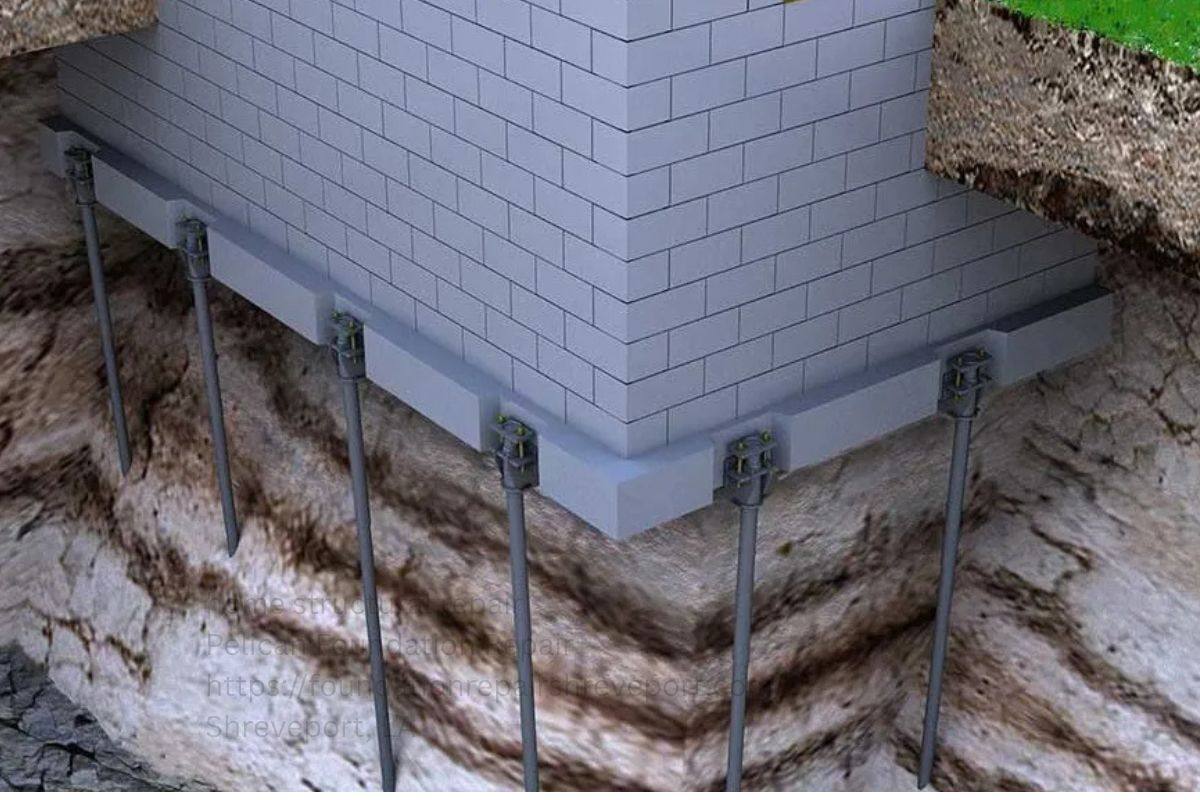
Foundation repair that is a genuine improvement — piers that stabilize and lift a settling foundation, structural repairs that restore the home — is the kind of work that can reasonably be added to your cost basis, according to general IRS guidance on home improvements. A $10,000 pier installation in your Bossier City home today could mean $10,000 less in taxable gain when you sell years from now. That is not a deduction this April, but it is real money later.
The critical habit: keep your paperwork. Save the contract, the paid invoice, and the warranty documents in one place — a folder, a scanned file, whatever you will actually find in ten years. When you sell, you (or your tax preparer) will need to document every improvement that raised your basis. We give every Pelican Foundation Repair customer detailed written documentation of the work performed, which makes this easy. For the IRS’s own general guidance on what counts as a home improvement, irs.gov publishes homeowner tax topics that are worth reading before you sell.
Rental Property: The Rules Flip
Own a rental in Highland, Cedar Grove, or over in Bossier City? The tax picture changes completely. Repairs to rental property — work that keeps the property in good operating condition, like fixing a settling foundation so the house stays rentable — are generally treated as ordinary business expenses and can typically be deducted in the year you pay for them.
The wrinkle is the repair-vs-improvement line. The IRS distinguishes between a repair (maintaining the property) and an improvement (making it better than it was, restoring it, or adapting it to a new use). A full pier installation that lifts a house back to level can land on the improvement side, which generally means depreciating the cost over time rather than deducting it all at once. Where your specific job falls depends on the facts, and this is exactly the kind of judgment call a CPA earns their fee on.
If you are a landlord in Caddo or Bossier parish weighing a foundation job, get the detailed written scope from your contractor first — pier count, method, what was restored — and hand it to your tax preparer. Good documentation makes their job easier and your return more defensible. And if you are comparing how to pay for the work, our guides to foundation repair financing in Shreveport and foundation repair payment options lay out the choices in plain language.
Casualty Losses, Insurance, and Louisiana Storms
Every few years a Louisiana homeowner asks us: our foundation cracked after that huge storm — can we claim a casualty loss? It is a reasonable question, especially after the kind of spring deluges that flood streets from South Highlands to Haughton. But the bar is high. Casualty loss deductions generally require sudden, unexpected damage from a specific event — and since recent tax law changes, they are generally limited to federally declared disaster areas, with additional thresholds to clear.
Gradual settlement from our shrink-swell clay — the cause of the vast majority of foundation problems in Northwest Louisiana — is not sudden damage, so it does not fit the casualty mold. If a burst pipe or a specific storm event damaged your foundation and you are in a declared disaster zone, talk to your CPA promptly, because casualty claims have strict documentation and timing rules. For everyone else, the cost-basis route described above is the realistic tax benefit.
One related note: if your insurance paid for part of the repair, you cannot also add the reimbursed amount to your cost basis. Only your out-of-pocket spending counts. Keep the insurance paperwork with your repair records so the numbers stay clean.

Repairs vs. Improvements: Why the Label Matters
You will hear the words “repair” and “improvement” a lot in tax conversations, and they are not interchangeable. In plain terms:
- A repair keeps your home in its normal working condition — patching a crack, sealing a joint, fixing what broke. For your personal home, repairs are not deductible, and they generally do not add to cost basis either.
- An improvement makes the home better, restores it, or extends its life — a full pier installation that re-levels a settled house, structural reinforcement of failing walls. Improvements to a personal home are not deductible either, but they generally do add to your cost basis.
- For rental property, the same labels decide timing: repairs are usually deducted right away, while improvements are generally depreciated over a period of years.
| Foundation Work | Usually Treated As | Personal Home (General) | Rental Property (General) |
|---|---|---|---|
| Hairline crack injection (maintenance) | Repair | Not deductible | Usually deductible in the year paid |
| Full pier installation to re-level the home | Improvement | Not deductible; may add to cost basis | Usually depreciated over years |
| Crawl space encapsulation | Improvement | Not deductible; may add to cost basis | Usually depreciated over years |
| Drainage correction / regrading | Often an improvement | Not deductible; may add to cost basis | Depends on scope — ask your CPA |
Again, this is general information, not a ruling on your return — the repair-vs-improvement line turns on the facts of your specific job.
Where foundation work lands depends on the scope. Injecting two hairline cracks looks like a repair. Installing 20 steel piers to lift and stabilize a sinking slab in Stonewall looks like an improvement. Most of the structural work we do at Pelican Foundation Repair falls on the improvement side — which is exactly why keeping that documentation matters for your future sale.
What Louisiana Homeowners Should Actually Do
Forget trying to engineer a deduction — for a personal home, there usually is not one to find. Instead, do the three things that genuinely protect your money:
- Fix the foundation properly, once. A correctly engineered pier job with a 20-year structural warranty on qualifying repairs beats a cheap patch that fails and has to be redone. The tax benefit only helps if the repair itself was sound.
- Keep every record. Contract, invoice, proof of payment, warranty, and any engineering notes — filed where you will find them at sale time. This is the paperwork that turns your repair into cost-basis savings later.
- Talk to a CPA before you sell, not after. A 30-minute conversation with a Louisiana tax professional when you list the house can surface basis additions you forgot — the foundation, the roof, the HVAC — and make sure you claim everything you are entitled to.
And if the numbers feel overwhelming, remember the order of operations: first get the foundation fixed right, then sort the paperwork. A free inspection from Pelican Foundation Repair — Monday–Saturday, 8:00 AM–6:00 PM — gives you a written scope and price you can hand straight to your tax preparer. Call 318-585-2003 to schedule.
Frequently Asked Questions
Is foundation repair tax deductible on a personal home?
Generally, no. The IRS treats foundation repair on the home you live in as a personal expense, which is not deductible. However, the cost of qualifying improvements can generally be added to your home’s cost basis, which may reduce the tax you owe when you sell. Confirm your situation with a CPA.
Can foundation repair increase my home’s cost basis?
Generally, yes, when the work counts as an improvement rather than a simple repair — for example, a pier installation that stabilizes and re-levels the foundation. Keep your contract, paid invoice, and warranty paperwork so you can document the added basis when you sell.
Is foundation repair deductible on a rental property?
Often, yes, but it depends on whether the IRS views the work as a repair or an improvement. Routine repairs to a rental are generally deductible in the year paid; improvements are generally depreciated over time. A Louisiana CPA can classify your specific job based on the contractor’s written scope.
Can I claim a casualty loss if a storm damaged my foundation?
Possibly, but the bar is high. Casualty losses generally require sudden damage from a specific event in a federally declared disaster area, and gradual settlement from clay soil does not qualify. If you think your situation fits, talk to a tax professional quickly — these claims have strict rules and deadlines.
Does it matter that Louisiana soil caused my foundation problem?
Not for tax purposes. The IRS does not have special rules for shrink-swell clay or our drought-then-deluge weather pattern. The cause of the damage does not change whether the expense is deductible — what matters is whether it is your personal home or a rental, and whether the work was a repair or an improvement.
Can I deduct foundation repair for a home office?
Sometimes a portion can be allocated if you claim a qualifying home office deduction, but the rules are narrow and the home office must meet strict IRS requirements. Do not assume foundation work qualifies — ask your tax preparer to run the numbers for your specific situation.
What records should I keep from my foundation repair?
Keep the signed contract, the paid invoice, proof of payment, the warranty documents, and any inspection or engineering notes. Store them where you will find them years from now — these are the records that support your cost-basis claim when you sell the home.
Should I talk to a CPA before or after the repair?
Both can help, but the most valuable conversation happens before you sell the house, when your preparer totals up every improvement that raised your basis. Before the repair, a quick call can also clarify whether your property — especially a rental — has any special considerations. This article is general information, not tax advice.
Pelican Foundation Repair
6118 Fairfield Ave, Shreveport, LA 71106, USA
318-585-2003
https://foundationrepairshreveport.com/