 Skip to main content

Do Gutters Protect Your Foundation? Downspout Drainage Done Right
Yes — gutters protect your foundation, but only when downspouts carry roof water at least 10 feet from the house. Here’s how to get downspout drainage right.
Yes, gutters protect your foundation — they’re the first line of defense against the thousands of gallons your roof sheds in every storm. But a gutter system only works if the downspouts carry that water well away from the house: at least 4 to 6 feet at a minimum, 10 feet or more on Louisiana clay. Short, clogged, or disconnected downspouts can actually concentrate water against your foundation and do more harm than no gutters at all.
How Gutters Protect Your Foundation
Your roof is a giant rain collector. One inch of rain falling on a 1,000-square-foot roof produces more than 600 gallons of water — and the average Shreveport-area home has a considerably bigger roof than that. Without gutters, all of it pours off the eaves and lands in a trench line right against your foundation.
Gutters intercept that waterfall and downspouts route it to chosen discharge points. Done right, roof water never touches the soil near your footings. That matters enormously on Louisiana’s expansive clay: concentrated water against the foundation saturates the clay, which swells and pushes against walls and footings, then shrinks away in dry weather and lets sections drop. Every wet-dry cycle is a tiny push-pull on your foundation, and gutters exist to keep your roof’s water out of that cycle.
Think of it this way: foundation problems are usually soil-moisture problems wearing a concrete costume. Drainage correction — gutters, downspouts, grading, drains — is moisture management, and it’s the cheapest foundation protection you can buy. A few hundred dollars of downspout extensions can prevent a $3,500–$15,000+ pier job. That’s not a sales line; it’s soil physics.

6 Ways Gutters and Downspouts Fail Foundations
Most homes have gutters. A surprising number of them have gutters that are quietly working against the foundation. Walk your house in the next rain and check for these six failures:
1. Clogged gutters that overflow like waterfalls
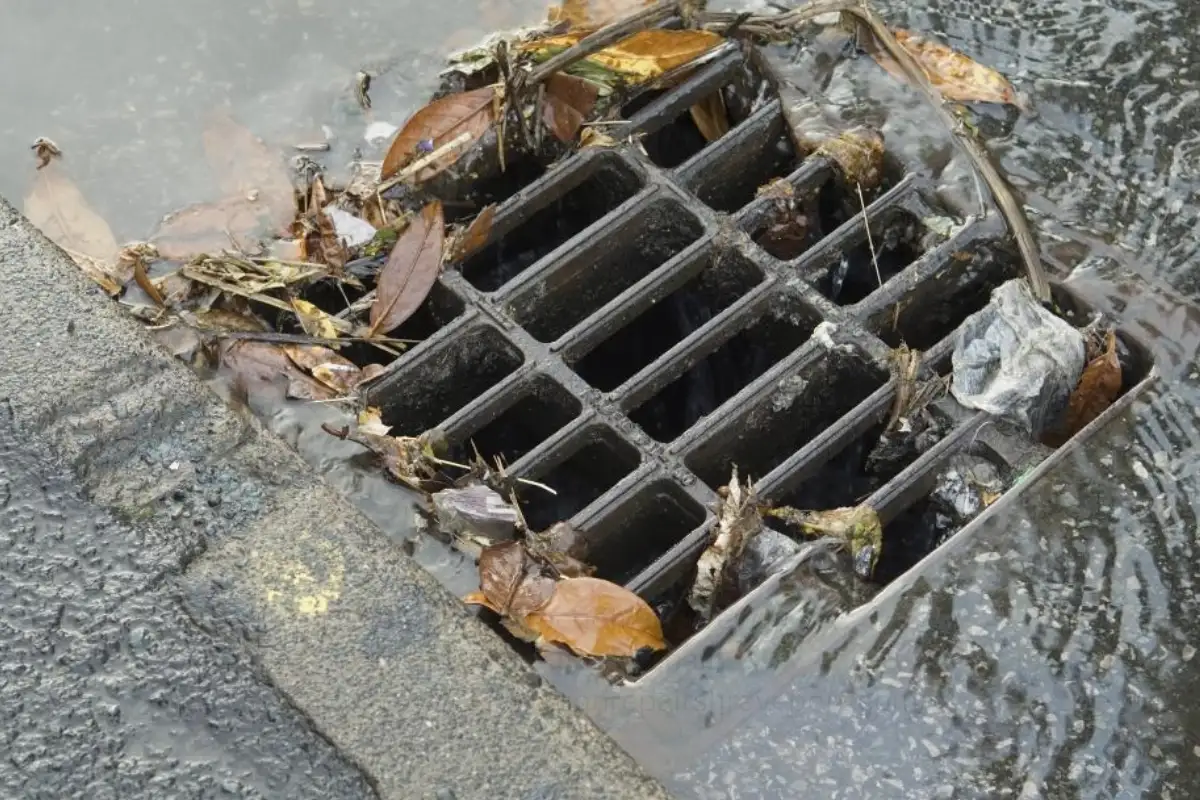
Pine needles, oak leaves, and roof grit pack gutters solid — and in northwest Louisiana, the pine straw never really stops. A clogged gutter doesn’t just fail to collect water; the overflow pours over the edge in exactly the concentrated stream the gutter was meant to prevent. If water sheets over your gutters during rain, cleaning comes before any other drainage project.
2. Downspouts that end at the foundation
The most common failure we see: a downspout that drops water right at the slab edge, sometimes through a decorative splash block that only moves it two feet. On clay soil, that’s a direct injection of hundreds of gallons against your footings every storm. A downspout ending within a few feet of the house is barely better than no downspout at all.
3. Disconnected or missing extensions
Extensions get kicked off by mowers, crushed by cars, or removed during yard work and never replaced. Every disconnected extension is a downspout ending at the foundation again. Check yours after every mowing season — it takes ten seconds per downspout.
4. Negative grading that sends water back
Even a perfect downspout loses if the yard slopes toward the house. Soil settles over the years, mulch beds build up against the siding, and flower beds get raised — all of it can reverse the original grade. Stand back after rain and watch which way water flows within ten feet of your walls.
5. Underground drains that are clogged or crushed
Buried downspout lines are great until they aren’t. Roots invade them, soil crushes thin-walled pipe, and outlets get buried under mulch. A buried line that’s blocked will back water up and spill it at the foundation — worse than a visible above-ground extension you can see failing. If your buried drains are more than a decade old, run a hose in the top during dry weather and confirm water exits at the far end.
6. Missing gutters on key roof sections
Some homes were built with gutters only on the front, or a porch addition never got them. Every unguttered eave dumps its full share against the foundation below. Partial gutter coverage creates uneven soil moisture — wet on one side, dry on the other — which is precisely the differential condition that cracks slabs.
Downspout Drainage Done Right
Getting downspouts right comes down to three rules: get the water far enough away, keep it moving downhill, and make the system maintainable. Here’s how the options compare:
| Discharge Method | How Far It Carries Water | Best For | Watch Out For |
|---|---|---|---|
| Splash block | 2–3 feet | A temporary or supplemental fix | Not enough distance on clay; only a stopgap |
| Above-ground extension | 4–10+ feet | Most homes; cheap, visible, easy to check | Mower damage; ugly across walkways |
| Buried solid drain line | 10–50+ feet to daylight or a drain | Clean look; crossing patios and driveways | Clogs and crushes silently; needs periodic testing |
| Dry well or catch basin | Disperses water underground away from the house | Lots with no downhill outlet | Clay soils drain slowly; size it generously |
The distance rules that matter
On sandy soil, 4 to 6 feet of discharge distance is often enough. On Louisiana clay, aim for 10 feet or more — clay holds water and wicks it sideways, so “a few feet out” still feeds the soil against your footings. Every downspout should also discharge downhill from the house, never into a low spot that drains back toward the foundation, and never onto a neighbor’s property.
Keep the whole path clear
A downspout system is only as good as its weakest point. Clean gutters twice a year — late fall after the leaves drop and early spring before storm season — and consider gutter guards if pines overhang your roof. At the ground level, make sure extensions stay connected and pointed away, and test buried lines yearly with a hose. Five minutes of maintenance beats five figures of foundation repair.
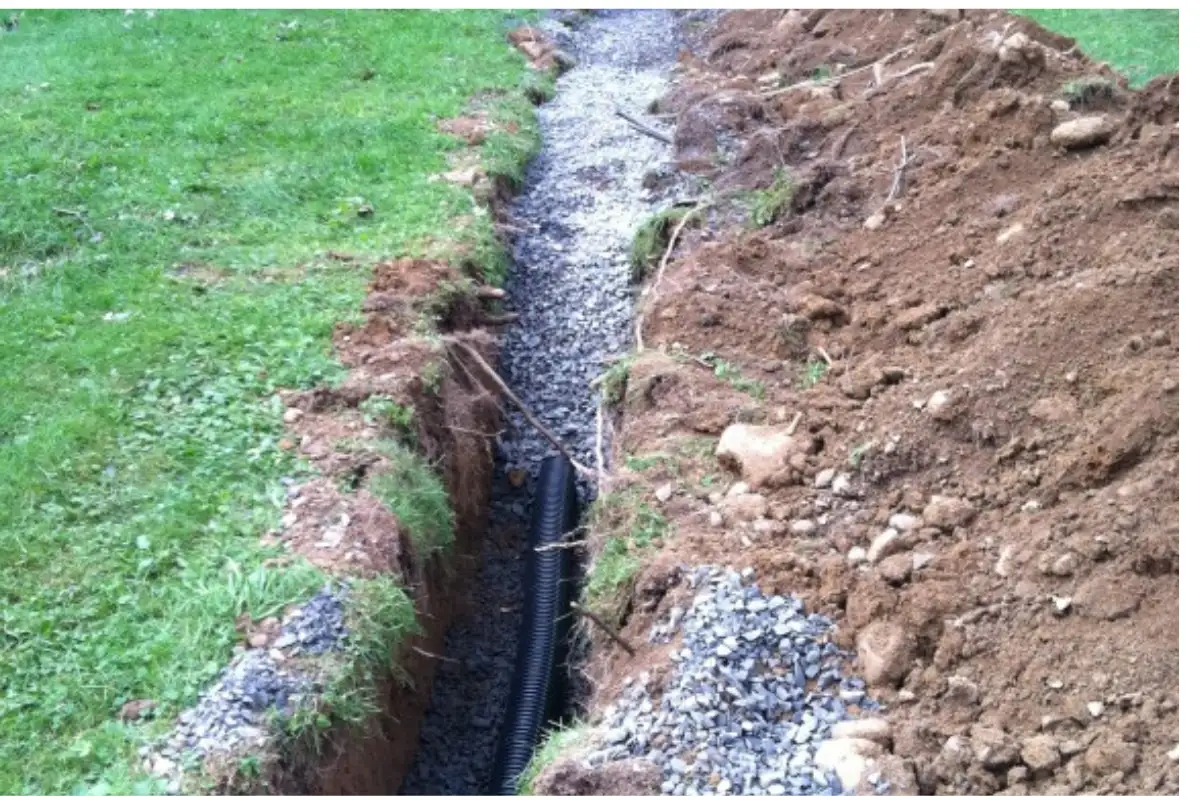
Grading: The Partner Your Downspouts Need
Downspouts control roof water. Grading controls everything else — the rain that falls on your yard, the runoff from your neighbor’s lot, the water your sprinklers add. The rule is simple and specific: soil should slope away from the foundation at least 6 inches over the first 10 feet. That’s enough fall to move water without looking like a hill.
Walk your foundation line with a critical eye. Mulch volcanoes piled against the siding, flower beds edged higher than the surrounding lawn, and soil that’s settled into a moat around the slab all defeat the grade. Pull mulch back so there’s a visible gap between soil and siding, and fill low spots with compacted fill dirt — not just mulch, which holds water like a sponge.
Where grading alone can’t fix a low lot — common near bayous and in the flatter parts of Caddo Parish — surface drains or a French drain system picks up the slack. Our drainage correction service handles exactly these situations, and our guide to signs of drainage problems around your foundation helps you spot them early. The LSU AgCenter also publishes practical guidance on grading and drainage for Louisiana homes.
Your Fall Drainage Checklist for Northwest Louisiana
Fall is the sweet spot for drainage work in northwest Louisiana, and the timing isn’t accidental. The drier fall weather shrinks the clay and opens visible gaps around footings — you can literally see where water will go when the rains return. Fixing downspouts and grading now means the system is ready before winter storms arrive, and contractors can work dry ground instead of mud.
Run through this checklist every October:
- Clean the gutters: after the bulk of leaves drop, clear every gutter and downspout completely. Run water through with a hose to confirm flow.
- Reconnect every extension: walk each downspout and confirm the extension is attached, undamaged, and pointed at least 10 feet from the house.
- Check the grade: look for new low spots or soil settled against the slab after summer storms. Top up with fill dirt where the ground has sunk.
- Test buried lines: feed a hose into each buried downspout drain and confirm water exits at the far end. No flow means a clog to clear before winter.
- Trim back vegetation: cut limbs overhanging the roof that dump leaves into gutters, and pull back shrubs trapping moisture against the foundation.
- Note the soil gaps: where dry-weather gaps have opened between soil and slab, mark them. After you fix the drainage, watch whether they close evenly with rain — uneven closing is an early settlement clue.
One caution for dry falls: don’t overcorrect. Soaking the foundation perimeter with a hose to “close the gaps” can swell the clay unevenly and cause the very heaving you’re trying to prevent. Even, moderate lawn watering is fine; flooding the slab edge is not.
Why fall beats spring for this work
Spring is when drainage problems announce themselves — but it’s also when the ground is saturated and every contractor is booked. Fall lets you fix things on dry ground, on your schedule, before the problem season. An hour with a ladder in October is worth a week of worry in March.
When Drainage Problems Need a Pro
DIY handles gutters, extensions, and minor grading. Call a professional when the problem is bigger than the downspout:
- Water entering the house: seepage through walls, up through slab cracks, or into the crawl space means drainage has already failed — and the foundation may be moving.
- Standing water that never drains: if water ponds against the foundation for days after rain, the grade or the soil needs engineered help, not just a longer extension.
- Cracks appearing alongside drainage issues: stair-step brick cracks, sticking doors, or sloping floors plus poor drainage is a foundation problem wearing a drainage costume. Fix the water and stabilize the structure together.
- A lot that slopes toward the house with no outlet: regrading a lot or installing a French drain system is earthwork — it needs equipment and expertise.
A free inspection sorts out which category you’re in. If it’s a downspout and grading job, you’ll get a straight answer and a fair price — our guide to how to fix poor drainage around your foundation shows what those fixes look like. If the inspection finds the slab or walls have already moved, you’ll get elevation readings and a stabilization plan, not a gutter quote. Start with Pelican Foundation Repair, Monday through Saturday, 8:00 AM to 6:00 PM.
Frequently Asked Questions
Do gutters really protect your foundation?
Yes, when the whole system works. Gutters collect the hundreds of gallons your roof sheds per storm and downspouts route it away from the foundation. But gutters with short, clogged, or disconnected downspouts can concentrate water against the foundation and make things worse.
How far should downspouts be from the foundation?
At minimum 4 to 6 feet, and 10 feet or more on Louisiana’s expansive clay. Clay holds water and wicks it sideways, so short discharge distances still feed the soil against your footings. Always discharge downhill and away from the house.
Are splash blocks enough for downspout drainage?
Usually not, on clay soil. A splash block only moves water 2 to 3 feet from the house, which is not enough where clay holds moisture against the foundation. Treat splash blocks as a supplement to a proper extension, not the whole solution.
How often should I clean my gutters in Louisiana?
At least twice a year: late fall after the leaves drop and early spring before storm season. If pines overhang your roof, check quarterly, since pine straw sheds year round. Clogged gutters overflow exactly where you don’t want water.
Can poor drainage cause foundation cracks?
Yes. Concentrated water against the foundation makes expansive clay swell and push against walls and footings, then shrink away in dry weather. That repeated push-pull cycle is one of the most common causes of foundation movement and cracking in northwest Louisiana.
Should downspouts go underground or stay above ground?
Above-ground extensions are cheaper, visible, and easy to inspect, which makes them the right choice for most homes. Buried lines look cleaner and work well for crossing patios, but they can clog or crush silently, so test them yearly with a hose.
When is the best time to fix drainage around my foundation?
Fall. Drier weather makes soil gaps visible, contractors can work dry ground, and the system is ready before winter rains. Spring is when drainage problems show up, but the ground is saturated and schedules are full.
Pelican Foundation Repair
6118 Fairfield Ave, Shreveport, LA 71106, USA
318-585-2003
https://foundationrepairshreveport.com/