 Skip to main content

How to Repair Structural Damage to a House: A Homeowner’s Guide
Structural damage means the parts holding your house up are failing. This guide explains how professionals repair beams, joists, and walls, what it costs, and when to call for help.
Repairing structural damage starts with a professional inspection to find every weakened beam, joist, wall, and footing. Then the crew stabilizes the house, replaces or reinforces the damaged load-bearing parts, and fixes the cause, like water or soil movement. Most structural repairs are not DIY jobs, and in Shreveport they often start with the foundation.
What Counts as Structural Damage?
Structural damage is any damage to the parts of your house that carry weight. The beams under your floors. The joists holding up the second story. The load-bearing walls. The foundation itself. When one of these weakens, the whole house feels it.
Cosmetic damage is different. A hairline crack in drywall from normal settling is cosmetic. A cracked main beam in the crawl space is structural. The first one needs spackle. The second one needs a professional, and sooner rather than later.
The Load-Bearing Parts of Your Home
Every house has a skeleton, and it works as a team. The foundation carries everything down into the soil. Floor joists span across beams and carry the weight of each level. Load-bearing walls transfer roof and upper-floor weight down to the foundation. Damage anywhere in this chain shifts stress to the other parts, which is why one bad beam can lead to cracked walls upstairs.
In Shreveport’s older neighborhoods like Highland and Cedar Grove, many homes were built with pier-and-beam foundations and old-growth lumber. That wood is tough, but after decades of Gulf humidity and crawl space moisture, even tough wood rots, sags, and gives way.
Why Remodels Keep Uncovering Hidden Damage
Here is a trend worth knowing. The Shreveport Bossier Advocate reported in spring 2026 that new-home construction in the area is running at its slowest pace in years, with local builders shifting 60–70% of their work to remodels, citing a Dallas Fed economist. More remodels on older homes means more opened-up walls — and more nasty surprises hiding inside them.
Contractors across Bossier City and Shreveport are finding the same things: rotted sill plates, termite-chewed joists, and cracked beams that have been quietly failing for years. If you are planning a remodel, get the structure checked before the new kitchen goes in, not after. Finding damage mid-remodel is expensive. Finding it beforehand lets you plan and budget.
The Repair Process, Step by Step
Professional structural repair follows the same order on almost every job. Skip a step and the fix will not hold. Here is how it works from the first phone call to the final walkthrough.
Step 1: A Thorough Inspection
Everything starts with eyes on the problem. A technician walks the interior looking for cracks, sloping floors, and sticking doors. Then comes the important part: the crawl space, basement, or slab perimeter, where the actual structure lives. Moisture readings, wood probing, and floor-elevation measurements turn guesses into facts.
Pelican’s inspections are always free, and they end with a written explanation of what is damaged, what caused it, and what it will take to fix. You should never pay for a structural diagnosis in Shreveport — and you should never accept a quote from someone who would not get under the house.
Step 2: Stabilize Before You Repair
You cannot rebuild on a moving target. If the foundation is still settling, new beams and walls will just crack again. That is why stabilization comes first: piers under a sinking slab, new supports under sagging beams, temporary shoring to hold weight while the real work happens.
Common Structural Repair Methods
Sistering bolts a new beam or joist alongside the damaged one so the pair carries the load together. Full replacement removes the failed member and installs new lumber or engineered wood. Epoxy injection bonds cracked concrete back together. Wall anchors and steel bracing straighten and hold bowing walls. Each method fits a different kind of damage, and most jobs use more than one.
Beams, Joists, and Wall Rebuilds: The Core Fixes
Most residential structural repair comes down to three jobs: fixing the wood that carries the floors, fixing the walls that carry the roof, and fixing the foundation everything sits on. Here is what each one involves.
Repairing Beams and Joists
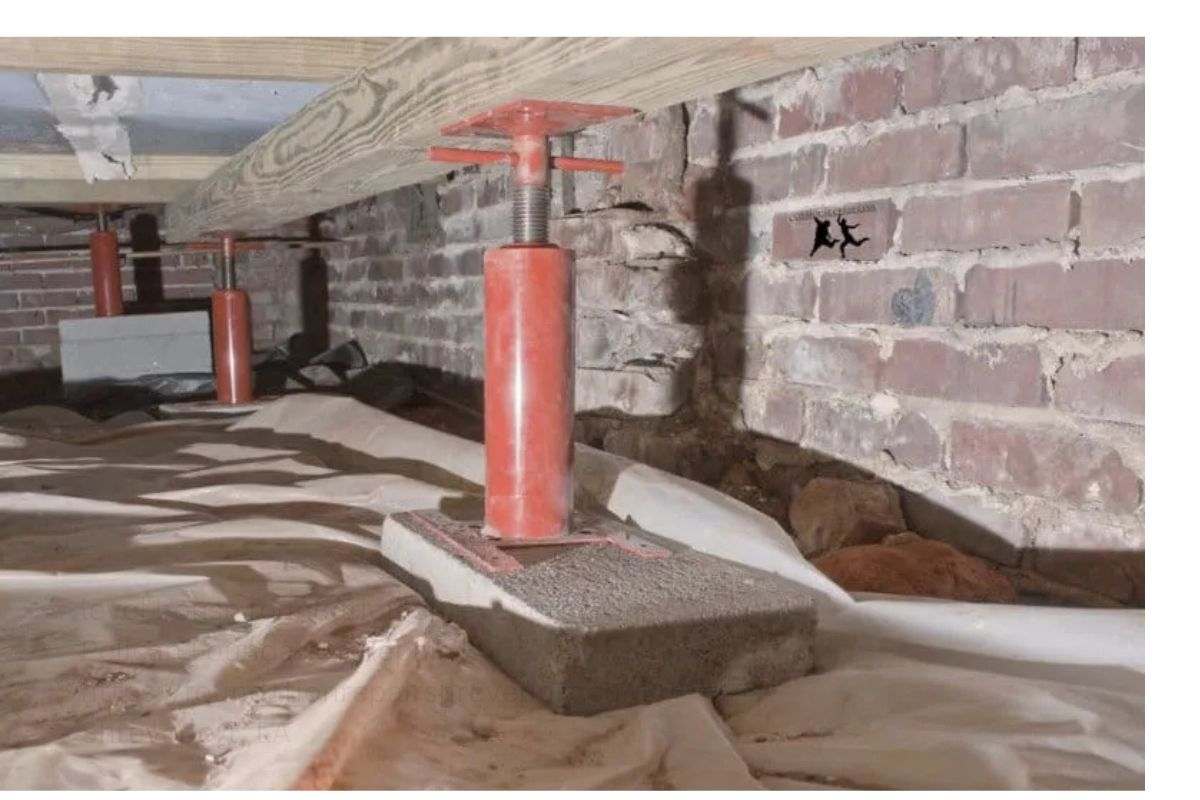
Sagging or bouncy floors usually mean the beams or joists below are failing. The crew jacks the floor back up slowly — rushing this step cracks finishes upstairs — then sisters new lumber to the old members or replaces them outright. Rotted ends get cut back to solid wood. In damp crawl spaces around Cross Lake and the Red River bottoms, pressure-treated lumber or engineered beams resist the next round of moisture far better than plain pine.
Termite damage gets special attention. Subterranean termites love the warm, damp soil of Caddo Parish, and they hollow out joists from the inside. The wood can look fine from the outside while being paper-thin inside. Any structural repair plan here should include a check for active termites before new wood goes in.
Rebuilding and Bracing Walls
Load-bearing walls fail in two common ways in northwest Louisiana. Block and brick walls bow inward under pressure from saturated clay soil. And wood-framed walls rack or lean when the foundation beneath them settles unevenly. Bowing masonry walls get wall anchors or steel bracing. Leaning framed walls get straightened, re-supported, and tied back into the structure.
A partial wall rebuild sounds drastic, but it is routine work for an experienced crew. The damaged section comes down in controlled stages while temporary shoring carries the load above, then the wall goes back up plumb, level, and properly tied to the foundation and the framing.
| Damage found | Typical repair | Why it works |
|---|---|---|
| Sagging or cracked floor joists | Sistering or full joist replacement | Restores the floor’s load capacity |
| Rotted sill plates and beams | Cut out rot, install treated lumber | Removes decay and resists future moisture |
| Bowing foundation walls | Wall anchors or steel bracing | Counteracts soil pressure pushing inward |
| Settling foundation | Steel push piers or helical piers | Transfers weight to stable soil below |
Structural Damage and Your Foundation in Shreveport
Here is the local truth: in Shreveport, structural damage upstairs often starts with the ground downstairs. Our expansive clay soil swells with the heavy spring rains and shrinks through the summer drought. That endless heaving and settling cracks foundations, and cracked foundations let walls shift, which stresses beams and joists. Fix the beam without fixing the foundation and you will be fixing the beam again.
Moisture is the other half of the story. Gulf humidity keeps crawl spaces damp most of the year, and poor drainage lets water pool against the foundation after every big storm. Damp wood rots. Rotted wood cannot carry weight. The LSU AgCenter publishes guidance for Louisiana homeowners on managing moisture and wood decay around homes, and it is worth a read if your crawl space smells musty.
What a Structural Repair Inspection Covers Here
A proper inspection in northwest Louisiana checks the foundation for settlement and cracking, the crawl space for moisture and rotted wood, the beams and joists for sag and termite damage, and the drainage around the home. The home inspection standards published by InterNACHI describe what a thorough structural evaluation should include, which helps you judge whether a contractor’s inspection was complete.
To learn more about our approach, visit our structural repair service page, read what structural repair actually means, and see our guide to rotted structural wood repair. The Pelican Foundation Repair homepage lists every service we provide across Shreveport, Bossier City, and the surrounding parishes.
What Structural Repair Costs in Northwest Louisiana
Structural repair costs swing widely because no two jobs match. A single sistered joist is a small job. A full foundation stabilization with wall rebuilds is a major one. These are the honest ranges we work within.
Foundation crack repairs typically run $400–$1,500. Full pier installations that stabilize a settling foundation usually run $3,500–$15,000 or more. Beam and joist work falls somewhere in between, driven by how many members are damaged, how hard the crawl space is to access, and whether termite damage or rot has spread.
| Repair scope | Typical range | Biggest cost driver |
|---|---|---|
| Crack repair | $400–$1,500 | Crack size and water intrusion |
| Beam or joist repair | Varies by member count | Access, rot extent, lumber type |
| Full pier stabilization | $3,500–$15,000+ | Pier count and depth to stable soil |
What raises the price most is waiting. A cracked beam caught early might need sistering. The same beam left for two more rainy seasons can rot through and take the joists with it. Free inspections exist precisely so small problems stay small.
When to Call a Professional (and When Not to DIY)
Some home repairs are fine on a Saturday. Structural repair is not one of them. If a beam, joist, load-bearing wall, or foundation is involved, the work affects whether your house stays standing. That is not a YouTube-project situation.
Call a professional when you see sagging floors, cracked or rotted beams, bowing walls, stair-step cracks in masonry, or doors and windows that suddenly will not close. Also call before a remodel, during a remodel if something looks wrong, and any time an inspector or appraiser flags a structural concern. Pelican’s inspections are free, so the only thing a call costs you is a few minutes.
What you can do yourself: keep water away from the foundation with clean gutters and proper grading, keep the crawl space ventilated and dry, and walk your home twice a year looking for new cracks. Prevention is the cheapest structural repair there is.
Frequently Asked Questions
How do you repair structural damage to a house?
A professional inspects the home to find all damaged beams, joists, walls, and foundation parts, then stabilizes the structure, repairs or replaces the failed load-bearing members, and fixes the root cause like water intrusion or soil movement. Common methods include sistering joists, replacing rotted beams, installing piers, and bracing bowing walls. Most structural repairs require a trained crew, not a DIY approach.
What are the signs of structural damage in a home?
Look for sagging or bouncy floors, cracked or rotted beams in the crawl space, bowing foundation walls, stair-step cracks in brick or block, doors and windows that stick, and gaps between walls and ceilings. In Shreveport, musty crawl space smells and visible wood rot are common early warnings because of the Gulf humidity. Any of these deserves a free professional inspection.
Can structural damage be fixed, or is the house a total loss?
Almost all residential structural damage can be fixed. Beams can be sistered or replaced, walls can be braced or rebuilt, and settling foundations can be stabilized with piers. A house becomes a true total loss only in extreme cases like catastrophic fire or flood damage. Do not assume the worst until a professional has actually looked at the structure.
How much does it cost to repair structural damage?
It depends on the scope. Foundation crack repairs typically run $400–$1,500, while full pier installations that stabilize a settling foundation usually run $3,500–$15,000 or more. Beam and joist work varies with the number of damaged members and crawl space access. A free on-site inspection is the only reliable way to price your specific situation.
Should I fix structural damage before remodeling?
Yes, always. With Shreveport-area builders shifting most of their work to remodels, opened-up walls are revealing hidden damage every week. Repair the structure first, then remodel around solid bones. Doing it the other way means tearing out new finishes when the old damage finally demands attention, which costs far more than fixing it upfront.
Does homeowners insurance cover structural damage repair?
Sometimes, but it depends on the cause. Sudden events like a fallen tree or a burst pipe are often covered, while gradual damage from soil settlement, rot, or long-term moisture usually is not. Read your policy and talk to your agent before assuming either way. Either way, get the damage documented by a professional inspection as early as possible.
How long does structural repair take?
Small jobs like sistering a few joists can finish in a day or two. Full foundation stabilization with pier installation typically takes several days, and wall rebuilds add more time. Your contractor should give you a written timeline before work starts. Weather, material delivery, and permit inspections can all affect the schedule.
Pelican Foundation Repair
6118 Fairfield Ave, Shreveport, LA 71106, USA
318-585-2003
https://foundationrepairshreveport.com/