 Skip to main content

Vertical Foundation Cracks: When They’re Normal and When They’re Not
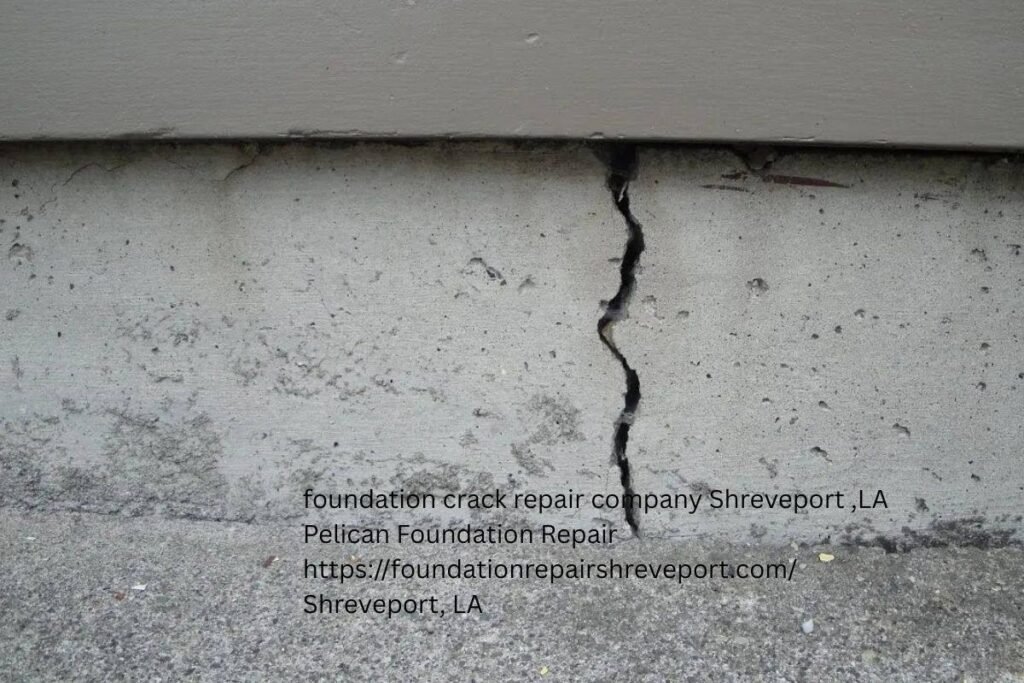
Are vertical foundation cracks normal? Most of the time, yes. Thin vertical cracks — the kind you could barely slide a credit card into — are usually just shrinkage cracks from the concrete curing, and they show up in a large share of homes in the Shreveport area. But not every vertical crack is harmless. Wide cracks, cracks that leak water, or cracks that keep growing can signal foundation settlement or pressure from saturated clay soil, and those deserve a professional look.
The short version: a thin, dry, stable vertical crack is almost always cosmetic and cheap to seal. A crack wider than a quarter inch, one that leaks, or one that is getting bigger needs an inspection — it may mean the foundation is moving. When in doubt, get a free inspection and find out for sure.
Call (318) 585-2003 – Free Inspection
📊 Vertical Cracks at a Glance
< 1/8 inch
Usually harmless shrinkage crack
$500–$1,500
Typical epoxy injection cost
> 1/4 inch
Get a professional inspection
Why Vertical Cracks Form in the First Place
Concrete shrinks as it cures. That is the simple, boring truth behind most vertical foundation cracks. When a foundation wall or slab is poured, the water in the mix evaporates over the first weeks and months, and the concrete contracts slightly. Because the wall cannot shrink freely — it is locked in place by the footing and the surrounding soil — the tension releases as thin vertical cracks, usually in the middle of wall spans or near corners. This is so common that engineers consider a few hairline vertical cracks a normal feature of a poured concrete foundation, not a defect.
Settlement is the other main cause, and it works differently. In the Shreveport area, expansive clay soil in Caddo Parish shrinks during dry summers and swells when the rains return. If one section of the foundation drops even a fraction of an inch more than the section next to it, the wall cracks vertically at the stress point. These cracks look similar to shrinkage cracks at first, which is why width, water, and change over time matter so much — they are how you tell the two causes apart.
A third cause is lateral pressure: saturated clay soil pushing sideways against the wall. This usually produces horizontal cracks or bowing rather than vertical ones, but on slab edges it can show up as vertical cracking too, especially where water pools against the foundation after heavy rain.
The 5-Minute Check: Normal vs. Not Normal
You do not need special tools to sort most vertical cracks into “fine” and “call someone.” Walk the inside and outside of your foundation with a flashlight and check each crack against this list.
- Probably normal: hairline crack (thinner than a credit card), dry, straight up and down, same width top to bottom, unchanged for months or years, no other symptoms in the house.
- Get it checked: crack wider than a quarter inch at any point, wider at the top than the bottom (or vice versa), water seeping through, white mineral stains (efflorescence) along the crack, or the crack is visibly growing.
- Call soon: vertical crack plus other symptoms — sticking doors, sloping floors, stair-step cracks in brick — or a crack where one side of the wall has shifted forward or back relative to the other.
The “unchanged over time” test is the most useful one a homeowner can run. Mark both ends of the crack with a pencil and the date, take a photo with a coin for scale, and check again in a month or two. A shrinkage crack sits still for years. A settlement crack keeps moving. Our guide on how to repair a foundation crack walks through the full evaluation process step by step.
Call (318) 585-2003 – Free Inspection
What Different Crack Widths Mean
Width is the fastest way to judge a vertical crack. Here is the rule of thumb contractors use:
| Crack width | What it usually means | What to do |
|---|---|---|
| Hairline (under 1/16 inch) | Normal concrete shrinkage | Monitor; seal if it bothers you |
| 1/16 to 1/8 inch | Shrinkage or minor settlement | Monitor; seal with epoxy if leaking |
| 1/8 to 1/4 inch | Possible settlement — watch closely | Monitor monthly; inspect if growing |
| Over 1/4 inch | Likely settlement or pressure | Professional inspection |
| Over 1/2 inch, or offset sides | Significant movement | Inspection promptly |
These are guidelines, not diagnoses. A hairline crack that is actively growing matters more than a stable quarter-inch crack that has sat unchanged for a decade — movement beats width as a warning sign. And any crack that leaks water deserves attention regardless of width, because water reaching the soil or the interior causes its own problems over time.
Location matters too. A vertical crack in the middle of a long foundation wall is the classic shrinkage spot. A vertical crack at a corner, or one that lines up with a stair-step crack in the brick above, is more suspicious — corners and openings are where settlement stress concentrates. In older Shreveport neighborhoods like Highland and Broadmoor, where homes have ridden decades of clay soil cycles, corner cracks get a closer look during inspections.
How Professionals Repair Vertical Cracks
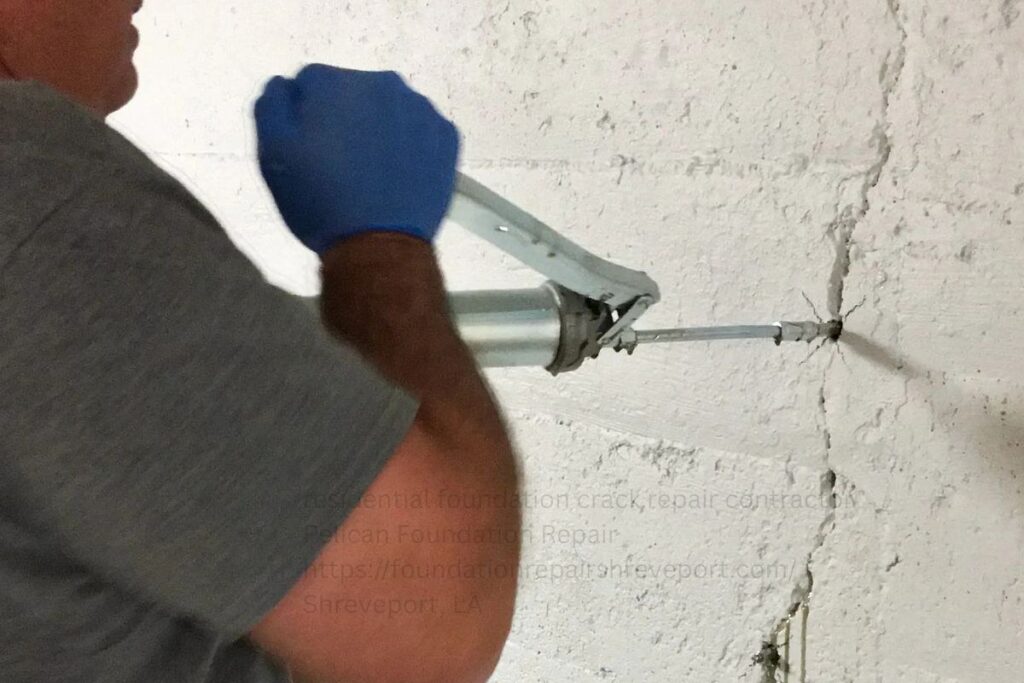
For a standard non-structural vertical crack, the go-to repair is epoxy injection. The technician seals the crack surface with epoxy paste, leaving small ports, then injects low-viscosity epoxy under pressure. The epoxy fills the crack through the wall and cures into a bond stronger than the surrounding concrete. The whole job usually takes a few hours, and the wall looks nearly untouched afterward.
Polyurethane foam injection is the alternative, and it is the better choice for cracks that leak. Polyurethane expands on contact with water, so it chases moisture into the crack and seals it — epoxy and water do not mix well. For an actively leaking vertical crack in a Shreveport foundation after a spring storm, polyurethane is usually the right call.
When a vertical crack is a symptom of settlement rather than the whole problem, crack repair alone is not enough. Sealing a settlement crack without stabilizing the foundation is like painting over a leak — the crack comes back because the wall keeps moving. In those cases the real repair is piers or other stabilization, and the crack gets sealed as part of the finished job. A contractor who wants to inject epoxy into a half-inch-wide growing crack without checking for settlement is selling you the wrong fix.
Our foundation crack repair page covers both methods in detail, and our cost breakdown for foundation crack repair in Shreveport puts real numbers on each option.
Call (318) 585-2003 – Free Inspection
What It Costs to Fix a Vertical Crack
Crack repair is one of the most affordable foundation services, which is good news — most vertical cracks never need anything more expensive.
- Epoxy or polyurethane injection: typically $500 to $1,500 for one to three cracks, depending on length and access. Most single vertical cracks land in the lower half of that range.
- Exterior waterproofing membrane over the crack: $1,000 to $2,500 when the crack leaks and the homeowner wants the outside sealed too. This involves digging down to the footing at the crack location.
- Carbon fiber staples or stitching: $800 to $2,000 for cracks that need structural reinforcement across the crack — used when the crack is wide but the foundation is not settling.
- Piers (when settlement is the cause): $8,000 to $25,000+ for the full stabilization job, with crack sealing included in the finished work. This is the repair for cracks that keep growing.
That price jump is exactly why the diagnosis matters: injecting a settlement crack buys you a sealed crack on a moving wall. A free inspection with elevation readings tells you which bracket you are in before you spend anything.
When a Vertical Crack Means Foundation Settlement
So how do you know when a vertical crack has crossed the line from cosmetic to structural? Look for the company it keeps. A lone hairline crack on an otherwise perfect foundation is almost never a settlement problem. A vertical crack that shows up alongside other symptoms is a different story.
The companion symptoms to watch for: doors or windows that stick or will not latch, floors that slope, stair-step cracking in exterior brick, gaps between the wall and the ceiling or floor trim, and chimneys leaning away from the house. Any two of these plus a growing vertical crack means the foundation is moving and the crack is just the most visible evidence.
Timing tells a story too. Shrinkage cracks appear early — usually within the first year or two after construction — and then sit still for decades. A brand-new vertical crack in a thirty-year-old home did not come from curing concrete. Something changed: the soil moved, drainage failed, or a tree root system matured. New cracks in old houses always deserve a closer look.
If settlement is confirmed, the fix is stabilization first and crack sealing second. Steel push piers or helical piers transfer the foundation’s weight to deep, stable soil below the active clay layer, and the crack gets sealed once the wall stops moving. Skipping straight to crack repair on a settling foundation wastes the money — and a reputable contractor will tell you so.
Call (318) 585-2003 – Free Inspection
How to Monitor a Crack Yourself
You do not need to call a contractor for every hairline crack — but you should keep an eye on them. Here is a simple monitoring routine that takes five minutes.
- Mark and date it. Draw a short pencil line across the crack at the top and bottom, and write the date next to each. If the crack grows past the marks, it is moving.
- Photograph with scale. Hold a coin or a ruler against the crack and take a clear photo. Repeat from the same spot every month or two — photos beat memory.
- Check after weather swings. Louisiana’s wet springs and dry summers are when clay soil moves most. Check cracks after the first big rain following a drought, and after long dry spells.
- Watch the width, not just the length. A crack getting wider is more concerning than one getting longer. If you can fit a dime where you used to fit only a credit card edge, note the change.
- Track companion symptoms. Note any new sticking doors, fresh drywall cracks, or nail pops upstairs. Settlement rarely announces itself with a single symptom.
Keep dated photos in a folder on your phone — the rate of change is one of the most useful diagnostic details a contractor can see. The InterNACHI resources at nachi.org describe what a proper structural evaluation covers when the time comes. And if monitoring turns into worry, our foundation repair services page and homepage are the starting points for scheduling a free look.
Call (318) 585-2003 – Free Inspection
Frequently Asked Questions
Are vertical cracks in a foundation normal?
Mostly, yes. Thin vertical cracks are usually shrinkage cracks from the concrete curing, and they appear in a large share of homes. They become a concern when they are wide (over a quarter inch), leak water, or keep growing — those can signal settlement or soil pressure.
Should I worry about a hairline vertical crack?
Usually not. A hairline crack that is dry and has not changed in months or years is almost certainly cosmetic. Mark it with a pencil and date, take a photo, and check it periodically. If it stays the same, you can stop worrying about it.
How do you fix a vertical foundation crack?
The standard repair is epoxy injection for dry cracks or polyurethane injection for leaking ones — both fill the crack through the full wall thickness. Wide cracks may get carbon fiber stitching. If settlement caused the crack, the foundation gets stabilized with piers first, then the crack is sealed.
Can I seal a foundation crack myself?
Surface sealants from the hardware store can keep a hairline crack dry temporarily, but they do not fill the crack through the wall the way professional injection does. For a crack that leaks or is wider than a hairline, professional injection is worth the few hundred dollars — it actually solves the problem.
How much does vertical crack repair cost?
Epoxy or polyurethane injection typically costs $500 to $1,500 for one to three cracks. Exterior waterproofing over a leaking crack runs $1,000 to $2,500. If the crack is caused by settlement, the full piering repair runs $8,000 to $25,000+ with crack sealing included.
Will a vertical crack get bigger over time?
Shrinkage cracks generally do not — they form during curing and then sit still for decades. Settlement cracks do get bigger, because the soil keeps moving. A crack that is growing is telling you something is still happening underground.
What is the difference between vertical and horizontal cracks?
Vertical cracks usually come from shrinkage or settlement — the wall pulling apart. Horizontal cracks usually come from lateral soil pressure pushing the wall inward, and they are more serious because they can mean the wall is bowing. A horizontal crack always deserves a professional inspection.
Call (318) 585-2003 – Free Inspection
Get a Free Foundation Crack Inspection in Shreveport
The difference between a $700 epoxy injection and a $15,000 piering job is the diagnosis — and the diagnosis is free. Our inspection includes elevation readings, a crack evaluation, and an honest answer about whether your crack is cosmetic or structural.
Call Pelican Foundation Repair at (318) 585-2003, or visit Pelican Foundation Repair to schedule. We serve Shreveport and the surrounding areas.
Pelican Foundation Repair
6118 Fairfield Ave, Shreveport, LA 71106, USA
318-585-2003
https://foundationrepairshreveport.com/