 Skip to main content
What Is Concrete Leveling? Mudjacking & Foam Explained Simply
What is concrete leveling? It is the process of raising a sunken concrete slab back up instead of tearing it out and replacing it. A contractor drills small holes through the slab, pumps a lifting material underneath — either a cement-based slurry called mudjacking or an expanding polyurethane foam — and the material fills the empty pockets in the soil and pushes the concrete back toward level. The holes are patched, and most slabs are ready to use the same day. It is the standard fix for settled driveways, sidewalks, patios, and pool decks across the Shreveport area.
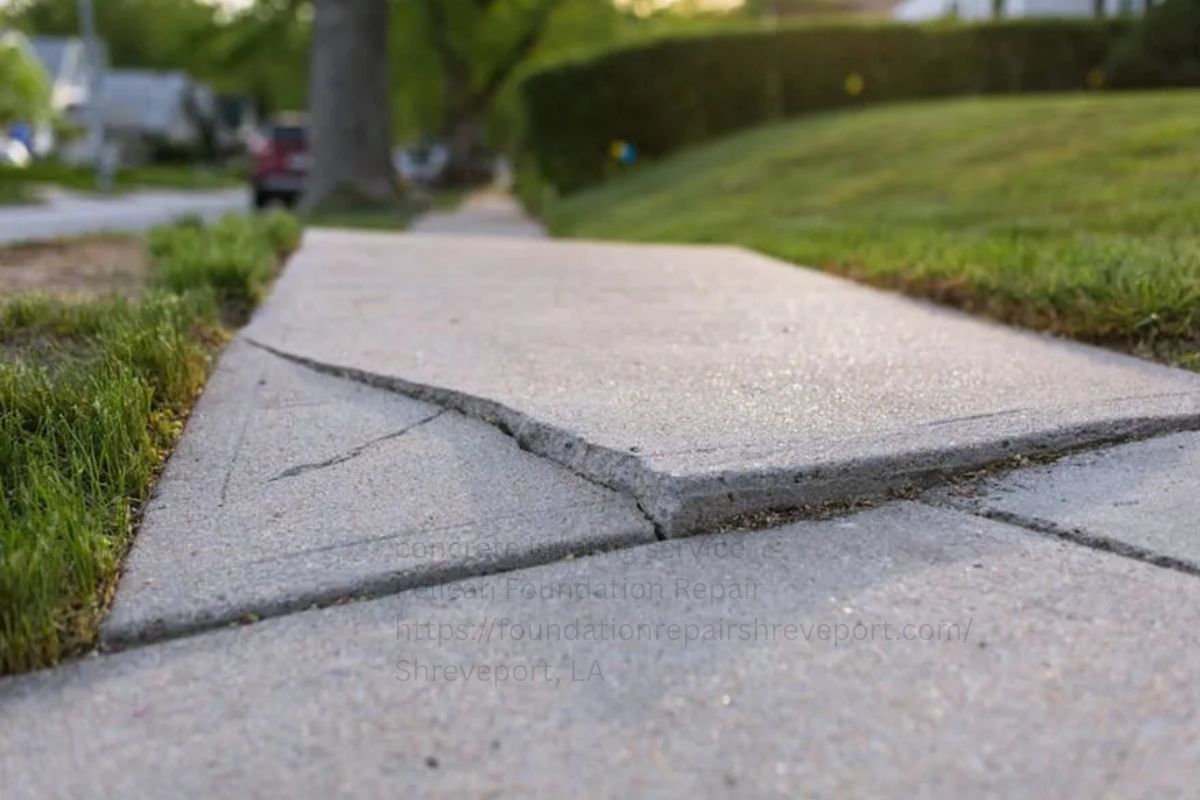
Concrete settles because the ground under it moves. In northwest Louisiana, expansive clay shrinks in dry summers leaving voids — or poor drainage washes fine soil out from underneath over the years. Once a section drops an inch or two, you get trip hazards, water pooling against the house, and an eyesore driveway. Leveling fixes the slab’s position without the cost, mess, and week-long wait of replacement.
The short version: concrete leveling lifts settled slabs by pumping material underneath through small drilled holes — mudjacking uses a heavy cement slurry and costs less, while foam injection uses lightweight expanding foam, costs a bit more, and cures in minutes. Typical Shreveport pricing runs $3 to $8 per square foot, roughly a third to half the cost of replacement, and most jobs finish in a single day. A free inspection tells you whether your slab is a leveling candidate or a replacement case.
Call (318) 585-2003 – Free Inspection
📊 Concrete Leveling Basics at a Glance
$3–$8 / sq ft
Typical leveling cost in Shreveport
1 day
Most residential jobs finished
1/3–1/2
Leveling cost vs. full replacement
The Basic Idea: Lifting Instead of Replacing
Think of a settled slab like a table with one short leg — you shim the leg, not buy a new table. The concrete is usually fine; the ground beneath it is the problem. Rather than demolishing a sound slab, leveling puts support back underneath and raises it to where it belongs.
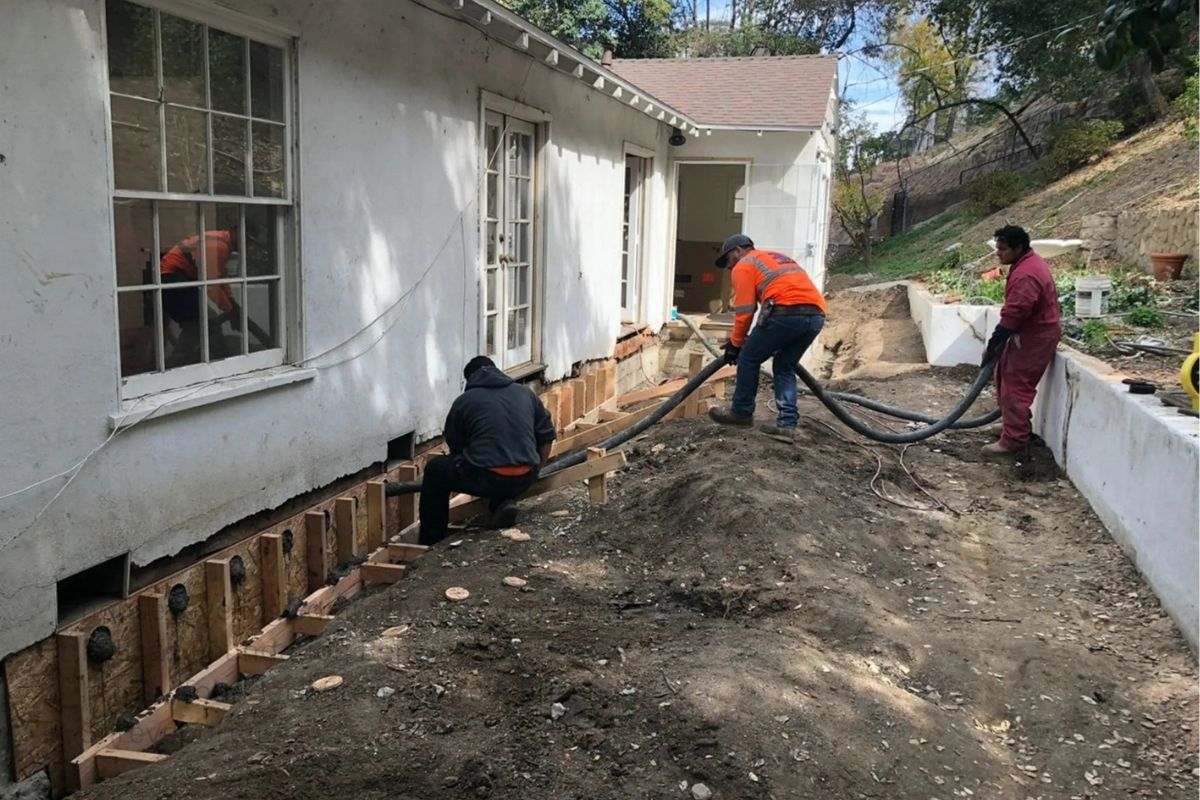
The process has three steps no matter which material is used. First, the crew drills a pattern of small holes through the slab — typically every few feet across the sunken area. Second, they pump the lifting material through those holes, where it spreads out, fills voids in the soil, and begins pushing the slab upward. The crew watches the lift with levels and stops when each section is back in position. Third, the holes are patched with a concrete mix, leaving only small circles that weather in over time.
What surprises homeowners is how undramatic it is: no jackhammering, no dump trucks of broken concrete, no week-long cure. A typical driveway job starts in the morning and the crew is gone by afternoon — you are paying for a day of skilled work, not a week of demolition.
Mudjacking: How the Original Method Works
Mudjacking — also called slab jacking — has been around for decades. The “mud” is a slurry of Portland cement, sand, and water, roughly pancake-batter consistency. The crew pumps it through holes about an inch and a half wide, and the slurry’s weight and pressure does the lifting as it fills voids below.
The crew maps the sunken areas, drills the pattern, and pumps slurry while a second crew member monitors the slab’s rise. The fluid slurry finds and fills every low pocket, giving even support. Once level, pumping stops, the hose moves on, and every hole is packed with a concrete patch at the end.
Mudjacking’s advantage is price — usually $1 to $2 less per square foot than foam, which adds up on a big driveway. The drawback is weight: cured slurry tops a hundred pounds per cubic foot, which matters on Shreveport’s soft clay because added load can contribute to future settlement. Holes are more visible, and the slab needs 24 to 48 hours before full vehicle weight.
Call (318) 585-2003 – Free Inspection
Foam Injection: How the Modern Method Works
Polyurethane foam injection — foam jacking — does the same job with a different material. Two liquids mix at the injection gun and are pumped under the slab, where a reaction expands the foam many times over and hardens it within minutes, filling voids precisely and lifting with surprising control.
The process mirrors mudjacking with smaller everything: dime-size holes, compact equipment, fast lift. The real difference is after injection: foam weighs roughly two pounds per cubic foot — practically nothing — so it adds no load to the soil. It cures in about 15 minutes, so a morning lift can be driven on that afternoon, and the expansion stabilizes loose soil better than heavier material.
Foam costs more per foot, but for most Shreveport homeowners it is the better value: precision on thin slabs like sidewalks and pool decks, barely visible holes, and same-day use. Our guide to how long concrete leveling lasts explains why foam’s light weight helps the lift hold longer on clay.
What Each Method Costs in Shreveport
Pricing is quoted per square foot with a minimum charge for small jobs — usually $500 to $800, since mobilizing crew and equipment costs the same for one sidewalk panel or twenty.
| Method | Typical cost per sq ft | Usable after | Best for |
|---|---|---|---|
| Mudjacking | $3–$6 | 24–48 hours | Large areas where budget is the priority |
| Foam injection | $4–$8 | Same day (about 15 min cure) | Driveways, pool decks, precise lifts |
| Full replacement | $8–$20+ | 7+ days of curing | Crumbling or shattered slabs |
For scale: foam-leveling a 400-square-foot driveway typically runs $1,600 to $3,200, versus $3,200 to $8,000 for replacement with demolition and finishing included. Hard-to-reach backyards cost more per foot than street-facing driveways. Our leveling vs. replacement cost breakdown runs the full math.
Call (318) 585-2003 – Free Inspection
When Leveling Beats Replacement
Leveling is the right call whenever the concrete is structurally sound and only the position is wrong. Run through this checklist — if your slab matches, you can almost certainly save it.
- The surface is in good shape. Solid concrete with no crumbling edges, no flaking, and at most hairline cracks. Settlement is a soil problem, and leveling fixes the soil side of the equation.
- Only some sections dropped. A driveway with two sunken panels or a patio corner tilted toward the house is the textbook leveling job — lift the low spots and leave the rest alone.
- You have trip hazards to fix fast. Sidewalk panels with raised lips are a liability concern, and leveling brings them flush in a day instead of the week-plus a replacement takes.
- Water is draining toward the house. A slab that settled toward the foundation can often be re-pitched with foam so water runs away from the house again — protecting the foundation at the same time.
- Replacement would be disruptive or expensive. Pool decks with coping and plumbing, driveways bordered by mature landscaping, and porches tied into the house structure all cost far more to replace than to lift.
- You need it done quickly. Leveling is a one-day job with same-day use for foam. Replacement means a week or more without a usable driveway while the new pour cures.
Replacement earns its price only when the slab itself is failing — deep cracking, crumbling surfaces, or concrete poured too thin to hold up. When the slab is sound, paying double means paying for demolition you did not need. Our concrete leveling service page shows how a free inspection sorts which camp your slab is in.
Where Concrete Leveling Works Best Around the Home
Not all concrete is equally level-able, and the project type affects both the method and the price. Here is how the common residential projects around Shreveport break down.
Driveways are the most common leveling job with the biggest savings: a typical two-car driveway is 400 to 600 square feet, exactly where foam beats replacement by thousands. The contractor should check slab thickness first — very thin older driveways sometimes need replacement regardless.
Sidewalks are ideal foam candidates: thin, light, and precise to lift. A single raised panel can often be fixed in under an hour at a contractor’s minimum charge. If the sidewalk sits in the city right-of-way, check with the parish or city first.
Patios and pool decks benefit enormously: replacement means disturbing coping, plumbing, and landscaping, while foam’s small holes and precise lift re-pitch the deck without touching the coping. The LSU AgCenter at lsuagcenter.com publishes Louisiana drainage guidance explaining why slope away from structures matters so much here.
Garage floors and interior slabs can be leveled too, though access is trickier. They are worth doing when a sunken garage slab directs water toward the foundation — a foundation problem wearing a concrete disguise in our rainy climate.
What to Ask Before You Hire a Leveling Contractor
Concrete leveling is straightforward work, which unfortunately makes it easy for low-effort outfits to cut corners. These questions separate the professionals from the rest.
- How many square feet, and how much lift per section? A real quote is based on measurements — a flat price without measuring is a guess.
- Which method do you recommend, and why? They should explain the choice for your slab — not just quote whichever they sell.
- What caused the settlement, and are you addressing it? If drainage washed out the soil, voids can reform — ask about gutters, grading, and downspouts in the plan.
- What is the warranty, in writing? Reputable work carries a written warranty on the lift — and no honest contractor promises a slab will “never move again” on Louisiana clay.
- Can I use the slab today? With foam, yes within hours; with mudjacking, expect a day or two. Vague answers suggest inexperience.
Call (318) 585-2003 – Free Inspection
Frequently Asked Questions
What is concrete leveling in simple terms?
It is raising a sunken concrete slab back up by pumping material underneath it through small drilled holes, instead of tearing the slab out and pouring a new one. The two methods are mudjacking, which uses a cement slurry, and foam injection, which uses expanding polyurethane foam.
How much does concrete leveling cost per square foot?
In Shreveport, mudjacking runs $3 to $6 per square foot and foam $4 to $8, with most contractors’ minimums at $500 to $800. Full replacement runs $8 to $20 or more per square foot.
Is mudjacking or foam injection better?
Foam suits most homeowners: far lighter, more precise, minutes to cure, tiny holes. Mudjacking costs less and works well on large thick slabs. The right choice depends on your slab, soil, and budget.
How long does leveled concrete last?
Done right, a foam lift on a sound slab typically holds for many years, often a decade or longer. The foam does not break down; longevity depends on the soil and whether the drainage problem that caused the settlement was fixed at the same time.
Can you level a cracked driveway?
Hairline cracks are fine — they can be sealed and the slab leveled normally. Wide, crumbling, or spiderwebbed cracks mean the slab itself is failing, and leveling will not make it whole. In that case replacement is the smarter spend.
Will the drill holes be visible after leveling?
Slightly, at first: mudjacking holes are about an inch and a half wide, foam holes dime-size. Both are patched and weather in over a few months.
Can concrete leveling fix water draining toward my house?
Often, yes. If a patio or driveway settled toward the foundation, foam injection can re-pitch the slab so water drains away from the house again. This is one of the most valuable leveling jobs because it protects the foundation too.
Call (318) 585-2003 – Free Inspection
Get a Free Concrete Leveling Estimate in Shreveport
The only way to know whether your slab should be leveled or replaced — and what it costs — is a measurement. Our free inspection covers the concrete, the soil and drainage beneath, and an honest recommendation with a written price.
Call Pelican Foundation Repair at (318) 585-2003, or visit Pelican Foundation Repair to schedule. We level driveways, sidewalks, patios, and pool decks across the metro — see our service area list and our full foundation repair services.
Pelican Foundation Repair 6118 Fairfield Ave, Shreveport, LA 71106, USA 318-585-2003 https://foundationrepairshreveport.com/