After the Storm: A Foundation Check You Can Do in 20 Minutes
After heavy rain, walk your home in 20 minutes: check grading, gutters, new cracks, sticking doors, and standing water before small storm damage turns into a foundation problem.
Heavy rain does most of its foundation damage quietly, and the best time to catch it is in the first day or two after the water recedes. This 20-minute check covers the outside, inside, and crawl space or slab edge of your home, in that order, and tells you which findings to watch and which deserve a expert inspection.
The timing is real for Shreveport this week. On November 3, 2026, the National Weather Service in Shreveport issued a flash flood warning for southern Bossier Parish and southwestern Caddo Parish, with Doppler radar showing 1 to 2 inches of rain already fallen and 1 to 3 more inches possible, covering Shreveport, Bossier City, Haughton, Greenwood, Eastwood, and Red Chute. That is exactly the kind of fast, heavy rain that finds weak grading, clogged gutters, and tired drainage, and then leaves its mark on a foundation. Whether your street flooded or just got soaked, the check below is worth your 20 minutes.
Before You Start: Safety First
Do not wade into standing water around your home, and do not enter a crawl space with standing water in it. Floodwater can hide open drains, debris, and electrical hazards, and a wet crawl space can hold sewage or a live wire you cannot see. If water reached your electrical panel, outlets, or HVAC equipment, call a licensed electrician or HVAC technician before you touch anything in that area. If the ground is still saturated and soft, walk on paved paths and driveways rather than slogging through mud that can hide a washed-out hole.
Gather three things: your phone for photos, a coin or tape measure for scale, and a pencil to mark crack ends. Marking matters because the single most useful question after a storm is not “is there a crack” but “is it growing.” A small pencil mark and date at each end of a crack turns next week’s recheck into a real measurement instead of a guess. Keep pets and kids inside while you walk the exterior, and save the crawl space for last, when you are dry and thinking clearly.
Minutes 1 to 8: The Outside Walk
Start at the street and walk slowly around the house, looking at the ground before you look at the walls. Water tells on itself: mulch washed into drifts, silt lines on the slab, soil pulled away from the foundation edge, and puddles that are still sitting hours after the rain stopped. In Shreveport’s expansive clay, a puddle against the foundation is not a cosmetic issue. Clay that sits soaked swells and pushes, and clay that then dries out shrinks and pulls away, and that cycle is what moves foundations in Broadmoor, South Highlands, Bossier City, and Haughton alike.
- Grading: soil should slope away from the house for at least the first several feet. Look for low spots or washed-out channels where water now pools against the wall.
- Gutters and downspouts: check for overflow stains on siding, gutters pulled loose, and downspouts that dump within a few feet of the foundation instead of well away from it.
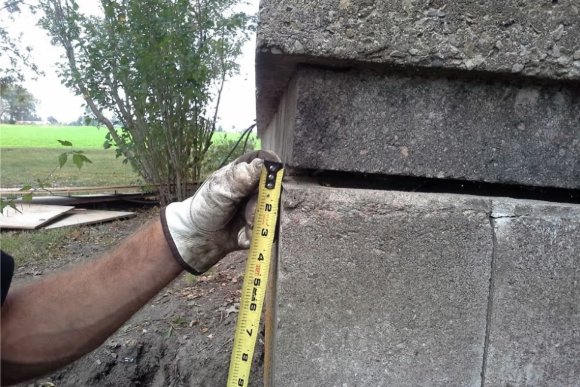
- Slab edge and foundation wall: look for fresh cracks, new gaps between soil and concrete, and mud or silt splashed up the wall, which marks how high water stood.
- Driveway and sidewalks: note new cracks, lifted panels, or sections that now tilt toward the house instead of away from it.
- Drains and swales: check French drain outlets, catch basins, and yard swales for debris dams, leaves, and silt that block flow after a storm.
- Porch and patio: look for separation where a porch or patio slab meets the house wall, and for water lines showing where water stood.
Photograph anything new, with the coin beside it for scale, and note which side of the house it is on. North and west sides behave differently from south sides in our climate, and a pattern that favors one side of the house tells an inspector more than a single crack ever will.
Minutes 9 to 14: The Inside Walk
Inside, you are checking for movement, not water, unless water actually came in. Walk every room on the ground floor and test the things that reveal a shifted frame: doors, windows, and floors. Open and close each interior door and note any that now stick, rub, or will not latch when they worked fine before the storm. Do the same for windows, especially on the street-facing and low sides of the house.
Look at walls and ceilings with the lights on and your eyes at an angle, which makes fresh cracks easier to spot. Hairline cracks in drywall at door corners are common after a storm cycle and often cosmetic, but a crack that runs diagonally across a wall, steps through brick or block, or has widened since your last look is a different story. Check the corners of window and door frames, the joints where walls meet ceilings, and the tile in bathrooms and kitchens, where cracked grout lines show movement early.
Finally, feel the floors. Walk slowly and notice any new slope, bounce, or hollow sound, particularly in rooms over a crawl space. A marble or a small ball on a hard floor is a crude but honest level: if it now rolls where it used to sit still, something moved. Write down which rooms changed and by roughly how much, because “the kitchen floor slopes toward the back door now” is far more useful than “the floors feel off.”
Minutes 15 to 20: Crawl Space or Slab Edge
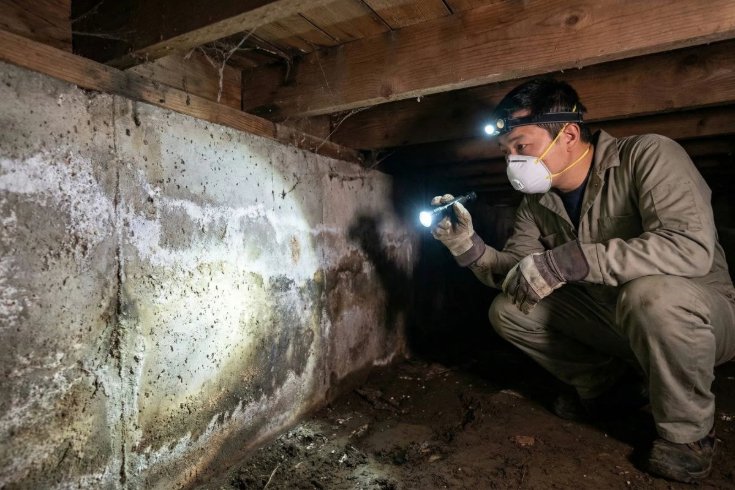
If your home is pier and beam, the crawl space is where storm water does its quietest damage, and it deserves the last five minutes. From the access opening, use a flashlight and look, without crawling in, for standing water, wet soil, sagging or wet insulation, and any musty smell stronger than before the storm. Wet soil under a pier-and-beam home softens supports and feeds mold, and standing water that lingers more than a day or two after the rain points to a grading or drainage failure outside, not a mystery inside.
If your home is on a slab, walk the slab edge instead: look for soil washed away from the edge, new gaps under the slab overhang, and water lines on the exterior wall. Check the rooms nearest the slab edge for the same interior signs as above, since slab movement shows up fastest at the perimeter. In either case, if you find standing water, sewage smell, or any electrical equipment that got wet, stop and call a professional. This check is a look, not a repair job.
For the mechanism behind what you are seeing, why a dry spell followed by heavy rain is the hardest pattern for our clay, see our post on foundation damage after a storm or flood in Louisiana. For drainage fixes when the check finds a water problem, see our drainage correction service and our guide to signs of drainage problems around a foundation.
What Your Findings Mean: Watch, Fix, or Call
| What you found | What it usually means | What to do |
|---|---|---|
| Puddle gone within a day, no new cracks | Drainage handled the storm | Watch; recheck after the next heavy rain |
| Puddle lingering against the wall | Grading or gutter failure | Fix grading and downspouts soon; water against clay is the root problem |
| New hairline drywall crack, doors still fine | Minor seasonal movement | Mark, photograph, recheck in 2 to 4 weeks |
| Diagonal or stair-step crack, sticking doors | Real structural movement | Call for a expert inspection with elevation readings |
| Standing water in the crawl space | Drainage failure, possible sump need | Call promptly; do not enter standing water |
| Water inside the home, wet electrical gear | Urgent safety and water problem | Call an electrician first, then a foundation and drainage professional |
The honest rule is simple: one small, stable finding can wait for your next recheck, but a pattern, cracks plus sticking doors plus a lingering puddle on the same side of the house, should not wait. Patterns are how inspectors read a house, and they are how you should read yours. A expert inspection with elevation readings turns your 20-minute notes into numbers, and numbers are what separate a house that moved a little in a storm from a house that is still moving.
After the Check: The Two Things That Protect You Most
First, keep the record. Put your photos, dates, and notes in one folder, and recheck every marked crack in two to four weeks, then again after the next heavy rain. A crack that stays the same across two checks is a different animal from one that grows, and that difference is what keeps a homeowner from paying for a repair they do not need, or delaying one they do.
Second, fix water before you fix structure. Gutters, downspouts, grading, and drainage are the unglamorous work that decides whether any structural repair lasts. A pier job under a house that still ponds water against its walls is fighting the same battle twice. Clear the drains, extend the downspouts, regrade the low spots, and then, if the movement findings say so, get the foundation itself evaluated. The National Weather Service flood safety page and the LSU AgCenter are solid references for storm and soil guidance, and our foundation inspection service explains what a professional visit covers. Start at our homepage for the full picture.
- Check outside first: grading, gutters, slab edge, drains, and porch separation.
- Inside, test doors, windows, and floors, and look for diagonal or stair-step cracks.
- Never enter a crawl space with standing water, and never touch wet electrical gear.
- Mark and photograph every crack so growth, not memory, drives the decision.
- One small stable finding can wait; a pattern on one side of the house should not.
- Fix water first: drainage and grading decide whether any structural repair lasts.
Frequently Asked Questions
How soon after heavy rain should I check my foundation?
Within a day or two after the water recedes, while evidence like silt lines, puddles, and fresh cracks is still visible. Waiting weeks lets the clay dry, the puddles vanish, and the trail go cold.
What is the most important thing to check after a storm?
Water sitting against the foundation. A lingering puddle means grading or drainage failed, and in Shreveport’s expansive clay, standing water against a wall is the root cause behind most storm-related foundation movement.
Are new hairline cracks after a storm serious?
Usually not by themselves. Hairline drywall cracks at door corners often reflect minor seasonal movement. Mark them, photograph them, and recheck in two to four weeks; growth, not presence, is what matters.
When should I call a foundation professional after a storm?
Call when you see a pattern: diagonal or stair-step cracks, doors or windows that newly stick, sloping floors, or standing water in a crawl space. A expert inspection with elevation readings turns observations into numbers.
Should I enter my crawl space to check for water after a storm?
Look from the access opening with a flashlight, but do not crawl in if there is standing water, a sewage smell, or wet electrical equipment. Those conditions call for a professional, not a homeowner inspection.
Can one heavy storm really damage a foundation?
One storm rarely ruins a healthy foundation, but it can expose weak grading, clogged gutters, or a drainage failure, and repeated wet-dry cycles on expansive clay do cumulative damage. The check exists to catch the weak link early.
What should I do first if I find standing water against my house?
Clear blocked drains and gutters, extend downspouts away from the wall, and regrade low spots so water moves away from the foundation. Then recheck after the next rain; if water still ponds, get a drainage evaluation.
Pelican Foundation Repair
6118 Fairfield Ave, Shreveport, LA 71106, USA
318-585-2003
https://foundationrepairshreveport.com/