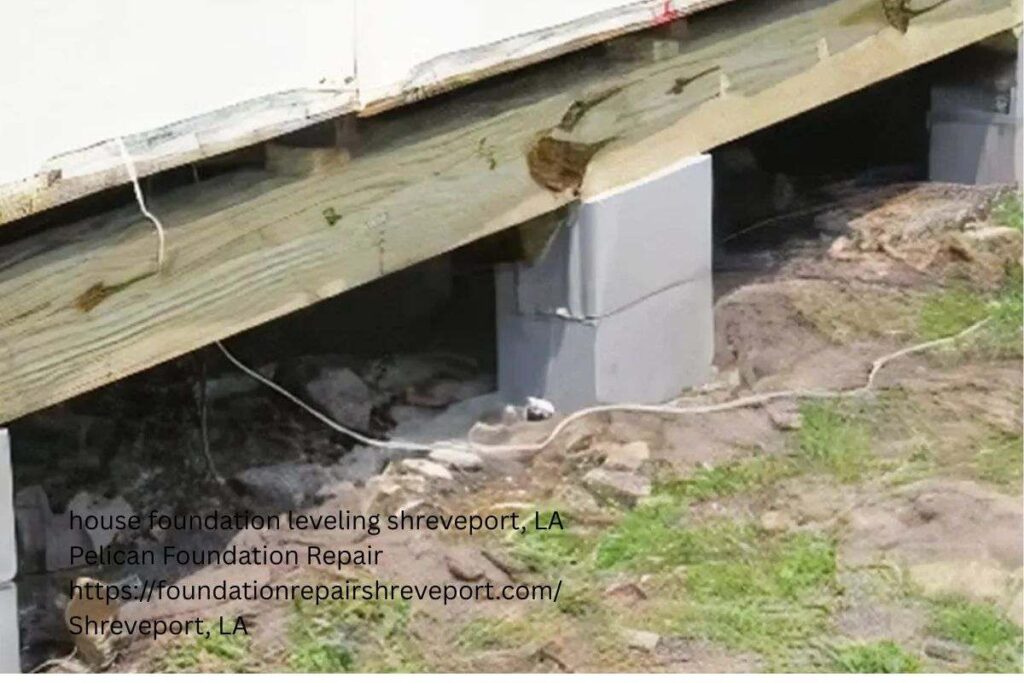
Is House Leveling Worth It?
House leveling is worth it when your home is actively settling: it stops movement, restores floors and doors, and protects resale value, but not for stable, cosmetic-only cracks.
That sentence is the whole answer, and the rest of this post is about telling which side your house falls on. Leveling is a real investment, typically to in Shreveport depending on pier count and foundation type, so it deserves a harder question than “is it good.”
In Shreveport, the question comes up constantly because our expansive clay gives houses plenty of reasons to move. A pier-and-beam home in Highland or a slab home in Bossier City can develop sloping floors, sticking doors, and stair-step cracks from ordinary shrink-swell cycles, and homeowners reasonably ask whether paying to level the house is money well spent or money thrown at a problem that will return with the next wet season. The answer depends on what is moving, why it is moving, and what leveling can actually fix.
What House Leveling Actually Fixes
Leveling is not a cosmetic service, even though its most satisfying results look cosmetic. When a crew levels a house, it lifts the structure back toward its original position in small, controlled stages, using piers, beams, shims, or a combination, until the frame sits as close to level as safety allows. The visible payoffs are the ones homeowners notice first: floors that stop sloping, doors that latch again, windows that open without a fight, and cracks that stop growing.
The less visible payoff matters more. A settling house does not just look tired; it stresses everything attached to it. Plumbing lines flex and can break at joints, especially under slab homes. Brick veneer cracks and lets water in. Frames rack out of square, which makes every future repair, from flooring to cabinets, harder and more expensive. Leveling stops that chain by stabilizing the structure, and stabilization is the benefit you are actually buying. A level floor is the evidence, not the product.
Leveling also restores usability in ways that are easy to undervalue until they are gone. A bedroom door that will not close, a kitchen floor that sends a chair rolling, a bathroom tile line that keeps cracking no matter how often it is regrouted: these are daily irritations that add up to a house that feels broken. Homeowners who level often say the biggest change is not the numbers on the elevation report but the feeling that the house works again. That is a real benefit, and it counts in the worth-it calculation even though it never appears on a spreadsheet.
When Leveling Alone Is Enough, and When Piers Are Needed
This distinction decides both the price and the durability of the job, so it is worth understanding before any contractor visits. In a pier-and-beam home, small, isolated low spots, a sagging section of floor over a failed shim or a settled block pier, can often be corrected with re-shimming and targeted pier or beam work, without a full leveling job. That is leveling in the narrow sense: adjusting supports to restore the floor, and it costs less than a full pier system because it uses the existing support layout.
A full leveling job with piers is a different animal. It is called for when elevation readings show settlement across a large area, an inch or more in places, or when the house is moving as a unit rather than sagging in one spot. Here, steel push piers or helical piers are driven to load-bearing soil below the shifting clay, and the house is lifted and stabilized on them. Re-shimming a house that needs piers is like tightening a loose bolt on a sinking dock: it looks better for a season and then the movement returns, because the soil problem was never addressed.
The only honest way to tell which one you need is an elevation survey, which maps the high and low points of your floors and foundation on a single drawing. Any contractor who quotes a leveling job without taking readings is guessing, and a guess on this question is expensive in both directions: over-piering wastes money, under-piering wastes the whole job. Pelican’s inspections are included and include elevation readings, which is why the survey should always come before the quote, never after.
What House Leveling Costs in Shreveport
Our published Shreveport-area range for a full leveling job is to , driven mainly by how many piers the home needs and whether the work is interior or exterior. Smaller pier-and-beam adjustments can fall below that range, while settlement across a large slab home can exceed it. There is no honest flat per-pier price, because pier depth to bearing soil, which varies lot by lot across Caddo and Bossier parishes, changes the number as much as pier count does.
| Cost driver | How it moves the price | What to ask |
|---|---|---|
| Pier count | More piers, higher price; count follows the elevation map | Show me the elevation readings behind the count |
| Pier depth | Deeper bearing soil means more material and time | What is the bearing target, and is depth in the contract? |
| Interior vs exterior access | Interior piers mean flooring work and more disruption | Which piers are interior, and what restoration is included? |
| Drainage and water work | Grading and drainage add cost but protect the repair | Is the water problem fixed, or just the structure? |
| Home size and foundation type | Larger homes and slab homes generally need more work | Is this quote for my foundation type, not a generic one? |
Two cost traps deserve a warning. The first is the suspiciously cheap quote that skips the elevation survey, under-counts piers, or stops piers short of bearing soil; it is cheap because it is incomplete, and the second job to fix it costs more than the first job done right. The second is the quote that bundles unrelated work, full drainage rebuilds or cosmetic repairs, without separating what is structural from what is optional. A good bid reads line by line, so you can see exactly what you are paying for and what you could defer.
The Disruption Question: Can You Stay in the House?
Most families stay in the home during leveling, and that fact changes the worth-it math considerably. Exterior pier work happens entirely outside, and the lift itself is usually completed in a single day, with the full job running a few days depending on pier count and access. Interior pier work is more disruptive, since crews work inside and flooring may need to come up, but most families still stay put, moving room to room as the crew progresses.
What you should expect during the lift: noise, vibration, dust, and some cosmetic cracking as the house moves back toward level. Good crews warn you about this upfront, lift in small stages, and repair the cosmetic cracks that the lift itself causes. What you should not expect: a perfectly level house. Leveling recovers most movement, but a home that settled over a decade has adapted to its position, and lifting it all the way back can crack finishes and stress plumbing. A stable home with working doors and floors is a successful leveling job, even if a floor still shows a slight slope.
Plan for the week of the job the way you would plan for any major home work: move fragile items off walls and shelves near the work areas, clear access to the crawl space or interior pier locations, keep pets secured, and ask the crew each morning what rooms they will be in. Small preparation makes the disruption a footnote instead of the story.
Leveling vs the Alternatives
Leveling is not the only option, and an honest worth-it answer has to weigh it against the others. The table below is the comparison most homeowners actually need.
| Option | Best when | Downside |
|---|---|---|
| Monitor and wait | Stable hairline cracks, no active movement | Risky if movement is active; needs dated rechecks |
| Re-shimming only | Small, isolated pier-and-beam sags | Does not fix soil-driven settlement |
| Full leveling with piers | Active, widespread settlement | Highest cost; some disruption during the lift |
| Cosmetic repair only | Never, as a substitute for structural work | Cracks return; hides a growing problem |
| Sell as-is | When repair cost exceeds the value it protects | Disclosure and price cuts usually exceed repair cost |
The sell-as-is row deserves emphasis, because it is where the worth-it question gets answered most clearly. A documented, warranted leveling job with before-and-after elevation readings is a selling asset: buyers understand what was done and why it will hold. An unrepaired, actively settling foundation is a negotiating weapon for the buyer, and the price cut or the failed lender appraisal usually costs more than the repair would have. That is not a scare tactic; it is the arithmetic of disclosure in a market where inspectors measure floors.
So, Is It Worth It for Your House?
Run this test. First, is your house actually moving, or is it just showing age? Elevation readings and dated crack measurements answer that, and a expert inspection gives you both. Second, is the movement active and widespread, or small and stable? Active, widespread settlement is the case for leveling; small, stable movement is the case for monitoring. Third, does the quote fix the water problem too? A leveling job under a house that still ponds water against its walls is a repair with an expiration date. Fourth, is the warranty in writing, with clear terms? Pelican’s qualifying repairs carry a 20-year structural warranty, and that wording should be in the contract before work starts.
If the answers come back yes, active movement, a complete quote, water addressed, warranty in writing, then leveling is worth it, not as a luxury but as protection for the largest asset most families own. If the answers come back no, stable cracks, a quote without readings, water ignored, then the honest answer is to monitor, fix the water, and revisit the question with better information. Either answer beats guessing, and both start with the same free step. Our house leveling service page explains the methods in more detail, our post on whether foundation repair is worth it covers the broader value question, and our guides on how long house leveling lasts and foundation repair and home resale fill in the two questions homeowners ask next. The LSU AgCenter publishes Louisiana soil guidance behind all of this, and our homepage is the starting point for a expert inspection.
- Leveling is worth it for active, widespread settlement; not for stable cosmetic cracks.
- Elevation readings, not eyeballing, decide whether you need re-shimming or piers.
- Published Shreveport-area range: to , driven by pier count and access.
- Most families stay in the home; the lift itself usually takes a single day.
- Fix water alongside structure, or the repair fights the same battle twice.
- A documented, warranted leveling job protects resale value better than selling as-is.
Frequently Asked Questions
Is house leveling worth it?
Yes, when your home is actively settling. Leveling stops movement, restores floors and doors, and protects resale value. It is not worth it for stable, cosmetic-only cracks, which are better monitored with dated measurements.
How much does house leveling cost in Shreveport?
Our published Shreveport-area range is to for a full leveling job, driven by pier count, pier depth, foundation type, and interior versus exterior access. Smaller pier-and-beam adjustments can cost less, and a expert inspection with elevation readings gives you an exact quote.
Can you live in your house during leveling?
In most cases, yes. Exterior pier work happens entirely outside, and the lift itself is usually completed in a single day. Interior pier work is more disruptive, but most families stay put and move room to room as the crew progresses.
Will leveling make my house perfectly level?
Usually not perfectly. Crews lift in controlled stages and stop where further lifting risks cracking finishes or plumbing. Expect a stable home with doors and floors working properly, not a mathematically perfect level.
Is leveling better than just re-shimming my pier-and-beam home?
It depends on the cause. Re-shimming suits small, isolated sags over sound supports. Widespread or active settlement needs piers driven to load-bearing soil, because shims alone do not address the soil problem.
How long does a leveling job last?
A pier system seated in stable soil, with drainage corrected, is a long-term fix measured in decades, and Pelican’s qualifying repairs carry a 20-year structural warranty. Re-shimming alone may need attention again down the road.
Does house leveling increase home value?
It protects value more than it adds a fixed amount: no honest percentage can be promised. A documented, warranted leveling job removes a buyer’s biggest objection and prevents the price cuts or failed appraisals that unrepaired settlement usually brings.
Pelican Foundation Repair
6118 Fairfield Ave, Shreveport, LA 71106, USA
318-585-2003
https://foundationrepairshreveport.com/