Foundation Repair Insurance Claims in Louisiana: How the Process Actually Works
Filing a foundation claim in Louisiana comes down to proof: photos, dates, and an inspection report that show what happened and when. Here is the process, step by step.
Start by calling your insurer, then document the cracks with dated photos and get a written inspection report before any repair work begins. The adjuster checks whether the damage was sudden or long-term, and that answer drives the claim. Most claims take a few weeks to a few months, and a clear paper trail helps at every step.
If you just found a crack across your living room wall or a door that will not close, you are probably wondering two things: how bad is this, and will insurance help? This guide covers the claim itself, from the first phone call to the final letter.
Timing matters in Shreveport right now. The National Weather Service office in Shreveport noted dry soils and elevated fire danger through Friday, November 13, 2026, and the season’s first frost was possible early Saturday, November 14, in the colder spots north of town. Dry-soil shrinkage followed by a cold snap is when ArkLaTex homeowners notice new cracks.
Start the Claim in the First 48 Hours
The clock on a foundation repair insurance claim in Louisiana starts when you find the damage, not when you get around to calling. Most homeowners policies ask you to report damage promptly. Call within 48 hours of finding the cracks, the sticking door, or the sloping floor.
When you call, have your policy number ready and a short, plain description of what you see: where the cracks are, when you first noticed them, and whether anything changed recently, like a burst pipe or a long dry spell. Ask for your claim number and write it down, along with the name of the person you spoke to and the date and time.
Ask three questions on that first call: what is my deductible, what should I do now to keep the damage from getting worse, and how long before an adjuster contacts me? Describe what you see, but do not guess at the cause before you have your own facts in hand. If a pipe is leaking, shut the water off, but do not paint over cracks or fill gaps before the adjuster has seen them. Keep every receipt in one folder with your photos and claim number. For a closer look at local coverage, see our Shreveport service area page.
Document the Damage Like an Adjuster Would
Photos are the backbone of a foundation repair insurance claim in Louisiana. The adjuster may visit once, for an hour, weeks after the damage started. Your photos show what the house looked like when the problem was fresh and how it changed. A claim with dated photos is a different claim from one without them.
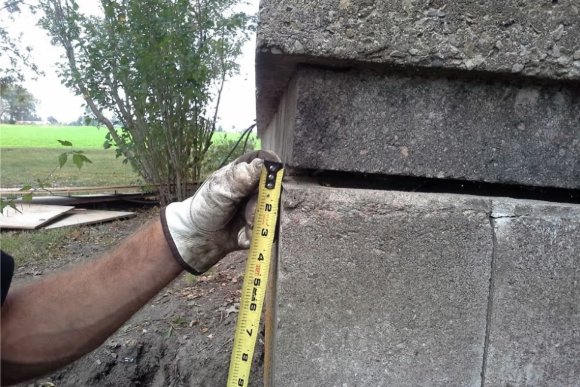
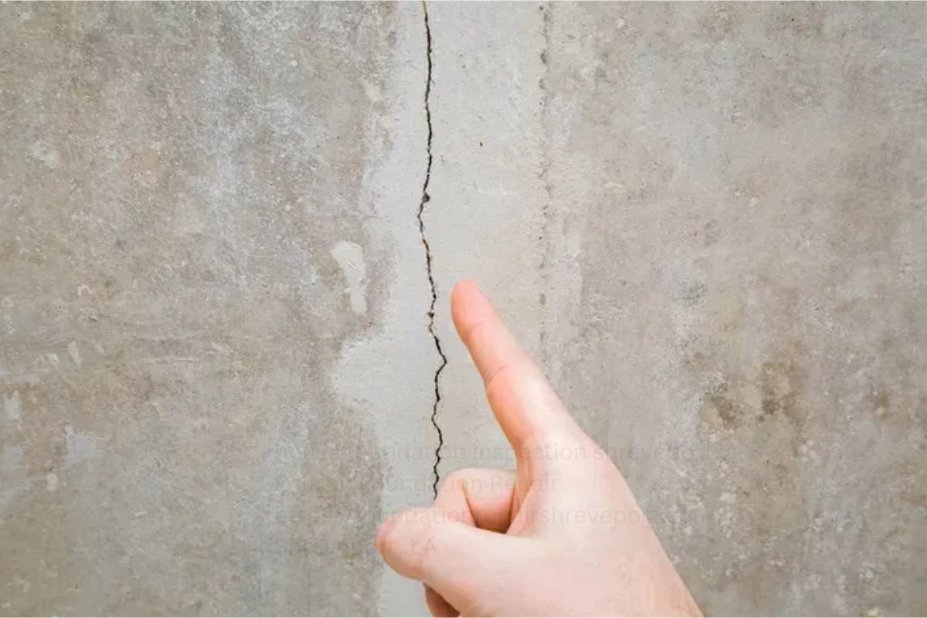
Start with wide shots. Stand back and photograph each wall with cracks from across the room, so the adjuster can see where the crack sits in the house. Then move in close. Put a ruler, a coin, or a tape measure next to the crack so its width is clear in the photo. A crack with no scale in the picture could be a hairline or a half inch wide, and the adjuster cannot tell which.
Date everything. Most phones stamp photos with the date automatically, so do not turn that feature off. Take a second set of the same cracks two weeks later, from the same spots. A crack that is growing tells a different story from one that has sat still for years. A short video helps too: walk slowly through the house, narrating what you see. Shreveport’s expansive clay often moves a whole street at once, and the LSU AgCenter publishes guidance on Louisiana soils that explains why this clay shrinks and swells with the seasons.
- Wide shot of each cracked wall, showing where it sits in the room
- Close-up of each crack with a ruler or coin for scale
- Photos of doors, windows, and floors that stick, jam, or slope
- Outside shots of the slab edge, brickwork, and grading around the house
- A dated repeat set two weeks later, plus a short video walkthrough
Why the Inspection Report Matters So Much
A foundation inspection report is the single most useful document in a claim, after your photos. It is a written record from a trained inspector who measured the house, mapped the cracks, and put a professional opinion about the cause in writing. Adjusters read these reports closely, because they answer the questions the insurer cares about: how bad is the damage, what caused it, and what will it take to fix it?
A good report covers more than a list of cracks. It includes floor elevation readings that show where the slab has dropped or lifted, measurements of crack width and direction, notes on moisture in the crawl space or under the slab, and observations about drainage and grading around the house. It should also say, in plain language, what the inspector believes caused the movement and what repair options exist.
Schedule the inspection before the adjuster visits, if you can, so you walk in with your own facts in hand. Bring the report, your photos, and your claim number. One thing a report cannot do is guarantee a claim outcome. No honest inspector will promise that. What it does is replace opinion with measurement. Our guide to what a foundation inspection report explains walks through each section. If you have not had one yet, a foundation inspection from Pelican Foundation Repair will give you that written record first.
| What the report shows | Why the adjuster cares |
|---|---|
| Floor elevation readings | Shows how far the slab has moved |
| Crack map with measurements | Separates new cracks from old ones |
| Moisture and drainage notes | Points to a leak or dry-soil shrinkage |
| Likely cause, in writing | The key fact behind the coverage decision |
| Repair options and scope | Shows the insurer the realistic cost |
What the Adjuster Looks for When They Visit
Expect the adjuster to photograph the same things you did, and to measure cracks, floor slopes, and door gaps. They will ask when you first noticed the problem, whether anything changed around the house recently, and whether you have had foundation work done before. They may ask about plumbing leaks, roof leaks, or drainage problems, because water is often part of the story. Answer plainly and stick to what you know.
The adjuster may also bring in a structural engineer, especially if the damage is serious or the cause is unclear. That is normal, not a bad sign. An engineer measures the house the same way an inspector does, and their report goes into the claim file alongside yours. If an engineer visits, ask for a copy of their findings.
Have your photos, your inspection report, and your receipts in one folder and ready to hand over, and walk the adjuster through the house in the same order you documented it. Do not start repairs while the adjuster is still working the claim, and do not sign anything about a settlement figure until you have read it carefully at home. If the adjuster asks for a repair estimate, get two written estimates from local companies. Remember, the adjuster works for the insurance company, not for you, so keep your own records close at hand.
Sudden Damage vs. Long-Term Settlement: Why It Matters
Almost every foundation claim in Louisiana turns on one question: did the damage happen suddenly, or did it build up slowly over years? The answer shapes the whole claim, because most homeowners policies are written to cover sudden, accidental events, while slow, gradual movement is usually treated as maintenance or wear.
Sudden damage has a clear trigger and a date. A water line bursts under the slab and washes soil out from beneath it. A heavy storm dumps water against the house and the wall shifts. In each case, something happened on a particular day, and the damage followed right after. Your photos and a plumber’s dated invoice help prove that timeline.
Long-term settlement is the slower story, and the common one in Shreveport. The expansive clay under the house dries out over a hot summer, shrinks, and pulls away from the slab. The house settles a little. Then the rain comes back, the clay swells, and the house lifts a little. Over years of that cycle, cracks widen and doors stop closing. There is no single date, because it happened a little at a time. That is the pattern the dry fall of 2026 has been producing across the 71106 and 71105 ZIP codes.
The two stories can overlap, too: a house can settle slowly for years and then a burst pipe makes the damage suddenly worse. Do not force your damage into one category or the other. Describe what happened, when you saw it, and what changed, and let the evidence speak. For the full picture of what policies typically cover, read our post on whether homeowners insurance covers foundation repair.
Timelines, Denials, and What Happens Next
A foundation claim does not move overnight, and knowing the timeline keeps the wait from feeling like a rejection. After you file, the insurer usually contacts you within a few business days to schedule the adjuster visit. The visit itself often happens within one to two weeks. After that, the insurer reviews the file and sends a written decision. From first call to decision, most claims take a few weeks to a few months.
A denial is not the end of the story, though it can feel like one. Read the denial letter carefully, because it has to state the reason. Common reasons include the damage being described as long-term settlement, a lack of documentation, or a policy exclusion. If the reason does not match what you saw, ask the insurer to explain it in writing.
Louisiana homeowners can also file a complaint with the Louisiana Department of Insurance, and its website at ldi.la.gov explains how. A complaint does not decide your claim, but it creates a formal record and can prompt the insurer to review the file again. Before you file one, make sure your own file is complete: photos, inspection report, estimates, and every letter from the insurer, in one place.
Watch out for anyone who offers to handle the claim for a fee, or who promises a payout before seeing your house. Legitimate help exists, but so do outfits that take a cut of the settlement and add little value, and some are outright scams. Our post on foundation repair scams and red flags lists the warning signs to watch for while a claim is open.
Once the claim is decided, the repair work can begin. If it is approved, the insurer will explain what it covers and how payment works, including your deductible. If it is denied and you decide to pay for the repair yourself, get written estimates first. Qualifying repairs from Pelican Foundation Repair carry a 20-year structural warranty. To get started, visit the Pelican Foundation Repair homepage and reach out for an expert inspection.
- Report the damage within 48 hours and get your claim number in writing
- Photograph everything with dates and a ruler for scale, then repeat in two weeks
- Get a written foundation inspection report before the adjuster visits
- Keep every letter, email, receipt, and call note in one folder
- If denied, read the reason, gather new evidence, and ask for a review
Frequently Asked Questions
How long does a foundation repair insurance claim take in Louisiana?
Most claims take a few weeks to a few months from the first call to a written decision. The adjuster usually visits within one to two weeks, and the insurer then reviews the photos, the inspection report, and any engineer findings.
Should I get a foundation inspection before I call my insurance company?
Call your insurer first to open the claim and get a claim number, then get the inspection done before the adjuster visits. That gives you a written report with measurements and a cause statement to hand the adjuster.
What photos should I take for a foundation damage claim?
Take wide shots of each cracked wall, close-ups with a ruler or coin for scale, and photos of doors, windows, and floors that stick or slope. Photograph the outside too, including the slab edge and brickwork. Then take a second set of the same cracks two weeks later.
Will my insurer send an adjuster to look at my foundation?
Yes, in most cases. The adjuster photographs and measures the damage, asks when you first noticed it, and checks for leaks or drainage problems. They may also bring in a structural engineer if the cause is unclear.
What is the difference between sudden damage and settlement for a claim?
Sudden damage has a clear trigger and a date, like a burst pipe washing soil out from under the slab. Settlement is slow movement over years, as Shreveport’s expansive clay shrinks and swells with the seasons. Most policies cover sudden events, not gradual settlement.
Can I start repairs before the adjuster visits?
No, not if you can avoid it. Stop active damage from spreading, like shutting off a leaking pipe, but do not repair, paint over, or fill the cracks before the adjuster has seen them. Once covered up, the insurer cannot measure it or judge its cause.
What can I do if my foundation claim is denied?
Read the denial letter for the stated reason, then ask the insurer to explain it in writing. Get a second opinion from your own inspector and send the new evidence in, asking for another look. You can also file a complaint with the Louisiana Department of Insurance at ldi.la.gov.
Pelican Foundation Repair
6118 Fairfield Ave, Shreveport, LA 71106, USA
318-585-2003
https://foundationrepairshreveport.com/