Standing Water in Your Crawl Space After Rain in Shreveport, LA: Causes and What to Do
After a wet weekend in Shreveport, standing water under your house is more than a mess. This guide explains what causes it and how to check it safely.
Standing water in a crawl space after rain in Shreveport usually means rainwater is getting in faster than it can drain away, often because of grading, gutters, or a high water table. Small puddles that dry in a day or two are less urgent. Water that stays for days, smells musty, or sits near wiring needs a professional look.
What Standing Water in a Crawl Space Actually Means
A crawl space is the low area under a pier-and-beam house, and in Shreveport it sits close to ground level. After a wet weekend, a homeowner may open the access door and find a puddle where the ground should be dry. That water got in through a drainage gap, or rose from the ground itself.
How Much Water Is Too Much?
A thin puddle that dries on its own in a day or two is the mild end of the scale. Standing water an inch or more deep that is still there three days after the rain is a different story: the ground is saturated, the air under the house stays damp, and wood framing and piers sit in moisture around the clock. If the water reaches the floor joists, wiring, ducts, or insulation, treat it as urgent and stay out.
Why Shreveport Homes See It So Often
Shreveport sits in Caddo Parish on expansive clay that holds water like a sponge. Much of the city is low ground near the Red River and Cross Lake. Neighborhoods like Broadmoor, South Highlands, Highland, and Cedar Grove have older pier-and-beam houses close to grade. The weekend of November 14 and 15, 2026 was a good example: it ended cold and wet, with light rain through Sunday, a high of 52 degrees, and humidity reaching 87 percent.
Three Causes of Standing Water After Rain
Water under a house comes from one of three places: rainwater running off the roof or the yard, groundwater rising from a high water table, or a leaking pipe that rain can hide.
Grading and Gutters That Send Water Under the House
When the yard slopes toward the house instead of away from it, rainwater runs straight to the foundation and finds its way under the house through vents, gaps, and the access door. Gutters make it worse when downspouts dump water beside the foundation instead of carrying it several feet away. In the 71106, 71105, and 71118 ZIP codes, many older homes predate modern grading, so check the slope first.
A High Water Table Near the Red River
Some Shreveport homes sit where the water table runs high, especially on low lots near the Red River and Cross Lake. After a wet stretch, the ground fills up like a sponge and water pushes up into the crawl space from below, even when the gutters and grading are in good shape. This kind of water returns after every heavy rain, and it points to a drainage or pumping fix rather than a grading fix.
A Plumbing Leak That Rain Only Reveals
A slow leak from a supply line or a drain under the house can sit unnoticed for months until a rainy weekend brings it to light. Unlike rainwater, it keeps coming back in dry weather, and the water meter may keep moving when every tap is off. If the crawl space stays wet in dry weather, call a plumber first: no drainage fix will hold while a pipe keeps leaking.
How to Check Your Crawl Space Safely After Rain
Take a careful look first, from outside the crawl space. A wet crawl space can hide live wiring and sharp debris under dark water.
What You Can See From the Access Door
Open the access door and shine a flashlight across the ground. Note how deep the water is and whether it is clear or dark and smelly. Look for a visible source, like water running in through a vent or a gap under the door. Check outside too: the downspouts and the slope of the yard.
- Open the access door and look in with a flashlight; never crawl into standing water.
- If you see or smell gas, or wiring touching water, leave and call a professional.
- Photograph the water level and the date to track whether it is rising or falling.
- Check downspouts and the slope of the yard from outside the house.
- Note whether the water returns in dry weather.
What Never to Do in a Flooded Crawl Space
Never wade into standing water in a crawl space. Water that touches wiring or an outlet can carry an electric current, and you cannot see what is under the surface. Never touch the breaker panel with wet hands. Do not run a pump while standing in the water. If you are unsure what is in the water, stay out and call a professional.
What Standing Water Does to Your House Over Time
Water that stays works on the house from below, and the damage adds up quietly over months. The longer the crawl space stays wet, the more the repair list grows.
| Problem | What happens | When it shows up |
|---|---|---|
| Wood rot in joists and subfloor | Damp wood softens and floor joists lose strength | Over months |
| Mold growth on framing and insulation | Moisture feeds mold on wood and insulation, and musty air rises into the house | Within days of a wet spell |
| Rusted piers and fasteners | Steel supports corrode in standing water | Over a wet season |
| Sagging or bouncy floors | Weakened joists let floors dip and bounce | As joists soften |
The EPA guidance on mold and moisture makes the same point: fix the source, not just the surface. See the EPA guide to mold, moisture and your home for background on damp spaces and mold.
How to Get the Water Out and Keep It Out
Once you know where the water comes from, the fix has two parts: get it out, then stop it coming back.
Getting the Water Out First
A pump moves standing water out fastest, and a sump pump set in the lowest corner of the crawl space can do the job once installed. For a one-time flood, a portable pump run from dry ground can clear the worst of it. Open vents help only when the outside air is drier than the air under the house.
Drainage Fixes That Stop It Coming Back
The lasting fixes are the plain ones. Re-grade the soil so the ground slopes away from the house, and extend downspouts so roof water lands well clear of the foundation. A French drain or a catch basin can carry yard water away from a low lot, and a sump pump handles water that rises from below. See our guide to drainage correction, and our post on signs of drainage problems around a foundation.
When Encapsulation Makes Sense
Encapsulation seals the crawl space with a heavy vapor barrier, closes the vents, and pairs the seal with a dehumidifier. It fits when the space keeps getting damp even after the grading and drainage are fixed. It is not a substitute for drainage: a sealed space with no way out will still flood, so the pump and the drain come first.
When Standing Water Signals a Bigger Foundation Problem
Most standing water is a drainage problem. Sometimes, though, the water is a symptom of the house itself moving.
Signs the House Itself Is Moving
Look for the same signs as other foundation problems: floors that slope or bounce, doors that stick, and cracks in interior walls that keep growing. Outside, check the brick piers for leaning or cracking. If the water under the house is paired with any of these signs, the two problems may share a cause.
Piers, Settlement, and What an Inspection Finds
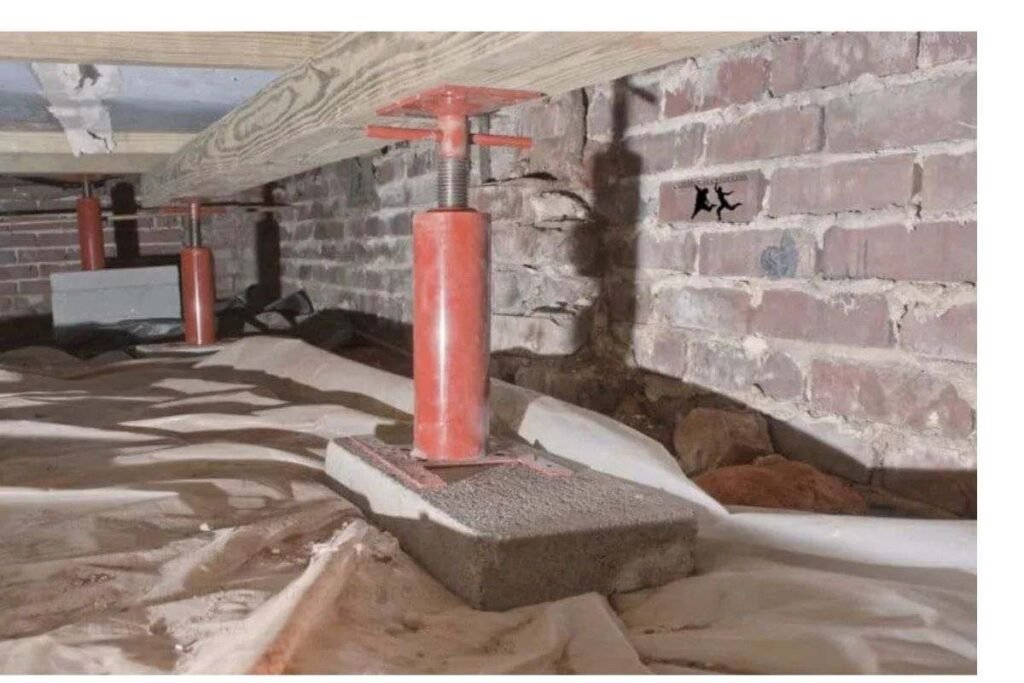
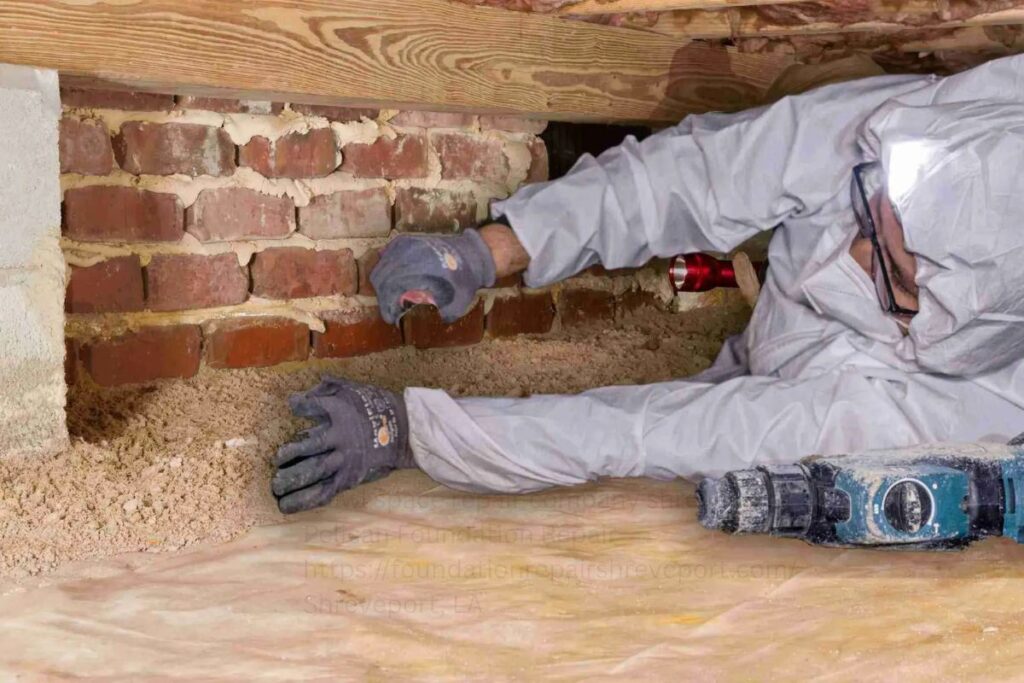
An expert inspection looks at the piers, the joists, the drainage, and where the water is coming from. A licensed structural engineer may be brought in when the movement is severe or a lender asks for an engineering report. The written findings should name the cause and the order of work: water out first, drainage fixed second, then any pier or joist work. See our post on checking your foundation after heavy rain, and our guide to the crawl space sump pump. The crawl space repair service page lays out how Pelican handles crawl space work from inspection through repair.
What Water Removal and Drainage Work Costs in Shreveport
Every homeowner asks what it costs to fix standing water, and the honest answer is that it depends on the cause and the scope. Regrading, drains, and a pump cost more, and encapsulation adds more again. Your exact cost comes from a written estimate after an expert inspection.
- The cause: grading, a pump, or a plumbing repair.
- How much water is involved, and how often the space floods.
- Whether the yard needs regrading, drains, a pump, or all three.
- Access to the crawl space and room for the crew to work.
- Whether joists or piers need repair once the space is dry.
- The size of the house and the crawl space.
Get the findings in writing before work starts. Pelican Foundation Repair backs qualifying repairs with a 20-year structural warranty.
Act Now or Watch It? A Simple Triage
Not every wet crawl space needs a crew this week. Water that appeared suddenly, water still there a week later, water that smells strongly, or water near wiring are all call-now signs. A thin puddle that dries in a day or two, with no smell and no signs of movement, can be watched: photograph it and check it again after the next wet weekend. If it comes back deeper, or stays longer, the watching is over.
The weekend of November 14 and 15 showed how fast a wet spell can fill a low crawl space, with light rain through Sunday and humidity reaching 87 percent. Homeowners in Broadmoor, South Highlands, Highland, and Cedar Grove who found water after that weekend should get the drainage checked before the next wet spell. The National Weather Service office in Shreveport tracks rain and drought for the region; see the National Weather Service Shreveport page for current local conditions.
Standing water under the house is a message, not a mystery. Get the water out safely, find the source, and fix the drainage before the next wet weekend. For more on crawl space care across the area, see the Pelican Foundation Repair homepage.
Frequently Asked Questions
Is standing water in a crawl space after rain normal in Shreveport?
It is common, but not harmless. Many older pier-and-beam homes in Shreveport see water under the house after a wet weekend. Water that stays for days can rot joists and feed mold.
How long can water sit in a crawl space before it causes damage?
A puddle that dries in a day or two does little harm. Water that stays for a week or more keeps wood and insulation damp, and mold can start growing within days.
Can I pump the water out of my crawl space myself?
You can run a portable pump from dry ground if the water is shallow and clear. Do not wade into the water or touch the breaker panel with wet hands. If you are unsure what is in the water, call a professional.
Will a sump pump keep my crawl space dry?
A sump pump handles water that rises from below, but it is only part of the fix. Grading, gutters, and drains stop water coming in from the sides, and the pump handles what still gets in.
Does standing water in a crawl space mean my foundation is failing?
Not usually. Most standing water is a drainage problem, not a foundation failure. It becomes one when the water softens the soil under the piers and the floors start to slope.
How much does it cost to fix standing water in a crawl space in Shreveport?
It depends on the cause, how much water is involved, and whether the fix is grading, drains, a pump, or encapsulation. A one-time pump-out is small; a full drainage and encapsulation plan is larger. Your exact cost comes from a written estimate after an expert inspection.
Who do I call for standing water under my house in Shreveport?
Call a foundation repair specialist who handles crawl space drainage, like Pelican Foundation Repair at 318-585-2003. If the water returns in dry weather or smells of sewage, call a plumber first.
Pelican Foundation Repair
6118 Fairfield Ave, Shreveport, LA 71106, USA
318-585-2003
https://foundationrepairshreveport.com/