 Skip to main content

Crawl Space Sump Pumps: When Your Crawl Space Needs One
A crawl space sump pump installation removes water automatically — here is how to tell if yours needs one, what it costs, and how to keep it ready for rain.
Your crawl space needs a sump pump if water collects under the house after rain — standing puddles, soggy soil that stays wet for days, musty smells, or white chalky stains on the walls all point to liquid water that drainage cannot handle. Humidity without puddles is a dehumidifier’s job; standing water is a pump’s job.
That distinction matters in northwest Louisiana, where Gulf humidity keeps the air damp all summer and hard rains — like the one arriving after six dry weeks — dump water faster than the ground can absorb it. A sump pump handles the second half of that problem: actual water.
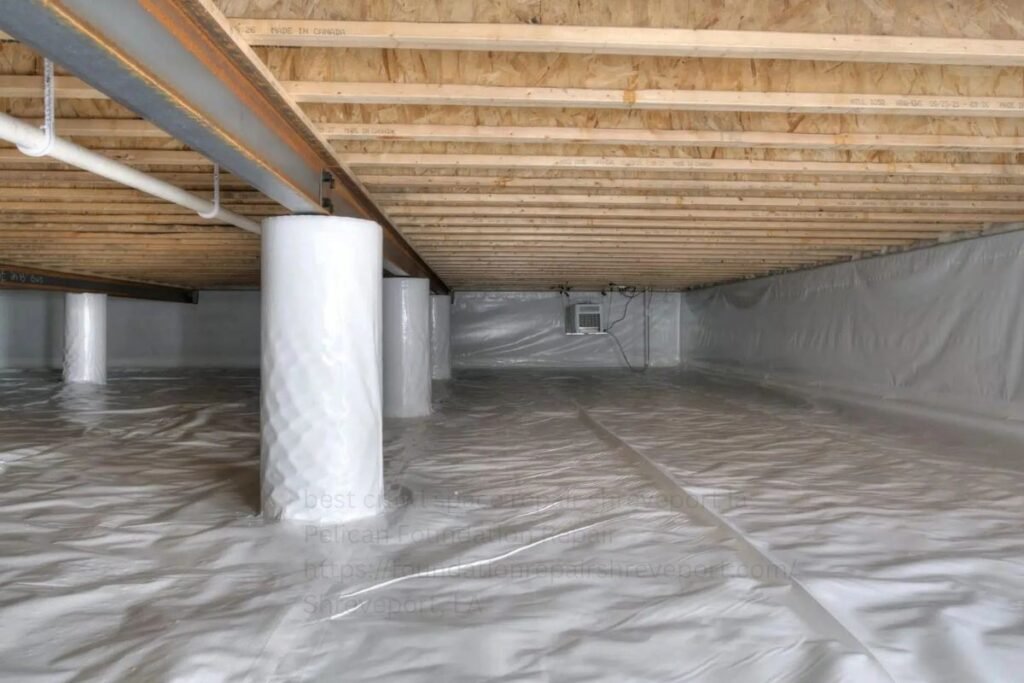
Signs Your Crawl Space Needs a Sump Pump
Most homeowners never look under the house until something smells wrong. Check for these — yourself with a flashlight, or ask a technician to photograph them during an inspection:
- Standing water after rain — puddles on the vapor barrier or bare soil still there a day later. One storm should not leave water sitting.
- Soil that never dries — damp earth under the house long after the last rain, a sign groundwater is pushing up from below.
- A musty smell inside the house — much of your first-floor air comes from the crawl space.
- White chalky stains (efflorescence) on foundation walls — mineral deposits left when water moves through masonry and evaporates.
- Rusty ductwork or corroded fasteners — standing water attacks metal under the house.
- Soft or crumbling wood — damp joists and subfloor rot, and termites love damp wood.
Spot two or more and the crawl space holds more water than gutters and grading can handle. Our crawl space repair guide covers the full symptom list; our mold guide covers the mold side of the same problem.
How a Crawl Space Sump Pump System Actually Works
A sump pump system is simpler than most homeowners expect. Four parts do the work:
- The sump basin (the pit). A plastic or fiberglass liner, about 18 inches across and 22–30 inches deep, set at the lowest point of the crawl space floor.
- The pump. Sits in the basin with a float switch. Water rising to a set level trips the float and the pump kicks on; when the level drops, it shuts off.
- The check valve. A one-way valve that keeps pumped water from flowing back into the pit when the pump shuts off. Without it, the pump cycles constantly and burns out early.
- The discharge line. PVC pipe (typically 1.25–1.5 inch) that carries the water up out of the crawl space and releases it well away from the foundation.
A sealed lid keeps humid air and debris out of the basin; a high-water alarm sounds if water climbs past the pump’s trigger point.
Crawl space installations differ from basement ones mainly in headroom: many northwest Louisiana pier-and-beam crawl spaces have 18–24 inches of clearance, so basins go in shallower and pumps are chosen for a low-profile fit.
Pedestal vs. Submersible: Which Pump Belongs in a Crawl Space?
Two pump styles dominate residential crawl space work:
| Feature | Pedestal pump | Submersible pump |
|---|---|---|
| Where it sits | Motor on a column above the basin, impeller down in the water | Whole unit sealed inside the basin, underwater |
| Noise | Louder — the motor is in open air | Quieter — water muffles the motor |
| Typical power | 1/4–1/2 HP, moves moderate volumes | 1/3–3/4 HP, handles heavier inflow and solids |
| Best for | Occasional water, tight budgets, where the motor can stay dry | Regular or heavy water, sealed basins, low headroom |
| Typical cost | Lower equipment cost | Higher equipment cost, usually longer service life |
For most Shreveport-area crawl spaces, submersible wins: it fits under a sealed basin lid, runs quieter, and shrugs off the gritty sediment our clay sheds into the pit.
Sizing matters more than brand: a 1/3 HP submersible handles most crawl spaces; step up to 1/2 HP for long discharge runs, high lift, or heavy inflow. Oversized pumps short-cycle and wear out the float switch.
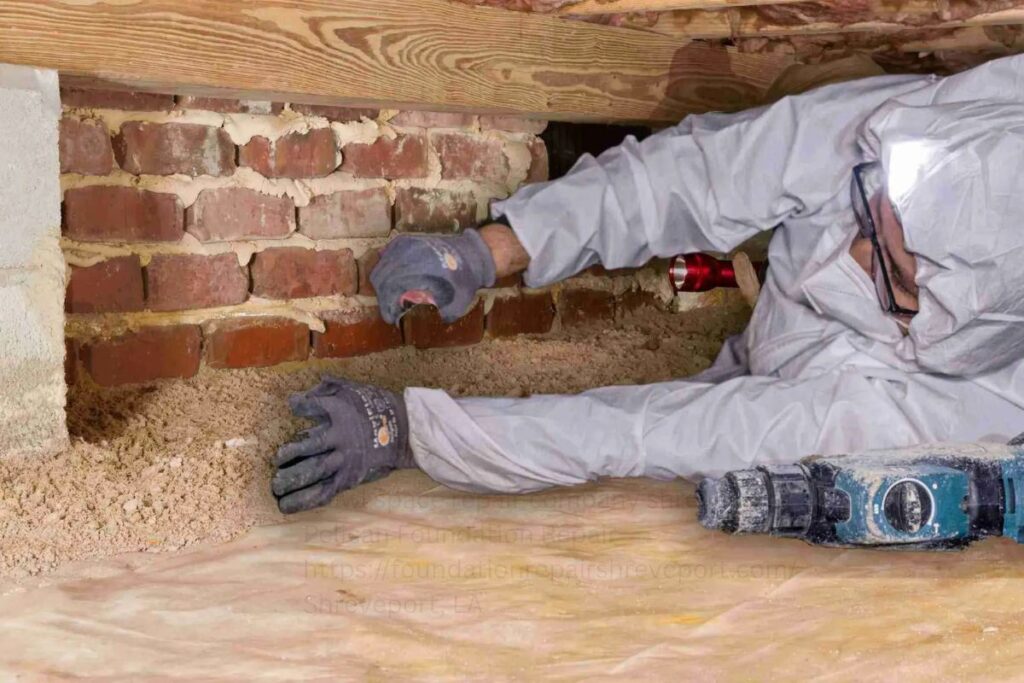
Pit Placement: Where the Sump Basin Goes
The basin goes at the lowest point — the pump can only remove water that reaches it. In practice, the technician:
- Maps the low spots during the inspection — where water pools after rain and where the floor grade dips.
- Digs below the footer line. The basin sits in a hand-dug pit bedded in gravel, so seeping water reaches the pump before spreading across the crawl space floor.
- Keeps clear of utilities. Louisiana One Call (811) marks public lines, and a careful crew probes for private ones before digging.
- Plans the discharge path. The basin location has to connect sensibly to where the discharge line will exit the foundation — a straight, short run beats a long run with elbows.
Large crawl spaces sometimes need two pits, but one properly placed pump beats two poorly placed ones. And the basin gets a sealed lid: an open pit in a crawl space is just a humidity machine.
Shreveport’s expansive clay digs hard and holds water tight, so basins here get a generous gravel bed — permeable fill around the liner lets groundwater reach the pump instead of sitting locked in the clay.
Battery Backup: The Part That Matters Most in Louisiana
The storms that dump the most water are the same storms that knock out the power, so battery backup is not an upsell here — it is the part of the system that protects you during a hurricane-season downpour or a spring squall line.
A backup pairs your main pump with a 12-volt pump and a deep-cycle battery that takes over automatically when power fails. Adding backup costs $800–$1,800 — for low-lying homes near the Red River bottoms, it is the cheapest insurance on the invoice.
A few practical points on backup:
- Test the battery, not just the pump. Batteries age. A three-year-old battery that has never been load-tested is a rumor of protection, not protection.
- Get the alarm. It tells you the main pump failed and the backup is running — which means you have hours, not days, to act.
- Know your runtime. A healthy deep-cycle battery typically carries a backup pump through a day or more of intermittent pumping; extended outages call for a generator or a second battery.
If your budget forces a choice, take the backup before the fancier primary pump.
Where the Discharge Line Goes
The pump is only half the system — the discharge line decides whether pumped water actually leaves. The rules are simple:
- Away from the house — at least 10 feet from the foundation, downhill if the lot allows it. Water discharged at the foundation wall is water the pump will pump again.
- Onto a splash pad or into a drain line to the street, a ditch, or a dry well — never into the sanitary sewer, which most parishes prohibit.
- Buried where it crosses traffic areas so mowers and feet do not crush it, with the outlet kept clear of mulch, leaves, and soil.
- Freeze-protected. Shreveport rarely freezes, but an exposed line can ice shut — burying it with a freeze-relief tee near the foundation solves it.
Tie it into the bigger drainage picture: downspouts should extend as far from the house as the sump discharge, so grading, gutters, and discharge all move water away — which is what a real crawl space repair plan covers.
Seasonal Maintenance That Takes 30 Minutes
Sump pumps are low-maintenance — until the season you need them after sitting idle. After six-plus weeks of severe-to-exceptional drought with burn bans across northwest Louisiana, every crawl space pump has sat dry since September — and with rain arriving late Friday October 30, the pump that sat all fall gets its first real test.
Run this check before the rain, not during it:
- Pour a few gallons into the basin. The float should trip and the pump should start — if it does not, the float is stuck or the power is off. Fixable now; not fixable at midnight in a storm.
- Watch a full cycle: the pump empties the basin, shuts off cleanly, and the check valve stops backflow. Gurgling backflow means the valve is failing.
- Clean the basin. Scoop out silt and grit — our clay soil sheds fine sediment that jams floats and impellers.
- Check the discharge outlet outside — not buried in mulch, blocked by leaves, or crushed.
- Test the battery backup. Unplug the main pump and pour water in — the backup should take over. Reconnect when done.
- Test the alarm — lift the float manually and confirm it sounds.
Do this twice a year — spring and fall. With drought conditions across northwest Louisiana breaking this weekend, this week’s check is timely.
Sump Pump, Dehumidifier, or Encapsulation?
They solve different problems — and in Louisiana, many crawl spaces need two of the three:
- Sump pump removes liquid water — puddles, seepage, storm inflow. If water physically stands in the crawl space, start here.
- Dehumidifier removes moisture from the air — the Gulf humidity that keeps wood damp even with no standing water. It cannot pump out a puddle. Our dehumidifier guide covers these units in our climate.
- Encapsulation seals the space — heavy vapor barrier on floor and walls, sealed vents, conditioned air. See our crawl space encapsulation service page.
The usual order: fix bulk water first (pump + drainage), then seal (encapsulation), then condition the air (dehumidifier). A dehumidifier in a crawl space that floods every spring will run constantly and die young; a pump in a merely humid crawl space is overspending. The free inspection sorts out which problem you have in about an hour.
A sump pump is not a foundation repair by itself, but it protects foundation repairs — piers, wall work, and encapsulation all last longer when the soil is not cycling between saturated and bone-dry. That is why foundation repair plans in Shreveport so often include drainage and pumping alongside the structural work.
What Crawl Space Sump Pump Installation Costs in Shreveport
An installed system typically runs $1,200–$4,500 in the Shreveport area — basin, pump, check valve, discharge line, lid, and labor. Battery backup adds $800–$1,800. A second pit, a long buried discharge run, or a new electrical outlet moves the price within that range.
What moves the price:
- Crawl space access and headroom. An 18-inch crawl under a 1950s South Highlands ranch takes longer to dig than a roomy one.
- Number of pits. One pit covers most homes; long or L-shaped crawl spaces may need two.
- Discharge distance. A short run to a downhill ditch is cheap; a long buried run to the street is not.
- Electrical. The pump needs a GFCI outlet nearby; if the crawl space has none, an electrician’s visit gets added.
Get the quote in writing — pump model, basin size, discharge route, warranty terms. Reputable companies warranty equipment and workmanship, and qualifying repairs carry a 20-year structural warranty. The EPA’s guide to mold, moisture, and your home explains why crawl space water affects the air you breathe.
Frequently Asked Questions About Crawl Space Sump Pumps
How do I know if my crawl space needs a sump pump?
Standing water under the house after rain — puddles on the vapor barrier or soil that stays soggy for days — is the clearest sign. Musty smells, white mineral stains, and water marks on piers point the same way. A free inspection with photos settles it fast.
How much does crawl space sump pump installation cost in Shreveport?
Most run $1,200–$4,500 — basin, submersible pump, check valve, discharge line, sealed lid, and labor. Battery backup adds $800–$1,800. Headroom, pit count, and discharge length move the price within that range.
Will a sump pump dry out a damp crawl space, or do I need a dehumidifier too?
A sump pump removes liquid water — puddles and seepage. A dehumidifier removes moisture from the air. Standing water means start with the pump; humidity with no puddles means a dehumidifier may be enough.
Where should the sump pump discharge line go?
At least 10 feet from the foundation and downhill if possible — onto a splash pad or into a drain line to a ditch or the street, never into the sanitary sewer. Keep the outlet clear of mulch and debris.
How often should I test my sump pump?
Twice a year — before spring storm season and in fall. After a long dry spell, test before the first rain: pour a few gallons into the basin and confirm the pump starts, empties the pit, and shuts off.
Do sump pumps really need battery backup in Louisiana?
Yes — the most important add-on here. The storms that dump the most water also knock out power. Backup adds $800–$1,800 and takes over automatically during an outage.
How long do sump pumps last?
A quality submersible pump gives many years of service with basic maintenance — the twice-yearly test, a clean basin, a working check valve. What kills pumps early is neglect: a jammed float, grit in the basin, or a failed check valve that makes it cycle constantly.
Pelican Foundation Repair
6118 Fairfield Ave, Shreveport, LA 71106, USA
318-585-2003
https://foundationrepairshreveport.com/