Slab Foundation Repair in Red Chute, LA: Methods, Signs, and Clay-Soil Factors
Slab foundation repair in Red Chute, LA fixes cracked and settling concrete slabs with foam leveling, steel piers, or epoxy crack repair, matched to Bossier Parish clay soil.
Slab foundation repair in Red Chute, LA usually means lifting a settled slab with foam or mudjacking, adding steel piers where the soil keeps moving, or sealing a stable crack with epoxy, and the right choice depends on whether your slab is sinking, cracking, or both. An expert inspection measures the drop first and sets the plan.
Red Chute is a small community just east of Bossier City, in Bossier Parish, and most homes here sit on concrete slab foundations. A slab home has no crawl space underneath. The concrete floor you walk on is the foundation itself, poured right on the ground. When the soil under a slab moves, the slab moves with it, and the signs show up in the floor, the walls, and the doors.
Why Slabs Move in Red Chute: Bossier Parish Clay and Moisture
How Bossier Parish Clay Moves a Slab
Expansive clay is the main force behind slab trouble in Red Chute. When rain soaks the soil, the clay takes in water and pushes upward. When the dry heat of summer comes, the clay gives that water back and pulls away from the slab, leaving gaps under the concrete. One side of a house may stay damp longer while the other side dries out sooner, so the slab does not move as one piece. It bends and tilts, and concrete is strong under weight but weak when pulled apart, so a bend often ends in a crack.
Water, Drainage, and the Ground Around Your Slab
North Louisiana weather adds a second push. Heavy rain soaks the ground around a house, and the flat lots common around Red Chute can hold water near the slab edge instead of shedding it away. A downspout that dumps beside the house or a low spot that holds water after rain can leave the soil on one side wetter than the rest. A slow plumbing leak under a slab keeps the clay swollen in one spot for months. The National Weather Service Shreveport page tracks the wet and dry spells that drive this cycle across Bossier Parish.
Slab Crack or Settlement: Signs Red Chute Homeowners Should Watch
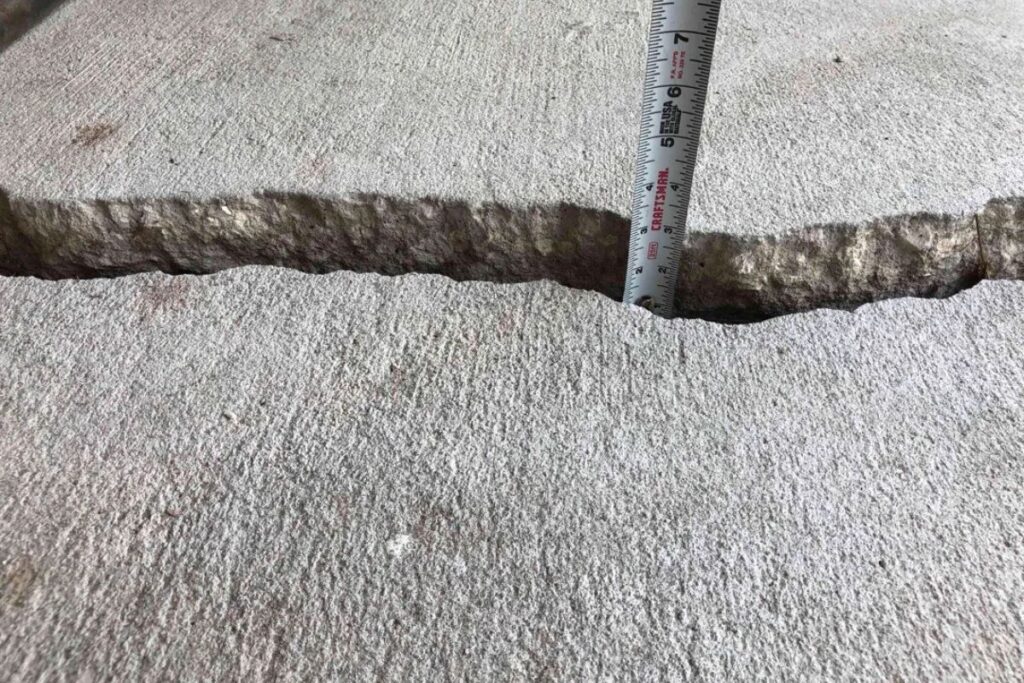
Cracks That Point to Slab Movement
Start with the floor itself. A crack that runs across a room, steps through the tile, or opens wider at one end than the other is worth a closer look. Cracks in the walls tell the same story from a different angle: a diagonal crack running from a door or window corner, a crack where the wall meets the ceiling, or a crack that keeps coming back after it has been patched. Outside, look for a stair-step crack in the brick or a gap between the brick and a window frame. Measure a crack now and again in a few weeks. A crack that stays the same width is often stable, while one that keeps widening is still moving.
Settlement Signs Inside the House
Settlement shows up in how the house feels to live in. A floor that slopes toward one corner, a spot where a chair rocks on what used to be a flat floor, or a marble that rolls the same way every time all point to a slab that has dropped on one side. Doors that stick, rub at the top, or will not latch are a classic sign, and so are windows that jam or will not close all the way. Look for gaps where baseboards pull away from the floor and for tile that has popped loose or cracked in a straight line. A single sticking door can be a swollen frame after a damp week, but a sticking door plus a sloping floor plus a diagonal crack is a pattern.
- A crack runs across the floor or steps through the tile in a straight line.
- A wall crack runs diagonally from a door or window corner.
- A crack keeps widening or comes back after it has been patched.
- Floors slope toward one corner, or a marble rolls the same way every time.
- Interior doors stick, rub at the top, or will not latch.
- Windows jam, stick, or will not close all the way.
- Baseboards pull away from the floor or a gap opens along the wall.
- Tile pops loose or cracks in a line across the room.
- A stair-step crack shows in the brick outside or in the mortar.
- A gap opens between the chimney and the house or beside a window frame.
Slab Foundation Repair Methods in Red Chute, LA
Foam and Mudjacking Leveling for a Settled Slab
Foam leveling and mudjacking both lift a settled slab by filling the gaps under it. With foam leveling, the crew drills small holes through the slab and pumps a foam that expands and lifts the concrete back toward level as it hardens. With mudjacking, the crew pumps a cement-based grout through larger holes to raise the slab the same way. Both fit slabs that have sunk because the soil under them washed out or shrank away, and both work best when the settlement has slowed or stopped. Neither method is right for a slab that is still sinking fast.
Steel Piers for Slabs That Keep Settling
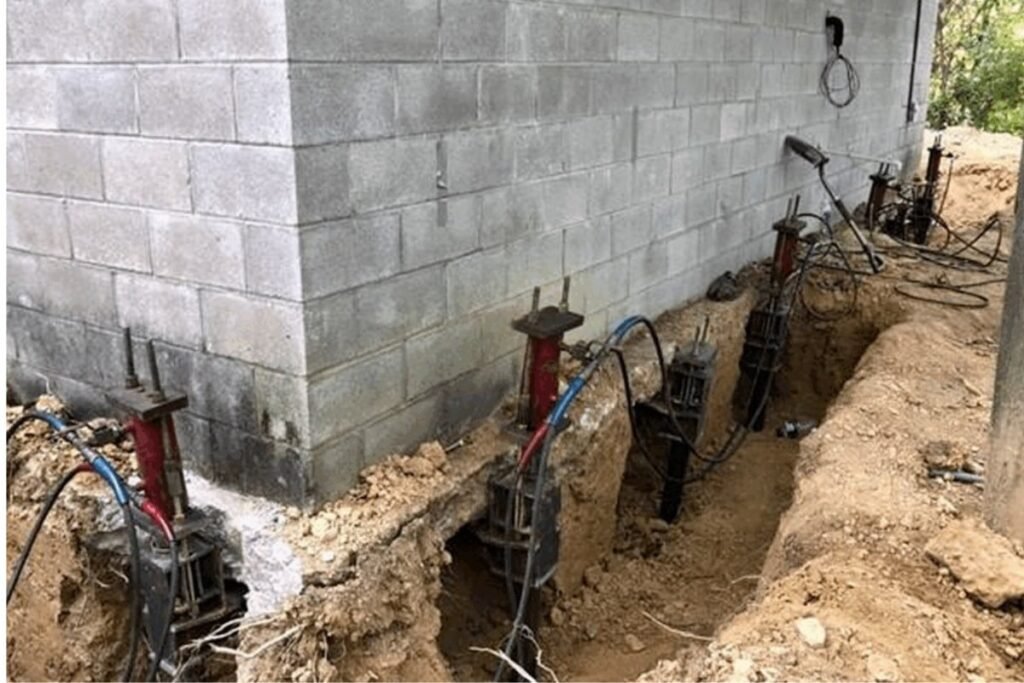
Steel piers are the fix when a slab keeps settling or has dropped too far for a lift alone. The crew drives steel piers down through the clay to a firm layer below, then uses them to lift and hold the slab in place. Piers fit Red Chute homes where one corner keeps dropping, where doors and cracks come back after a smaller job, or where a plumbing leak has washed soil out from under the slab. It is the most involved of the three methods, because it needs digging beside the slab, but it also reaches past the clay layer that caused the trouble. For the full picture of this service, see the slab foundation repair service page.
Epoxy Crack Repair for Stable Cracks
Epoxy crack repair fits a slab crack that is stable but needs sealing. The crew cleans the crack, then injects an epoxy that bonds the two sides of the concrete back together and keeps water out. It suits hairline cracks and wider cracks that have stopped growing, and it keeps a small problem from turning into a bigger one by stopping water from getting under the slab and feeding the clay. Epoxy does not lift a slab and does not stop settlement, so it is the wrong choice for a crack that is still widening or for a floor that still slopes.
| Method | Best for | Limit |
|---|---|---|
| Foam or mudjacking leveling | A slab that has sunk a little and stopped moving | Does not hold if the soil keeps sinking |
| Steel piers | A slab that keeps settling or has dropped far | Most involved job; needs digging beside the slab |
| Epoxy crack repair | A stable crack that needs sealing against water | Does not lift a slab or stop settlement |
What a Slab Foundation Repair Visit Covers in Red Chute
The Expert Inspection
During the inspection, the specialist measures floor levels room by room, notes where the slope runs and how far it drops, and maps each crack by length, width, and direction. The specialist also checks the water sources that feed the clay: a downspout that dumps beside the house, a low spot that holds water after rain, or a plumbing leak under the floor. In a slab home, a leak check matters more than in a pier-and-beam home, because there is no crawl space to look into. Homeowners in ZIP code 71037 can read more about the wider area on the Red Chute, LA service area page.
The Written Estimate After the Inspection
After the inspection, you should receive a written estimate that lists the work area by area, the method for each one, and the warranty terms on qualifying repairs. Ask how much lift to expect in each room, what happens if a lifted section settles again, and whether drainage work is part of the plan or a separate step. A good estimate also says plainly which cracks will be sealed and which ones only need watching. Our guide on how to fix a cracked slab foundation in Shreveport, LA walks through the same crack-by-crack thinking for a nearby city.
What Affects the Cost of Slab Foundation Repair in Red Chute?
The cost of slab foundation repair in Red Chute depends on how much of the slab needs work, how far it has dropped, which method fits the problem, and whether drainage or plumbing work is part of the plan. A home that needs epoxy sealing on one stable crack is a smaller job than a home that needs foam leveling across several rooms, and both are smaller than a home that needs steel piers under a full corner. No honest figure exists before the floors are measured and the cracks are mapped, and any number given without that inspection is a guess. Your exact figure comes from a written estimate after an expert inspection.
Two things push the figure up more than any others: the number of piers or lift points involved, and whether a plumbing leak or drainage problem has to be fixed along with the slab. See our guide on slab foundation repair costs in Shreveport, LA for the same cost drivers nearby.
Keeping Your Red Chute Slab Steady After the Repair
- Keep gutters clear and run downspouts well away from the slab edge.
- Grade the yard so rain runs away from the house, not toward it.
- Fix plumbing leaks fast, since a slow leak swells the clay from below.
- Recheck doors, floors, and old cracks twice a year, after wet and dry seasons.
- Keep trees and large shrubs from growing roots against the slab.
- Watch for new cracks after heavy rain and note whether they grow.
Red Chute homeowners who want to compare slab and crawl space trouble can read our crawl space repair guide for Red Chute, LA, since the two foundation types share the same Bossier Parish clay. For the full range of services across Shreveport and northwest Louisiana, see the Pelican Foundation Repair homepage. The LSU AgCenter also offers guidance on soil and moisture management around Louisiana homes.
Frequently Asked Questions
How do I know if my slab foundation in Red Chute needs repair?
Book an inspection when a crack runs across the floor, when floors slope, when doors stick or will not latch, or when a crack keeps widening after it has been patched. One sign can be a quirk, but two or three together usually mean the slab has moved.
What causes slab foundations to crack in Red Chute, LA?
Expansive clay soil is the main cause: it swells when wet and shrinks when dry, bending the slab until it cracks. Poor drainage, water pooling near the slab edge, and plumbing leaks under the floor add to the problem.
Can a cracked slab foundation in Red Chute be repaired without replacing it?
Yes, in most cases. Foam or mudjacking leveling lifts a settled slab, steel piers hold a slab that keeps settling, and epoxy seals a stable crack. Full slab replacement is rare.
How much does slab foundation repair cost in Red Chute, LA?
The cost depends on how much of the slab needs work, how far it has dropped, the method used, and whether drainage or plumbing work is part of the plan. Your exact figure comes from a written estimate after an expert inspection.
How long does slab foundation repair take in Red Chute?
Epoxy sealing and small foam leveling jobs often take a day, depending on the number of cracks and lift points. Steel pier jobs take longer, since the piers must be driven to firm ground and the slab lifted in stages.
Will my slab floors be perfectly level after slab foundation repair?
Floors usually come back close to level, but a slab that has settled for years rarely returns to perfect. A good job gets the floors noticeably flatter, stops doors from sticking, and holds the slab steady.
When should I book a slab foundation repair inspection in Red Chute?
Book one when a floor crack keeps widening, when floors slope, when doors or windows stick, or when tile pops loose or cracks in a line. The sooner the movement is measured, the simpler the fix tends to be.
Pelican Foundation Repair
6118 Fairfield Ave, Shreveport, LA 71106, USA
318-585-2003
https://foundationrepairshreveport.com/