Slab Foundation Repair in Haughton, LA: Methods, Signs, and Clay-Soil Factors
Slab foundation repair in Haughton, LA fixes cracked and settling concrete slabs with foam, mudjacking, or piers, matched to what the clay soil underneath is doing.
Slab foundation repair in Haughton, LA means lifting and leveling a concrete slab that has cracked or sunk because the expansive clay under Bossier Parish swells when wet and shrinks when dry. Small hairline cracks can often be sealed, while a slab that has dropped or keeps cracking needs foam lifting, mudjacking, or piers, chosen after an expert inspection.
Haughton sits in Bossier Parish, ZIP code 71037, just east of Bossier City along US-80 and I-20. Many homes here sit on concrete slabs poured over the same heavy clay that moves houses in Shreveport.
Most homeowners spot the trouble the same way: a crack across the garage floor, a tile that has popped loose, or a door that sticks a little more each year. This guide covers how to read slab cracks, why Haughton clay moves, and which repair method fits each problem.
Slab Cracks vs Settlement: Reading What a Haughton Slab Is Telling You
A slab crack is a message. Its width, direction, and growth tell a specialist whether the concrete simply shrank as it cured or the ground under the house moved.
Hairline Cracks: Often Shrinkage, Still Worth Watching
A hairline crack is a thin line, no wider than a credit card edge. Concrete shrinks as it cures, and that shrinkage often opens hairline cracks in the first year or two. A hairline crack that never changes is usually not a structural problem, but it still deserves attention. Water finds any opening, so check it every few months.
Wide or Growing Cracks: A Sign the Slab Is Moving
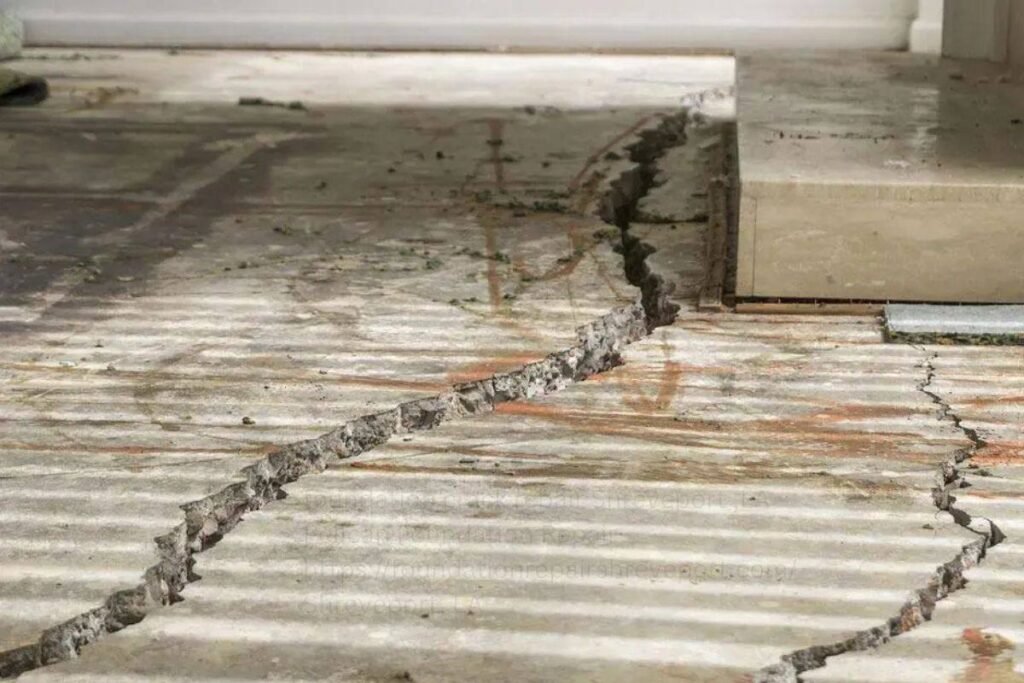
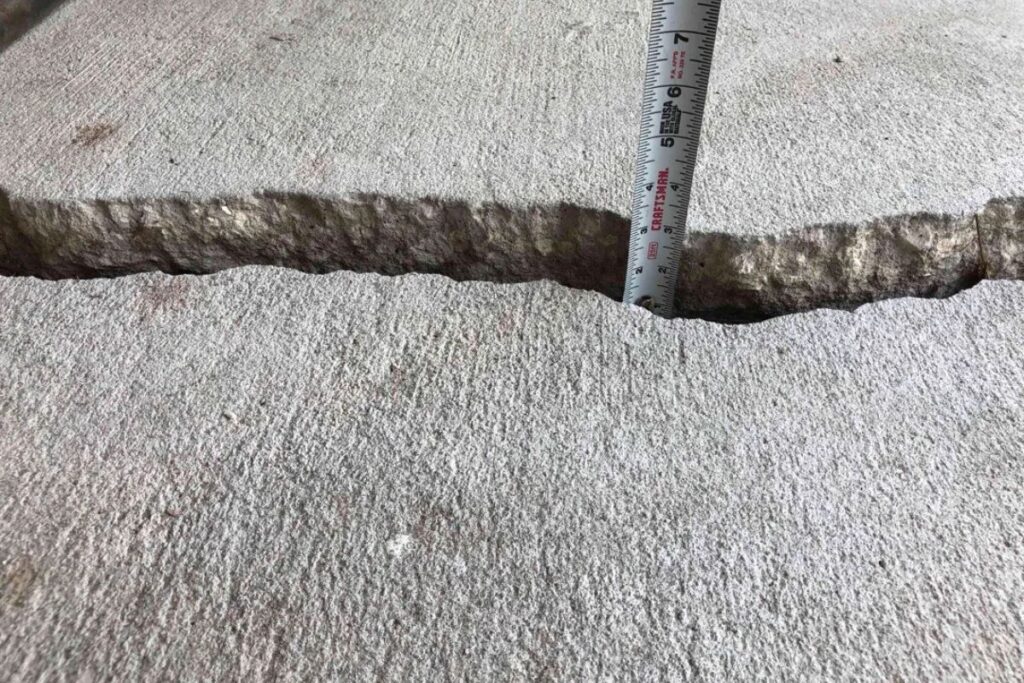
A crack you can fit a coin into is a different story. Wide cracks usually mean one side of the slab has dropped or lifted, and a crack that keeps growing means the movement has not stopped. Measure the width with a ruler and the date, then measure again after the next wet or dry spell. A crack that grows needs a specialist, not a tube of filler.
Diagonal Cracks and Uneven Floors: Settlement Showing Inside
A diagonal crack running from a corner across a room is a settlement sign. Look for other clues too: a floor sloping toward one corner, tile cracked in a straight line, or a gap between the baseboard and the floor. These signs mean the slab has dropped on one side and the concrete is cracking as it bends. When several appear together, the problem is under the slab.
- A thin hairline crack across the garage floor.
- A crack wide enough to fit a coin into.
- A diagonal crack running from a corner toward the middle of a room.
- A crack that keeps growing from one season to the next.
- Tile cracked in a straight line across the floor.
- A floor that slopes or feels uneven underfoot.
- A gap between the baseboard and the floor.
- A door that sticks worse each year.
Why Haughton Clay Moves Concrete Slabs
Slabs in Haughton do not crack by accident. They crack because the ground under them moves, and the clay in Bossier Parish moves more than most soils in Louisiana.
Expansive Clay Under Bossier Parish
The soil under Haughton is heavy, expansive clay, the same clay as Shreveport and Bossier City. When it gets wet it swells and pushes up against the slab; when it dries out it shrinks and pulls away. That cycle repeats with the seasons, working the concrete harder each round. Clay that keeps moving will crack a slab eventually. The LSU AgCenter offers guidance on Louisiana soils and moisture swings around homes built on clay.
A Dry Autumn and the Clay Shrink Cycle
The ArkLaTex has had a dry autumn: rainfall since September 1 has run about 4.3 inches below normal, according to the National Weather Service in Shreveport, and much of the region sits in ongoing Extreme to Exceptional drought. A cold front crossed on November 22 with light rain, but one front does not refill soil dried for months. Dry spells shrink the clay and leave gaps under the slab, and heavy rain soaks it back up fast.
Drainage, Trees, and the US-80 Corridor
Clay is only half the story. In Haughton, water often gathers where the yard is flat or gutters dump close to the house. A downspout that empties beside the slab keeps one patch of clay wet while the rest dries out, and that uneven moisture bends a slab. Large trees make it worse, pulling water from the clay in a dry spell and shrinking the soil under one corner. Homes along US-80 and I-20, and the newer subdivisions east of Bossier City toward Benton and Minden, sit on the same clay.
Slab Foundation Repair Methods Compared
There is no single fix for a cracked slab. The right method depends on whether the slab has sunk, whether it is still moving, and whether the ground or the concrete is at fault.
Polyurethane Foam Injection: Lifting From Below
Polyurethane foam injection lifts a sunken slab by pumping expanding foam through small holes in the concrete. The foam fills the gaps under the slab, then lifts the concrete back toward level. It cures fast, and the slab can be used again the same day. Foam works best where a slab has settled into a void left by shrunken clay, and it suits a dropped garage floor or sunken patio slab in Haughton.
Mudjacking: The Older Slab-Lifting Method
Mudjacking, also called slabjacking, lifts a slab by pumping a cement-based slurry under it. The slurry fills the void and pushes the slab up, then hardens into a solid base. It costs less than foam on a large job, but the holes are bigger and the heavy slurry adds weight to soil that is already struggling. Mudjacking suits a thick slab with a simple void, but it is a poor pick for active clay.
Steel Push and Helical Piers: Support That Reaches Firm Ground
Piers are the answer when the slab keeps moving or settlement is severe. Steel push piers are driven through the clay to firm ground, and the slab is lifted and held on them. Helical piers screw into the soil the same way and suit lighter loads. Piers stop settlement at its source instead of filling a void, so they are the choice when foam or mudjacking has already failed, or when the house has dropped enough to slope the floors.
Epoxy Injection: Sealing Cracks That Are Not Moving
Epoxy injection fills a crack with a rigid resin that bonds the two sides of the concrete back together. Once cured, the repair is often stronger than the concrete around it. Epoxy suits a dry, stable crack in a slab that has stopped moving, and suits a hairline crack that lets water through. It will not lift a slab or hold if the ground under it is still shifting.
| Method | How it works | Best for | Limit |
|---|---|---|---|
| Polyurethane foam injection | Expanding foam fills voids and lifts the slab | Sunken slabs over dry clay | Will not fix ongoing settlement |
| Mudjacking | Cement slurry pumped under the slab lifts it | Thick slabs with a simple void | Heavy slurry adds weight to weak clay |
| Steel push and helical piers | Piers driven to firm ground hold the slab | Severe or ongoing settlement | Needs an inspection first |
| Epoxy injection | Rigid resin bonds the crack closed | Dry cracks in a slab that stopped moving | Does not lift a slab or stop settlement |
| Drainage correction | Grading and gutters move water away | Slabs stressed by uneven moisture | Supports a repair |
What a Slab Repair Visit Covers in Haughton
A good slab repair visit starts with the whole house, not just the crack. The specialist reads the crack alongside the doors, floors, and ground around the home.
The Expert Inspection
During the inspection, the specialist measures each crack, checks whether the floor slopes, and walks the house for sticking doors, cracked tile, and gaps at the baseboards. Outside, the specialist checks the grading and gutters, and where water gathers after rain. Homeowners in ZIP code 71037 can read more on the Haughton, LA service area page, and the slab foundation repair service page covers every method.
The Written Estimate After the Inspection
After the inspection, you should receive a written estimate that names the slab problem, the repair method, and the warranty terms. Ask whether the estimate covers lifting only or whether piers or drainage work are part of the plan.
What Affects the Cost of Slab Foundation Repair in Haughton?
The cost of slab foundation repair in Haughton depends on the method, the size of the slab, how far it has dropped, and whether the ground is still moving. A single hairline crack sealed with epoxy is smaller than a garage slab needing foam lifting across its whole area, and a job that needs piers is bigger than lifting alone. No honest figure exists before the slab is seen. Your exact figure comes from a written estimate after an expert inspection.
Two things push the figure up most: how much of the slab needs lifting, and whether the repair is a lift or a structural fix. A slab with one low corner costs less to lift than one that has dropped across several rooms, and piers cost more than foam because they reach firm ground below the clay. Drainage work adds to the job, but it protects the repair. Our slab foundation repair cost guide for Shreveport explains these cost drivers, and the FEMA website offers guidance on water damage and foundation protection.
Keeping a Repaired Slab Steady After the Work
Lifting or sealing a slab is only half the job. The other half is keeping the clay around the house steadier, because a slab that keeps cycling through wet and dry will crack again.
- Keep gutters clear and downspouts running away from the house.
- Walk the yard after rain and look for puddles against the slab.
- Keep the soil grade sloping away from the walls.
- Fix plumbing leaks fast, since a slow leak swells the clay.
- Water the soil evenly in dry spells so it does not shrink away.
- Recheck repaired cracks twice a year.
- Watch doors and floors for new sticking or sloping.
- Keep trees and shrubs from rooting too close to the house.
The Pelican Foundation Repair homepage shows the full range of services, the services page lists every repair method available, and our guide to fixing a cracked slab foundation in Shreveport covers the same methods for homes across the river. Our foundation repair guide for Haughton covers the wider picture on local soil and settlement.
Frequently Asked Questions
How do I know if a slab crack in my Haughton home is serious?
A crack is serious when it is wide, diagonal, or growing, or paired with sloping floors and sticking doors. A thin hairline crack that never changes is usually just shrinkage. When in doubt, book an expert inspection.
What causes slab foundation problems in Haughton, LA?
The main cause is the expansive clay under Bossier Parish, which swells when wet and shrinks when dry. Poor drainage, plumbing leaks, and nearby tree roots make it worse.
Is polyurethane foam or mudjacking better for lifting a slab in Haughton?
Foam is better for most Haughton slabs because it is light, cures fast, and uses small holes. Mudjacking suits a thick slab with a simple void, but its heavy slurry adds weight to struggling clay.
How long does slab foundation repair take in Haughton?
Most foam lifting and epoxy sealing jobs take a few hours, and the slab can often be used again the same day. A job that needs piers takes longer, since the piers must be driven in stages.
Will a repaired slab crack open up again?
A properly repaired crack in a stable slab should stay repaired, but one can reopen if the ground under the slab keeps moving. That is why the inspection matters: the repair plan has to address the cause, not just the crack.
How much does slab foundation repair cost in Haughton, LA?
The cost depends on the method, the size of the slab, how far it has dropped, and whether piers are part of the plan. Your exact figure comes from a written estimate after an inspection.
When should I book a slab foundation repair inspection in Haughton?
Book one when a crack is wide, diagonal, or growing, when the floor slopes, when tile cracks in a straight line, or when doors start sticking.
Pelican Foundation Repair
6118 Fairfield Ave, Shreveport, LA 71106, USA
318-585-2003
https://foundationrepairshreveport.com/