 Skip to main content
Bowing Basement Walls: Causes and Repair Options
A bowing basement wall is a foundation wall that is bending or leaning inward under pressure from the soil outside. In the Shreveport area, the main cause is our expansive clay soil: it swells when wet and pushes sideways against the wall with tremendous force. The repair options are wall anchors, carbon fiber straps, steel I-beams, or in severe cases a partial or full wall rebuild. The right fix depends on how far the wall has moved.
Walls that have bowed less than two inches are often good candidates for anchors or carbon fiber. Walls bowed more than two inches, or walls with wide stair-step cracks and crumbling mortar, usually need steel beams or rebuilding. A free inspection is the only way to know which category your wall falls into, and catching it early almost always means a simpler and less expensive repair.
Call (318) 585-2003 – Free Inspection
📊 Bowing Wall Repair at a Glance
2 inches
The bowing threshold that usually separates simple fixes from major ones
4 options
Carbon fiber, wall anchors, steel beams, or rebuild
Free
Inspection and written repair plan from Pelican Foundation Repair
Why Basement Walls Bow Inward
A basement wall is basically a dam holding back soil. When that soil stays dry and stable, the wall has an easy job. When the soil gets saturated and starts pushing, the wall is in trouble. In northwest Louisiana, the soil around most homes is heavy clay, and clay is the worst offender when it comes to lateral pressure.
Clay soil absorbs water like a sponge and expands. That expansion has to go somewhere, and the path of least resistance is sideways — right into your basement wall. Then the soil dries out, shrinks back, and the cycle repeats. Every wet-dry cycle ratchets the wall a little further inward. This is why bowing gets worse over time instead of staying put.
Several things make the pressure worse:
- Poor drainage. Gutters that dump water next to the foundation, soil that slopes toward the house, and missing downspout extensions all soak the soil against the wall.
- Heavy rain seasons. Shreveport gets long, soaking rains. Weeks of wet weather keep clay expanded and pressing for extended periods.
- Expansive soil backfill. If the soil packed against the wall during construction was clay-heavy, the pressure problem was built in from day one.
- Frozen or saturated ground. Even in Louisiana, a cold snap on saturated soil adds expansion pressure.
- Tree roots and added loads. Large trees near the foundation drink water unevenly, and things like new driveways or additions add surcharge weight on the soil.
How to Tell If Your Wall Is Bowing
Most homeowners do not notice a bowing wall until it is obvious. That is a shame, because early bowing is much cheaper to fix. Here is what to look for when you walk your basement or crawl space walls.
Stand at one end of a long wall and sight down its length, the way you would sight down a two-by-four at the lumber yard. A straight wall looks straight. A bowing wall shows a visible curve or belly pushing inward, usually worst at the middle of the wall. Even a slight curve deserves attention.
Other warning signs include:
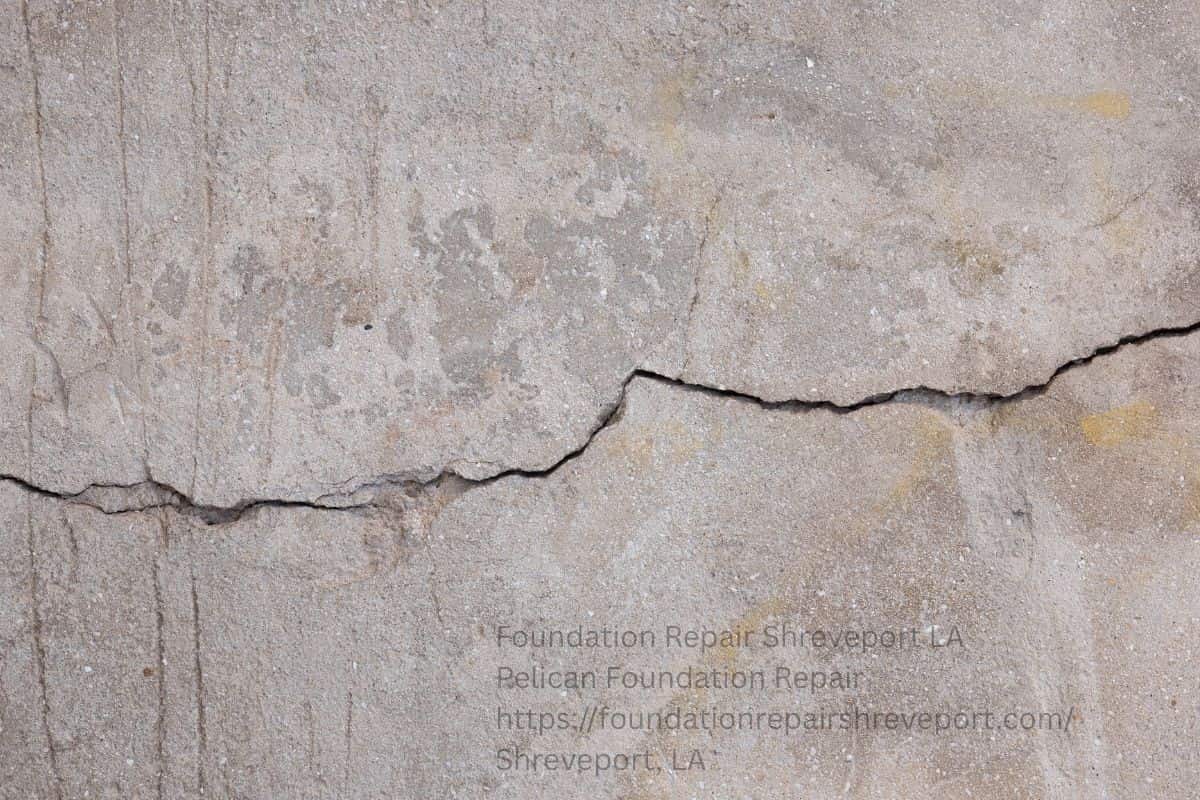
- Horizontal cracks running along the wall, often at the frost line or mid-height
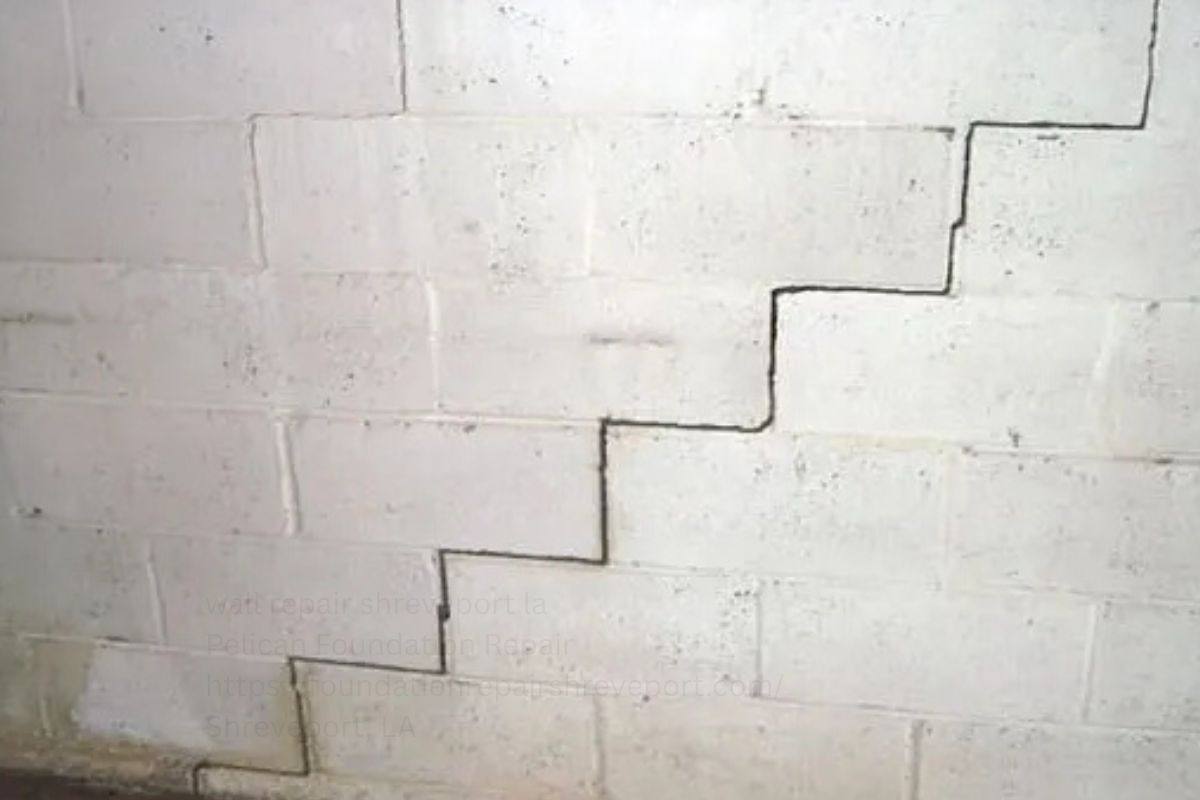
- Stair-step cracks in block or brick walls that are getting wider
- Walls that lean inward at the top
- Doors and windows near the wall that stick or will not latch
- Water seeping through cracks that were dry before
- White powdery residue (efflorescence) on the wall face, which signals water movement through the masonry
A simple test: hold a plumb line or a long level against the wall. If the middle of the wall sits an inch or more inside the line of the top and bottom, the wall is bowing. Write down the measurement and the date, then check again in a few months. Movement over time means the pressure is active, not historical.
Call (318) 585-2003 – Free Inspection
The Four Main Repair Options
There are four proven ways to fix a bowing basement wall. They range from minimally invasive to full reconstruction. The right one depends on how far the wall has moved, what the wall is made of, and what is happening with water and drainage outside.
| Repair method | Best for | How it works |
|---|---|---|
| Carbon fiber straps | Bowing under 2 inches, minor cracking, dry walls | High-strength straps epoxied vertically to the wall face hold it in its current position |
| Wall anchors | Bowing of 2 inches or more, block or poured walls | Steel plates inside connect through the wall to anchors buried in stable soil outside; tightening pulls the wall back |
| Steel I-beams | Severe bowing, tall walls, walls that keep moving | Vertical steel beams braced against the floor joists and footing physically hold the wall straight |
| Wall rebuild | Collapsed sections, crumbling mortar, bowing beyond repair limits | The damaged section is torn out and rebuilt with proper drainage and reinforcement |
Carbon Fiber Straps: The Light-Duty Fix
Carbon fiber straps are exactly what they sound like: strips of carbon fiber fabric, many times stronger than steel by weight, epoxied directly to the inside face of the wall in vertical runs. Once cured, they act like external reinforcement that keeps the wall from bowing further.
This method works best when the bowing is minor — generally under two inches — and the wall is otherwise sound. It does not straighten the wall; it locks the wall in place so the bowing cannot progress. For a wall that has barely started to move and shows only hairline cracking, that is often enough.
Carbon fiber has real advantages: no excavation outside, no disruption to landscaping, and the straps are thin enough to paint over. The limitation is that it is a stabilization method, not a straightening method. If the wall is already bowed two inches and you want it straight again, carbon fiber will not do that.
Wall Anchors: Pulling the Wall Back
Wall anchors are the most common fix for moderate to significant bowing. A steel wall plate is mounted on the inside of the basement wall. A steel rod runs from that plate through the wall and out into the yard, where it connects to a second anchor plate buried in stable, undisturbed soil. Tightening the system pulls the wall back toward straight, and periodic re-tightening over the seasons can recover more of the original position.
Anchors work on both poured concrete and block walls, and they address the actual cause — the soil pressure — by tying the wall to soil that is not moving. Most residential jobs use anchors spaced about six to eight feet apart along the affected wall. The exterior work involves digging small pits for the earth anchors, which means some disturbance to the yard, but far less than a full excavation.
Homeowners in the Shreveport area choose anchors often because our clay soil keeps pushing season after season. A system that can be re-tightened as the soil moves has a practical advantage here over a fix-and-forget approach.
Call (318) 585-2003 – Free Inspection
Steel I-Beams: Maximum Holding Power
When a wall is severely bowed or keeps moving despite other measures, steel I-beams are the heavy-duty answer. Vertical steel beams are set tight against the wall, anchored to the concrete footing at the bottom and braced against the floor joists at the top. The wall physically cannot move inward past the beams.
Beams take up a few inches of basement space along the wall, which matters if the basement is finished living space. In an unfinished basement or utility area, that tradeoff rarely bothers anyone. Beams are also the go-to when the wall is very tall, because taller walls develop more leverage from soil pressure and need the extra stiffness.
When a Wall Has to Be Rebuilt
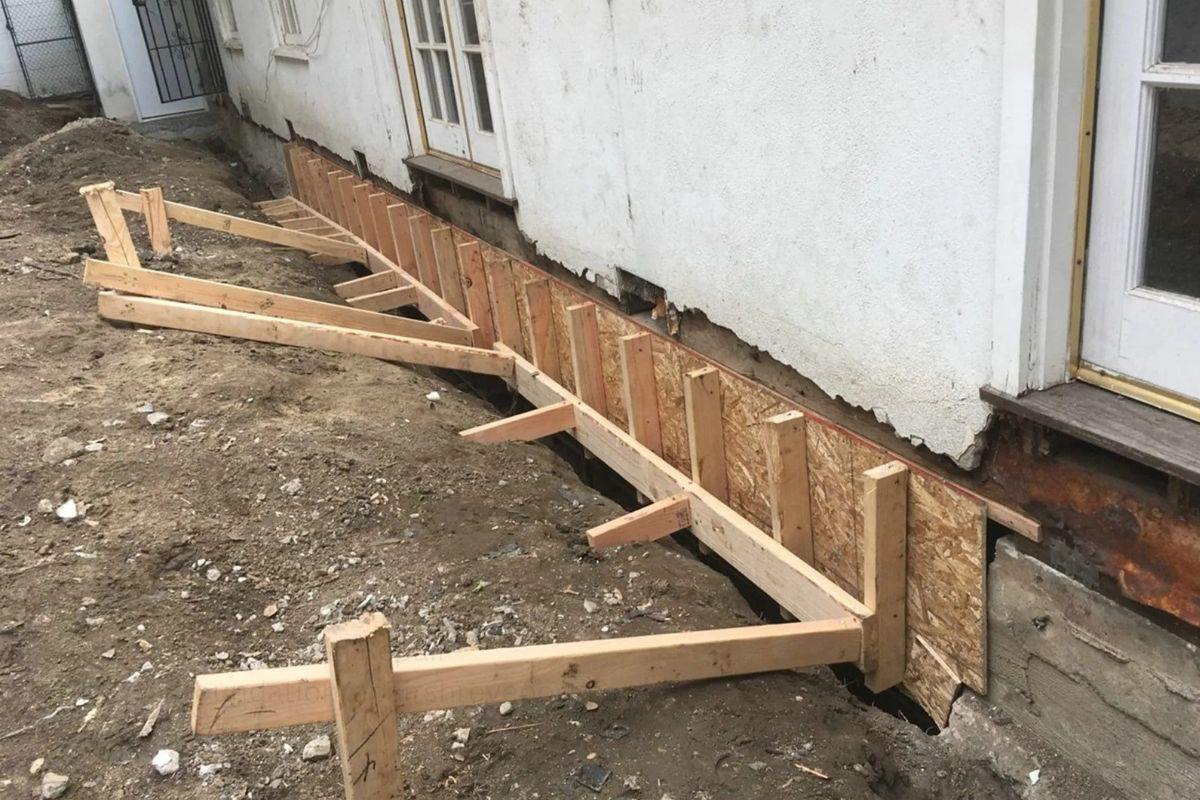
Sometimes a wall is past the point where reinforcement makes sense. That happens when the mortar joints are crumbling, blocks are cracked through, sections have actually shifted out of plane, or the wall has bowed so far that straightening it would break it. In those cases the honest fix is to take the bad section down and rebuild it.
A rebuild is also the opportunity to do everything right: proper footing drainage, waterproofing membrane on the outside of the new wall, and backfill with granular material instead of clay. Rebuilt correctly, the new section should outlast the rest of the house. It is the most expensive option, but for a failed wall it is the only one that actually solves the problem.
What Bowing Wall Repair Costs
Cost depends on the method, the length of wall, and how far it has moved. Small crack repairs in our area typically run $400–$1,500. Full bowing-wall jobs with anchors or beams are priced per wall and per anchor or beam, so the total scales with the size of the problem. That is exactly why early action saves money: stabilizing a wall at one inch of bowing costs far less than rebuilding it at four inches.
Be cautious of any quote given without measurements. A reputable contractor measures the deflection, checks the drainage, and explains why the recommended method fits your specific wall. Our inspections are free, and the written plan shows the measurements so you can see exactly what we are fixing and why. You can read more about typical foundation crack repair costs in Shreveport to understand how minor crack work is priced versus structural wall work.
Fix the Water, Not Just the Wall
Here is the part many contractors skip: the wall bowed because of water pressure, and if the water situation does not change, the pressure does not change either. Every bowing wall repair should come with a drainage review. At minimum, that means gutters and downspouts moving water at least six feet from the foundation, soil graded to slope away from the house, and no low spots where water ponds against the wall.
In many Shreveport yards, that also means a drainage correction plan: French drains, surface grading, or exterior waterproofing to keep the clay around the foundation from staying saturated. The structural fix holds the wall; the drainage fix removes the reason it bowed. Do both, and the repair lasts. Skip the drainage, and you are treating the symptom.
Interior water management matters too. If the bowing wall also leaks, an interior drain system paired with basement waterproofing keeps the basement dry while the structural repair holds the wall. These systems work together, and planning them at the same time is cheaper than doing them years apart.
Call (318) 585-2003 – Free Inspection
Wall Repair and Your Other Foundation Services
Bowing walls rarely travel alone. The same clay soil and water pressure that push a basement wall inward also cause slab settlement, pier-and-beam movement, and crawl space moisture problems. During our free inspection we check the whole foundation, not just the wall you called about, because fixing one symptom while missing another wastes your money.
If your home has a pier-and-beam or crawl space foundation rather than a basement, the same lateral pressure principles apply to your foundation walls and piers. Our wall repair services cover block, poured, and pier-and-beam foundation walls across Shreveport, Bossier City, Benton, Haughton, and the surrounding areas, and we check for settlement elsewhere during the same free inspection.
If you are dealing with block walls specifically, our cinder block foundation wall repair guide goes deeper on stair-step cracking and tuckpointing.
Frequently Asked Questions
How much does it cost to fix a bowing basement wall?
It depends on the method and the length of wall. Minor stabilization with carbon fiber is the least expensive structural option. Wall anchors and steel beams cost more because they involve more material and labor. Full rebuilds are the most expensive. Small crack repairs in Shreveport typically run $400–$1,500. A free inspection with exact measurements is the only way to get an accurate number for your wall.
Can a bowing wall be straightened, or only stabilized?
Wall anchors can gradually pull a wall back toward straight over time with periodic tightening. Carbon fiber straps stabilize the wall in its current position but do not straighten it. Steel I-beams hold the wall where it is. If the wall is severely bowed, straightening may not be possible without rebuilding.
Is a bowing basement wall dangerous?
It can be. A wall that is actively moving can eventually fail, and a failed basement wall is a structural emergency. Bowing under two inches with no active movement is usually a repair-soon situation rather than an emergency. Bowing beyond two inches, sudden new cracking, or visible movement over weeks deserves immediate professional attention.
Will carbon fiber straps work on a block wall?
Yes, carbon fiber works on block, poured concrete, and brick walls, as long as the bowing is minor and the wall surface is sound enough for the epoxy to bond. Walls with crumbling mortar or heavily deteriorated block are poor candidates, since the strap is only as strong as what it is bonded to.
Do I need to fix drainage too, or just the wall?
Fix both. The wall bowed because of water pressure in the soil. Anchors or beams solve the structural problem, but if the drainage stays bad, the pressure stays high and you are fighting the soil forever. Gutters, grading, and often a drainage system are part of a complete repair.
How long does bowing wall repair take?
Carbon fiber jobs are often done in a day or two. Wall anchor installations typically take two to four days depending on the number of anchors and exterior digging conditions. Steel beam installations are similar. Full rebuilds take longer because of the demolition and masonry work. Your written plan will include a timeline.
Does homeowners insurance cover bowing walls?
Usually not. Most policies exclude foundation movement caused by soil pressure, settling, and water seepage, treating them as maintenance issues. Sudden damage from a covered event is different, but gradual bowing from clay soil pressure is almost never covered. Check your specific policy, but plan on this being an out-of-pocket repair.
What is the warranty on bowing wall repair?
Pelican Foundation Repair offers a 20-year structural warranty on qualifying repairs. The exact coverage depends on the method used and the condition of the wall, and it will be spelled out in your written proposal before any work begins.
Call (318) 585-2003 – Free Inspection
Get an Honest Assessment of Your Wall
A bowing wall does not fix itself, and it does not stay the same — it gets worse a little at a time until the repair becomes a major project. The good news is that caught early, most bowing walls are straightforward to stabilize, and the inspection that tells you where you stand is free.
Call Pelican Foundation Repair at (318) 585-2003. We will measure the deflection, check your drainage, and give you a written plan with the right fix for your wall — anchors, carbon fiber, beams, or rebuild — and nothing you do not need. We serve Shreveport, Bossier City, Benton, Haughton, Greenwood, Stonewall, and surrounding communities. For background on how we evaluate contractors, the InterNACHI guide to bowing foundation walls is a solid independent reference on causes and warning signs.
Pelican Foundation Repair 6118 Fairfield Ave, Shreveport, LA 71106, USA 318-585-2003 https://foundationrepairshreveport.com/