 Skip to main content
Commercial Foundation Repair: What Business Owners Should Know
Commercial foundation repair uses the same proven methods as residential work — steel piers, polyurethane foam injection, drainage correction — but scaled for larger buildings and planned around keeping your business running. The key differences are load size, access logistics, and scheduling: a good commercial contractor phases the work to minimize downtime, documents everything for your records, and warranties the structural work. If your building shows settlement cracks, uneven floors, or drainage problems, a professional inspection is the first step.
Business owners often delay foundation work because they fear shutting down. In practice, most commercial pier and foam jobs are done with the business open — crews work in phases, often nights or weekends for sensitive areas. The expensive mistake is waiting: settlement that is cheap to stabilize today becomes a major structural project after another few rainy seasons in our clay soil.
Call (318) 585-2003 – Free Inspection
📊 Commercial Foundation Repair at a Glance
Open
Most jobs phased so your business stays open during repairs
20-year
Structural warranty on qualifying commercial repairs
Free
Inspection and written repair plan for your building
How Commercial Foundation Work Differs From Residential
The physics are the same — clay soil moves, foundations settle — but everything about the job is bigger. Commercial buildings carry heavier loads, cover more square footage, and often have slab thicknesses and footing designs that residential crews rarely see. The equipment scales up accordingly: larger piers, higher-capacity brackets, and sometimes engineered plans stamped for the specific structure.
The bigger difference is operational. A homeowner tolerates a torn-up yard for a week. A business needs the front entrance open, the parking lot usable, and customers unaware that structural work is happening. That means phasing: doing the work in sections, scheduling noisy or disruptive phases for off-hours, and keeping the site clean and safe every single day. Any contractor who treats your storefront like a residence is the wrong contractor.
Common Foundation Problems in Commercial Buildings
Commercial buildings in the Shreveport area develop the same clay-soil problems as homes, with a few business-specific twists:
- Differential settlement across large slab footprints — one wing drops while another holds, racking door frames and cracking tilt-wall panels
- Warehouse and retail floor settlement that creates trip hazards, drainage dead spots, and problems for racking and forklifts
- Expansion joint failure where slab sections move independently and joints open, spall, or fault
- Drainage failures on flat commercial lots — big roofs dump enormous water volumes, and undersized or clogged drainage soaks the clay around the foundation
- Plumbing leaks under slabs in restaurants, medical offices, and multi-tenant buildings, creating localized heave
- Facade and veneer cracking that alarms tenants and customers even when the structure is sound — perception matters for a business
If you manage a property, document symptoms with dates and photos. That record helps the inspector distinguish active movement from old, stable cracking, and it protects you if tenant or insurance questions come up later.
Repair Methods for Commercial Structures
Commercial repair draws from the same toolkit as residential, sized up for the job:
| Method | What it does | Typical commercial use |
|---|---|---|
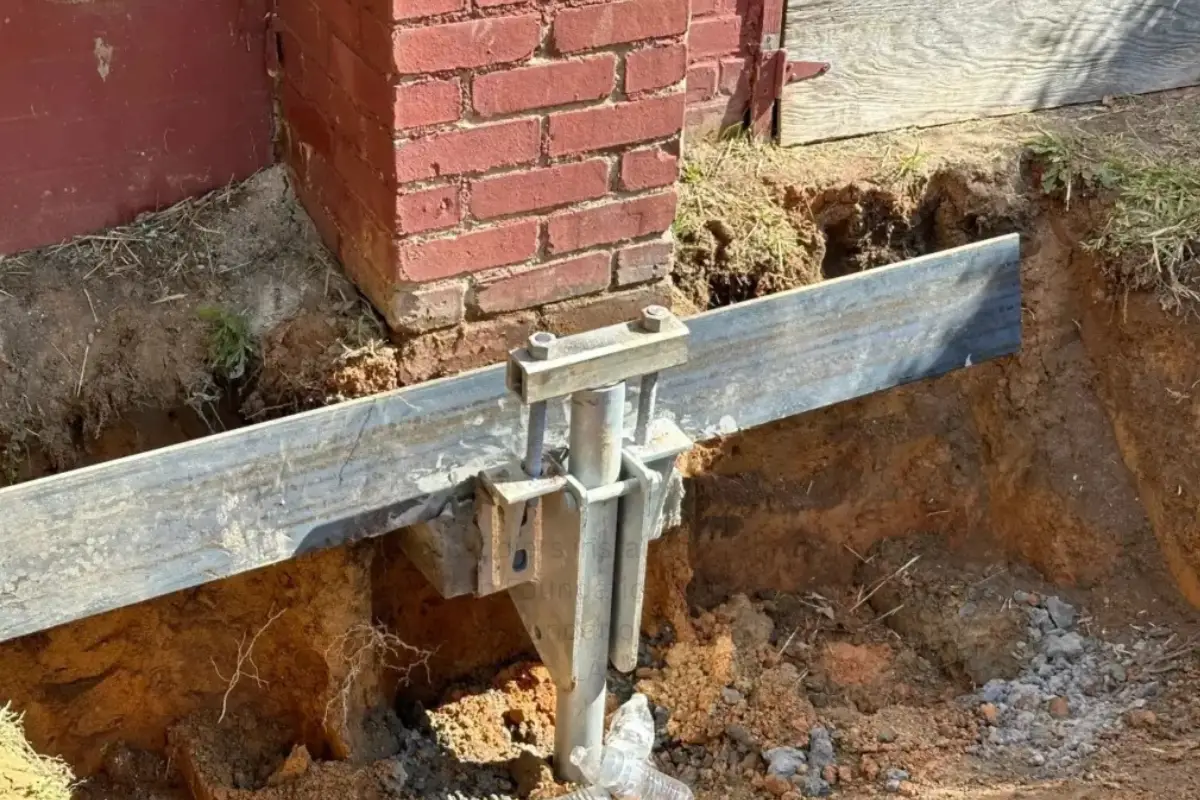
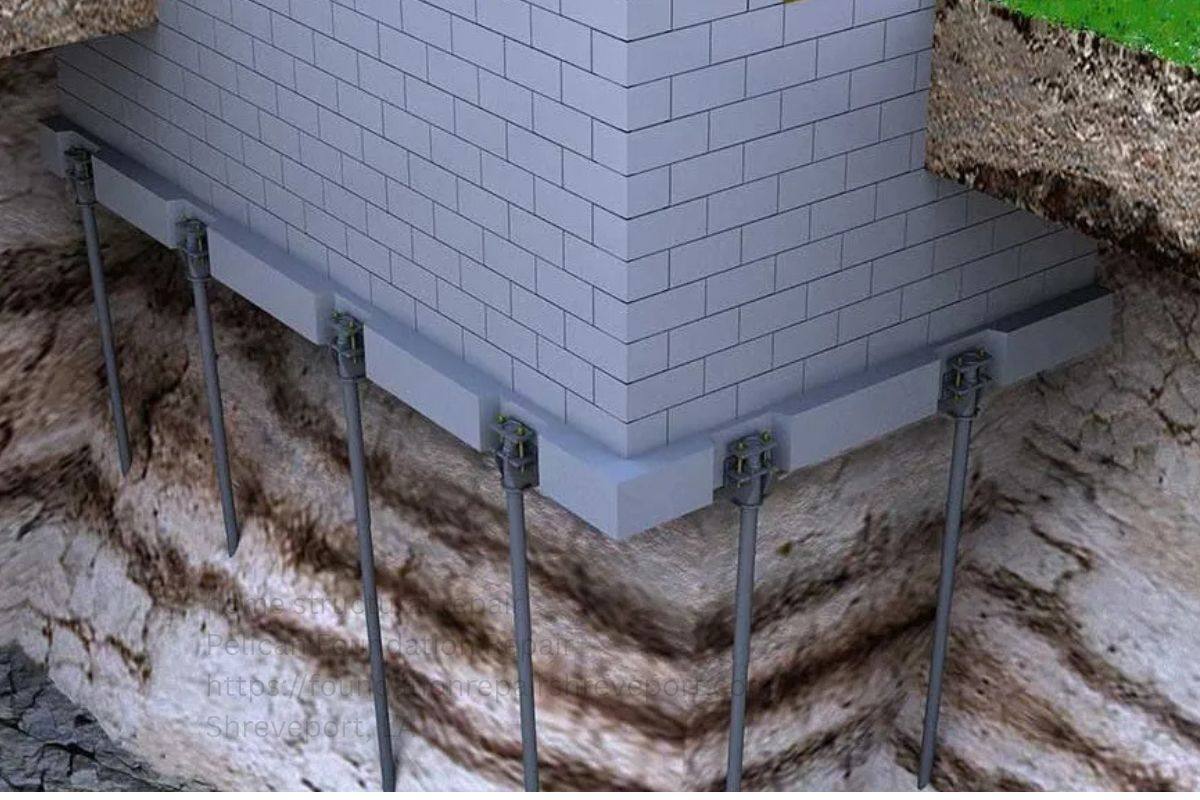
| Steel push piers | Drive to deep stable soil, then lift and stabilize the foundation | Settled building perimeters, additions, and load-bearing walls |
| Helical piers | Screw into competent soil with verifiable torque readings | Lighter structures, canopies, signage footings, and fast-track jobs |
| Polyurethane foam injection | Expanding foam fills voids and lifts settled interior slabs | Warehouse floors, retail interiors, and slab sections where excavation is impractical |
| Drainage correction | Manages roof and surface water away from the foundation | Nearly every commercial job — big roofs mean big water |
Polyurethane foam deserves special mention for commercial work. Interior slab settlement in an operating store or warehouse is hard to fix with piers — you cannot excavate a sales floor. Foam injection drills small ports, pumps expanding foam beneath the slab, and lifts it back to grade, often in a single night shift. The business opens the next morning on a level floor. Our concrete leveling service covers foam applications for exactly these situations.
Keeping Your Business Open During Repairs
This is the question every owner asks, and the answer is almost always yes, you stay open. Here is how competent commercial work is staged:
- Exterior-first sequencing: perimeter pier work happens outside the building envelope while interior operations continue normally
- Zoned interior work: foam injection and interior piers are done one zone at a time, with barriers and dust control, so only a small area is affected at once
- Off-hours scheduling: noisy phases — pier driving, concrete cutting — get scheduled for evenings, nights, or weekends
- Daily site restoration: excavations are plated or backfilled daily, walkways stay clear, and the site is left safe and presentable every evening
- Clear communication: you get a written phase plan before work starts, with dates, affected areas, and a single point of contact
Put the phasing plan in the contract. “We will work around your hours” is a promise; a written schedule with zones and dates is a commitment. If a contractor will not put the phasing in writing, keep looking.
Call (318) 585-2003 – Free Inspection
What Commercial Foundation Repair Costs
Commercial pricing is project-based, not menu-based. The variables are building size, pier count and depth, interior versus exterior access, phasing requirements, and engineering involvement. A small office building with localized settlement may cost about the same as a large residential pier job. A big-box footprint with widespread settlement is a different scale entirely.
Two cost drivers surprise owners. First, engineering: larger commercial jobs often need a structural engineer’s stamped plan, which is a separate professional fee worth paying — it protects you and satisfies lenders and insurers. Second, access: interior work in a finished, occupied space costs more per pier than exterior work in open soil, because of the protection, phasing, and restoration involved.
Get the quote in writing with the pier layout, method, phasing plan, and warranty terms. For context on how residential pier pricing works — the same methods at a smaller scale — see our foundation repair cost guide.
Drainage: The Commercial Multiplier
Commercial roofs are water factories. A 10,000-square-foot roof sheds over 6,000 gallons in a single inch of rain, and if the gutter and drainage system cannot move that water away from the building, it goes straight into the clay around the foundation. We see commercial settlement caused as much by failed drainage as by anything structural.
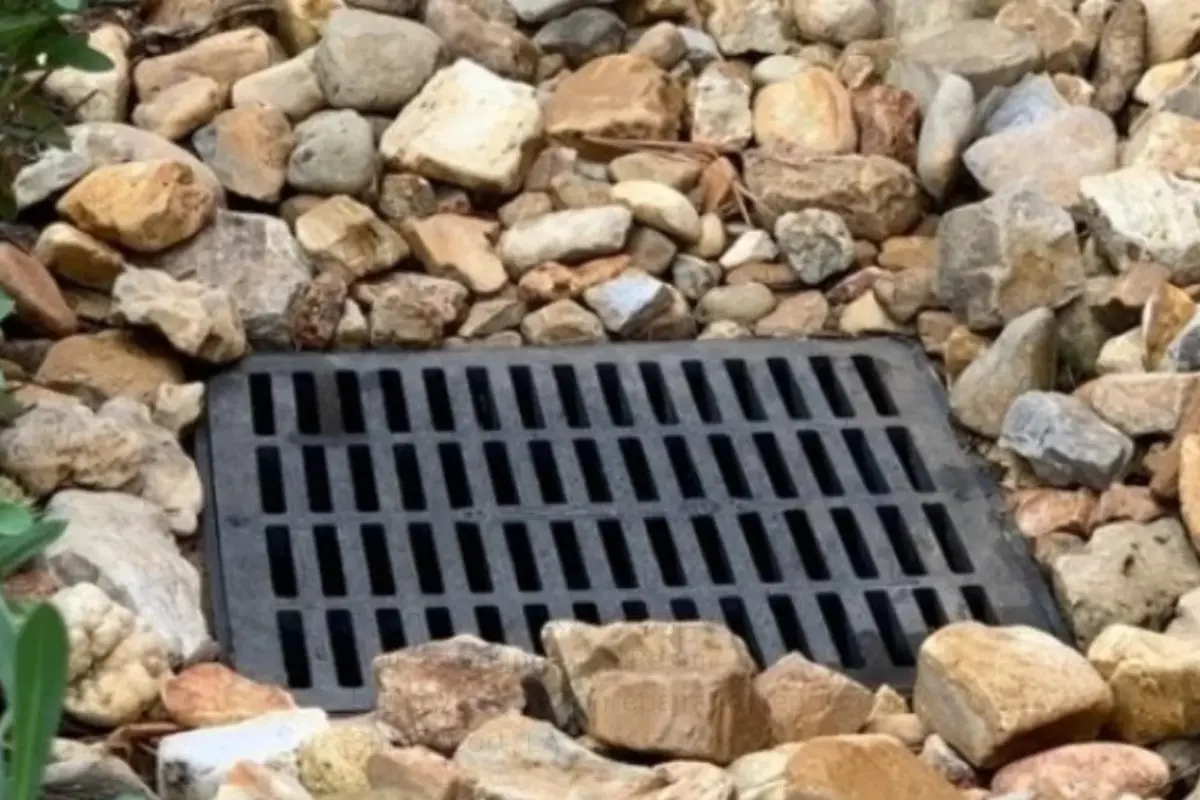
A commercial drainage review covers roof drainage capacity, downspout discharge points, lot grading, catch basins and trench drains, and the condition of underground storm lines (which crack and leak, soaking the soil from below). On most commercial jobs, drainage correction is not optional add-on work — it is half the repair. Fix the piers without fixing the water, and the clay keeps moving.
Documentation Your Business Needs
Residential owners keep a warranty letter in a drawer. Commercial owners need a paper trail that satisfies partners, lenders, insurers, and future buyers. Before work starts, make sure your contractor provides:
- A written scope with pier locations, methods, and quantities
- Before-and-after elevation readings documenting the lift
- Photos of each phase, especially anything buried and no longer visible
- The structural warranty in writing, with terms and duration
- Any engineering reports or stamped plans, with copies for your files
- A maintenance and drainage checklist for the property manager
This documentation does real work for you later. When you refinance, sell, or file an insurance claim, a documented, warranted structural repair with elevation data answers every question before it is asked. Pelican Foundation Repair provides full documentation on every commercial job as standard practice.
Preventive Maintenance for Commercial Properties
The cheapest commercial foundation repair is the one you never need. A simple annual routine catches problems while they are small:
- Walk the building perimeter each spring and fall: look for new cracks, gaps, and drainage changes
- Keep gutters, downspouts, and catch basins clear — assign it to someone specific, not “whoever notices”
- Maintain lot grading; landscaping and parking lot work often accidentally regrades soil toward the building
- Fix plumbing leaks immediately — a running toilet leak under a slab is a foundation problem wearing a plumbing disguise
- Monitor trees near the building; large trees within 20 feet of the foundation affect clay moisture unevenly
- Schedule a professional inspection every few years, or immediately if new symptoms appear
For property managers overseeing multiple buildings across Shreveport, Bossier City, and surrounding areas — including Benton and nearby communities — a standing inspection relationship beats emergency calls every time.
Call (318) 585-2003 – Free Inspection
Choosing a Commercial Foundation Contractor
Commercial work demands more from a contractor than residential: bigger equipment, engineering coordination, phasing discipline, and documentation habits. Ask for commercial references specifically — residential reviews do not prove commercial competence. Ask who supervises the job daily, how they handle surprises like deeper-than-expected piers, and whether their technicians are employees or subcontractors.
Verify insurance carefully: commercial jobs need general liability and workers’ comp at limits appropriate to the project, and you should be named as additionally insured on larger jobs. Get the warranty in writing with commercial terms. And read our contractor selection guide — written for homeowners, but the vetting questions apply double for commercial work.
Pelican Foundation Repair handles commercial foundation work across the Shreveport area with our own technicians, written phase plans, full documentation, and a 20-year structural warranty on qualifying repairs. Start with a free inspection at foundationrepairshreveport.com or call (318) 585-2003.
Frequently Asked Questions
Can foundation repair be done while our business is open?
In most cases, yes. Exterior pier work does not affect interior operations at all. Interior work is phased by zone and often scheduled for off-hours. A written phase plan agreed before work starts spells out exactly which areas are affected and when, so there are no surprises.
How much does commercial foundation repair cost?
It is priced per project based on building size, pier count and depth, access conditions, phasing needs, and engineering requirements. Small commercial buildings may run in the same range as large residential pier jobs ($3,500–$15,000+); larger footprints scale from there. A free inspection and written proposal is the only way to get an accurate number.
Do we need an engineer involved?
For larger commercial jobs, yes — and you want one. A structural engineer’s stamped plan defines the repair, satisfies lenders and insurers, and gives everyone a clear standard the work is measured against. Smaller jobs may not require it, but your contractor should tell you honestly which category your building falls into.
How long does a commercial pier job take?
Most commercial pier projects run one to three weeks depending on size and phasing, versus a few days for a typical home. Foam injection for interior slabs is much faster — often completed in overnight shifts. Your phase plan will include a realistic timeline before work begins.
Will the work damage our parking lot or landscaping?
Exterior pier excavations are localized pits, not trenches, and responsible crews restore grade and surface afterward. Discuss restoration explicitly in the contract: who repairs asphalt, concrete, and landscaping, and to what standard. Get it in writing, not as a verbal promise.
What warranty should a commercial job carry?
Look for a written structural warranty with clear terms — what is covered, for how long, and what voids it. Pelican Foundation Repair offers a 20-year structural warranty on qualifying repairs, documented in the proposal. Keep all warranty paperwork with your building records.
Does commercial foundation work require permits?
It depends on the jurisdiction and scope. Your contractor should know the local requirements in Shreveport, Bossier City, and surrounding parishes and handle permit applications as part of the job. Ask about it upfront rather than discovering it mid-project.
How do we maintain the foundation after repair?
Keep up the drainage: clean gutters and basins on schedule, maintain grading, fix leaks fast, and manage trees near the building. An annual walkthrough and a professional inspection every few years catch new issues early. We provide a maintenance checklist with every commercial job.
Call (318) 585-2003 – Free Inspection
Protect Your Building Before Small Problems Grow
Foundation settlement in a commercial building never gets cheaper with time. Cracks widen, floors slope further, doors and docks go out of square, and tenants notice. The inspection that tells you exactly what is happening — with measurements, photos, and a written phased plan — costs nothing.
Call Pelican Foundation Repair at (318) 585-2003. We will assess your building, lay out the repair options with honest pricing, and phase the work around your business — not the other way around. For technical background on foundation systems, the InterNACHI commercial foundation overview is a useful independent reference.
Pelican Foundation Repair 6118 Fairfield Ave, Shreveport, LA 71106, USA 318-585-2003 https://foundationrepairshreveport.com/