 Skip to main content
How Much Does Foundation Repair Cost in Shreveport, LA?
In Shreveport, foundation repair typically costs $400 to $1,500 for crack repairs and $3,500 to $15,000 or more for full pier jobs, depending on your foundation type and damage. Most homeowners in Caddo and Bossier parishes land in the middle of that pier range. We offer free inspections, so you get an exact number for your home.
Bottom line: fixing small cracks costs hundreds; stabilizing a settled foundation costs thousands — and Shreveport’s clay soil means early repair almost always beats waiting.
Call (318) 585-2003 – Free Inspection
📊 Foundation Repair Cost at a Glance
$400–$1,500
Crack repairs
$3,500–$15,000+
Full pier jobs
Free
Inspections — always
What Does Foundation Repair Cost in Shreveport, LA?
Here is the honest breakdown behind how much foundation repair costs in Shreveport, LA: real local ranges, not national averages copied from a directory site.
| Repair type | Typical Shreveport cost |
|---|---|
| Foundation crack repair (epoxy injection, staples) | $400–$1,500 |
| Full pier job (push piers or helical piers, installed and lifted) | $3,500–$15,000+ |
| House leveling / releveling | $3,500–$15,000+ |
Crack repair sits at the low end — usually a half-day job of installing injection ports and pumping epoxy through the crack under pressure.
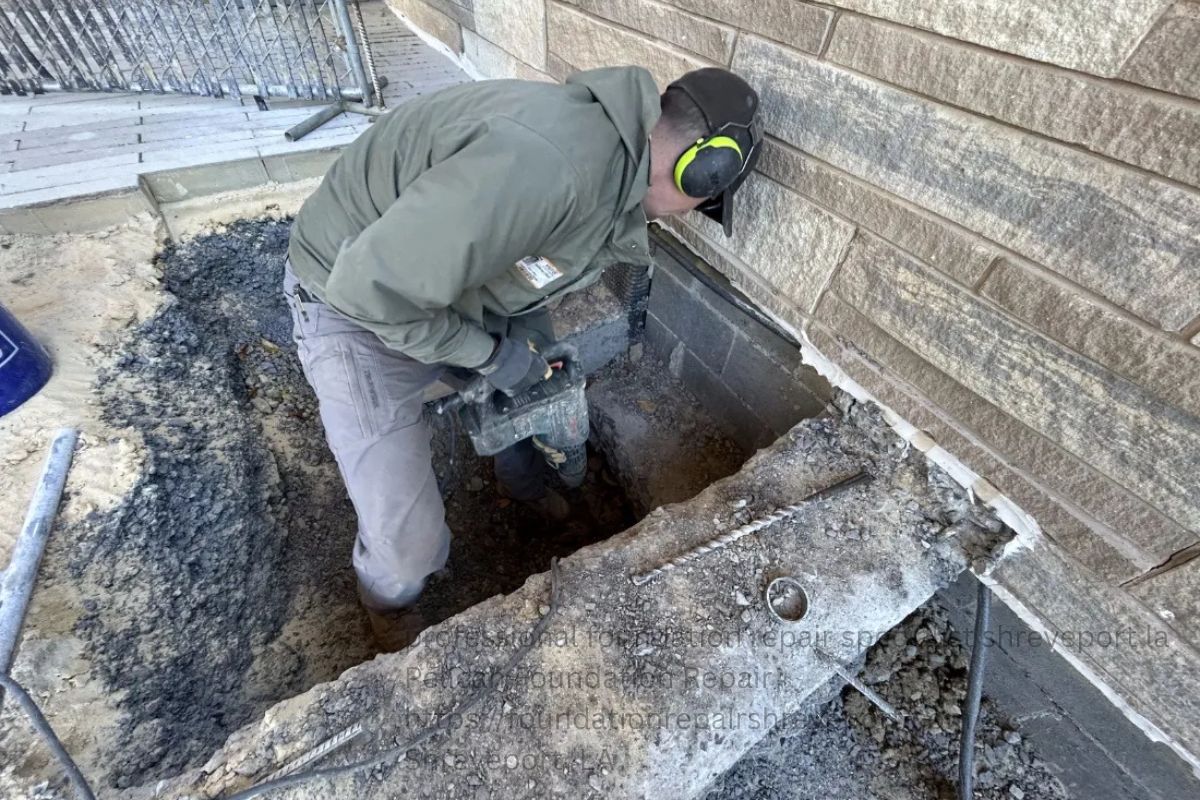
Pier jobs are the big-ticket item — the real fix for a settling foundation: steel piers driven deep into load-bearing soil, attached with heavy brackets, and lifted with hydraulic jacks. A small job might need six to eight piers along one wall; a full perimeter lift can need twenty or more. That spread is why the range is so wide. You may also see quotes for pressed concrete piling — short concrete cylinders pressed into the soil as a lower-cost alternative to steel piers. Ask how deep they go and what soil they bear on before comparing that bid to a steel-pier quote.
Most homes we see in Highland, Broadmoor, and South Highlands fall between $5,000 and $10,000 for pier work — smaller jobs come in under that, whole-house lifts land above it.
Any contractor who quotes a foundation price over the phone without seeing your house is guessing.
Why Does Louisiana Clay Soil Drive Foundation Repair Costs?
Dig a hole anywhere in Caddo Parish and you will meet the reason our phones ring: expansive clay — dark gray, dense, and sticky when wet. Grab a handful after a spring storm and it holds your fingerprints like modeling clay; dig the same hole in August and the ground is cracked like a dry lake bed.
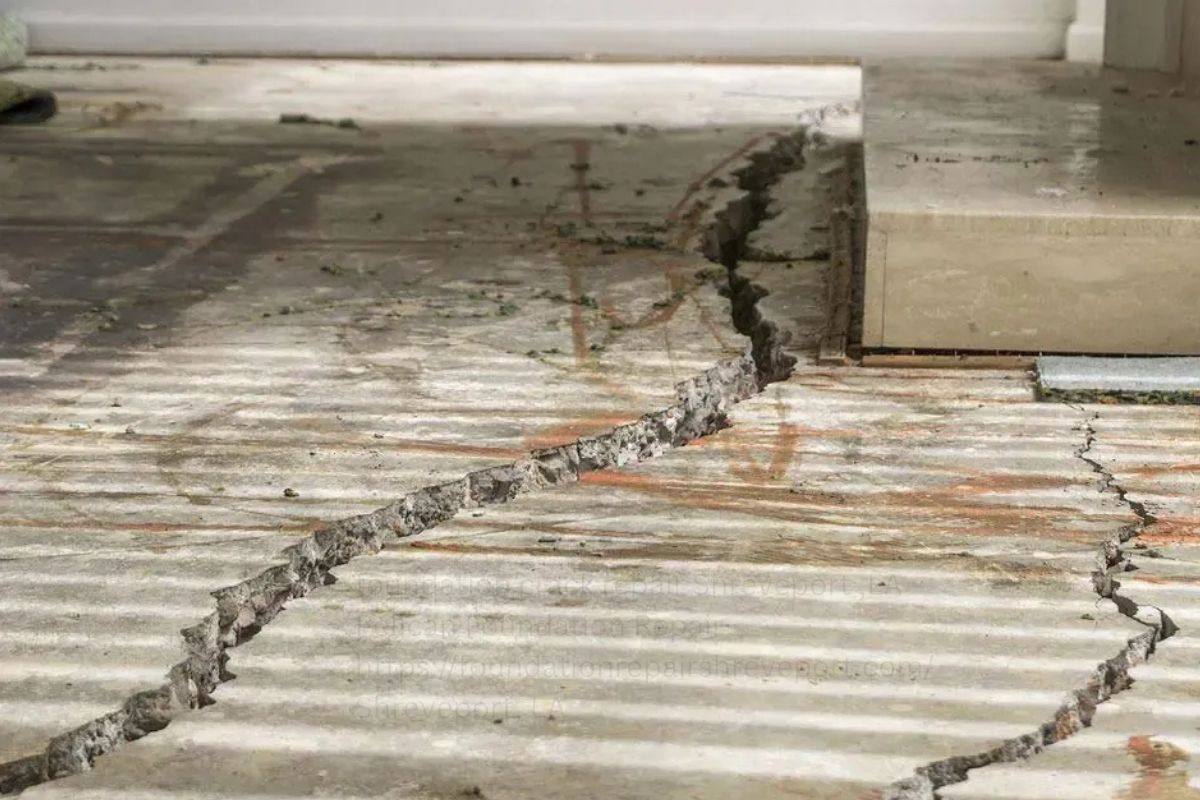
That shrink-swell cycle is the engine behind most foundation damage in Shreveport: the clay absorbs water and swells against foundations, then summer drought shrinks it, the soil pulls away from the footing, and the house settles into the gap. Repeat that for a few decades and you get cracked walls, sloping floors, and doors that will not close.
Homes near Cross Lake and the Red River also deal with a high water table: hydrostatic pressure forces small cracks wider every rainy season. We see the same in low-lying parts of Bossier City near Barksdale AFB and along I-20, where drainage was an afterthought when many homes were built.
The Louisiana State University AgCenter has published extensive guidance on expansive soils in Louisiana, confirming what we see in the field every week: this soil moves, and foundations here must be built — or repaired — to account for it.
Call (318) 585-2003 – Free Inspection
What Factors Affect Your Foundation Repair Cost?
Two houses on the same street can get very different quotes. Here is what moves the number.
Foundation type
Slab, pier and beam, and crawl space foundations fail differently and get fixed differently. Slab homes often need interior piers — sometimes installed by tunneling underneath so the crew does not tear up your floors. That is a specialized job, and our slab foundation repair page explains how we handle it. Pier and beam homes usually get releveled by shimming and adjusting the support piers under the house, which is straightforward if the crawl space has decent access. Each foundation type has its own labor profile, and that shows up in the price.
How far the foundation has settled
A house that has dropped half an inch at one corner needs fewer piers and less lifting than one that has settled two inches across the whole back wall. More settlement means more piers, more excavation, more time on the jacks — and a higher chance that doors, drywall, and plumbing have been stressed.
Access to the work area
This one surprises people. If the settled wall sits behind a concrete patio, under a deck, or behind mature landscaping, the crew works around it — or digs by hand where machines cannot reach. Tight crawl spaces slow everything down too: a technician dragging steel pier sections through an 18-inch opening covers ground far slower than a crew on an open exterior wall. We price that reality honestly.
Soil conditions at your address
Not all clay is equal: in some parts of Shreveport, load-bearing soil sits 15 feet down; in others, piers must go deeper before the pressure gauge shows refusal. Deeper piers mean more steel, more drive time, and a higher price. Our guide to steel push piers vs. helical piers explains which fits your soil.

Plumbing and interior work
On slab homes, settlement can crack drain lines under the slab, so part of a proper job is running water and checking for leaks after the lift. A broken line has to be repaired — lifting a house over a broken sewer line just creates a bigger problem.
Hardscape pressure
Concrete driveways and walkways expand over the years — a slow phenomenon called street creep — and can push laterally against your foundation, especially where expansion joints have filled with dirt. It won’t sink a house, but it can crack walls and add lateral load a repair has to account for.
What Is the Most Expensive Foundation Repair?
The most expensive foundation repair is a full structural lift combined with wall reconstruction — the kind of job where a foundation wall has failed badly enough that sections need to be rebuilt, not just stabilized. Those jobs go well past the standard $15,000 pier range.
But the most expensive repair most homeowners face is waiting too long: a $600 crack repair left alone for three rainy seasons becomes a bowed wall needing piers and drainage work. Small problems don’t stay small in expansive clay.
If you take one thing from this article, take that: the cheapest foundation repair is the one you do early.
Call (318) 585-2003 – Free Inspection
How Long Does Foundation Repair Take?
Crack repairs usually take half a day. The technician arrives, preps the crack, injects the epoxy, and is gone before lunch.
Pier jobs take longer. A small exterior job — six to eight piers along one wall — typically takes two to three days: excavation and installation, the lift, then backfill, cleanup, and a walkthrough. Larger jobs with interior piers, tunneling, or twenty-plus piers can run a full week.
On site, day one is digging: the crew excavates to the footing — usually three to four feet deep in Shreveport soil. Day two is driving piers and lifting, the house rising in small controlled increments while the crew watches the levels. The final day is backfill and cleanup.
If your job involves house leveling, expect the same rhythm. And if you are pricing a relevel specifically, our house leveling cost guide for Shreveport breaks that down further.
Will Homeowners Insurance Cover Foundation Repair?
Usually, no — and this is the answer nobody likes giving. Standard homeowners policies in Louisiana cover sudden, accidental damage: a burst pipe, a fallen tree, fire. They do not cover foundation settlement, because settlement is considered gradual wear and tear, and because our clay soil makes it so predictable that insurers treat it as a maintenance issue.
There are narrow exceptions: if a covered event caused the damage — a plumbing leak eroding soil, a vehicle striking the house — the resulting damage may be covered. Some policies cover collapse, though the legal definition is much narrower than most homeowners expect.
Our advice: read your policy’s exclusions before calling your agent, document everything with photos and dates, and get a written inspection report tying the damage to a specific cause. InterNACHI, the international home inspector association, publishes the documentation standards we follow during inspections.
Call (318) 585-2003 – Free Inspection
Is Foundation Repair Worth It?
For most Shreveport homeowners, yes. An unrepaired foundation problem does three expensive things at once: it gets worse, it scares off buyers, and it can damage costlier things like plumbing, brick veneer, and rooflines.
On resale, foundation issues are one of the first things a buyer’s inspector flags. A house with documented professional repairs sells far easier than one with a known problem and no paperwork — and our repairs carry a 20-year structural warranty on qualifying work, with the terms spelled out in writing before you sign. You will see some national companies advertising lifetime transferable warranties — read those the same way you would read any warranty: what is covered, what is excluded, whether it transfers to a new owner, and who does the work if you ever need it. A plainly written 20-year warranty from a local company you can call is often more useful than a lifetime promise from a company three states away.
Then there is the cost of doing nothing. Water follows cracks: moisture this spring becomes mold in the wall cavity by fall, and settlement that shifts a slab can shear a drain line — a five-figure problem on its own.
The exception: a hairline crack from normal concrete curing, with no displacement and no water intrusion, may just need monitoring. A free inspection tells you which one you have.
What Is the Best Time of Year for Foundation Repair in Shreveport?
The honest answer: whenever you notice the problem — though Shreveport’s weather does create better and worse windows.
Late summer and early fall are often ideal: drier ground makes excavation cleaner and faster, and gives the most accurate read on settlement since the clay is at its most contracted.
Spring is the busiest season: heavy rains expose every weak spot — quiet cracks start leaking, doors swell and stick. We do plenty of spring work; it just takes longer in saturated ground.
Winter in Shreveport is mild enough that foundation work continues year-round.
Call (318) 585-2003 – Free Inspection
Does Foundation Repair Require a Permit in Shreveport?
For most residential foundation repair in Shreveport — crack injection, pier installation, house leveling — no separate building permit is typically required, since the work is repair of an existing structure. Rules can vary by parish and scope, though: structural rebuilds and work that changes drainage patterns can trigger requirements, especially inside city limits versus unincorporated Caddo Parish.
A reputable contractor knows the local rules and pulls required permits without being asked. If a contractor seems unsure — or says permits are “never needed” for a major rebuild — treat that as a red flag.
Can You Live in a House During Foundation Repair?
Yes. In nearly every residential job, the family stays in the home the whole time — the work happens outside along the foundation or underneath the house, not in your living room.
What you will notice: noise on pier driving and lifting days, some vibration, and workers coming and going. Interior piers on a slab home mean small access holes — usually in a garage or utility area — and a day of dust, which we contain and clean up.
The lift is the most controlled part: the house rises in tiny increments while the crew monitors every pier.
The only time we suggest making other arrangements is when major under-slab plumbing work keeps the water off for an extended stretch — usually measured in hours, not days.
Call (318) 585-2003 – Free Inspection
Frequently Asked Questions
What does the average foundation repair cost in Shreveport?
Most Shreveport homeowners pay $400 to $1,500 for crack repairs and $3,500 to $15,000 or more for pier jobs. Full pier jobs in Caddo and Bossier parishes typically land between $5,000 and $10,000, depending on pier count, foundation type, and access.
How much does it cost to fix a foundation crack?
A single crack repaired with epoxy injection typically costs $400 to $1,500 in Shreveport. Hairline and clean vertical cracks fall at the low end; wide, horizontal, or actively leaking cracks that need staples or extra sealing fall at the high end.
How long will a foundation repair last?
A properly installed pier system should last for the life of the home, and our pier work carries a 20-year structural warranty on qualifying repairs. Epoxy crack repairs are permanent as long as the underlying cause — usually settlement or water pressure — has been addressed.
Do I need to move out during foundation repair?
No. Homeowners stay in the house during nearly all residential foundation work. Expect noise and vibration on pier driving days and brief water shutoffs if plumbing repairs are involved.
What does a free inspection include?
Our free inspection includes a full walkaround inside and out, elevation readings to measure settlement, a check of doors, windows, and floors, and a look at drainage and grading. You get a written explanation of what we found, what it takes to fix, and an exact price — with no obligation.
Do you service areas outside Shreveport?
Yes. We serve Shreveport plus Bossier City, Blanchard, Greenwood, Keithville, Benton, Stonewall, Haughton, Red Chute, Eastwood, Mooringsport, Minden, and Ruston — all across Caddo, Bossier, Webster, Lincoln, and DeSoto parishes.
How much does foundation repair cost per pier?
There is no honest flat per-pier price — it depends on pier type, depth to bearing soil, and access. Steel pier jobs in Shreveport are quoted as complete projects, typically $3,500 to $15,000+, because a per-pier number cannot account for how deep the piers must go or how hard they are to reach. Be wary of any contractor quoting a per-pier price without an inspection — they are pricing a guess, not your house.
How is foundation repair done?
It depends on the problem. Settling foundations are stabilized with steel push piers or helical piers driven to load-bearing soil, then lifted with hydraulic jacks. Cracks are sealed with epoxy injection or staples. Bowing walls get anchors or rebuilding, and sagging pier-and-beam homes get re-shimming or new piers. Every proper job starts with an inspection and elevation survey that maps exactly what moved — the repair plan is built from those measurements.
Get an Exact Price With a Free Inspection
Every number in this guide covers how much foundation repair costs in Shreveport, LA in general — but your home is a specific house on a specific patch of Louisiana clay. The only way to know your exact cost is a professional inspection, and ours is free.
Call Pelican Foundation Repair at (318) 585-2003 to schedule. We will measure your foundation’s elevation, show you exactly what is happening and why, and give you a written quote on the spot — and if your foundation is fine, we will tell you that too. We serve Shreveport, Bossier City, and the surrounding parishes Monday through Friday, 7:00 to 6:00, and Saturday 8:00 to 2:00.
Pelican Foundation Repair
6118 Fairfield Ave, Shreveport, LA 71106, USA
318-585-2003
https://foundationrepairshreveport.com/