Does Foundation Repair Really Work?
Yes, foundation repair really works when it matches the cause: piers and leveling stabilize a settling home by transferring its weight to stable soil, though rarely to perfect level.
It is a fair question. You are being asked to spend thousands on work that happens underground, where you cannot watch the result. Foundation repair works by changing what the house stands on: piers carry the load down to firmer ground when soil is weak or washed out, and leveling lifts the structure back toward level, though never perfectly.
In Shreveport, that distinction matters more than in most places. The expansive clay under homes in Broadmoor, South Highlands, Bossier City, and Haughton swells when wet and shrinks when dry, year after year. A repair that ignores that cycle will disappoint. A repair designed for it, with the water problem handled alongside the structural work, can hold for decades. Pelican backs qualifying repairs with a 20-year structural warranty, which is a meaningful statement about how long a well-matched repair is expected to last.
What “Fixed” Actually Means
Homeowners hear “fixed” and picture a house returned to exactly how it was built. Contractors mean something more specific: the foundation is stabilized so it stops moving, the load is carried by reliable support, and the structure is lifted as close to level as safety allows. Those two pictures differ, and the gap between them causes most disappointment after a repair.
Here is why full restoration is often impossible. A house that has settled over ten years has adapted to its new position: drywall has cracked and been patched, doors have been trimmed, floors have taken a set. Lifting it all the way back can crack finishes that adapted to the settled position, break brittle plumbing connections, and stress the frame. Good crews lift in small, controlled stages and stop at the point where further lifting risks more damage than it fixes. The result is a stable home that may still show a slight slope or a hairline crack, and that is a successful repair, not a failed one.
What you should expect instead is measurable: doors and windows that work again, floors that no longer slope noticeably worse, cracks that stop growing, and a foundation that holds its elevation on the next check. Those are the outcomes a warranty can stand behind, and they are the outcomes worth paying for.
This honest definition also protects you at resale. A buyer who sees a documented, warranted stabilization with before-and-after elevation readings understands what was done. A seller who can only say “it was fixed” invites the same skepticism you felt before hiring. Keep the repair plan, the pier layout, and the warranty together; that file is part of the home’s value, not just its paperwork.
How the Main Repair Methods Actually Work
Steel Push Piers and Helical Piers
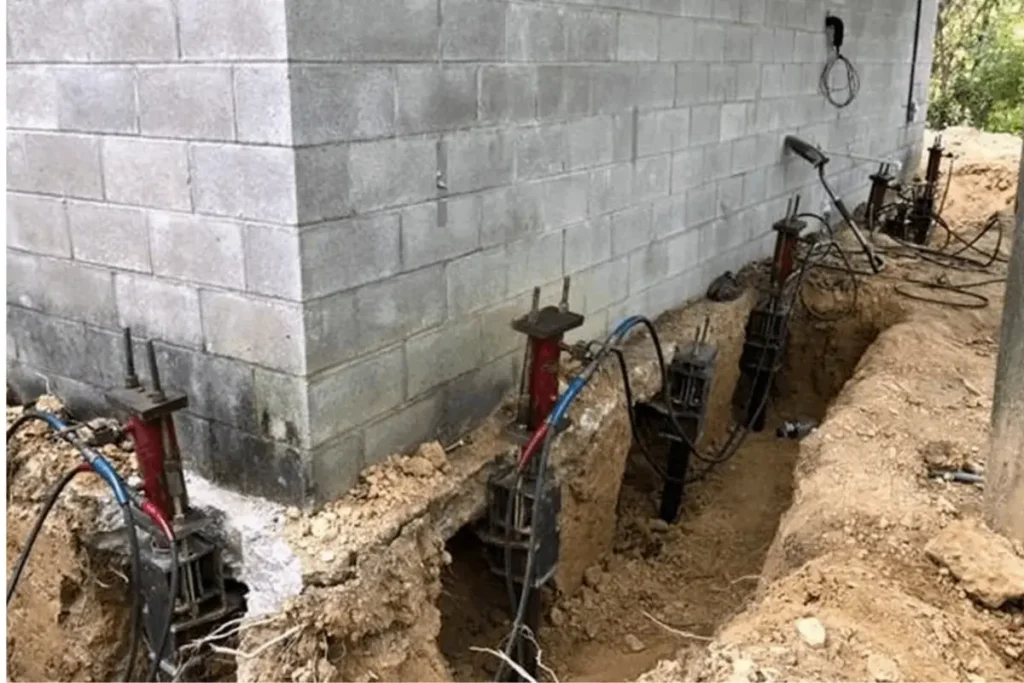
Piers are the workhorse of settlement repair. Steel push piers are driven hydraulically beside or beneath the foundation until they reach load-bearing soil or bedrock, then the structure’s weight is transferred onto them. Helical piers screw into the ground like giant screws and suit lighter loads or soils where driving is difficult. In both cases the principle is the same: stop relying on the weak, moving clay near the surface and rest the house on something that does not move.
Piers work best where settlement is the problem: a slab corner dropping, a pier-and-beam section sinking, a porch pulling away from the house. They do not fix heave, where swelling clay lifts a foundation, and they do not fix a drainage problem. A pier plan that skips the water question is incomplete.
Slabjacking and Polyurethane Foam Injection
For sunken concrete slabs, driveways, and sidewalks, crews pump material beneath the slab to fill voids and lift it. Traditional mudjacking uses a cement-based slurry; polyurethane foam injection uses an expanding foam that is lighter, cures fast, and needs smaller holes. Both work by the same idea: fill the empty space under the slab and push it back up.
These methods work well for slabs that sank because soil compacted or washed out, and poorly for slabs still sitting on unstable, waterlogged clay that will keep moving. Foam is not a foundation pier, and it should never be sold as one. It is a leveling tool for concrete, and judging it by pier standards, or piers by foam standards, leads to bad decisions.
Crack Repair, Beam Replacement, and Drainage Work
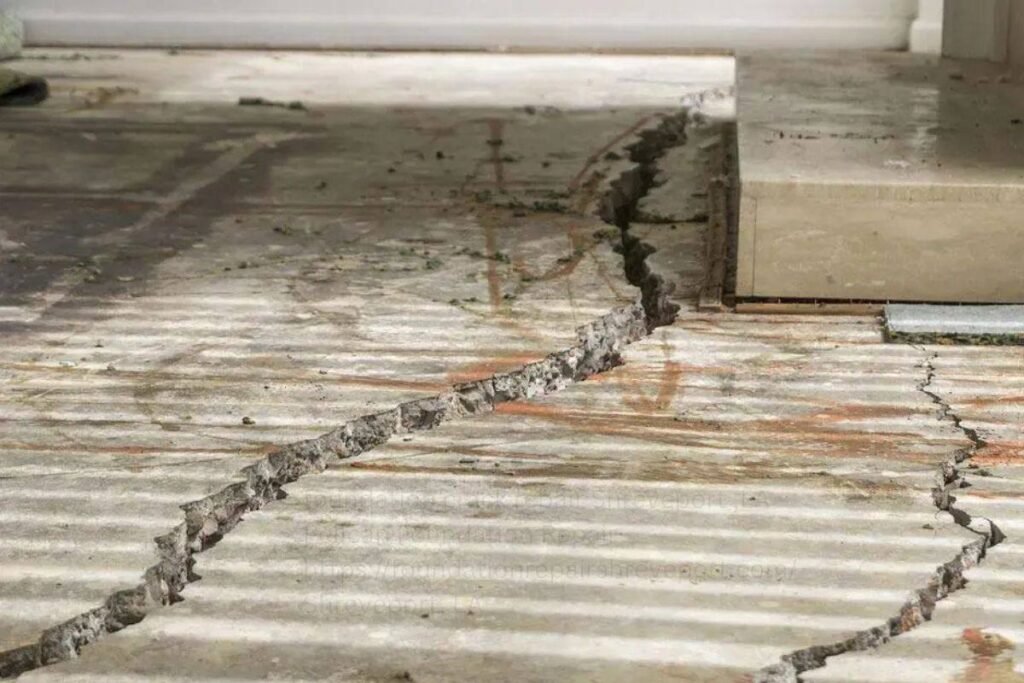
Not every foundation problem needs piers. Epoxy or polyurethane injection seals cracks and restores a wall’s integrity where the wall itself is sound and the movement has stopped. Sagging floors in pier-and-beam homes often need new or additional beams, joists, and piers rather than a full underpinning job. And drainage correction, grading, gutters, and French drains, is the unglamorous work that protects every other repair from the next wet season.
When Repair Works, and When It Does Not
| Situation | Does repair work? | Why |
|---|---|---|
| Settlement from weak or washed-out soil | Yes, with piers | Load transfers to stable soil below the problem layer |
| Sunken slab from compacted soil or voids | Yes, with slabjacking or foam | Voids fill and the slab lifts back toward level |
| Sagging floors, failing piers or beams | Yes, with pier and beam work | Support is restored where it was lost |
| Drainage-driven movement, water unfixed | Only temporarily | Water keeps moving the soil under the repair |
| Heave from swelling clay | Harder; needs moisture control | Piers resist settlement, not upward swelling |
| Severely deteriorated structure | Sometimes no | Replacement or engineering may be the honest answer |
Why Some Repairs Fail
When a repair fails, the cause is usually one of a few repeatable mistakes. The most common is treating the symptom instead of the cause: injecting a crack while the soil underneath keeps moving, or leveling a slab without fixing the leak that washed the soil out. The second is under-pinning: too few piers, piers that stop short of bearing soil, or a plan that stabilizes one corner while the rest of the house keeps settling. The third is cosmetic-only work sold as structural repair, which looks finished on day one and means nothing by year two.
Homeowners can protect themselves by asking plain questions before signing: How many piers, and how deep will they go? What is the bearing target? What happens to drainage and water around the foundation? What exactly does the warranty cover, and is it in writing? A company that answers those questions clearly, with numbers and a written warranty, is a company whose repair is likely to work. Pelican’s qualifying repairs carry a 20-year structural warranty, and that warranty should be stated in writing before work starts, not discovered afterward.
How Long Does a Good Repair Last?
There is no single honest number, because longevity depends on the method, the soil, and the water. A pier system seated in stable soil, with drainage corrected, is a long-term fix measured in decades, which is why multi-decade warranties exist for qualifying work. A foam lift on a driveway over stable, dry soil can last many years, while the same lift over a chronically wet spot will not. The right question is not “how long does foundation repair last in general” but “how long should this repair last on my soil, with my water situation, and what keeps it lasting that long?”
Maintenance matters more than most homeowners expect. Keep gutters clean, keep downspouts extended, keep soil graded away from the house, and keep the consistent moisture balance that Shreveport clay rewards: not soaked for months, not baked bone-dry for months. Small habits protect a large investment, and they cost almost nothing. For the value question behind this one, see our post on whether foundation repair is worth it and our timeline guide on how long foundation repair takes. The LSU AgCenter also publishes Louisiana soil and moisture guidance at lsuagcenter.com, and our structural repair service page explains the methods above in more detail.
- Stabilization, not perfection, is the honest goal of most foundation repair.
- Piers work by moving the load to soil that does not move.
- Foam and mudjacking level slabs; they are not substitutes for piers.
- Every lasting repair includes a water plan, not just a structural one.
- A written warranty with clear terms is part of the repair, not an extra.
- Monitoring after repair, rechecking elevations and cracks, proves the fix held.
Frequently Asked Questions
Does foundation repair really work, or will the problem come back?
It works when the method matches the cause. Piers seated in stable soil stop settlement, and leveling restores a slab over filled voids. Problems come back when the underlying cause, usually water or unstable soil, is left unaddressed.
Will my house go back to perfectly level after repair?
Usually not perfectly. Crews lift in controlled stages and stop where further lifting risks cracking finishes or plumbing. Expect a stable home with doors and floors working properly, not a mathematically perfect level.
How long does foundation repair last?
It depends on the method, the soil, and the water. Pier systems in stable soil with drainage corrected are long-term fixes measured in decades, and Pelican’s qualifying repairs carry a 20-year structural warranty. Foam lifts last longest on stable, dry ground.
Can foundation repair make cracks worse?
Aggressive or careless lifting can crack finishes, which is why good crews lift slowly and in stages. Minor cosmetic cracking during a lift is possible and is normally repaired as part of the job; structural damage from a proper lift is rare.
Is it better to monitor a foundation problem instead of repairing it?
Sometimes, yes. Stable hairline cracks and minor seasonal movement are often best monitored with dated photos and measurements. Active settlement, growing cracks, or failing supports should not wait, because delay usually raises the eventual cost.
Do I need piers, or is foam injection enough?
It depends on what moved. Piers stabilize a settling foundation by reaching stable soil. Foam lifts sunken concrete slabs by filling voids. A slab that is settling because its soil is failing needs piers, not foam, and a driveway that sank from a void does not need piers.
What should a foundation repair warranty cover?
It should state in writing what is covered, for how long, and under what conditions, including whether it covers the stabilized area if movement recurs. Ask for those terms before work starts, and keep the signed warranty with your closing documents.
Pelican Foundation Repair
6118 Fairfield Ave, Shreveport, LA 71106, USA
318-585-2003
https://foundationrepairshreveport.com/