 Skip to main content
How Long Does Foundation Repair Take? Timeline Explained
How long does foundation repair take? Most residential jobs take between one and five days of on-site work, depending on the repair method. A simple crack injection can be done in a single day. A full pier installation around a house usually takes two to four days. Larger jobs — interior piers, wall rebuilds, or full encapsulation — can run a week or more. The inspection and planning happen before any of that, and most homeowners are surprised by how fast the actual work goes once the crew is on site.
Plan on one to five days of active work for most foundation repairs, plus a separate day for the initial inspection. The biggest timeline factors are the repair method, the number of piers or the size of the area, and whether the crew has to work inside your home.
Call (318) 585-2003 – Free Inspection
📊 Repair Timelines at a Glance
1 day
Crack injections and small repairs
2–4 days
Typical pier installation jobs
1 week+
Large or interior-access projects
The Full Timeline, Start to Finish
When homeowners ask how long foundation repair takes, they are usually thinking about the noisy part — the crew, the digging, the equipment in the yard. But the real timeline has three phases, and only the middle one involves construction.
Phase 1: Inspection and Quote (1 day, scheduled at your convenience)
Everything starts with an inspection. A technician walks the interior and exterior, takes elevation readings at dozens of points, checks the crawl space or slab edge, and looks at drainage. You get a settlement map and a written plan, usually within a day or two of the visit. Our inspections are free, and there is no obligation — this phase costs you nothing but an hour of your time.
Phase 2: Scheduling (days to weeks, depending on backlog)
After you approve the quote, the job gets scheduled. During busy seasons — typically spring, after the rains reveal new settlement — reputable contractors in Shreveport can book out several weeks. This is not work time; it is wait time. If your situation is urgent, say so. Most contractors will tell you honestly how their calendar looks.
Phase 3: The Work (1 day to 1+ weeks)
This is the on-site construction, and it is the part this post breaks down in detail below. For most homes, the crew is in and out within a few days, and you can live in the house the entire time.
Knowing the phases helps you plan. The most common frustration we hear is not about the work itself — it is about not knowing what comes next. A good contractor lays out all three phases before you sign anything. If you are still comparing companies, our guide on choosing a foundation repair contractor in Shreveport explains what to look for.
Timelines by Repair Method
Not all foundation work is the same job. Here is what to expect for the most common repairs in the Shreveport area.
| Repair method | Typical on-site time | Can you stay home? |
|---|---|---|
| Crack injection (epoxy or polyurethane) | Half day to 1 day | Yes |
| Exterior steel pier installation | 2–4 days | Yes |
| Interior pier installation (slab) | 3–5 days | Usually, with disruption |
| House leveling (pier and beam) | 2–4 days | Yes |
| Crawl space encapsulation | 2–3 days | Yes |
| Wall anchors or braces | 1–2 days | Yes |
| Full wall rebuild | 1–2 weeks | Usually, with disruption |
| Drainage correction | 1–3 days | Yes |
These are typical ranges for residential work, not guarantees. Your contractor should give you a specific schedule for your house after the inspection — anyone quoting a firm timeline without seeing the property is guessing.
Call (318) 585-2003 – Free Inspection
What a Pier Job Looks Like, Day by Day
Pier installation is the most common major foundation repair in Shreveport, so here is how those two to four days actually unfold.
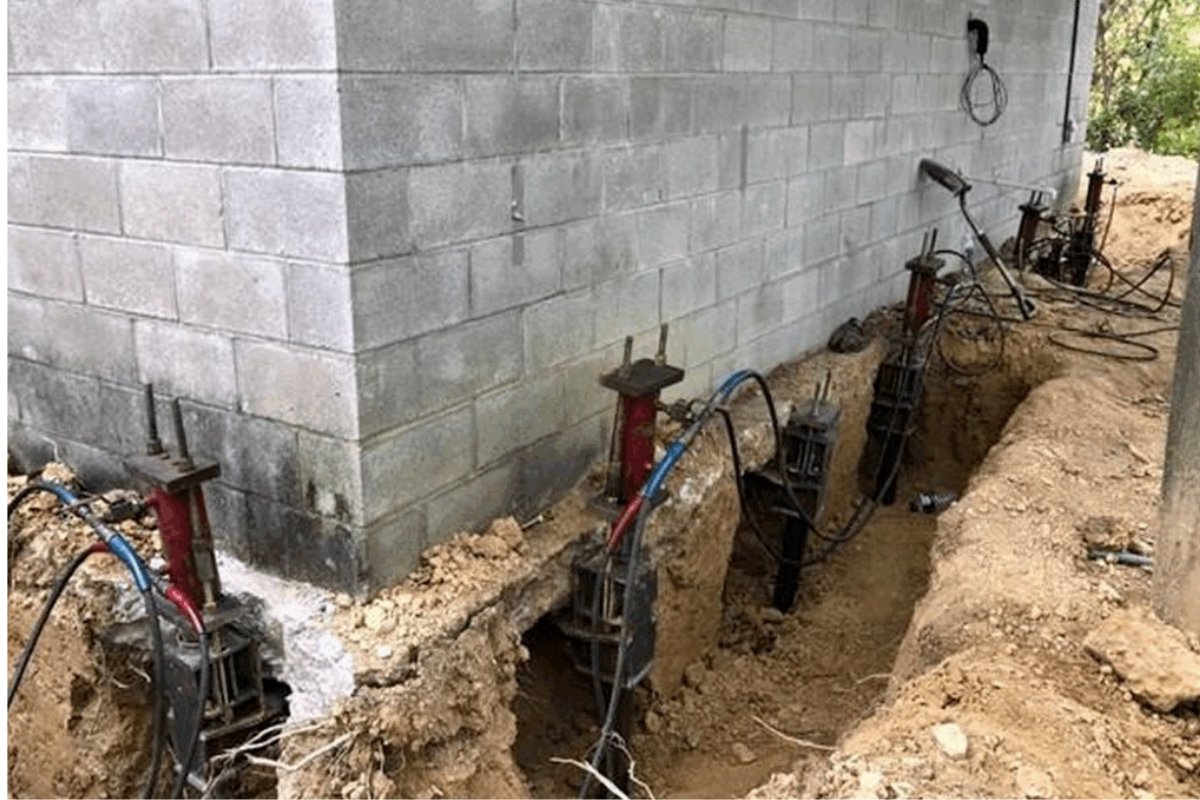
Day 1: Excavation. The crew hand-digs at each pier location, usually down about three feet to the footing. On a full perimeter job, that is a lot of digging, and it is most of what day one is. You will see a ring of neat pits around the house by evening. If the soil is wet Louisiana clay, this is slow, heavy work — which is one reason summer drought actually makes for faster digging.
Day 2: Pier driving. Steel piers are hydraulically driven at each excavation point until they hit load-bearing strata — the dense soil layer deep below the shifting clay. The crew watches a pressure gauge on every pier. Depths vary across the metro area; some homes hit bearing at twelve feet, others take twenty-five. This is the technical heart of the job, and it cannot be rushed.
Day 3: The lift. Hydraulic jacks go on the piers, and the foundation is raised slowly and evenly while the crew monitors doors, cracks, and elevation readings. Most residential lifts finish in a single day. The goal is maximum practical recovery — as close to level as the structure will comfortably take.
Day 4: Shimming, backfill, cleanup. Final elevations are locked in with steel shims, excavations are backfilled and compacted, and the site is cleaned. The crew does final elevation readings to document the result, and walks the property with you.
Some jobs compress this — a small pier job might excavate and drive in a single day. Larger jobs stretch it. But the sequence is always the same: dig, drive, lift, finish. Our steel push pier installation page walks through the system in more detail.
What Can Make a Job Take Longer
Most delays are predictable. Here are the ones that actually affect residential timelines in our area.
- Interior access. Exterior piers are straightforward. Interior piers — needed when the middle of a slab has settled — require opening the floor and working inside your home. That adds days, not hours.
- Weather. Heavy rain turns excavation into mud work. Crews can work through light rain, but a Louisiana gully-washer shuts down digging. Spring scheduling should include a weather buffer.
- Plumbing surprises. On slab homes, old drain lines under a settled foundation are often already stressed. If a camera inspection finds broken pipes, that repair has to happen alongside the lift — and it adds time.
- Deep bearing soil. In some parts of the metro area, load-bearing strata sits deeper than average. Every extra foot of pier driving, multiplied across twenty piers, adds up.
- Permits and engineering. Most residential pier jobs do not need engineered plans, but wall rebuilds and commercial work sometimes do. Engineering review adds weeks before work starts, not during it.
- Access problems. Tight side yards, fences that will not come down, and steep slopes slow excavation. A pre-job walkthrough should flag these so the schedule accounts for them.
A contractor who has worked Shreveport soil for years will anticipate most of this during the inspection. Ask directly: “What could make my job take longer than your estimate?” The answer tells you how well they know local conditions. The InterNACHI foundation inspection standards at nachi.org are a useful reference for what a thorough pre-work evaluation should cover.

Call (318) 585-2003 – Free Inspection
Living Through the Work: What to Expect
The question behind the timeline question is usually this: how much will this disrupt my life? For most homeowners, the honest answer is: less than you fear.
Exterior pier work happens entirely outside. You will hear equipment and see a crew in the yard, but your daily routine inside the house barely changes. The lift day brings some noise and vibration — pictures should come off the walls, and you will feel the house move slightly — but it is one day.
Interior work is the exception. If the crew has to open your slab floor, expect dust, noise, and workers moving through the house for several days. A good contractor seals off work areas with plastic sheeting, runs air scrubbers, and tells you upfront which rooms will be affected and when. Ask about dust control before the job starts, not after the first day.
Pets, by the way, deserve a plan. The noise and strangers stress most dogs out. If you can arrange for pets to be elsewhere on lift day, everyone — including the crew — will have a better day.
For pier-and-beam homes, the work is mostly underneath the house, which means the disruption is minimal but the crawl space will be an active work zone. Our pier and beam repair cost breakdown covers what that work involves and what it typically runs in Shreveport.
How to Keep Your Project on Schedule
You cannot control the weather, but you can control the things that cause the most avoidable delays.
- Clear the work zone before day one. Move patio furniture, potted plants, grills, and anything stored against the foundation. Every hour the crew spends waiting on access is an hour added to your timeline.
- Confirm utility marking. The contractor should call 811 for utility locates before digging. Confirm it happened. Hitting an unmarked line stops work cold — and creates a much bigger problem than a delayed schedule.
- Decide on interior access early. If interior piers are possible, decide before work starts whether you want them. Adding interior work mid-job resets the schedule.
- Be reachable during the lift. The crew may need quick decisions on lift day — how far to push a section, whether to stop at a certain elevation. An unreachable homeowner can stall the most critical day of the job.
- Do not schedule around the crew. Give the job a buffer day on each end. If the contractor says three days, plan for four. Finishing early is a pleasant surprise; finishing “late” against a tight personal deadline is stressful for everyone.
Frequently Asked Questions
How long does pier installation take?
Most residential exterior pier jobs take two to four days of on-site work: excavation, pier driving, the lift, and backfill with cleanup. Smaller jobs can finish faster; jobs requiring interior piers or dealing with deep bearing soil take longer. Your contractor should give you a specific schedule after the inspection.
Can I stay in my house during foundation repair?
Yes, in most cases. Exterior pier work, crack injection, encapsulation, and drainage work all happen without you leaving. Interior pier installation and wall rebuilds are more disruptive but usually do not require moving out. Your contractor should explain day by day what to expect.
How long does foundation crack repair take?
A standard crack injection — epoxy or polyurethane — typically takes half a day to a full day, including surface prep and curing time. It is one of the fastest foundation repairs, and you can use the area normally once the material has cured.
What is the fastest foundation repair method?
Crack injection is fastest at under a day. Among structural methods, exterior pier installation is efficient at two to four days for most homes. Speed should never be the deciding factor, though — the right method for your soil and settlement pattern matters far more than the fastest one.
Does weather delay foundation repair?
Heavy rain can pause excavation work, since digging in saturated Louisiana clay is slow and unsafe. Light rain usually does not stop a job. Reputable contractors build a weather buffer into spring schedules, when sudden storms are most likely.
How soon can work start after the inspection?
That depends on the contractor’s backlog. During busy spring months, established Shreveport contractors can book out several weeks. The inspection itself is quick — scheduling the crew is where the wait happens. If your situation is urgent, say so when you call.
How long does crawl space encapsulation take?
Most residential encapsulation jobs take two to three days: cleaning and prep, installing the vapor barrier and sealing vents, then setting up dehumidification. Larger or heavily damaged crawl spaces take longer. You stay in the home throughout.
Will foundation repair damage my yard or landscaping?
Excavation disturbs the soil immediately around the foundation — there is no way to dig piers without digging. Responsible crews keep excavations tight, protect landscaping where possible, backfill and compact properly, and clean up daily. Grass recovers; ask what restoration is included in your quote.
Call (318) 585-2003 – Free Inspection
Get Your Timeline — Free Inspection
Every house is different, and the only honest timeline is one based on your home’s actual settlement. A free inspection gives you elevation readings, a written plan, and a real schedule — not a guess.
Call Pelican Foundation Repair at (318) 585-2003, or visit Pelican Foundation Repair to schedule. We serve Shreveport and surrounding areas including Mooringsport, LA. For pricing context, see our foundation repair cost guide, and learn about our house leveling services.
Pelican Foundation Repair
6118 Fairfield Ave, Shreveport, LA 71106, USA
318-585-2003
https://foundationrepairshreveport.com/