 Skip to main content

Does Foundation Repair Require a Permit in Shreveport?
Does foundation repair require a permit in Shreveport? It depends on the job. Structural repairs — helical piers, steel push piers, beam and joist replacement, wall rebuilds — almost always need a city or parish permit. Cosmetic or non-structural work, like filling a hairline crack or getting an inspection, usually does not. The rule of thumb is simple: if the repair changes how your house is supported, the local building department wants to know about it.
The short version: piers and structural work need permits; crack sealing and cosmetic fixes usually do not. Your contractor should pull any required permit in their own name and handle the inspections. Ask about permits in every quote — the answer tells you a lot about the company.
Call (318) 585-2003 – Free Inspection
📊 Shreveport Permit Rules at a Glance
Piers = permit
Pier installation and structural work almost always need one
Cracks = usually not
Non-structural crack filling rarely needs a permit
Contractor pulls it
A legitimate company handles the permit in its own name
The Short Answer: It Depends on the Job
“Foundation repair” covers everything from a tube of epoxy in a hairline crack to a full perimeter of helical piers. The building department does not treat those the same way, and neither should you. Permits are required when work affects the structure of the home — its ability to stand up safely. Work that does not change the structure generally falls outside the permit system.
Think of it this way: if the repair adds, replaces, or alters anything that carries the weight of your house, assume a permit is needed. Piers, new beams, replacement sill plates, rebuilt foundation walls, and wall anchors all fall in this category. If the repair is surface-level — sealing a non-structural crack, regrading soil away from the house, cleaning gutters — it typically does not trigger a permit requirement.
The gray area is where homeowners get tripped up. A wall anchor system stabilizes a bowing wall, which is structural, so it usually needs a permit even though the hardware is small. A sump pump installation might need a permit in one jurisdiction and not in another, depending on whether electrical or plumbing work is involved. When in doubt, the safe move is to ask the permit office — or better yet, hire a contractor who already knows the answer for your address. Our general guide to whether helical piers need a permit in Louisiana digs into the most common structural job in detail.
Repairs That Usually Need a Permit
These are the foundation repairs that building departments in Shreveport, Bossier City, and Caddo and Bossier Parish consistently treat as permitted work:
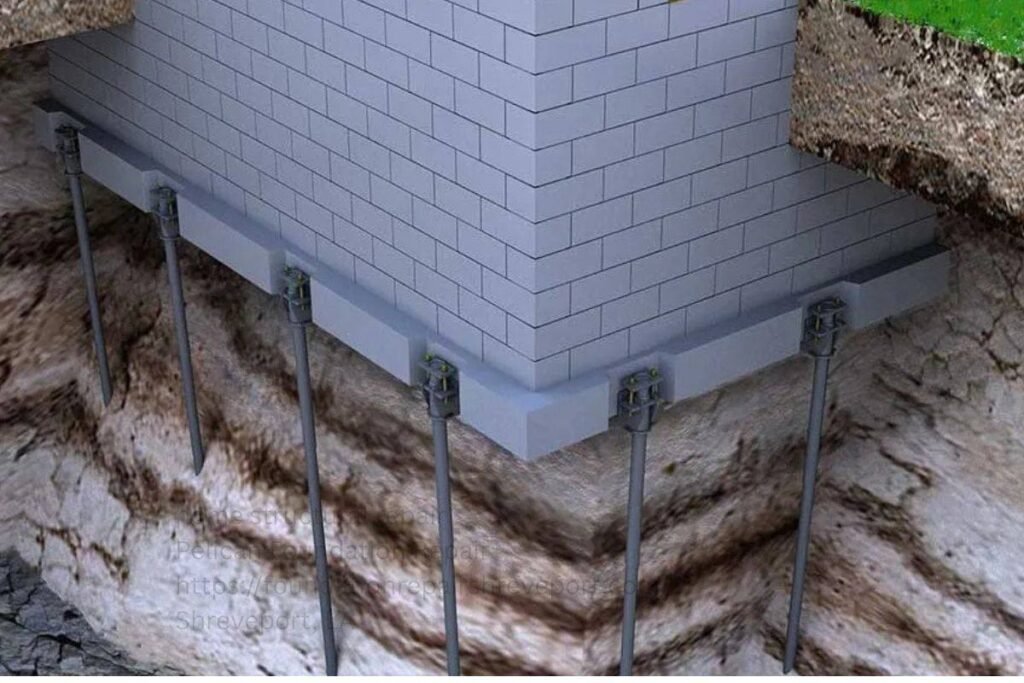
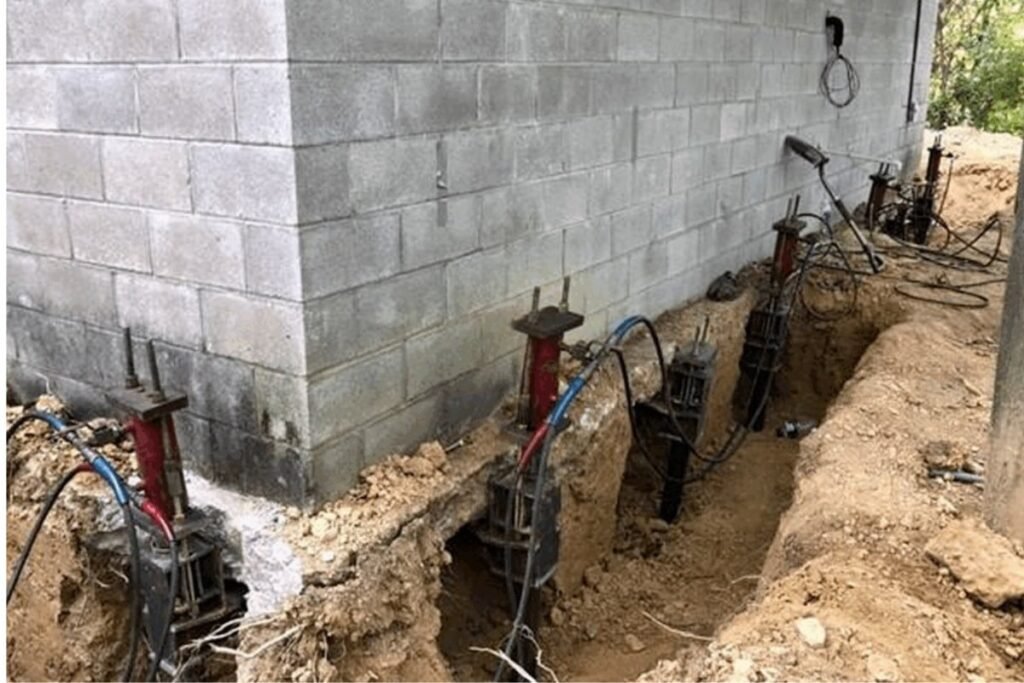
- Helical pier and steel push pier installation. The most common permitted foundation job. Piers transfer the home’s weight to deeper soil, which is a structural change by definition.
- Beam, joist, and sill plate replacement. In pier-and-beam and crawl space homes, replacing the wood members that carry the floor system is structural work and needs a permit.
- Foundation wall rebuilds and major wall repair. Rebuilding a collapsed section of block wall or installing wall anchors and braces to straighten a bowing wall changes the structure.
- House lifting and leveling involving piers. Any lift that includes new structural supports falls under the permit requirement, even if the lift itself is small.
- Drainage work tied to stormwater systems. French drains and surface grading on your own property are usually fine, but anything that connects to a public storm drain or alters drainage across property lines can need approval.
- New concrete slabs or structural additions. Pouring a new structural slab or adding a room addition with its own foundation is new construction as far as the permit office is concerned.
Call (318) 585-2003 – Free Inspection
Repairs That Usually Do Not Need a Permit
Not every foundation job involves the permit office. These common repairs are typically exempt because they do not alter the structure:
- Non-structural crack filling. Epoxy or polyurethane injection into a hairline crack that an inspector has confirmed is not structural is cosmetic repair. No permit needed.
- Foundation inspections. An inspection is just an evaluation — no work is performed — so there is nothing to permit.
- Waterproofing coatings and sealants. Applying sealant to a basement or crawl space wall to manage moisture is a surface treatment, not a structural change.
- Regrading soil around the foundation. Adding or reshaping soil so water drains away from the house is landscaping, and it is one of the most effective things a homeowner can do without any paperwork.
- Gutter and downspout work. Extending downspouts or adding splash blocks manages water without touching the structure.
- Crawl space encapsulation. Installing a vapor barrier, sealing vents, and adding a dehumidifier does not change how the house is supported, so it is generally permit-free — though any electrical work for the dehumidifier follows normal electrical rules.
One caution: “usually exempt” is not the same as “always exempt.” A crack that looks cosmetic can turn out to be structural once a professional looks at it, and at that point the repair plan — and the permit requirement — changes. This is why a proper inspection comes before the repair plan, not after. If you are weighing encapsulation against simpler fixes, our comparison of crawl space repair vs. encapsulation walks through which approach fits which situation.
How Shreveport’s Permit Process Works, Step by Step
For a job that needs a permit inside Shreveport city limits, the process follows a predictable path. Your contractor does the legwork, but it helps to know the steps so you can tell whether things are on track:
- Step 1: Application. The contractor submits a permit application describing the work — for pier jobs, that means the pier type, count, and layout, plus the contractor’s credentials and the property information.
- Step 2: Plan review. The permit office reviews the application for completeness and code compliance. Straightforward residential pier permits usually clear review within a few business days.
- Step 3: Permit issuance and fee payment. Once approved, the fee is paid — typically $100 to $500 for residential foundation work — and the permit is issued. It should be posted on-site during the job.
- Step 4: Inspections. The contractor schedules inspections at the required stages: footing exposure, installation verification, and final sign-off. The inspector confirms the work matches the approved plan.
- Step 5: Final approval. After the last inspection passes, the permit is closed out. Keep the final sign-off with your house records.
Unincorporated Caddo Parish, Bossier City, and Bossier Parish follow the same general pattern with their own offices, forms, and fee schedules. The details vary, but the shape of the process does not. The National Association of Home Builders and local code offices both publish plain-language overviews of how residential permits work — the InterNACHI resources at nachi.org are another good reference for what proper structural evaluation and documentation look like.
Call (318) 585-2003 – Free Inspection
What Permits Cost and How Long Approval Takes
Permit costs for residential foundation work in the Shreveport area are modest compared to the project itself. Here is a general comparison across common job types:
| Job type | Permit usually required? | Typical fee range |
|---|---|---|
| Helical or push pier installation | Yes | $100–$500 |
| Beam / joist / sill plate replacement | Yes | $100–$400 |
| Foundation wall rebuild or anchors | Yes | $150–$500 |
| Non-structural crack injection | Usually no | N/A |
| Crawl space encapsulation | Usually no | N/A |
| Interior drain / sump pump | Sometimes | $50–$200 |
Your Contractor’s Job: Permits, Paperwork, and Inspections
Pulling the permit is the contractor’s responsibility, full stop. When you hire a foundation repair company for structural work, you are hiring them to handle the entire job legally — and that includes the paperwork. Here is the checklist a professional company should run through without being asked:
- Confirm the correct jurisdiction for your address (city vs. parish matters)
- File the application in the company’s name, not yours
- Include product documentation for piers, brackets, and hardware
- Pay the fee and post the permit on-site during work
- Schedule each required inspection at the right stage
- Attend inspections and correct anything the inspector flags
- Close out the permit and give you the final sign-off for your records
Ask for that final sign-off in writing when the job is done, and keep it with your warranty paperwork. Together, the permit record and the warranty are the two documents that prove your foundation repair was done right. Speaking of warranties, our guide to foundation repair warranties and what to ask explains how to read the fine print before you sign. Qualifying repairs from Pelican Foundation Repair carry a 20-year structural warranty — ask any contractor you interview what theirs covers and for how long.
Call (318) 585-2003 – Free Inspection
Red Flags: When a Contractor Says “We Don’t Need a Permit”
Sometimes a contractor is right that a permit is not needed — for a genuinely non-structural job. But when the job clearly involves piers or structural work and the contractor dismisses the permit question, pay close attention. Here are the warning signs:
- “Permits just slow things down.” A few days of review is not a reason to skip legal requirements. This line usually means the contractor does not want scrutiny.
- “You can pull the homeowner permit yourself.” Shifting the permit to your name shifts the liability to you. Legitimate contractors permit their own work.
- “We have never needed one before.” Either they have been working without permits — bad — or they are unfamiliar with local requirements — also bad.
- No license or insurance documentation. A company that cannot show credentials is a company the permit office would not approve anyway.
- Cash-only pricing with no written contract. Unpermitted work and undocumented work travel together. Get everything in writing.
Selling Your Home? Permits Protect Your Resale
If there is one audience that cares deeply about foundation permits, it is homebuyers — and their lenders. In Louisiana, a buyer’s mortgage lender can require documentation that structural repairs were permitted and inspected before funding the loan. An unpermitted pier job discovered during the buyer’s inspection can delay closing by weeks while everyone scrambles for an after-the-fact permit, or it can send the buyer walking.
This is also why permit records matter even if you never plan to sell. Life changes — job transfers, growing families, downsizing — and the house you swore you would never leave becomes someone else’s home. Permitted work protects the value you put into the repair no matter what the future holds. If you want to understand the full range of repairs we handle, browse our foundation repair services or start with our main foundation repair page.
Call (318) 585-2003 – Free Inspection
Frequently Asked Questions
Does foundation repair require a permit in Shreveport?
Structural foundation repair — piers, beam replacement, wall rebuilds — almost always requires a permit in Shreveport. Non-structural work like crack filling or an inspection usually does not. Your contractor should confirm the requirement for your specific job and address.
What kind of foundation work needs a permit?
Any work that changes how the house is supported: helical or push pier installation, beam and joist replacement, sill plate replacement, foundation wall rebuilds, wall anchors, and house lifting with new supports. Cosmetic crack repair and waterproofing coatings are typically exempt.
Who pulls the foundation repair permit?
The contractor. A professional foundation repair company files the application in its own name, pays the fee, schedules the inspections, and closes out the permit. Be cautious of any contractor who asks you to pull the permit yourself.
How much does a foundation repair permit cost?
In the Shreveport metro area, permit fees for residential foundation work typically range from about $100 to $500 depending on the job type and project value. The fee is usually listed as a line item in your quote.
How long does permit approval take?
Straightforward residential applications are usually approved within a few business days in Shreveport, Bossier City, and the surrounding parishes. Incomplete paperwork or filing with the wrong jurisdiction are the most common causes of delay.
Can unpermitted foundation work affect selling my house?
Yes. Buyers’ inspectors flag unpermitted structural work, and mortgage lenders can require permit documentation for foundation repairs before funding the loan. A permitted, inspected job with a closed-out permit protects your resale value.
Call (318) 585-2003 – Free Inspection
Get a Free Foundation Inspection in Shreveport
Not sure whether your repair needs a permit? That is exactly what a professional inspection answers. Our free inspection includes elevation readings, a clear repair plan, and straight talk about permits — what your job needs, who handles it, and what it costs.
Call Pelican Foundation Repair at (318) 585-2003, or visit Pelican Foundation Repair to schedule. We serve Shreveport and the surrounding areas — see our full service area list — and you can browse all of our foundation repair services to compare your options.
Pelican Foundation Repair 6118 Fairfield Ave, Shreveport, LA 71106, USA 318-585-2003 https://foundationrepairshreveport.com/