 Skip to main content

Foundation Grading: The Right Slope to Keep Water Away From Your Home
Proper grading drops soil 6 inches over the first 10 feet from your foundation, steering rain away from your footings. Here is how to check your slope and fix it.
The right slope around a foundation is 6 inches of fall in the first 10 feet on every side. Check it with a string, two stakes, and a line level in one afternoon. Where the grade is flat or tilts toward the house, added soil, a swale, or drain extensions fix it for a few hundred dollars in most yards.
Why Grading Is Your Foundation’s First Defense
Every foundation problem that starts with water starts with grading. Roof runoff, lawn sprinklers, and Gulf-fed downpours all land on your yard — and grading decides whether that water flows away from your house or sits against it, soaking the soil around your footings for days.
In northwest Louisiana the stakes are higher than average. Caddo and Bossier Parish clay swells when it gets wet and shrinks when it dries, so a foundation sitting in a permanent puddle zone rides a constant heave-settle cycle. One side of the house stays soggy while the other stays dry, and that unevenness is what opens cracks, racks door frames, and eventually calls for piers. The LSU AgCenter documents how Louisiana’s clay soils move through wet and dry cycles — and proper grading is the simplest way to keep your soil’s moisture even.
The most expensive dirt on your lot
Think of the soil in the first 10 feet around your house as the most important dirt you own. A thousand dollars of pier work can’t permanently fix a foundation while that ring of soil funnels every rainstorm into the footings. Contractors see it constantly: beautiful pier jobs in Broadmoor and South Highlands undermined within a few years because the grade still tilted toward the house. Grading isn’t landscaping decoration — it’s structural maintenance.

The 6-in-10 Rule, Explained
The industry standard is simple: the ground should drop at least 6 inches in the first 10 feet out from the foundation wall, on every side of the house. That works out to about a 5% grade — enough for water to move decisively away without looking like a hill.
Minimum vs. ideal
Six inches in ten feet is the minimum, not the goal. If your lot allows it, more fall is better — 8 to 12 inches over the first 10 feet sheds water faster and keeps the foundation zone drier between storms. But never pile soil against the siding to get there: keep at least 4 to 6 inches of foundation wall exposed above the soil line, or you’ll trade a grading problem for a termite and rot problem.
All four sides matter — especially the uphill one
Most homeowners check the front yard and ignore the back. Water doesn’t care about curb appeal. The side that matters most is whichever side sits lower on the lot — it collects everyone else’s runoff. Walk the whole perimeter; the one side you skip is the one that will betray you.
Where the rule bends
Tight lots in older Shreveport neighborhoods — Highland, Cedar Grove, parts of Queensborough — sometimes don’t have 10 feet to work with before the property line or a neighbor’s fence. When you can’t get the full fall in the available distance, you compensate: a swale (a shallow grassed channel) to carry water sideways, or buried drain pipe to move it where gravity can’t. The principle never changes — water must leave the foundation zone — only the method adapts.
How to Check Your Grade With a String Level
You can measure your slope in an afternoon with about ten dollars of hardware-store supplies. Here’s the method:
- Drive a stake at the foundation wall and another one 10 feet straight out from it, into the lawn.
- Tie a string between them at ground level on the foundation-side stake, pulling it taut.
- Hang a line level on the string at the midpoint and raise or lower the far end until the bubble centers — now the string is perfectly level.
- Measure the gap between the string and the ground at the far stake. That’s your fall over 10 feet.
- Repeat on all four sides, and at corners where downspouts discharge — the spots that matter most.
Here’s how to read what you find:
| What You Measure | What It Means | What To Do |
|---|---|---|
| 6+ inches of fall | Proper grade — water leaves the foundation zone | Maintain it; don’t let mulch beds flatten it over time |
| 2–5 inches of fall | Marginal — sheds light rain, ponds in downpours | Add soil to build the slope; extend downspouts |
| Flat (0–1 inch) | Water sits against the foundation after every rain | Regrade; consider a swale on the low side |
| Negative (slopes toward house) | Actively funneling water into the footings | Regrade promptly; this is a foundation problem in progress |
Do the check in the wet season if you can — that’s when poor grading shows itself as standing water. If you’re already seeing the warning signs of water trouble, compare notes with our guide to signs of drainage problems around your foundation.
What Bad Grading Looks Like
Most bad grading doesn’t look bad — it looks like landscaping. Watch for these disguised culprits:
- Mulch beds piled against the siding: every spring’s fresh mulch raises the bed a little higher, until the bed that used to slope away now dams water against the wall. Keep beds below the siding and sloping outward.
- Flower beds that hold water: edging and dense plantings can turn a bed into a bathtub. After rain, beds near the foundation should drain within hours, not days.
- Settled backfill along the foundation: the trench dug for construction settles over the first few years, leaving a low moat right against the wall — exactly where water collects. This is the single most common grading defect we see.
- Driveways and patios tilting inward: concrete slabs settle too. A walkway that now slopes toward the house delivers its whole catchment to your footings.
- Downspouts dumping at the corner: a roof sheds hundreds of gallons in a storm; a downspout that ends at the foundation concentrates all of it in one spot.
The settled-backfill moat deserves emphasis: nearly every home develops it within five years of construction, and almost no homeowner notices until the first foundation crack appears. A few wheelbarrows of soil, properly sloped and compacted, fix a problem that would otherwise cost thousands.
How Regrading Works
Regrading isn’t complicated, but it is physical. Here’s the honest process, whether you DIY a small section or hire it out:
The basic regrade
- Strip the sod in the work zone so you can set it back afterward.
- Bring in fill dirt — not topsoil. Clean fill dirt compacts firmly and holds a slope; fluffy topsoil settles back flat within a season. This is the mistake that dooms most DIY regrades.
- Build the slope from the foundation outward: highest at the wall (keeping 4–6 inches of foundation exposed), falling 6+ inches over the first 10 feet.
- Compact in layers, wetting and tamping every few inches. Loose soil is just a future low spot.
- Replace the sod or seed, and water it in so roots lock the new grade in place.
Swales: the shallow ditch that saves tight lots
A swale is a broad, shallow grassed channel — typically 6 inches deep and a few feet wide — that intercepts runoff and carries it sideways to daylight or a drain. It doesn’t look like a ditch when it’s done; it looks like a gentle dip in the lawn. Swales are the answer for side yards too narrow for a full 10-foot slope, and for the uphill side of a house that catches the whole street’s runoff.
What regrading costs
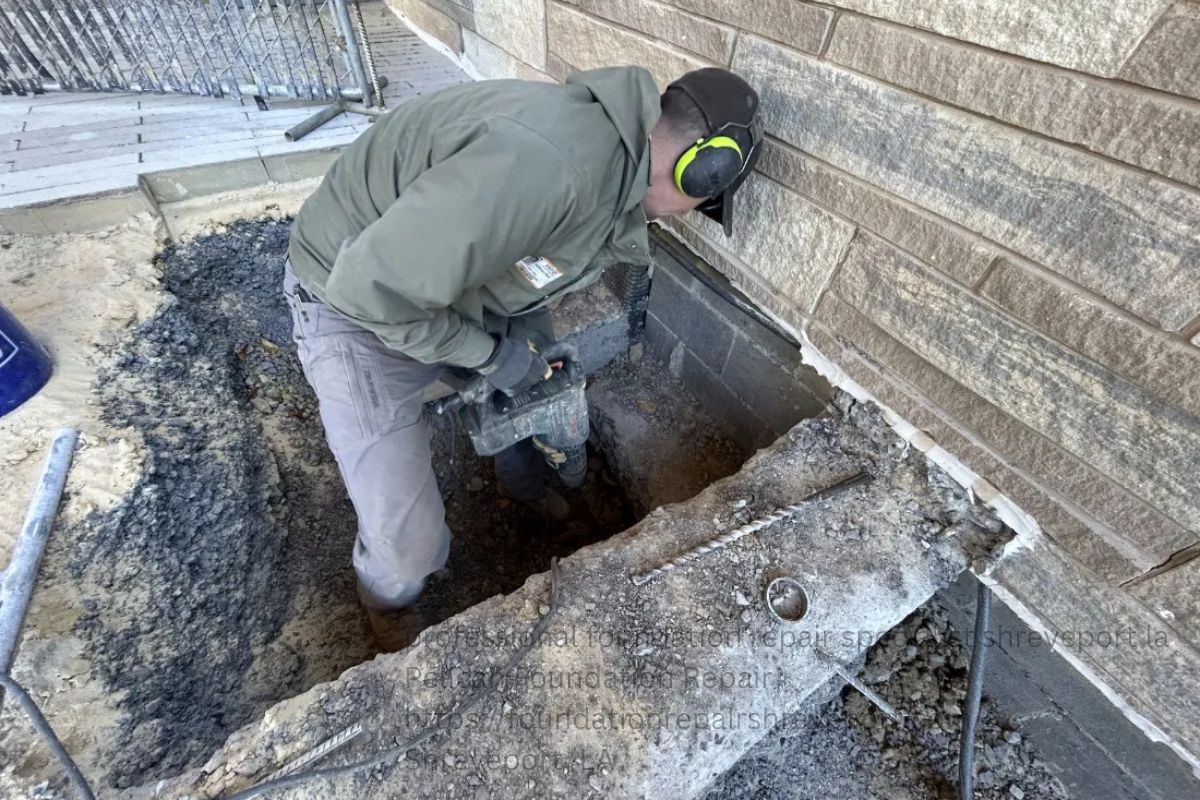
DIY regrading of one side of the house runs a few hundred dollars in fill dirt and a weekend of labor. Professional regrading of the full perimeter typically runs in the low hundreds to low thousands depending on how much soil has to move and whether swales or drain tie-ins are involved. Compare that to $3,500–$15,000+ for pier work caused by years of water against the footings, and grading is the cheapest foundation insurance you can buy. If water has already moved your foundation, our foundation repair services cover the structural side — and for water problems beyond grading’s reach, see our drainage correction services — French drains, surface drains, and full yard-drainage systems for the jobs soil alone can’t solve.
Grading + Gutters: The One-Two Punch
Grading handles sheet flow across the yard; gutters handle the roof — and the roof is the bigger water source. A 1,500-square-foot roof sheds roughly 900 gallons in a one-inch rain. If your gutters dump that at the foundation corners, no amount of grading fully compensates.
- Extend every downspout at least 10 feet from the house — solid pipe, not the accordion stuff that clogs and collapses.
- Bury the extensions where they cross lawns, daylighting to a pop-up emitter or a swale. Buried pipe doesn’t get hit by the mower.
- Clean gutters twice a year. A clogged gutter is a waterfall aimed at your foundation — all that roof water sheets over the edge in one concentrated curtain.
- Check the discharge point. An extension that ends in a low spot just moves the pond ten feet out. Make sure the outlet drains to daylight or a working swale.
Grading and gutters are a system: the gutter gets the water off the roof and ten feet out, and the grade carries it the rest of the way. Get both right and your foundation zone stays merely damp instead of saturated — which, in Caddo Parish clay, is the difference between a stable house and a moving one. Our guide to gutter and downspout drainage for foundations covers the roof side of the system in detail.
Frequently Asked Questions
What is the proper slope for grading around a foundation?
At least 6 inches of fall in the first 10 feet from the foundation wall, on every side of the house — about a 5% grade. More fall is fine where the lot allows it, but never pile soil against the siding; keep 4 to 6 inches of foundation wall exposed.
How do I check my yard’s slope?
Drive a stake at the foundation and another 10 feet out, tie a taut string between them, hang a line level on it, and measure the gap between the string and the ground at the far stake. That gap is your fall over 10 feet. Repeat on all four sides.
Can poor grading really damage my foundation?
Yes — it’s one of the most common causes we see. Water pooling against the footings keeps clay soil cycling through swell and shrink, and uneven moisture around the perimeter produces differential settlement: cracks, sticking doors, and eventually pier work.
How much does it cost to regrade around a house?
A DIY regrade of one side runs a few hundred dollars in fill dirt plus a weekend of labor. Professional full-perimeter regrading typically runs from the low hundreds to the low thousands, depending on soil volume and whether swales or drains are involved.
Should I use topsoil or fill dirt for grading?
Fill dirt. Clean fill compacts firmly and holds its slope; topsoil is fluffy, settles flat within a season, and undoes your work. Save the topsoil for the top inch or two where grass needs to root.
What is a swale and do I need one?
A swale is a broad, shallow grassed channel that carries runoff sideways to daylight or a drain. You need one when the lot is too tight for a full 10-foot slope, or when the uphill side of the house collects runoff from higher ground. Done right, it looks like a gentle dip in the lawn.
Do I need to fix my gutters too, or just the grading?
Both, if the gutters are part of the problem. A roof sheds hundreds of gallons per storm, and downspouts that end at the foundation defeat good grading. Extend every downspout at least 10 feet out, then let the grade carry the water the rest of the way.
Pelican Foundation Repair
6118 Fairfield Ave, Shreveport, LA 71106, USA
318-585-2003
https://foundationrepairshreveport.com/