 Skip to main content

Helical Piers Disadvantages: Honest Limitations & When Push Piers Win
What are the disadvantages of helical piers? The honest answer: they cost more than steel push piers for most residential jobs, they depend on specific soil conditions to achieve the torque that proves they will hold, they have practical depth and load limits, and they need installation access that some properties cannot provide. Helical piers are a legitimate, well-engineered system — but they are the wrong choice in a surprising number of Louisiana situations, where steel push piers do the same job for less money.
The main helical pier disadvantages are higher cost, soil-dependent holding power, and installation constraints. For most Shreveport-area homes with typical expansive clay and straightforward access, steel push piers reach the same bearing soil, support the same loads, and cost less — which is why push piers remain the default recommendation for most residential settlement here.
Call (318) 585-2003 – Free Inspection
📊 Helical Pier Limitations at a Glance
Higher cost
Than push piers on most homes
Soil-dependent
Torque must prove bearing
Access-heavy
Equipment needs room to work
A Quick, Fair Look at What Helical Piers Do Well
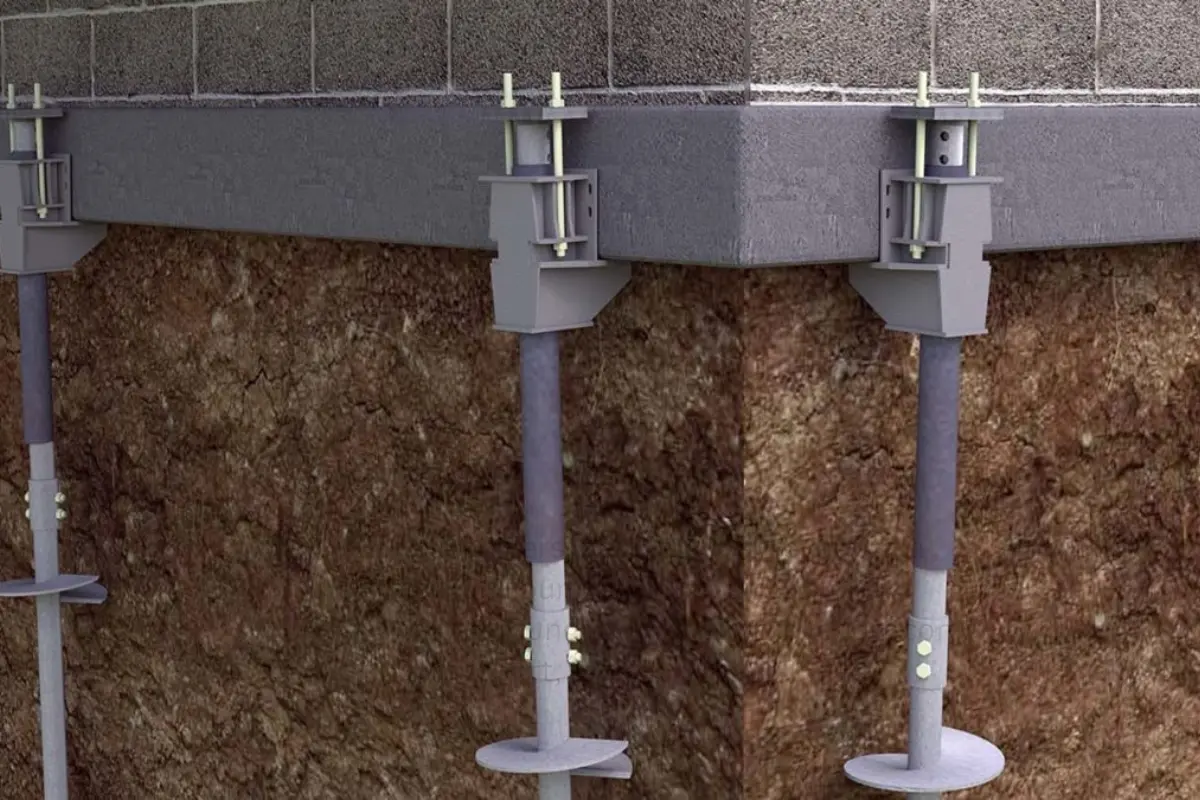
Before the limitations, the fair part — because helical piers are not a bad product, and this is not a hit piece. A helical pier is a steel shaft with one or more screw-like plates welded to it. It is rotated into the ground like a giant screw until the installation torque — the resistance measured during driving — indicates the plates have engaged competent, load-bearing soil. That torque-to-capacity relationship is well studied, and when the soil cooperates, helicals provide verified, predictable support.
Helicals shine in specific situations. They install with minimal vibration, which matters near fragile structures or in tight urban lots. They can be installed in limited-access areas with smaller equipment than some alternatives. They work well for lighter loads — porch columns, additions, and smaller structures where massive push-pier rigs would be overkill. And in granular soils — sand and gravel — where push piers can struggle to develop end-bearing, helicals’ screw plates grip beautifully.
The key phrase in all of that is “when the soil cooperates.” Helical piers are a soil-dependent system in a way that matters enormously in Louisiana, and that is where the disadvantages start stacking up. The rest of this post is about those situations — not to dismiss helicals, but so you can tell when a contractor is recommending the right pier for your ground instead of the most profitable one.
Disadvantage #1: The Cost Problem
For comparable residential foundation support, helical piers typically cost more than steel push piers — often noticeably more. The piers themselves are more expensive to manufacture (those welded helix plates are precision components), the installation requires torque-monitoring equipment and trained operators, and the engineering that sizes each pier adds overhead that push-pier jobs often do not need.
On a typical Shreveport home needing a dozen or more piers, the helical premium adds up fast. Here is how the two systems generally compare on residential work:
| Factor | Helical piers | Steel push piers |
|---|---|---|
| Typical residential project cost | $12,000–$25,000+ | $4,000–$15,000+ |
| Cost driver | Pier hardware + torque equipment + engineering | Pier count + depth to bearing |
| Best value when | Light loads, limited access, granular soil | Typical home settlement in clay soil |
| Price predictability | Better (torque target known during install) | Good (depth verified by gauge) |
| Overkill risk | Higher on standard homes | Lower — sized to the settlement map |
Those ranges overlap, but notice where each system sits: helicals start higher and climb faster. For a standard settling home in Broadmoor or Southern Hills — the most common job in this market — push piers deliver the same structural result for thousands less. Paying the helical premium makes sense when the job actually needs what helicals do best. Paying it for a routine clay-soil settlement is paying for capability you will never use.
Watch for this sales pattern: a contractor who only installs helicals will recommend helicals for everything. A contractor who installs both will match the pier to the soil and the structure. If you have only been offered one pier type, get a second opinion from a company that does both — the comparison is the only way to know whether the premium is justified on your ground.
Call (318) 585-2003 – Free Inspection
Disadvantage #2: Soil and Torque — When Helicals Cannot Get a Grip
Here is the technical heart of the matter. A helical pier’s holding power is proven by installation torque: the resistance the soil puts up as the pier screws in. Enough torque means the helix plates are biting into competent soil. Not enough torque means they are spinning in material too weak to hold the house — and the pier cannot be counted on, no matter how deep it goes.
Now consider Louisiana soil. Much of the Shreveport area sits on deep, soft, saturated clay — exactly the material where helicals struggle to develop torque. The USGS soil data at usgs.gov confirms how extensive our soft clay deposits are. In very soft or loose soils, a helical pier may need extensions upon extensions, driving deeper and deeper chasing torque that never quite arrives. Each extension adds cost, and at some point the economics collapse: you are paying helical prices for a pier that still has not proven bearing.
Push piers handle this scenario differently and, frankly, better. A push pier does not need soil grip — it needs something hard to push against. The hydraulic ram drives the pier until the pressure gauge proves it has hit dense bearing strata, and in our geology that dense layer is down there; it just might be 25 feet down. The push pier reaches it by brute force and verifies with pressure. The helical has to coax the in-between soil into providing torque, and soft Louisiana clay does not always cooperate.
This is not theoretical. Contractors in this market have stories of helical installations that ran far deeper than planned, racking up extension costs, before the torque target was met — or that had to be abandoned for push piers mid-job. When a system fights your native soil, that is a disadvantage worth pricing honestly before anyone signs a contract.
Disadvantage #3: Depth Limits and Installation Constraints
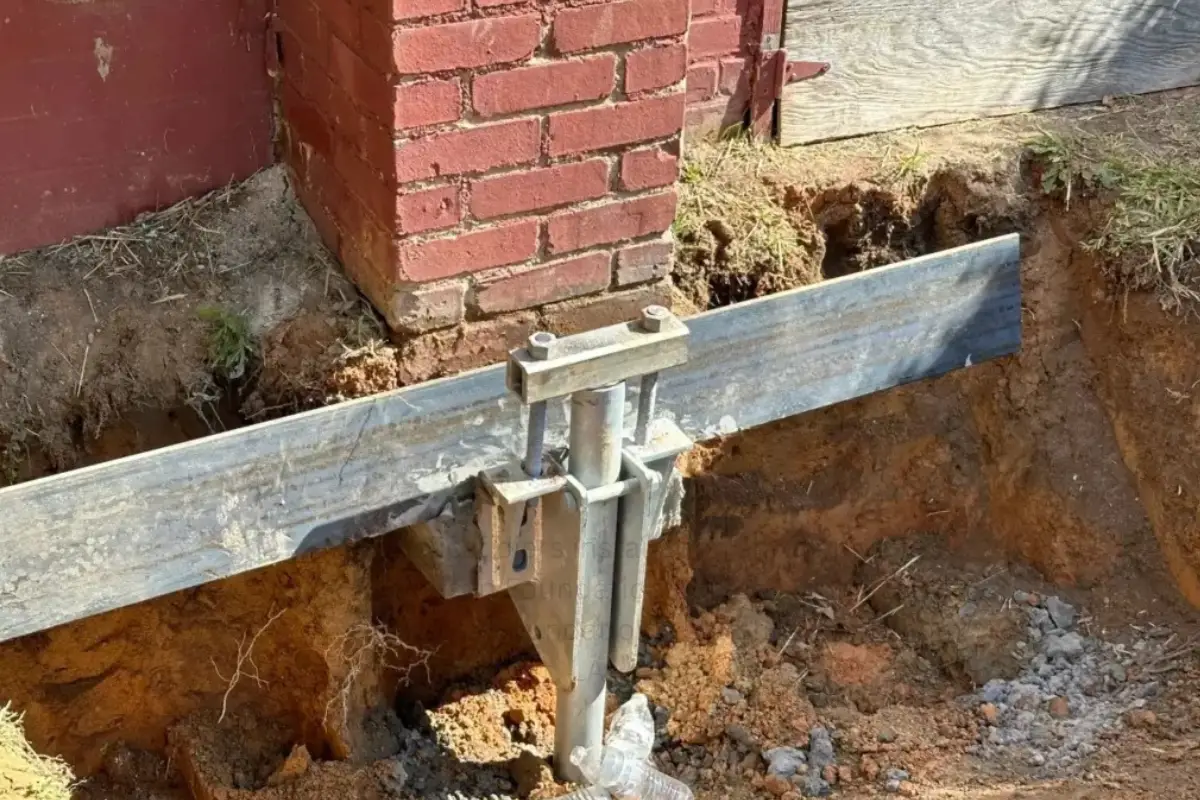
Helical piers have practical depth limits that matter on real jobs. As a helical goes deeper, the torque required to keep turning it increases, and the equipment has finite capacity. In soils where bearing is deep — and in parts of Caddo and Bossier parishes, bearing strata can sit 25 to 30+ feet down — helicals can hit the point where the drive equipment maxes out before the pier reaches competent soil. Push piers, driven by hydraulic rams reacting against the weight of the house itself, routinely reach those depths.
There is also a load consideration. Helical piers are excellent for light to moderate loads, but heavy residential structures — large two-story brick homes, the kind common in South Highlands and Ellerbe — can exceed what standard helical configurations support without upsizing to larger, more expensive shafts and plates. Push piers, bearing directly on deep strata, handle heavy loads as a matter of course. Matching a light-duty pier to a heavy house is a mismatch no warranty can fix.
Installation access cuts both ways. Helicals are often sold as the low-access option, and the smaller equipment does fit in tighter spots. But the drive head still needs overhead clearance and working room at each pier location, and interior installations — through a slab floor — are more complicated with torque equipment than with push-pier rams. For the tightest interior work, push piers are often the more practical choice, not the less.
None of these are disqualifying in the right application. They are disqualifying when the job needs deep bearing, heavy loads, or straightforward economics — which describes a large share of residential foundation work in northwest Louisiana.
Call (318) 585-2003 – Free Inspection
Situations Where Helical Piers Are the Wrong Choice
Putting the limitations together, here is when you should push back — politely but firmly — if helicals are being recommended:
- Standard settlement in expansive clay. The most common foundation problem in Shreveport, and the scenario where push piers are proven, cheaper, and simpler. Helicals add cost without adding benefit.
- Very soft or saturated surface soils. When torque cannot develop, helicals chase depth at your expense. Push piers bypass the soft layer entirely and bear on the deep strata.
- Deep bearing strata (25+ feet). If local knowledge says bearing is deep in your area, helicals risk equipment limits and runaway extension costs. Push piers are built for exactly this.
- Heavy two-story brick homes. High loads favor the direct end-bearing of push piers over the torque-dependent capacity of standard helicals.
- Budget-constrained projects. When the helical premium buys no structural advantage on your soil, it is money that could go toward drainage correction, encapsulation, or simply staying in your pocket.
- Single-system contractors. If the company only sells helicals, their recommendation is a business model, not a diagnosis. Get a quote from a contractor who installs both systems — like our team, which offers both helical pier installation and steel push pier installation — and compare.
Notice the theme: helicals are the wrong choice when the job is ordinary. They are a specialty tool, and specialty tools earn their keep on specialty jobs — not on the routine settlement that makes up most foundation work in this market.
When Steel Push Piers Are the Better Fit
So when do push piers win? In most of the situations Shreveport homeowners actually face. Push piers are the better fit when the soil profile is classic Louisiana: a thick layer of expansive clay over deep, dense bearing strata. That profile plays directly to the push pier’s strength — drive straight through the problem layer, seat on the good stuff, verify with the gauge.
They are the better fit for standard residential loads on typical homes: one- and two-story houses, slab or pier-and-beam, with the settlement patterns our elevation maps see every week. The system is simple, the verification is direct, and the cost tracks the actual work — pier count and depth — rather than hardware premiums and engineering overhead.
They are the better fit when bearing is deep. A hydraulic ram pushing against the weight of the house does not care whether bearing is at twelve feet or thirty. And they are the better fit when the budget matters, because the same structural outcome for less money is not a compromise — it is just good value.
Our side-by-side push piers vs. helical piers comparison lays out the full technical matchup. The short version: in northwest Louisiana clay, push piers are the default for a reason, and helicals are the exception you choose deliberately — not the standard you accept by default.
Call (318) 585-2003 – Free Inspection
How to Decide for Your Home
The pier decision should follow a sequence, and soil comes before sales. It starts with an inspection: elevation readings, a settlement map, and an honest assessment of your soil conditions. In many Shreveport neighborhoods, the soil profile is well understood — contractors who have worked here for years know which areas run deep and which bear shallow — but your specific lot still gets its own evaluation.
Ask these questions of any contractor recommending a pier type. What is the expected bearing depth on my lot, and how will you verify each pier reaches it? Why is this pier type better than the alternative for my soil? What happens — and what does it cost — if the piers have to go deeper than planned? The quality of the answers tells you whether you are getting engineering or a sales script. The InterNACHI structural resources at nachi.org are a solid reference for what a proper evaluation covers.
Get quotes for both systems when the job could go either way. A contractor who installs both has no incentive to steer you wrong — the job is theirs either way — so their recommendation is the most trustworthy one you will hear. If the helical quote is thousands more with no soil-driven reason, you have your answer.
And remember the warranty question. We back qualifying pier work with a 20-year structural warranty — whatever system you choose, get the warranty terms in writing and make sure you understand what is covered. The pier type matters less than the contractor standing behind it, but on Louisiana clay, the right pier type still matters plenty.
Frequently Asked Questions
What are the main disadvantages of helical piers?
The main disadvantages are higher cost than steel push piers for most residential jobs, dependence on soil conditions to achieve the torque that proves bearing, practical depth limits in deep-bearing areas, and installation constraints on heavy structures. In soft Louisiana clay, helicals can struggle to develop torque without costly extra depth.
Are helical piers better than push piers?
Neither is universally better — it depends on the soil and the structure. Helical piers excel in granular soils, for lighter loads, and where low vibration matters. Steel push piers are generally better for typical Louisiana homes: deep expansive clay, standard to heavy residential loads, and deep bearing strata. Most Shreveport settlement jobs favor push piers.
Why do helical piers cost more than push piers?
Helical piers cost more to manufacture because of the precision-welded helix plates, and installation requires torque-monitoring equipment plus trained operators. Engineering to size each pier adds overhead. On a typical home needing a dozen or more piers, those per-pier premiums add up to thousands over a push pier job.
Can helical piers fail in clay soil?
They can underperform in very soft or saturated clay, where the soil does not provide enough resistance for the pier to develop its target installation torque. Without adequate torque, the pier cannot be verified to its rated capacity. In those conditions, contractors may keep adding extensions at rising cost — or switch to push piers that bear directly on deep strata.
How deep can helical piers go?
It depends on the equipment and soil, but helicals face practical limits: as depth increases, so does the torque needed to turn them, and drive equipment has finite capacity. In areas where bearing strata sits 25–30+ feet deep — common in parts of northwest Louisiana — push piers driven by hydraulic rams are often the more reliable way to reach bearing.
When should I choose helical piers over push piers?
Choose helicals for lighter structures like porches, additions, or outbuildings; in granular or sandy soils where push piers struggle; where minimal vibration is critical; or in tight-access spots suited to smaller equipment. For standard home settlement in Louisiana clay, push piers are usually the better value.
Do helical piers work for house leveling?
They can, but they are rarely the most economical choice for it. House leveling typically involves many piers under significant load in clay soil — exactly the scenario where push piers deliver the same lift and support for less money. Helicals make more sense for leveling small, light structures than whole houses.
Call (318) 585-2003 – Free Inspection
Get a Free Pier Evaluation in Shreveport
Helical or push pier is a soil decision, not a brand decision — and the only way to make it correctly is with elevation readings and local soil knowledge. A free inspection gives you a settlement map, an honest pier recommendation, and quotes you can compare.
Call Pelican Foundation Repair at (318) 585-2003, or visit Pelican Foundation Repair to schedule. We serve Shreveport and surrounding areas — see our service areas and all foundation repair services.
Pelican Foundation Repair 6118 Fairfield Ave, Shreveport, LA 71106, USA 318-585-2003 https://foundationrepairshreveport.com/