Skip to main content


Horizontal Foundation Cracks: Causes, Repair & When to Worry
A horizontal crack in a foundation wall is caused by lateral pressure — soil and water pushing sideways against the wall — and it deserves prompt attention. A thin, dry hairline crack can often be monitored or sealed, but a wide, growing, or leaking horizontal crack signals serious pressure that can bow or fail the wall over time. Repair costs range from $800 to $2,500 for epoxy injection on minor cracks, up to $3,000 to $10,000 or more for wall anchors, bracing, or partial rebuilds on severe cases.
Horizontal cracks are the ones foundation professionals take most seriously, more so than typical vertical cracks. This guide explains what causes them, how to tell whether yours is urgent, what the repair options look like, and what they cost in the Shreveport area.
What Causes Horizontal Cracks in Foundation Walls
A horizontal crack forms when pressure from outside the wall exceeds what the wall can resist. The usual culprit is hydrostatic pressure — water building up in the soil against the foundation. When soil gets saturated, it gets heavier and pushes harder. In northwest Louisiana, our expansive clay makes this worse: the clay not only holds water but swells as it absorbs it, multiplying the sideways force on the wall.
Several things feed that pressure around Shreveport-area homes:
- Poor drainage. Downspouts dumping next to the foundation, negative grading, or clogged gutters keep soil saturated against the wall. This is the number one driver we see in neighborhoods from Cedar Grove to Bossier City.
- Expansive clay soil. Caddo Parish clay swells dramatically when wet. A wall that was fine for years can start cracking after a few unusually wet springs.
- Frost-free but rain-heavy cycles. We do not get deep freezes, but we do get intense rain events that spike soil pressure quickly.
- Heavy loads near the wall. Parked vehicles, additions, or stacked materials close to the foundation add surcharge pressure to the soil pushing on the wall.
- Tree roots. Large roots can exert surprising lateral force, and they also change how water moves through the soil near the wall.
The crack usually appears at the point of maximum pressure — often near the middle of the wall height — and runs sideways along the mortar joints in block walls or straight across poured concrete. Because the force is constant and seasonal, these cracks rarely stay the same size for long.
How Worried Should You Be? A Simple Triage
Not every horizontal crack is an emergency, but every one deserves evaluation. Here is how to read what you are seeing:
| Repair Type | Typical Cost Range | Usual Timeline |
|---|---|---|
| Thin hairline crack, dry, no displacement | Early pressure; wall still straight | Monitor and seal; get a professional opinion |
| Crack up to 1/8 inch, dry | Ongoing lateral pressure | Schedule an inspection soon; injection or straps likely |
| Crack wider than 1/8 inch or growing | Significant, active pressure | Prompt professional evaluation; anchors or bracing likely |
| Crack leaking water | Water path established; pressure plus drainage failure | Repair promptly; address drainage at the same time |
| Wall bowing or leaning inward | Structural failure in progress | Urgent — get an inspection right away |
One practical test: mark the ends of the crack with a pencil and date it, then check monthly. If the crack grows past your marks, the pressure is active and waiting is not a plan. Also sight along the wall from the end — any visible inward curve means the wall is bowing, which is the stage where simple injection is no longer enough.
How Horizontal Cracks Are Repaired
The right method depends on the crack’s severity and whether the wall is still straight. A good contractor matches the fix to the problem rather than selling one solution for everything:
Epoxy or polyurethane injection ($800–$2,500)
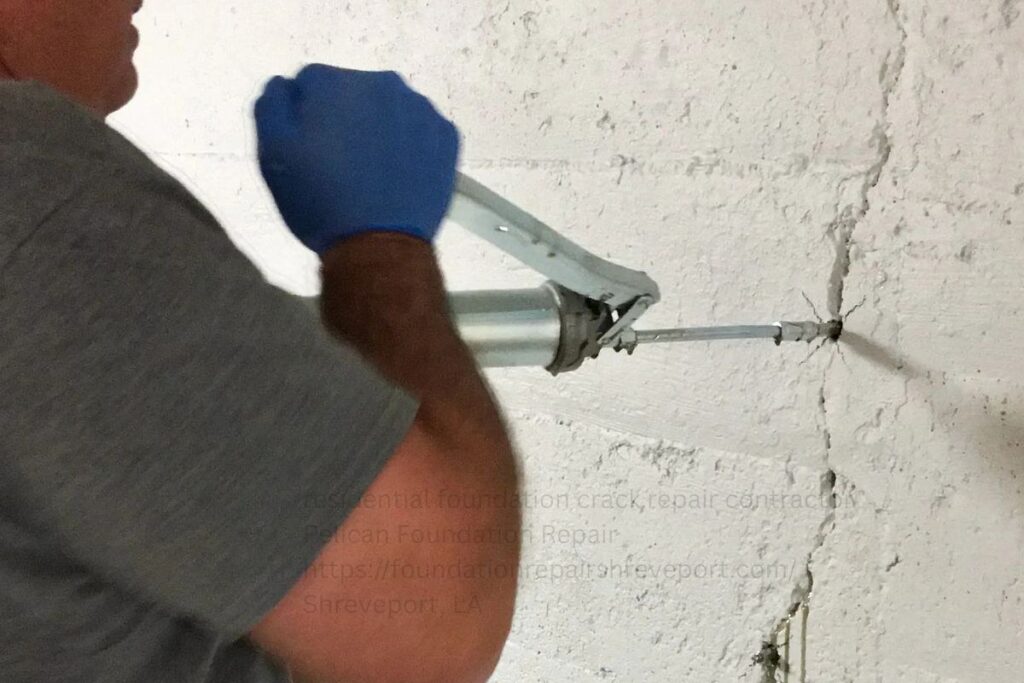
For thin, stable, non-structural cracks, resin is injected under pressure to fill and bond the crack. This seals out water and restores the wall’s integrity at that spot. It is the right call for hairline cracks in an otherwise straight wall — but it does not counteract ongoing soil pressure, so drainage improvements often go with it.
Carbon fiber straps ($2,000–$5,000 per wall)
High-strength carbon fiber strips are epoxied vertically across the crack and along the wall. They act like a splint, holding the wall in its current position and preventing further bowing. This works well for walls with minor inward movement (under about an inch) where the goal is stabilization rather than straightening.
Wall anchors ($3,000–$7,000+ per wall)
Steel plates inside the wall are connected through the soil to anchors buried in stable earth outside. Tightening the system can gradually pull a bowed wall back toward plumb while permanently resisting soil pressure. Anchors are the go-to for walls with significant bowing, and they require enough yard space outside for the anchor installation.
Steel I-beam bracing ($3,500–$8,000+ per wall)
Vertical steel beams are secured against the wall and anchored to the floor and overhead framing, physically preventing further inward movement. Bracing is strong and straightforward, though the beams remain visible inside — a consideration for finished spaces.
Drainage correction (often bundled, $1,500–$4,000)
Almost every horizontal crack repair should include addressing the water that caused it: exterior or interior drainage, downspout extensions, and grading fixes. Repairing the wall without relieving the pressure is a temporary fix.
Partial wall rebuild ($8,000–$15,000+)
For walls that have bowed severely or partially failed, the honest answer is sometimes rebuilding the section. It is the most expensive option, but it is the right one when the wall’s structural capacity is gone.
What a Repair Visit Looks Like
If you have never had foundation work done, the process is more straightforward than most people expect. Here is the typical sequence for a horizontal crack repair in the Shreveport area:
- Inspection and measurement. The contractor measures crack width, checks the wall for bowing with a straightedge or laser, looks at exterior drainage and grading, and takes photos. You should get a written explanation of what is happening and why — not just a price.
- Engineering input for structural fixes. Anchors, bracing, and rebuilds on bowed walls should follow an engineered plan. Ask whether a structural engineer is involved in the design.
- The repair itself. Injection jobs often finish in a day. Carbon fiber strap installations take a day or two. Wall anchors typically take 2 to 4 days including the exterior excavation. Your contractor should explain dust, noise, and access needs up front.
- Drainage work alongside. Downspout extensions, grading touch-ups, or drain installation usually happen during the same visit so the pressure does not rebuild.
- Warranty in writing. We back qualifying structural repairs with a 20-year structural warranty. Whatever method is used on your wall, get the warranty terms on paper before work starts.
For a closer look at how crack repairs work step by step, see our article on how foundation crack repair works.
Preventing the Next Horizontal Crack
Once a wall is repaired — or if your walls are still crack-free and you want to keep them that way — prevention comes down to managing water and pressure:
- Move roof water away from the house. Extend downspouts at least 6 to 10 feet from the foundation and keep gutters clean. This single step prevents more wall pressure than anything else.
- Grade soil away from the foundation. The ground should slope away from the house for at least the first several feet so rain runs off instead of pooling against the wall.
- Keep a consistent moisture level. In long dry spells, soaker hoses run occasionally near (not against) the foundation can keep expansive clay from shrinking away and then swelling violently when rain returns.
- Watch new cracks early. Check basement and foundation walls twice a year — spring and fall work well in Louisiana. Catching a hairline crack early is the difference between an $800 injection and a $7,000 anchor job.
Vertical cracks are a different animal with different causes — if that is what you are seeing, read our guide to vertical foundation crack repair instead. For an overview of our approach to wall issues, visit our foundation crack repair service page or start at our homepage. The U.S. Geological Survey also publishes useful background on expansive soils and the damage they cause to structures.
Frequently Asked Questions
How do you repair a horizontal crack in a foundation wall?
It depends on severity. Thin, stable cracks are sealed with epoxy or polyurethane injection ($800–$2,500). Walls with minor bowing get carbon fiber straps or steel bracing. Significantly bowed walls need wall anchors ($3,000–$7,000+) that pull the wall back and resist soil pressure permanently.
Are horizontal foundation cracks serious?
Yes — they are the crack type professionals worry about most, because they signal lateral soil and water pressure pushing the wall inward. A thin, dry hairline may only need monitoring and sealing, but wide, growing, or leaking horizontal cracks need prompt professional repair.
Can a horizontal crack be fixed from the inside?
Many can. Injection, carbon fiber straps, and steel I-beam bracing are all interior methods. Wall anchors need exterior excavation for the anchor plates. Your contractor will recommend the least invasive method that actually solves the pressure problem.
How much does it cost to fix a bowing foundation wall?
In the Shreveport area, stabilizing a bowed wall typically costs $3,000 to $10,000 or more depending on the method — carbon fiber or bracing on the lower end, wall anchors in the middle, and partial rebuilds at the top. Drainage correction is often bundled in.
Will a horizontal crack get worse over time?
Almost always, yes. The soil pressure that caused it is seasonal and ongoing in Louisiana’s expansive clay, so the crack tends to widen a little with each wet-dry cycle. Marking and dating the crack ends lets you track whether it is actively growing.
Does homeowner’s insurance cover horizontal crack repair?
Usually not — gradual soil pressure and settlement are typically excluded as maintenance issues. Coverage may apply if the damage came from a sudden covered event, like a burst water line saturating the soil. Check with your agent.
Should I buy a house with a horizontal foundation crack?
Only with a professional evaluation first. A repaired wall with a documented warranty and engineering can be fine, but an unrepaired bowing wall is a negotiating point at best and a deal-breaker at worst. Get an independent inspection before you commit.
Do you offer free inspections for foundation cracks in Shreveport?
Yes. We offer free inspections across Shreveport, Bossier City, and nearby communities in Caddo and Bossier Parishes, Monday through Saturday from 8:00 AM to 6:00 PM. You get measurements, photos, and a written repair plan.
Pelican Foundation Repair
6118 Fairfield Ave, Shreveport, LA 71106, USA
318-585-2003
https://foundationrepairshreveport.com/