 Skip to main content

How Do You Repair Foundation Damage? Every Method Explained
Foundation damage gets repaired with piers, house leveling, crack injection, drainage correction, and concrete leveling. Here is what each method does, when it fits, and what it costs around Shreveport.
How do you repair foundation damage? It depends on the cause and the type of foundation. Settling slabs get steel push or helical piers driven to stable soil. Pier-and-beam homes get leveled with new piers, shims, and beam work. Cracks get sealed with epoxy or polyurethane injection, and the water causing the trouble gets fixed with drainage work.
If you are reading this while staring at a stair-step crack or a door that sticks every August, you are asking the right question. Around Shreveport, most foundation damage traces back to expansive clay that swells in wet springs and shrinks in hot summers — and every common type has a proven fix.
How Do You Repair Foundation Damage? Start With a Real Diagnosis
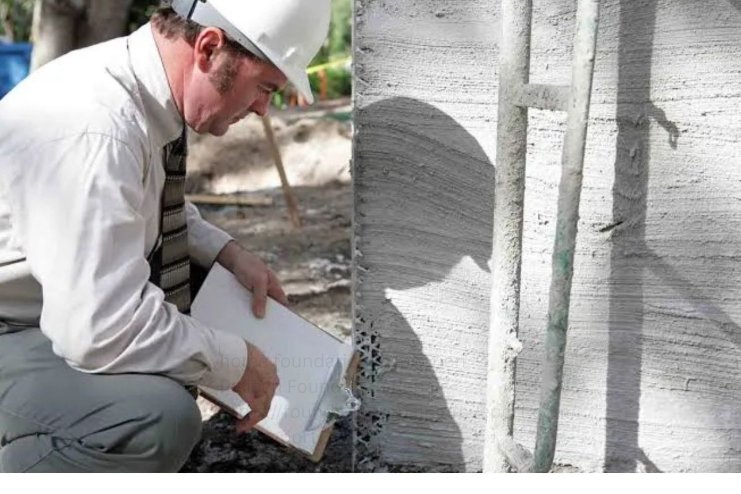
Before anyone talks about methods, the honest answer starts with diagnosis. Two houses on the same street can show the same crack and need completely different fixes — one a settling corner needing piers, the other a shrinkage crack plus a gutter dumping water on the wall. A contractor who names the method before measuring is guessing with your money.
A real inspection takes one to two hours and produces numbers. The inspector maps floor elevations across the house, notes every crack with its width and pattern, walks the drainage around the perimeter, and checks the crawl space or slab edge. That data tells the story: uniform settlement points to soil consolidation under the whole footprint, while differential movement — one corner dropping, one side lifting — points to moisture imbalance or a localized soil problem.
Steel Push Piers and Helical Piers: Stopping Slab Settlement
When a slab settles — corners dropping, brick cracking in stair-steps, doors racking — piers are the standard repair. Steel pipe sections are driven hydraulically beside the footing until they reach load-bearing soil, a bracket is fitted under the footing, and the crew transfers the house’s weight onto the piers, lifting the settled section back toward level.
Helical piers work the same way but screw into the ground like a giant screw — suited to lighter loads and tight access. Both bypass the unstable surface clay entirely, which matters here: the USDA Web Soil Survey maps much of Caddo Parish as expansive clay, and that top layer is what keeps moving every year.
Pier depth drives the price — the crew drives each pier until it refuses to move, and that stable layer sits deeper in some parts of town than others. That is why per-pier pricing varies and a firm quote needs an on-site inspection. For the full rundown, see our foundation repair services page.
House Leveling for Pier-and-Beam Homes
Shreveport has thousands of pier-and-beam homes — from mid-century houses in Shreve City to older places toward Mooringsport — and they get repaired differently than slabs. House leveling restores the support grid from underneath: new or replaced piers, steel or hardwood shims bringing beams back to level, sistered joists, and replaced sill plates.
Clay punishes pier-and-beam homes in its own way: when the ground shrinks in late summer, individual piers settle unevenly and you feel it as a soft, bouncy spot in the hallway. Decades of crawl space moisture add rot, so leveling often uncovers framing that needs replacing first — a good crew reports it instead of shimming over it.
Leveling usually takes two to five days, with the crew working entirely beneath the house. For deeper background, read our guide to what foundation underpinning is — same goal of getting the structure onto stable support.
Foundation Crack Repair: Epoxy and Polyurethane Injection
Not every crack means the foundation is failing, but every crack deserves a judgment call. Hairline shrinkage cracks are often cosmetic. Stair-step cracks, cracks wider than a quarter inch, horizontal wall cracks, or any actively leaking crack all call for repair — and sometimes they signal settlement needing piers, not just a patch.
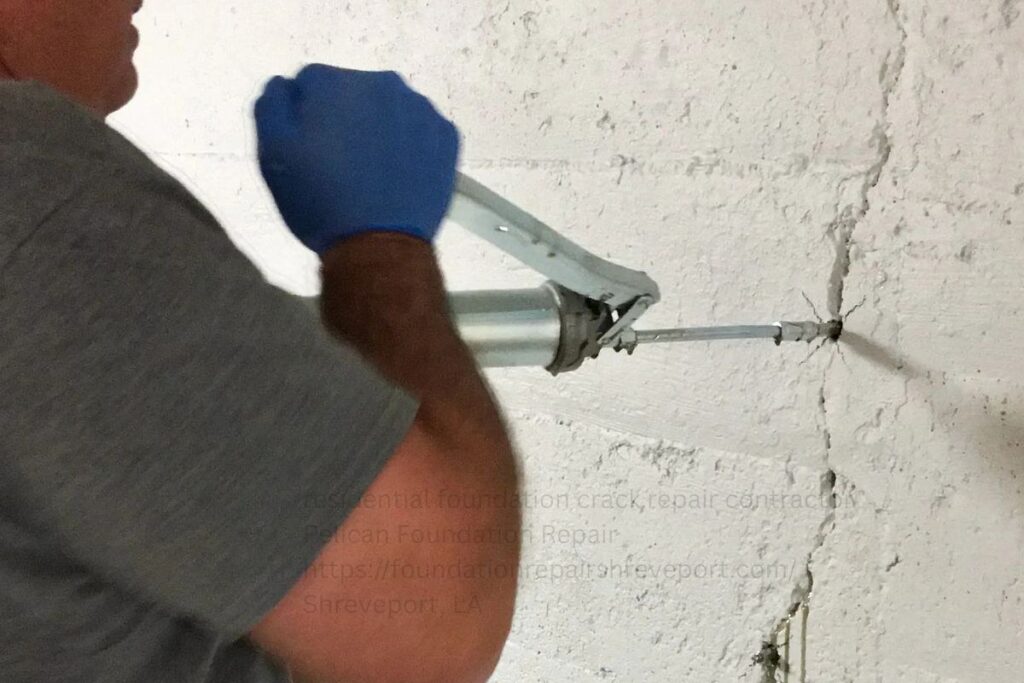
Epoxy injection bonds concrete back together with tremendous strength — right for structural cracks where both sides must act as one. Polyurethane stays flexible and expands to fill the void — better for cracks that leak, since it chases water through the crack path and seals it. A contractor should tell you which your crack needs and why.
Injection day is low drama: the crew sets ports along the crack, pumps material in from the lowest point up, and lets it cure — most single-crack jobs finish in a day. But if a crack is tied to ongoing settlement, ask how the repair addresses the movement. Sealing a crack while the foundation keeps moving buys a short-term fix.
Drainage Correction: Fixing the Water Behind the Damage
Here is the repair most homeowners underestimate: fixing the water. In Shreveport, a huge share of foundation damage starts as a drainage problem — wet springs swell the clay, summer bakes it dry, and that cycling opens cracks and drops corners. Repairing the structure without managing the water is like bailing a boat without plugging the leak.
Drainage correction is practical work, not exotic. It means regrading soil so it slopes away from the house, extending downspouts well past the foundation, cleaning gutters that overflow straight onto the slab edge, and installing French drains where water collects — along the low side of lots near Cross Lake or in flat subdivisions off I-49 where water has nowhere natural to go. Interior drain systems paired with sump pumps handle water that is already getting under the slab.
Drainage work runs $1,500 to $6,000 for most homes and is often done alongside structural repair. If you are weighing the whole project, our breakdown of whether foundation repair is worth it walks through repair cost versus home value.
Concrete Leveling: Mudjacking and Foam Injection
Sunken concrete around the house — a tilted driveway slab, a patio ponding water against the wall, a walkway turned trip hazard — gets fixed with concrete leveling: mudjacking (cement slurry pumped underneath) or polyurethane foam injection (expanding foam, less weight, smaller holes).
Foam is the popular residential choice: it cures fast, adds almost no weight to soft clay, and the small drill holes patch nearly invisibly. Expect $500 to $2,000 for typical residential flatwork, finished in a day.
One honest distinction: leveling fixes settled flatwork, not a settling house. If your home’s slab is dropping, that is a pier job — foam under a structural slab without addressing deep soil movement is cosmetic. A straight contractor tells you which you are looking at.
Wall Repair and Underpinning for Bowing or Failing Walls
Walls that bow, lean, or shear need wall-specific repair: wall anchors tightened over time to pull the wall back, steel I-beam bracing, or carbon fiber straps bonded to the wall. Which fits depends on how far the wall has moved and what is pushing it — usually saturated clay or hydrostatic pressure.
Underpinning is the umbrella term for strengthening a foundation’s support — piers, new footings, wall systems. If a contractor uses the word, ask them to translate it into the specific method for your house. Jargon is never a substitute for plain English.
Wall repair runs $3,000 to $10,000 for most residential jobs, depending on wall length and the system used. You can browse the full set of structural options on our services page to see how wall repair fits alongside piers, leveling, and drainage in a complete repair plan.
What Foundation Damage Repair Costs and How Long It Takes
How the methods compare for a typical Shreveport-area home — honest ranges, not quotes:
| Method | Best For | Typical Cost | Typical Timeline |
|---|---|---|---|
| Crack injection (epoxy or polyurethane) | Cracks that are not tied to ongoing settlement | $400–$1,500 per crack | 1 day |
| Concrete leveling (mudjacking or foam) | Sunken driveways, patios, walkways | $500–$2,000 | 1 day |
| Steel push or helical piers | Settling slab foundations | $3,500–$15,000+ | 2–4 days |
| House leveling (pier-and-beam) | Sagging floors, settled piers, rotted framing | $3,000–$12,000 | 2–5 days |
| Crawl space structural repair | Rotted beams, joists, and sills | $2,000–$10,000 | 2–4 days |
| Drainage correction | Pooling water, poor grading, gutter problems | $1,500–$6,000 | 1–3 days |
| Wall repair (anchors, bracing, carbon fiber) | Bowing, leaning, or shearing walls | $3,000–$10,000 | 2–5 days |
Scheduling after inspection usually runs one to four weeks out, and you can stay home during nearly all of it. Start with a free inspection from Pelican Foundation Repair — Monday through Saturday, 8:00 AM to 6:00 PM — for elevation readings and a written diagnosis matched to your soil.
Frequently Asked Questions
How do you repair foundation damage in a slab home?
Settling slabs are repaired with steel push piers or helical piers driven to stable soil, then the settled sections are lifted back toward level. Cracks get sealed with epoxy or polyurethane injection, and drainage problems get corrected so the soil stays stable afterward.
Can you repair foundation damage without lifting the house?
Sometimes — crack injection, drainage correction, and concrete leveling involve no lifting. But if the foundation has settled, there is no honest fix that skips stabilization.
How much does it cost to repair foundation damage in Shreveport?
Crack repairs run $400 to $1,500, concrete leveling $500 to $2,000, pier installations $3,500 to $15,000 or more, and house leveling $3,000 to $12,000. Drainage work adds $1,500 to $6,000. Depth, pier count, and access set the final price.
How long does foundation damage repair take?
Most residential jobs take two to five days: crack injection and concrete leveling in a day, pier installation in two to four days, house leveling in two to five days. Scheduling after inspection usually runs one to four weeks out.
Will foundation damage get worse if I wait?
Usually, yes. Expansive clay keeps cycling every year, so settlement and cracking tend to progress rather than stabilize. Small, cheap fixes become big, expensive ones — a free inspection now tells you where you stand.
Does homeowners insurance cover foundation damage repair?
Most standard policies exclude soil movement and settling, which covers most Shreveport foundation claims. Sudden events like plumbing leaks may be covered. Read your policy and talk to your agent.
What is the best method to repair foundation damage?
There is no single best method — only the right one for your diagnosis. Piers fix settlement, injection seals cracks, leveling fixes pier-and-beam sag, drainage fixes water. Be skeptical of one-method-fits-all contractors.
Should I fix drainage before repairing my foundation?
Ideally both are planned together — drainage first stabilizes the soil the repair depends on. What you should not do is structural repair while ignoring active water problems.
Pelican Foundation Repair
6118 Fairfield Ave, Shreveport, LA 71106, USA
318-585-2003
https://foundationrepairshreveport.com/