 Skip to main content
What Is Foundation Underpinning? A Homeowner’s Guide
Foundation underpinning is the process of strengthening an existing foundation by extending it deeper into stable soil or spreading its load over a larger area. In plain terms: when the soil under your home can no longer hold it steady, underpinning gives the foundation something solid to stand on. The most common methods are steel push piers, helical piers, and pier-and-beam adjustments, and the right one depends on your soil, your foundation type, and how much the house has moved.
Underpinning is not a cosmetic fix. It is structural work that stops settlement and, in many cases, lifts the foundation back toward its original position. If your doors stick, cracks are widening, or one side of the house sits lower than the other, underpinning may be the permanent answer. A free inspection with elevation measurements tells you whether your home needs it.
Call (318) 585-2003 – Free Inspection
📊 Foundation Underpinning at a Glance
$3,500–$15,000+
Typical range for a full pier underpinning job in Shreveport
3 methods
Push piers, helical piers, and pier-and-beam shimming
20-year
Structural warranty on qualifying underpinning repairs
Underpinning in Plain English
Think of your foundation as feet standing on ground. If the ground under those feet is soft, shifting clay, the feet sink. Underpinning does not fix the ground — it gives the feet longer legs that reach down past the bad soil to something solid.
That is the whole idea. Everything else is engineering detail about how those “longer legs” are built and installed. The goal is always the same: transfer the weight of your house from weak, moving soil to deep, stable soil or bedrock that does not move.
When Does a Home Need Underpinning?
Not every foundation problem needs underpinning. Hairline cracks, minor sticking doors, and small cosmetic issues usually do not. Underpinning is for settlement — the actual downward movement of the foundation — that is ongoing or significant. Here are the signs that point toward it:
- Stair-step cracks in brick or block that are wider than a quarter inch or getting wider over time
- One side of the house visibly lower than the other, or floors that slope noticeably
- Cracks that keep coming back after patching, which means the movement behind them never stopped
- Gaps opening up where walls meet ceilings, or where the chimney pulls away from the house
- Doors and windows that progressively bind — getting worse year after year, not just in one season
- Elevation readings showing real drop, which is what our free inspection measures with professional equipment
Seasonal sticking that comes and goes with wet and dry weather is often clay soil swelling, not true settlement, and it may not need piers at all. That distinction is exactly why an inspection with actual measurements matters more than a guess.
The Three Main Underpinning Methods
In residential work around Shreveport, underpinning almost always means one of three things. Each has a job it does best.
| Method | How it works | Best for |
|---|---|---|
| Steel push piers | Steel pipe sections are hydraulically driven down alongside the footing until they hit load-bearing soil or bedrock, then the foundation is lifted and pinned to the piers | Heavy homes on clay where deep stable soil exists; the most common full underpinning job |
| Helical piers | Steel shafts with screw-like plates are mechanically rotated into the ground to a engineered depth and torque, then bracketed to the foundation | Lighter structures, porches, and jobs where installation speed or minimal vibration matters |
| Pier-and-beam shimming and replacement | Existing piers under a raised foundation are shimmed, rebuilt, or supplemented to re-level the beams | Pier-and-beam and raised homes with sagging or rotted piers |
Steel Push Piers: The Workhorse
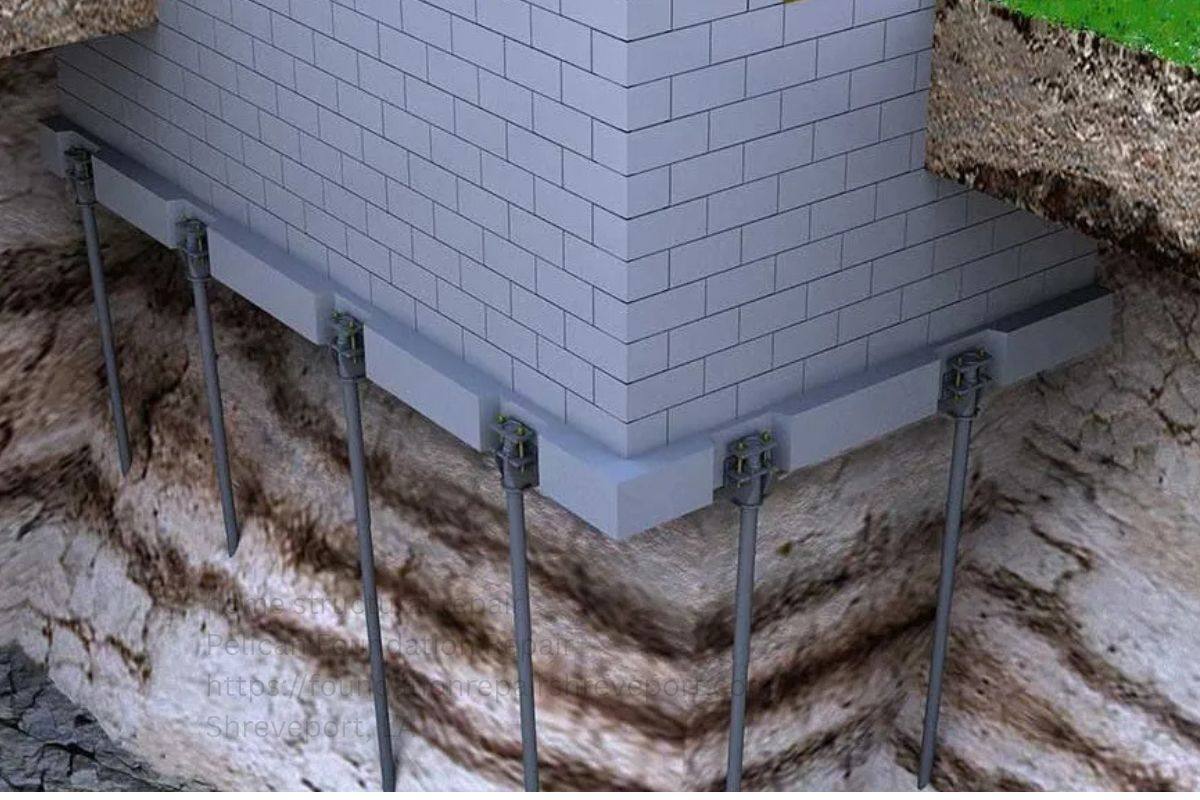
Steel push piers are the most common underpinning method for Shreveport homes, and for good reason. Our clay soil is deep, and push piers keep driving until they reach soil dense enough to hold the house — sometimes 20, 30, or more feet down. The pier does not care how bad the clay is near the surface because it bypasses it entirely.
Installation goes like this: small excavations are dug at intervals along the settled foundation. A heavy steel bracket is attached to the footing. Then interlocking steel pipe sections are hydraulically pressed down through the bracket, one after another, until the pier refuses to go further — that refusal means it has hit load-bearing strata. The crew then uses the piers as jacking points to lift the foundation, and the bracket is locked to the pier so the weight now rests on deep soil instead of surface clay.
The lift is the satisfying part. Doors that would not close start closing. Slopes in the floor flatten out. Not every home comes all the way back — a house that has settled for 20 years may have framing that has adapted to the slope — but the settlement stops, which is the structural goal. Our steel push pier installation page walks through the process in more detail.
Call (318) 585-2003 – Free Inspection
Helical Piers: The Screw-In Alternative
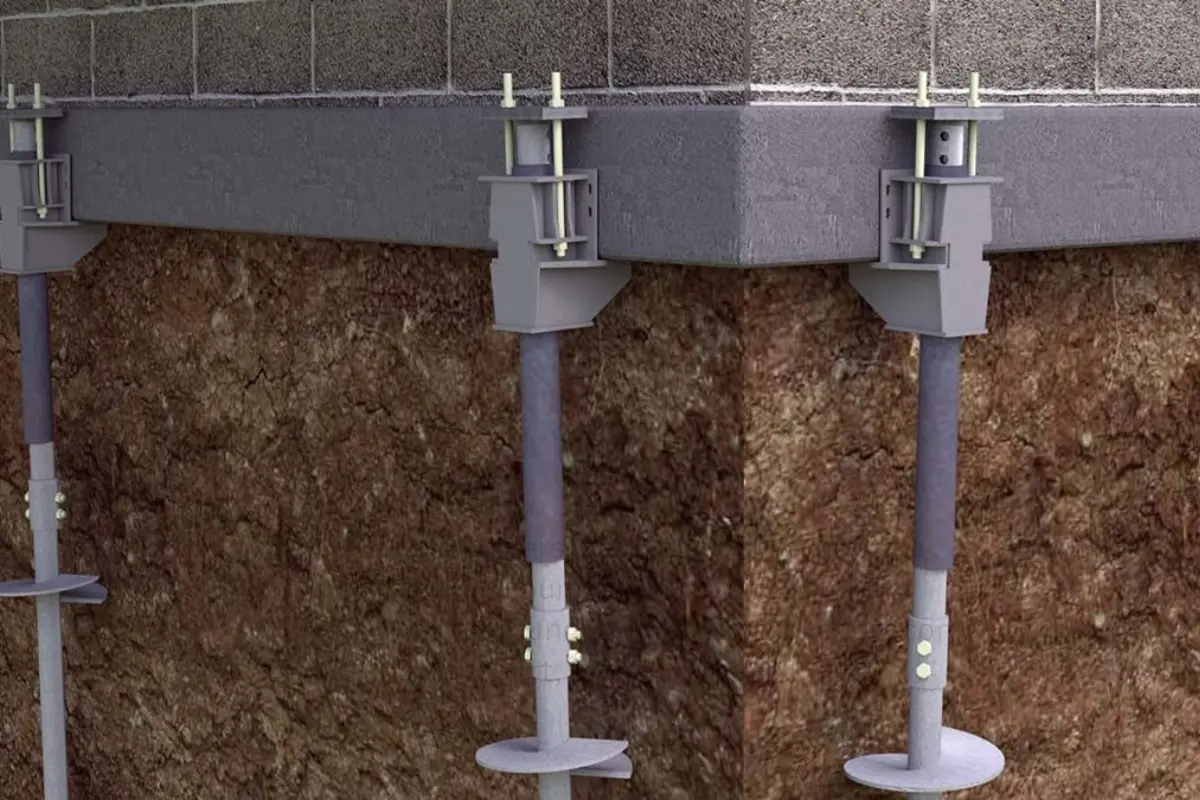
Helical piers work on the same principle — reach stable soil — but they get there differently. Instead of being pushed straight down, they are screwed into the ground like a giant auger, with helical plates that bite into the soil. An installer monitors the torque as they go; when the torque hits the engineered target, the pier has reached competent soil.
Helicals shine in a few situations: lighter loads like stoops, porches, and room additions; sites where you want to know the exact bearing capacity during installation (the torque reading gives it to you in real time); and jobs where speed matters, since there is no waiting for driven sections. For a full-size brick home on deep clay, push piers are usually the recommendation, but helicals have their place and a good contractor will explain which fits your house.
We wrote a full comparison if you want the details: push piers vs helical piers covers costs, depths, and which soil conditions favor each.
Pier-and-Beam Underpinning
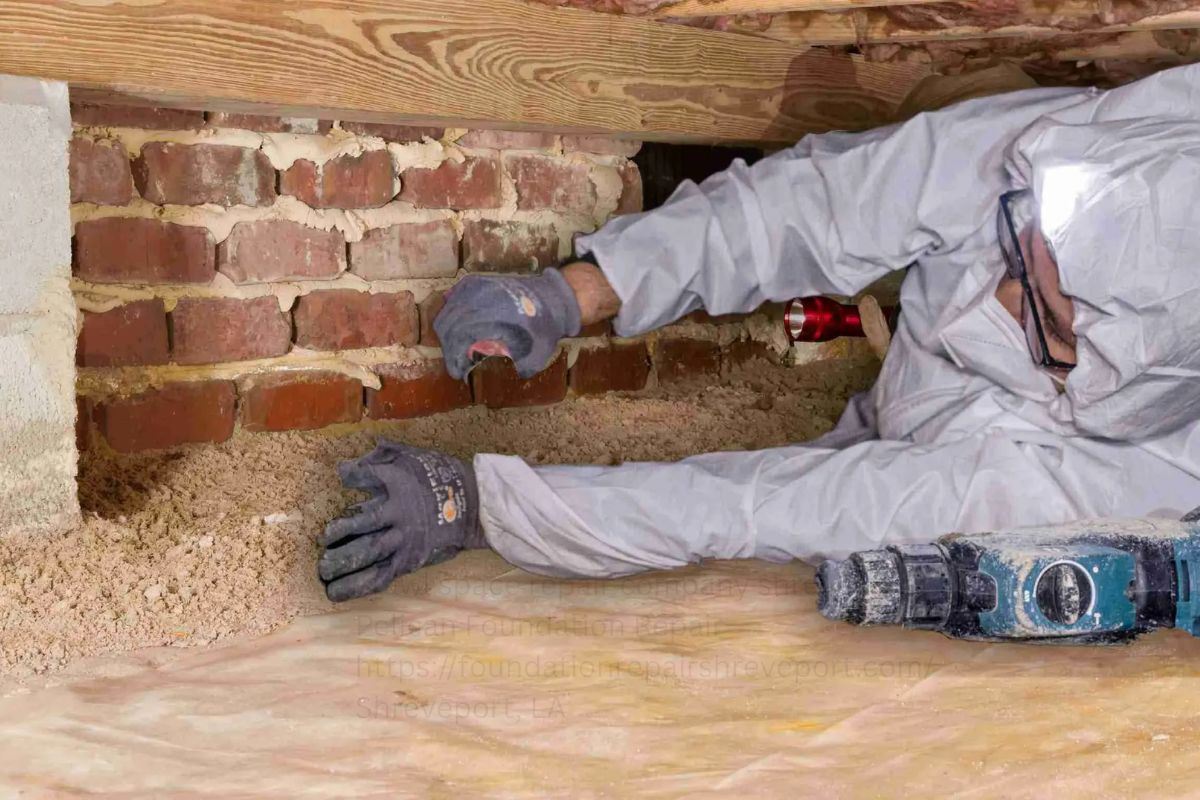
A huge number of Shreveport-area homes sit on pier-and-beam foundations — raised homes with a crawl space underneath. Underpinning here looks different: instead of driving deep piers, the crew works under the house, shimming existing piers with steel shims, rebuilding deteriorated piers, and adding supplemental piers where spans are too long.
The telltale signs are bouncy or sagging floors, musty crawl space smells, and visible leaning or crumbling piers. Because the work happens in the crawl space, it also tends to uncover moisture and wood-rot issues that need attention at the same time.
What Underpinning Costs in Shreveport
Full pier jobs in our area typically run $3,500–$15,000+, depending on the number of piers, how deep they must go, and how much lift is involved. A small supplemental job on one corner of a house sits at the low end. A full perimeter underpinning on a large brick home sits at the high end. Depth is the wild card: piers that must go 30 feet cost more in material and labor than piers that find bearing at 12 feet, and nobody knows the depth until the first piers are driven.
That uncertainty is why per-pier pricing with a written plan beats a flat guess. Your proposal should show the pier layout, the expected depth range, and what happens if piers go deeper than expected. Our inspections are free and the quote is written, so you see the plan before you commit to anything. For the broader pricing picture, see our foundation repair cost guide for Shreveport.
How Long Does Underpinning Take?
Most residential pier jobs take two to five days. A small job — a handful of piers on one wall — can be done in two days. A full perimeter job on a large home runs closer to a week. Pier-and-beam re-leveling is often faster, sometimes a single day for straightforward shimming.
You do not need to move out. Crews work outside along the foundation, with brief interior access only if interior piers are needed. Water and power stay on. The noisiest part is the hydraulic driving, which lasts a few hours, not days. Most homeowners are surprised how little the work disrupts daily life.
Call (318) 585-2003 – Free Inspection
Underpinning vs. Other Foundation Fixes
Underpinning solves settlement — downward movement. It does not solve every foundation problem, and a contractor who recommends piers for everything is a contractor to avoid. Here is how underpinning fits alongside the other tools:
- Mudjacking / concrete leveling lifts settled concrete slabs like driveways and patios by pumping material underneath. It is for flatwork, not for holding up a house.
- Crack repair ($400–$1,500) seals and stabilizes individual cracks with epoxy or polyurethane. It is the right fix for isolated cracks in a foundation that is not settling.
- Drainage correction manages the water that causes clay soil movement. It prevents future damage but does not lift a settled foundation. Often paired with underpinning on the same job.
- Wall anchors and beams fix inward-bowing walls — lateral movement, not downward settlement. Different problem, different fix.
A proper inspection sorts out which of these your home actually needs. Many homes need two of them together — underpinning plus drainage is the classic Shreveport combination — and doing them as one planned job costs less than doing them years apart.
Choosing an Underpinning Contractor
Underpinning is expensive, invasive, and permanent, which makes the contractor choice matter more than with almost any other home repair. Look for a company that measures elevation with real instruments instead of eyeballing, shows you the pier layout on paper, explains why the chosen method fits your soil and house, and puts the warranty in writing.
Ask how they handle piers that go deeper than expected, who does the work (their own technicians or subcontractors), and what the warranty actually covers. Be wary of anyone who quotes a price without measurements, pressures you to sign the same day, or cannot explain in plain language why your house is settling. Our guide on choosing a foundation repair contractor in Shreveport walks through every question worth asking.
Pelican Foundation Repair uses our own technicians — not subcontractors — and every underpinning job comes with a 20-year structural warranty on qualifying repairs, spelled out in the written proposal. We serve Shreveport, Bossier City, Benton, Haughton, Greenwood, Stonewall, and the surrounding Louisiana communities.
Frequently Asked Questions
What is the cheapest underpinning method?
For pier-and-beam homes, shimming and pier replacement is usually the least expensive because the work is shallow and accessible. For slab homes with true settlement, there is no genuinely cheap underpinning — push piers and helical piers cost what they cost because of the steel and labor involved. Beware of any “underpinning” quote far below market: it usually means too few piers, shallow piers, or both.
Will underpinning lift my house back to level?
Often, substantially. Crews lift the foundation during installation and many homes come most or all of the way back. But a house that has settled for decades may have framing, brickwork, and finishes that have conformed to the slope, so a full return to perfect level is not always possible or advisable. The structural goal — stopping the settlement permanently — is achieved regardless.
How deep do push piers go in Shreveport?
It varies by location and soil boring, but 15 to 30 feet is common in northwest Louisiana clay. Piers are driven until they reach verified load-bearing strata, which the crew confirms by driving resistance. Your proposal should explain the expected depth range for your specific property.
Can I live in the house during underpinning?
Yes. Nearly all residential underpinning is done with the homeowner in place. Work happens outside along the foundation, utilities stay on, and the loudest phase lasts hours, not days. Interior access is only needed briefly if interior piers are part of the plan.
How do I know if I need piers or just drainage work?
Elevation measurements. If the foundation has measurably dropped and the drop is ongoing, you need piers — drainage alone will not lift it back. If elevations are stable and the symptoms are seasonal (doors stick in summer, release in winter), drainage and moisture control may be enough. A free inspection with real measurements answers this definitively.
Do piers come with a warranty?
They should. Pelican Foundation Repair provides a 20-year structural warranty on qualifying underpinning work. Get the warranty terms in writing before work starts, and make sure you understand what is covered and what would void it.
Will underpinning increase my home value?
A documented, warranted pier job with an engineering-style pier layout removes the biggest objection a buyer can have about a settled home. While no contractor should promise a specific dollar increase, a stabilized foundation with transferable paperwork consistently appraises and sells better than an actively settling one. Keep all documentation.
Is underpinning the same as house leveling?
They overlap. House leveling is the goal — getting the home level — and underpinning with piers is the most common method of achieving it for settled slab foundations. For pier-and-beam homes, leveling is done with shimming and pier work instead. Our house leveling page covers the full picture.
Call (318) 585-2003 – Free Inspection
Find Out If Your Home Needs Underpinning
Settlement does not reverse itself. Every year a foundation keeps moving, the repair gets bigger and the costs climb. The inspection that tells you exactly where you stand — with elevation readings, photos, and a written plan — is free.
Call Pelican Foundation Repair at (318) 585-2003 to schedule yours. If your home needs underpinning, you will get a clear pier layout and an honest price. If it does not, we will tell you that too, and point you at the simpler fix that actually fits. For independent background on pier methods, the InterNACHI article on push pier systems is a solid technical reference.
Pelican Foundation Repair 6118 Fairfield Ave, Shreveport, LA 71106, USA 318-585-2003 https://foundationrepairshreveport.com/