 Skip to main content
How Much Does Crawl Space Encapsulation Cost in Shreveport LA?
In Shreveport, LA, full crawl space encapsulation typically costs $5,000 to $15,000, while a simple vapor-barrier-only job can run $1,500 to $3,000. Reported project prices vary with crawl space size, standing water, mold remediation, and whether a dehumidifier is installed. Pelican Foundation Repair offers free inspections, so you get an exact quote for your home.
Most Shreveport homeowners pay $5,000–$15,000 for full encapsulation; the size of your crawl space, water problems, and mold remediation drive the final price.
Call (318) 585-2003 – Free Inspection
📊 Crawl Space Encapsulation Cost at a Glance
$1,500–$15,000
Full encapsulation range in Shreveport
$4,000–$8,000
Typical basic encapsulation
Free
Inspection & exact written quote
What Is Crawl Space Encapsulation, Exactly?
Encapsulation means turning your crawl space into a sealed, controlled part of your home instead of an open pit of damp earth and outside air.
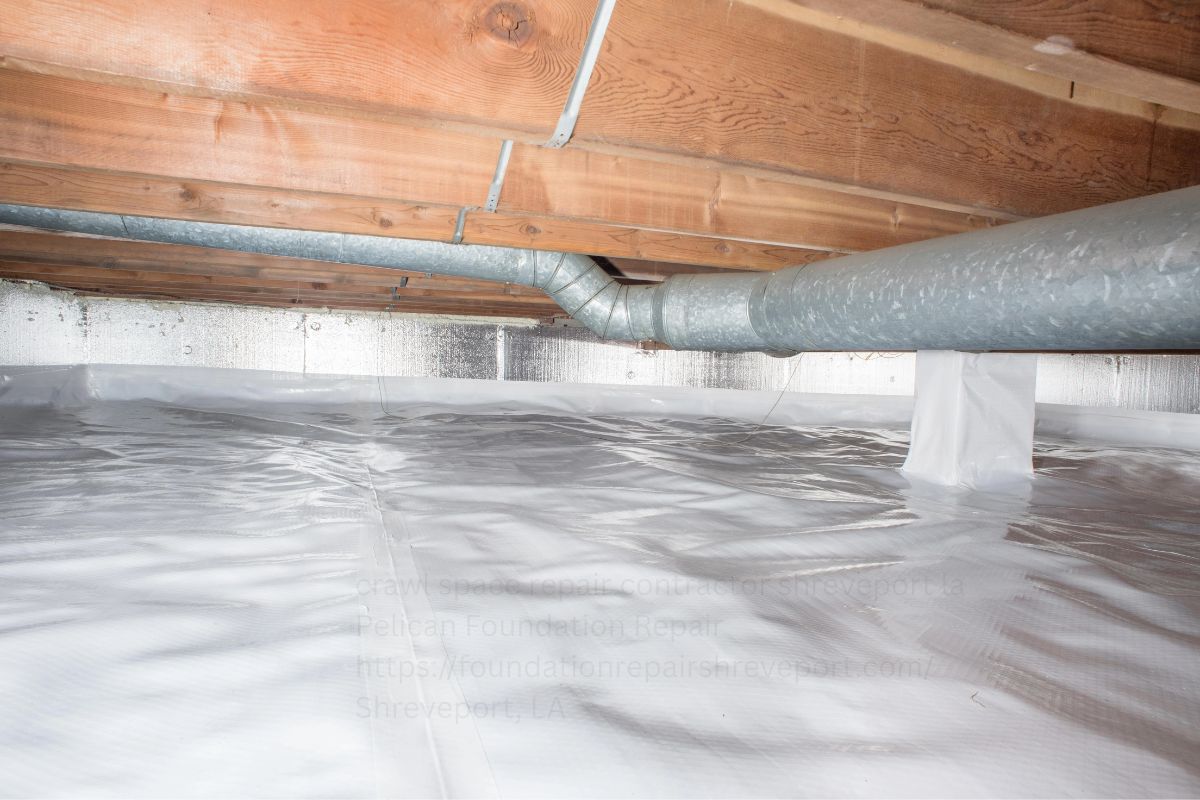
A full encapsulation job has five main parts. First, every vent and opening to the outside gets sealed shut. Second, a heavy-duty vapor barrier — usually 20-mil reinforced plastic — is laid across the bare earth floor and run up the foundation walls. Third, all seams, piers, pipes, and duct penetrations get sealed with tape and mastic so ground moisture can’t sneak through. Fourth, the space is conditioned, most often with a commercial-grade crawl space dehumidifier. Fifth, any damaged wood, insulation, or drainage problems found during the job get fixed first, because wrapping a problem doesn’t solve it.
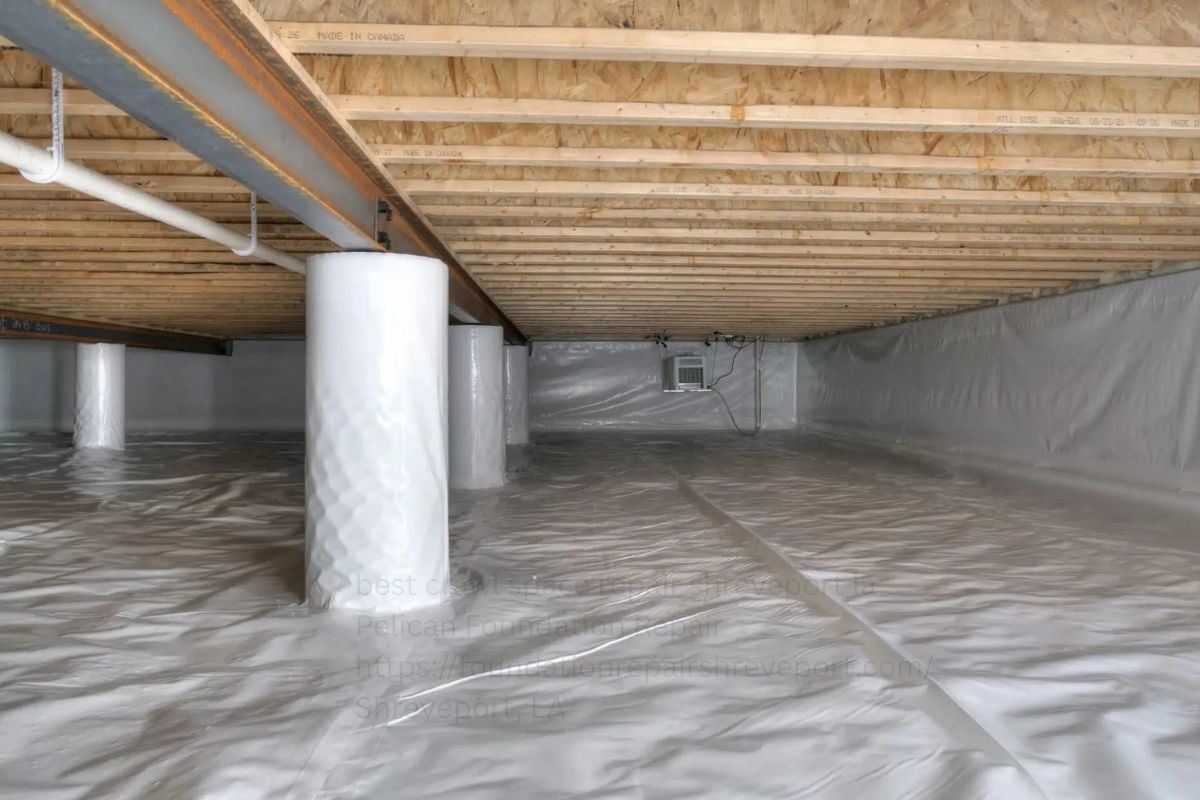
Under homes in Highland and Broadmoor we see the same story: damp clay soil, puddles after spring storms, white mold fuzz on joists, and a musty smell drifting upstairs. When the clay under your house stays wet, everything built on it pays the price.
How Much Does Crawl Space Encapsulation Cost in Shreveport LA?
Here is what Shreveport-area homeowners typically see, based on reported project ranges:
| Job type | Typical reported range |
|---|---|
| Vapor barrier only (basic moisture cover) | $1,500–$3,000 |
| Basic encapsulation (sealed vents + 20-mil barrier, no dehumidifier) | $4,000–$8,000 |
| Full encapsulation with dehumidifier | $6,000–$12,000 |
| Full encapsulation + mold remediation and water management | $8,000–$15,000+ |
These are reported ranges, not a quote — every crawl space is different, which is why a free inspection matters.
What pushes a job toward the top of the range? Five things:
Square footage. A 900-square-foot ranch in South Highlands costs less to seal than a 2,400-square-foot two-story in Ellerbe — more plastic, more seam tape, more labor hours.
Standing water. If your crawl space holds water after rain, encapsulation alone won’t fix it — you need water management first, like interior drains, a sump pump, or drainage correction outside the home. Non-negotiable when water is present.
Mold remediation. Light surface mold might only need scrubbing and treatment; heavy, widespread mold with rotted wood can add thousands before encapsulation starts.
Accessibility. Three feet of clearance goes fast; 18 inches of clearance, sharp rock, or a maze of old ductwork goes slow. Labor is a big share of the price.
The dehumidifier. A commercial crawl space dehumidifier — sized to the space, wired to a dedicated circuit, piped to drain outside — adds to the upfront cost and keeps working for years.
Homes in Bossier City, Blanchard, and across the river deal with the same water and clay, so these ranges hold across our whole service area. If you are weighing the full foundation picture too, our guide to how much foundation repair costs in Shreveport breaks down pier work, crack repair, and leveling prices the same honest way.
Call (318) 585-2003 – Free Inspection
Encapsulation vs Vapor Barrier: What’s the Difference?
This is the question that confuses the most homeowners, and it matters because the price difference is thousands of dollars.
A vapor barrier is just the plastic sheeting — laid over the dirt to slow moisture rising from the ground. It is a single layer of defense and does nothing about outside air, humidity, or the vents that let both in all summer.
Encapsulation is the whole system: sealed vents, 20-mil reinforced barrier sealed to the walls and piers, sealed penetrations, and controlled humidity with a dehumidifier. It treats the crawl space like part of the house.
Which one should you get? If your crawl space stays dry and you just want basic moisture control under a pier-and-beam home, a quality vapor barrier with sealed seams may be enough. If you have humidity, mold, standing water, musty odors in the house, or warped floors — the barrier alone will disappoint you. It can even trap moisture underneath it and rot everything faster.
When our crew inspects, we tell you straight which level your house actually needs. Paying for a full encapsulation when a vapor barrier would do is just as wasteful as the reverse.
For homes with damaged supports or sagging floors underneath, crawl space repair — replacing rotted joists, shimming piers, or sistering beams — often has to happen before or alongside the sealing work.
Why Crawl Space Work Costs What It Does in Louisiana
Shreveport is not like the rest of the country, and your crawl space knows it.
Our soil is Louisiana expansive clay — the red-orange, sticky stuff that swells when wet and shrinks when dry. Dig into it and it clings to your boots in wet season and cracks into hard plates in August. That constant movement pushes moisture up through the ground and stresses everything sitting on it.
Then add the weather pattern: heavy spring storms that dump inches of rain, a high water table near the Red River and Cross Lake, and long humid summers where the air itself feels damp. In a ventilated crawl space, warm humid air hits the cooler surfaces under your house and condenses — the same way a cold glass sweats. That condensation feeds mold all summer.
Winter is not a break either. Summer drought shrinks the clay away from foundation walls, opening gaps where the next rain runs straight in. We have crawled under homes in Keithville and Greenwood where one side of the crawl space was a mud pit and the other was bone dry, all because of how water moved off the roof and through the soil.
This is also why a sealed crawl space matters more here than in drier states. The LSU AgCenter publishes home-moisture guidance for Louisiana homeowners that stresses keeping ground moisture and humid outside air out of the building envelope — in our climate, that is not optional advice, it is survival for your floor structure.
Call (318) 585-2003 – Free Inspection
Crawl Space Dehumidifier: Do You Really Need One?
In Shreveport? Almost always, yes.
Sealing the vents keeps outside air out, but the ground still breathes moisture through the soil and up the foundation walls. A dehumidifier actively pulls that moisture out and holds the space around 45–55% relative humidity — the range where wood stays sound and mold can’t get established.
Without one, a sealed crawl space in our climate often lands at 60–70% humidity anyway. That is a sealed petri dish instead of an open one.
The dehumidifier gets sized to your square footage and moisture load, mounted off the ground, and piped to drain to daylight or a sump. It runs on a humidistat, so it only works when needed. Expect to check the filter a couple of times a year — five minutes of maintenance that protects a five-figure investment.
If your quote for a “full encapsulation” doesn’t include a dehumidifier or a plan to condition the air, ask what keeps the humidity down. A sealed space with no moisture control is unfinished work.
Mold in the Crawl Space: When Remediation Adds to the Bill
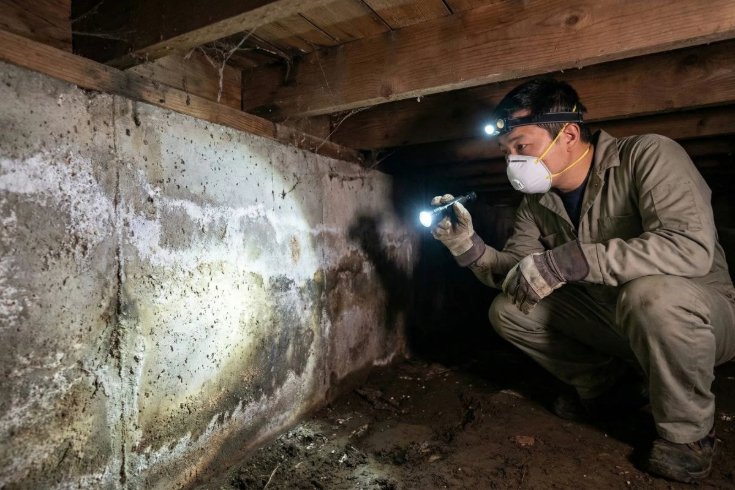
Mold is the wildcard in encapsulation pricing, because you can’t know the extent until you’re under the house with a flashlight.
Light mold — a thin gray film on a few joists — gets scrubbed, treated with an antimicrobial, and the job moves on. Heavy mold means removing and replacing rotted material before any barrier goes down. You never encapsulate over active rot — trapping it inside the seal just hides the damage while it keeps spreading.
Signs mold may be driving your cost up: a musty smell in the house that gets worse in summer, allergy symptoms that improve when you leave home, or visible fuzz and staining if you’ve ever peeked under the house. A proper inspection includes a look at all of this, so you’ll know where you stand before any quote.
Mold remediation is also where DIY gets dangerous — disturbing heavy mold without containment spreads spores through the house.
Call (318) 585-2003 – Free Inspection
How Long Does Crawl Space Encapsulation Last?
A properly installed encapsulation lasts 20 years or more. The 20-mil reinforced barrier is tough stuff — it resists tears, punctures, and degradation far beyond the thin plastic sold at hardware stores. Sealed vents don’t unseal themselves. The part with a shorter life is the dehumidifier, which typically runs 10–15 years before needing replacement, like any appliance.
Ask any contractor what their warranty covers and for how long, in writing. Pelican Foundation Repair backs qualifying repairs with a 20-year structural warranty, and the specific coverage for your encapsulation scope will be spelled out in your written quote — never a handshake promise.
Is Waterproofing a Crawl Space Worth It?
For most Shreveport homes with moisture problems, yes — and the math is straightforward.
The alternative to encapsulation is not “free” — it is the slow cost of doing nothing: rotting floor joists, mold remediation that gets pricier every year, musty indoor air, higher energy bills, and a foundation that keeps moving in wet clay. One round of joist and subfloor replacement can cost more than the encapsulation that would have prevented it.
Encapsulation also pays back at resale: buyers in Caddo and Bossier parishes notice a clean, dry, sealed crawl space — especially next to a competing listing with a damp, moldy one.
The honest exception: a genuinely dry, mold-free crawl space may only need a good vapor barrier and proper exterior drainage — a judgment call best made after an inspection, not before. You can review the full scope of our crawl space encapsulation services to see exactly what a complete job includes.
The InterNACHI standards for crawl space inspections describe what a thorough evaluation should cover — useful background if you want to know what to expect when a pro goes under your home.
Call (318) 585-2003 – Free Inspection
Frequently Asked Questions
How much does it cost to encapsulate a crawl space in Shreveport, LA?
Most full encapsulations in the Shreveport area run $5,000 to $15,000 as reported project ranges, with simple vapor-barrier-only jobs at $1,500 to $3,000. Final cost depends on square footage, standing water, mold remediation, and whether a dehumidifier is installed. A free inspection gives you an exact quote for your home.
Is encapsulation better than just a vapor barrier?
Encapsulation is a complete sealed system — closed vents, 20-mil barrier sealed to walls and piers, and humidity control — while a vapor barrier is only plastic sheeting over the dirt. For damp, moldy, or humid crawl spaces, encapsulation performs far better. For a dry crawl space, a quality vapor barrier may be enough.
Does a sealed crawl space need a dehumidifier?
In Louisiana’s climate, yes in almost all cases. Sealing keeps outside air out, but ground moisture still raises humidity. A dehumidifier holds the space at 45–55% relative humidity, which prevents mold and protects wood framing.
How long does crawl space encapsulation last?
A properly installed encapsulation lasts 20 years or more. The 20-mil vapor barrier is highly durable; the dehumidifier typically needs replacement after 10–15 years. Occasional maintenance — checking filters, sump pumps, and plumbing — keeps the system working.
Will encapsulation get rid of mold in my crawl space?
Encapsulation prevents future mold by controlling moisture, but existing mold must be remediated first — scrubbed, treated, and any rotted wood replaced. Never let a contractor seal over active mold or rot.
Can I still get to my plumbing and HVAC after encapsulation?
Yes. The vapor barrier is laid around piers and equipment, and sections can be pulled back for service access. A good installer leaves access paths to mechanicals and the access door remains usable.
Do I need encapsulation if my crawl space only gets damp sometimes?
Occasional dampness usually means water is finding its way in — and it tends to get worse, not better. At minimum, address the water source with drainage improvements. If humidity, odors, or mold are present, encapsulation is worth serious consideration.
Does homeowners insurance cover crawl space encapsulation?
Typically no. Insurance covers sudden damage like a burst pipe, not gradual moisture, mold, or maintenance issues. Check your policy, but plan on encapsulation being an out-of-pocket home improvement.
How much should crawl space encapsulation cost?
As a reported market range, expect $5,000 to $15,000 for a full encapsulation in the Shreveport area, and $1,500 to $3,000 for a vapor-barrier-only job. If a quote comes in far below that, ask what is being skipped — usually the dehumidifier, sealed penetrations, or mold remediation. The price should always follow an under-house inspection, never precede it.
What does crawl space encapsulation cost per square foot?
Most contractors price encapsulation by the project, not by the square foot, because water problems, mold, and access swing the price more than footage alone. Square footage is still the biggest single factor — a larger crawl space needs more barrier material, more seam tape, and more labor. Be cautious of flat per-square-foot quotes given sight unseen; they cannot account for standing water or mold until someone goes underneath.
Is crawl space encapsulation really necessary?
It depends on what your crawl space looks like. If you have standing water, mold, musty odors drifting upstairs, or rotting floor joists, encapsulation is one of the smartest investments you can make in the house. If your crawl space is genuinely dry year-round with no mold or wood damage, it is usually not necessary — a quality vapor barrier and good exterior drainage may be all you need. A free inspection tells you which camp you are in.
Is crawl space encapsulation a DIY project?
No — this is not a good DIY project. A real encapsulation means sealing every vent and penetration, installing a 20-mil reinforced barrier with sealed seams, and sizing and wiring a commercial dehumidifier to a dedicated circuit. Disturbing heavy mold without containment spreads spores through the house, and a poorly sealed job can trap moisture and rot wood faster than doing nothing. Handy homeowners can replace a vapor barrier sheet or clean gutters — the full system belongs to a pro.
Get a Free Crawl Space Inspection in Shreveport
The only way to know what your crawl space needs — and what it will cost — is to get under the house and look. Pelican Foundation Repair offers free inspections across Shreveport, Bossier City, and the surrounding parishes. We will show you photos of what we find, explain your options straight, and give you a written quote with no pressure. Call (318) 585-2003 today. We are open Monday through Friday, 7:00 to 6:00, and Saturday 8:00 to 2:00.
Pelican Foundation Repair
6118 Fairfield Ave, Shreveport, LA 71106, USA
318-585-2003
https://foundationrepairshreveport.com/