 Skip to main content

Mold in Your Crawl Space: Should You Worry?
Mold in your crawl space — should you worry? Sometimes yes, sometimes no. A light dusting of surface mildew on a single joist in a dry crawl space is a minor issue. Widespread growth across joists and subflooring, especially with wood rot or a musty smell reaching your living room, is a real problem that will not fix itself. In Louisiana, the deciding factor is almost always moisture: control the moisture, and you control the mold.
The short answer: worry when the growth is widespread, when wood is soft or rotting, or when you can smell mustiness upstairs. Do not panic over a small patch of surface discoloration — but do find out where the moisture is coming from. Note: mold can aggravate allergy-like symptoms for sensitive people; talk to your doctor about personal health concerns.
Call (318) 585-2003 – Free Inspection
📊 Crawl Space Mold: The Quick Facts
Moisture = mold
Mold needs damp wood and poor airflow to grow
Smell test
Musty air upstairs often starts under the house
Rot is the risk
Long-term moisture rots the wood holding up your floors
Why Crawl Space Mold Is So Common in Louisiana
If you own a pier-and-beam home in the Shreveport area, some degree of crawl space moisture is practically a given. Louisiana air is humid most of the year, and a traditional vented crawl space breathes that humid air straight under your house. Warm, moist air hits the cooler surfaces under the floor — joists, subflooring, ductwork — and condenses, the same way a cold glass sweats on a summer day. That thin film of moisture on wood is all mold needs to get started.
Add the local soil to the picture. Much of Caddo and Bossier parishes sits on clay that holds water near the surface, so the ground under and around the house stays damp long after rain. In neighborhoods like Highland, Broadmoor, and Southern Hills, where many pier-and-beam homes are decades old, crawl spaces were built in an era when nobody thought much about moisture control. Open vents, bare dirt floors, and no vapor barrier was the standard — and it is a recipe for exactly what we are discussing.
This is not a rare problem or a sign you did something wrong. It is the predictable result of Louisiana humidity meeting an older crawl space design. The good news is that the fixes are well understood, and they work.
Surface Mildew vs. a Real Mold Problem
Not all growth under the house deserves the same response. Here is how to tell what you are dealing with.
| What you see | Likely situation | How urgent |
|---|---|---|
| Light gray or white dusting on one or two joists | Surface mildew in a mostly dry crawl space | Low – clean it and improve airflow |
| Dark spotting across multiple joists | Established growth; moisture source active | Moderate – find and fix the moisture source |
| Thick, fuzzy growth on joists and subfloor | Heavy colonization over a large area | High – professional remediation recommended |
| Wood that feels soft, crumbly, or punky | Wood rot, not just surface mold | High – structural repair may be needed |
| Musty smell inside the living space | Crawl space air reaching upstairs | Moderate to high – seal the air pathway |
| Standing water or constantly wet soil | Drainage failure feeding everything above | High – fix drainage first |
The poke test is the simplest diagnostic you have: press a screwdriver into any discolored joist. If the wood is solid and the growth wipes off the surface, you are looking at surface growth. If the screwdriver sinks in easily or the wood crumbles, that is rot — the wood fibers themselves are breaking down, and no amount of cleaning restores structural strength. Rotted joists or subfloor sections need to be repaired or replaced, which is crawl space repair work, not just a cleaning job.
One caution about identifying mold by color: you cannot reliably tell what kind of mold it is by looking at it, and the color does not tell you how serious the moisture problem is. Extent, wood condition, and moisture source are what matter. Do not let anyone sell you expensive mold testing as a first step — a visual inspection and a moisture meter reading tell a professional everything needed to plan the fix.
Call (318) 585-2003 – Free Inspection
How Crawl Space Air Reaches Your Living Room
Here is the part most homeowners do not realize: the air in your crawl space does not stay in your crawl space. Warm air rises through your house — a phenomenon called the stack effect — and as it rises, it pulls replacement air up from below. In a pier-and-beam home, a large share of the air you breathe upstairs started its journey under the house, passing through gaps around plumbing, wiring, and ductwork.
That is why a musty smell in the living room or bedrooms often traces back to the crawl space, even when everything upstairs looks clean. It is also why crawl space mold is worth taking seriously beyond the wood itself: musty, damp air moving upstairs can aggravate allergy-like symptoms for sensitive people. This is not a medical diagnosis — just a practical observation that the two spaces share air. If anyone in the household has sensitivities, talk to your doctor about personal health concerns, and treat the crawl space as part of the home’s air system, not a separate place.
The stack effect also works in reverse as good news: once you clean up the crawl space and seal it properly, the air coming upstairs gets cleaner too. Many homeowners report the musty smell disappearing within days of encapsulation and dehumidification — not because anything was sprayed upstairs, but because the air source changed.
The Moisture Sources That Feed It
Mold is the symptom; moisture is the disease. Every lasting fix starts by finding where the water is coming from. In Shreveport crawl spaces, the usual suspects are:
- Humid outdoor air through open vents. The classic vented crawl space design pulls in Louisiana’s humid air all summer. Vents that were supposed to dry the space actually feed it moisture — which is why modern practice seals them.
- Bare dirt floors. Moisture wicks straight up out of the soil, especially our local clay that holds water near the surface. A dirt crawl space floor is a permanent humidity source.
- Poor exterior drainage. Gutters dumping at the foundation, yard sloping toward the house, or a low spot that ponds water after rain — all of it ends up under the house. Fix the water outside first.
- Plumbing leaks. A slow drain leak or a sweating supply line can keep one section of the crawl space perpetually damp. Always check plumbing before assuming the problem is general humidity.
- Condensation on ductwork and pipes. Cold air-conditioning ducts running through a hot, humid crawl space sweat constantly in summer. Insulating the ducts or conditioning the space solves it.
- Dryer vents terminating under the house. It happens more often than you would think in older homes — every laundry load pumps warm, wet air straight into the crawl space.
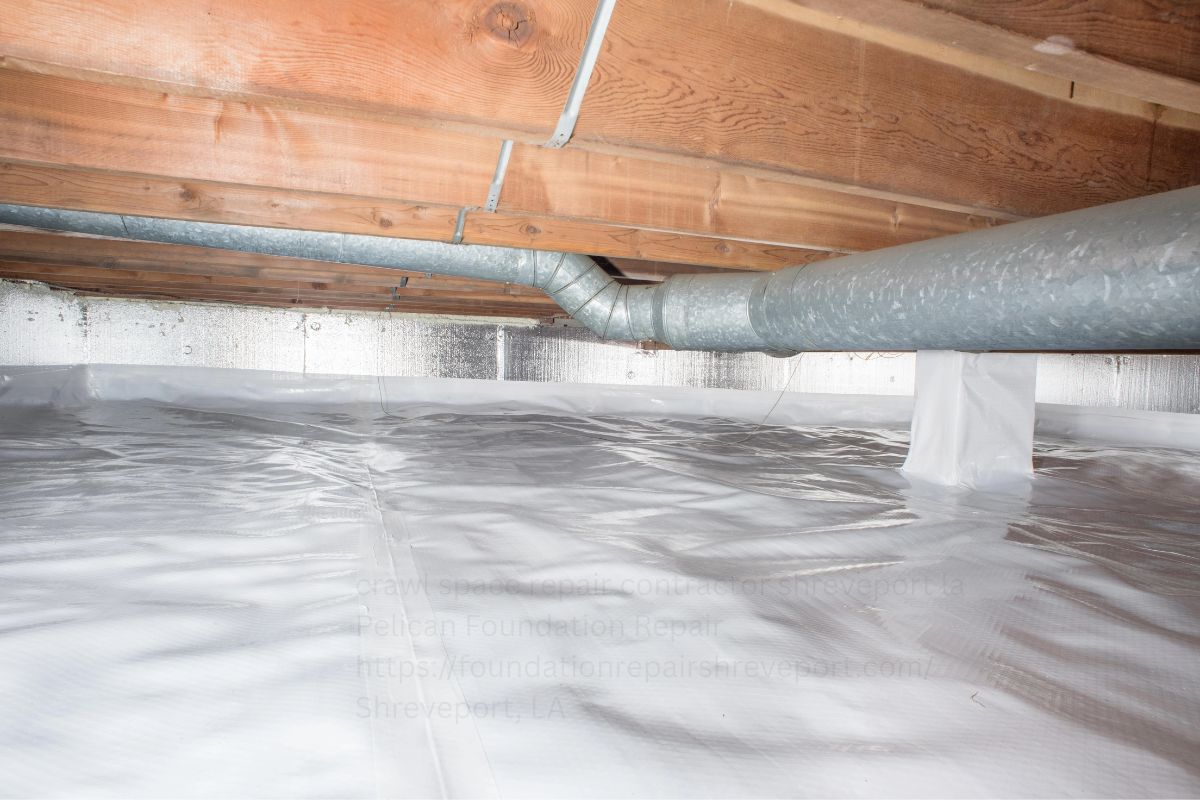
A professional inspection checks all of these systematically, because treating mold without fixing the moisture source is a temporary cosmetic job — the growth comes back with the next humid season. The EPA’s mold guidance at epa.gov makes the same point: dry the area, fix the water problem, then clean.
Call (318) 585-2003 – Free Inspection
Wood Rot: The Structural Worry Under Your House
Here is the honest hierarchy of crawl space concerns: mold gets the attention, but wood rot does the damage. Mold grows on the surface of wood; rot is fungi digesting the wood fibers themselves, and rotted wood loses its structural strength. The joists and subfloor holding up your floors can look intact from a distance while being soft enough to dent with a thumb.
Rot takes sustained moisture — wood generally needs to stay above about 20 percent moisture content for rot fungi to thrive — which means it indicates a long-term problem, not a one-time event. If an inspector finds rot, the affected wood has to be addressed: sistering new joists alongside damaged ones, or replacing sections of subfloor. This is structural repair work, and it is priced by the extent of the damage, which is another reason catching moisture problems early saves real money.
The connection to the rest of the house is direct. Rotted or weakened joists let floors sag, slope, and bounce — the same symptoms people associate with foundation settlement. In pier-and-beam homes around Shreveport, we regularly see cases where the “foundation problem” is actually deteriorated wood in a wet crawl space. A proper inspection looks at both, because the fix for rotting joists is very different from the fix for settling piers. Our house leveling page covers the pier side of that equation.
How Professionals Fix Crawl Space Mold
A proper professional job follows a sequence, and the order matters. Any company that wants to spray something before addressing moisture is selling you a temporary result.
Step 1: Find and fix the moisture sources. Drainage corrections outside, plumbing repairs, rerouting that dryer vent — the water problems get fixed first. There is no point cleaning what will just get wet again.
Step 2: Remove debris and damaged material. Old insulation that has absorbed moisture, fallen vapor barrier scraps, and any rotted wood that cannot be saved come out. You cannot remediate around soggy debris.
Step 3: Remediate the growth. Affected wood is cleaned — typically HEPA vacuuming followed by antimicrobial treatment of the remaining sound wood. This is labor-intensive work in a tight space, which is why it costs what it costs. The goal is clean, sound wood, not wood that merely looks clean in a photo.
Step 4: Address the wood damage. Joists or subfloor sections weakened by rot are sistered or replaced. This is the structural step that separates a mold job from a mold-and-repair job.
Step 5: Control the environment going forward. This is encapsulation and dehumidification — the long-term fix covered in the next section. Without it, Louisiana humidity restarts the whole cycle.
For a detailed comparison of repair approaches, see our crawl space repair vs. encapsulation breakdown.
Encapsulation and Dehumidification: The Long-Term Fix
Encapsulation is what keeps the mold from coming back. The concept is simple: instead of trying to ventilate a Louisiana crawl space with humid outdoor air — a losing battle — you seal the space and control its climate directly.
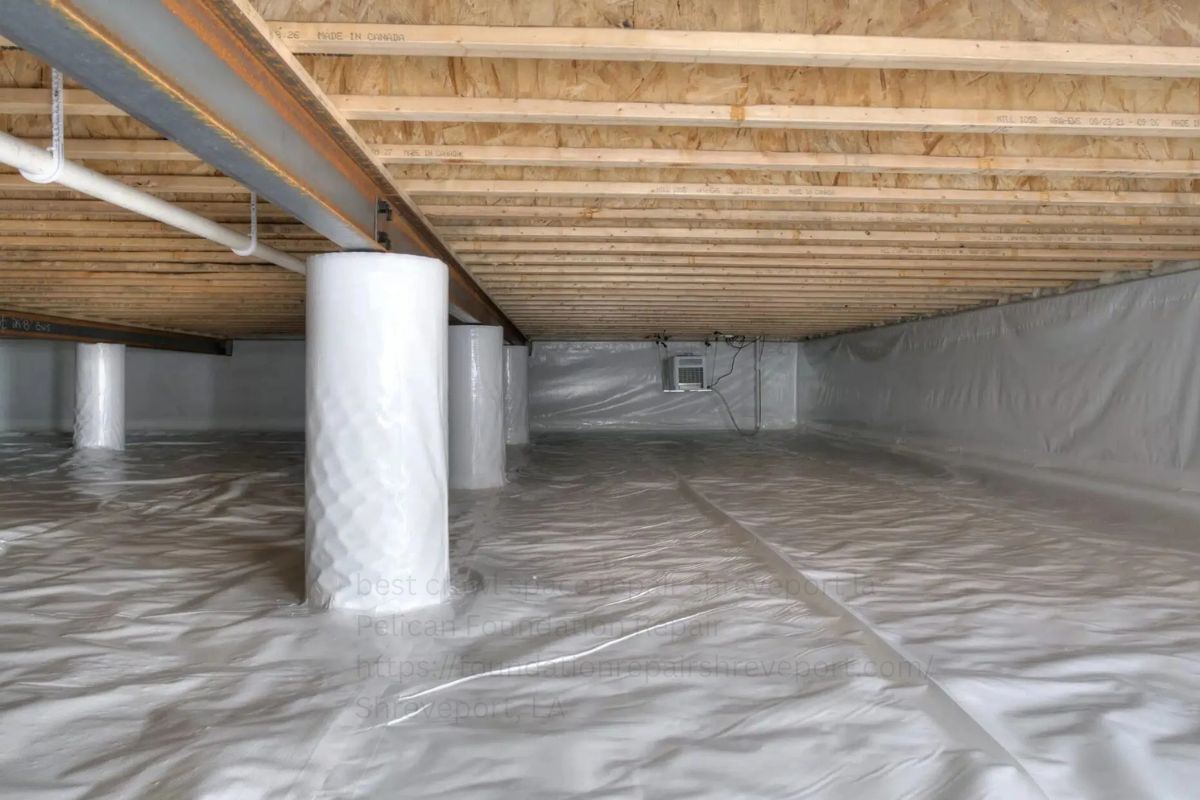
A full encapsulation typically includes a heavy-duty vapor barrier sealed across the entire dirt floor and up the foundation walls, sealed vents, sealed rim joists, and a dedicated dehumidifier sized for the space that keeps relative humidity in the healthy range year-round. The crawl space goes from being an outdoor space under your house to a clean, dry, semi-conditioned space. Mold cannot grow without moisture; take away the moisture permanently, and the problem is solved at the root.
It is not the cheapest option — most residential encapsulation jobs in the Shreveport area run in the low-to-mid thousands depending on size and condition — but it is the only fix that addresses the cause rather than the symptom. Our crawl space encapsulation page details what is included, and the encapsulation cost guide breaks down pricing. The LSU AgCenter also publishes Louisiana-specific guidance on moisture control in homes that is worth reading.
Call (318) 585-2003 – Free Inspection
Frequently Asked Questions
Is mold in the crawl space dangerous?
It depends on the extent. A small patch of surface mildew is a minor issue. Widespread growth, especially with wood rot or musty air reaching your living spaces, is a real problem worth addressing promptly — both for the wood structure and for indoor air quality. Mold can aggravate allergy-like symptoms for sensitive people; talk to your doctor about personal health concerns.
What causes mold in a crawl space?
Moisture, always. The common sources in Louisiana are humid outdoor air entering through open vents, moisture wicking up from bare dirt floors, poor exterior drainage, plumbing leaks, condensation on air-conditioning ducts, and occasionally a dryer vent terminating under the house. Lasting fixes start by identifying which of these apply to your home.
Can I clean crawl space mold myself?
A small patch of surface mildew on solid wood can be cleaned by a handy homeowner with proper protective gear — respirator, gloves, eye protection — and the area kept dry afterward. Widespread growth, growth with wood rot, or mold tied to standing water and drainage problems should be handled professionally, because the moisture source has to be fixed or the mold returns.
Will crawl space mold go away on its own?
No. Mold goes dormant when it dries out, but it does not die off and disappear — and in Louisiana, the humidity always comes back. Without removing the growth and fixing the moisture source, it reactivates with the next damp season and continues spreading. Surface cleaning without moisture control is a temporary cosmetic fix.
How much does crawl space mold remediation cost in Shreveport?
It varies widely with the extent of growth and whether wood repair is needed. Remediation alone for a moderate case typically runs in the low thousands; add wood repair or full encapsulation and the project moves into the mid thousands or more. A free inspection with moisture readings gives you a real number for your specific crawl space instead of a guess.
Does encapsulation prevent mold from coming back?
Yes — that is its main purpose. Encapsulation seals out humid outdoor air and ground moisture, and the dehumidifier keeps the space dry year-round. Mold cannot grow without moisture, so a properly encapsulated and dehumidified crawl space stays mold-free as long as the system is maintained. It is the long-term fix; cleaning alone is the short-term one.
Why does my house smell musty if the mold is under the house?
Because of the stack effect: warm air rising through your home pulls replacement air up from the crawl space through gaps around plumbing, wiring, and ductwork. A large share of your upstairs air started under the house. Sealing and cleaning the crawl space usually eliminates the musty smell within days, since the air source itself has changed.
Should I get my crawl space mold tested?
Usually not as a first step. The color of the growth does not reliably identify the type, and the type does not change the fix: remove the growth, repair damaged wood, and eliminate the moisture source. A visual inspection with moisture meter readings tells a professional everything needed to plan the work. Save your money for the actual repair.
Call (318) 585-2003 – Free Inspection
Get a Free Crawl Space Inspection in Shreveport
The only way to know whether you are looking at surface mildew or a real problem is someone getting under the house with a moisture meter and a bright light. A free inspection gives you photos of what is actually down there, moisture readings, and an honest recommendation — clean it, fix the drainage, remediate, or encapsulate.
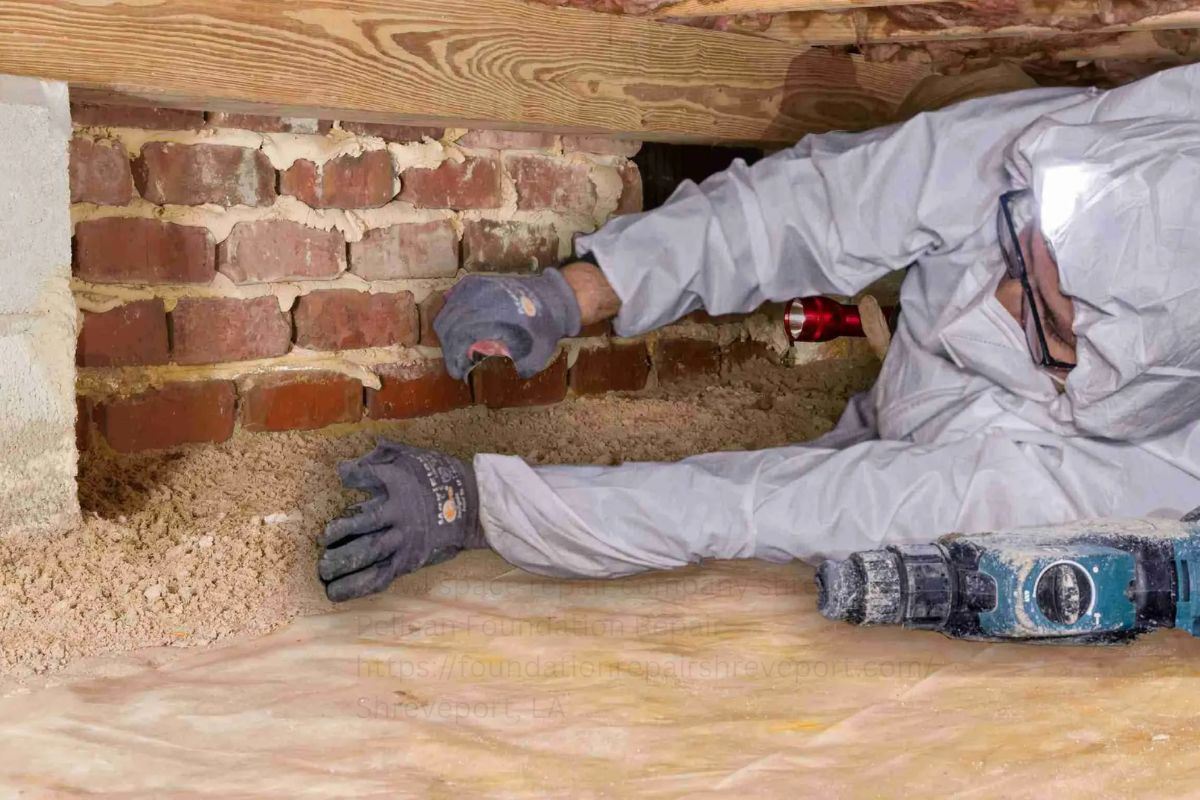
Call Pelican Foundation Repair at (318) 585-2003, or visit Pelican Foundation Repair to schedule. We serve Shreveport and the surrounding areas — see our service areas and full list of services. For related reading, see our crawl space repair services and our repair vs. encapsulation comparison.
Pelican Foundation Repair 6118 Fairfield Ave, Shreveport, LA 71106, USA 318-585-2003 https://foundationrepairshreveport.com/