 Skip to main content
Pier and Beam Foundation Repair Cost
Releveling a pier and beam home in the Shreveport area typically costs $3,500 to $15,000 or more for a full pier job, while minor shimming runs well under that. Much of the older housing stock across Caddo and Bossier parishes sits on concrete block piers. A free inspection tells you exactly what yours needs.
Bottom line: most pier and beam repairs are a relevel, not a rebuild — and catching sagging floors early keeps the job on the affordable end of the range.
Call (318) 585-2003 – Free Inspection
📊 Pier & Beam Repair Cost at a Glance
$3,500+
Partial relevel starting point
$3,500–$15,000+
Full house relevel range
Free
Inspection & written quote
What Does Pier and Beam Foundation Repair Cost?
Pier and beam repair is not one job. It is a family of repairs, and the price depends on which one your house needs:
| Repair type | Typical Shreveport-area cost |
|---|---|
| Shimming and spot adjustments (a few piers) | On the low end — quoted by inspection |
| Partial relevel (one section of the house) | $3,500 and up |
| Full house relevel (perimeter and interior piers) | $3,500–$15,000+ |
| Beam or joist replacement (rotted wood) | Quoted by inspection — priced per beam |
| Block-and-base pier replacement | Quoted by inspection — priced per pier |
The biggest driver is pier count: how many support points need attention. Three settled piers on one side is a different job from a whole beam line dropped two inches. The second biggest driver is wood condition — solid beams just need shimming, while rotted or termite-damaged beams must be replaced, which adds carpentry work to the leveling work.
Crawl space access matters too. A technician moves fast with three feet of clearance; in a 16-inch crawl space full of old insulation and standing water, every pier takes longer to reach and shim. We see both extremes across Shreveport, from newer raised homes in Keithville to 1950s bungalows in Highland where the hatch barely fits a grown man.
We never quote these jobs over the phone. The only honest way to price pier and beam work is to get under the house, level the beams, and count what needs attention. That is why our inspections are free.
How Do You Repair a Pier and Beam Foundation?
Here is how a proper pier and beam repair actually goes — and how to tell whether a contractor knows what they are doing.
Step 1: Map the elevation
Before anyone touches a pier, the crew maps elevation across the entire floor system with a water level or laser level, marking exactly where the house has dropped and by how much. This map drives every decision that follows — a contractor who starts shimming without elevation readings is guessing.
Step 2: Inspect every pier, beam, and joist
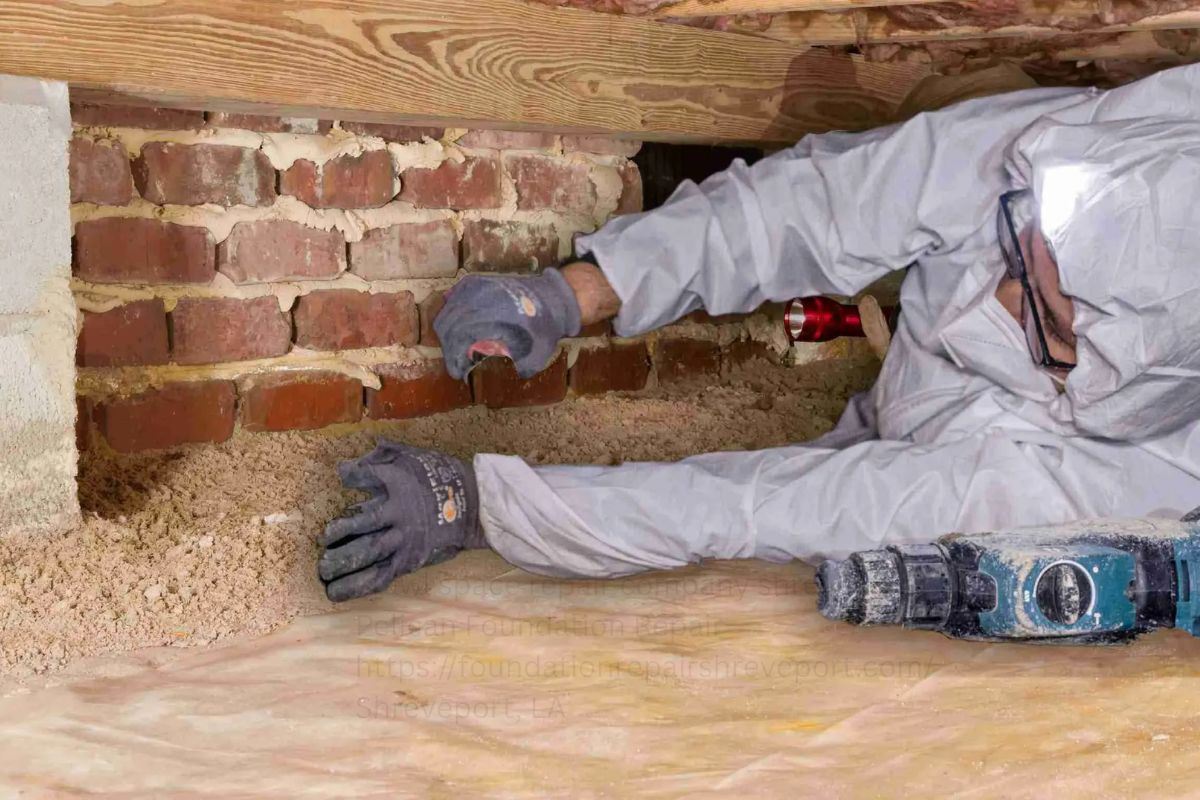
The technician crawls the full footprint — not just the bad corner — inspecting every pier, beam, and joist for settlement, tilting, cracking, rot, splitting, and termite damage. We also check moisture: standing water, mold on joists, and the musty smell of water sitting under the house. Dig a test hole in Caddo Parish clay and it comes up dark gray and sticky; if it is saturated, the footings may be sitting in mud.
Step 3: Shim and adjust
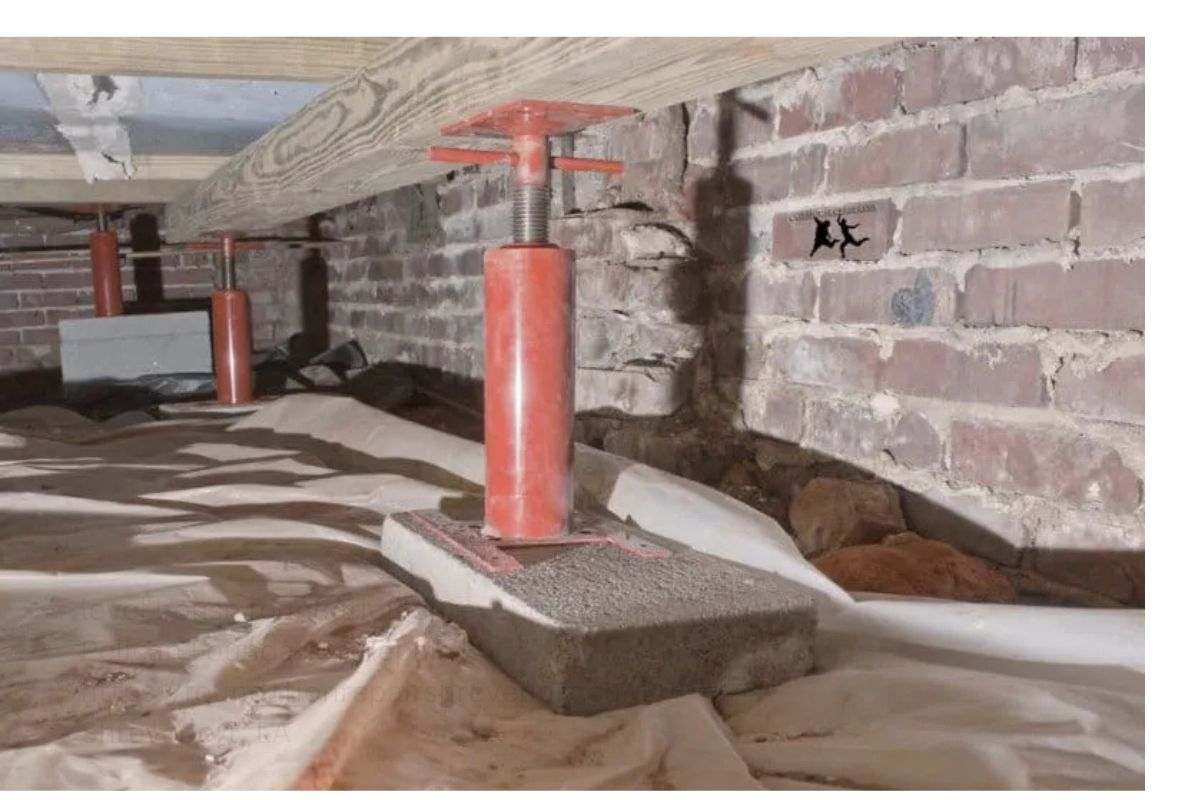
Shimming is the core of most pier and beam repairs. Where a pier has settled, the crew jacks the beam up in small increments and slides steel shims between the pier cap and the beam until it reaches target elevation. Modern steel shims will not compress or rot like old wood shims. Each stack must be plumb and centered so load transfers straight down to the footing — an off-center stack is a future failure.
Step 4: Replace what cannot be saved
Some piers are beyond shimming. A crumbled block pier, a pier with no footing, or a wood post rotted at grade gets replaced with a new block-and-base pier: a poured concrete footing with mortared blocks stacked on top and a solid cap. Rotted beams get sistered — a new beam bolted alongside the old one — or replaced outright, and damaged joists get sistered the same way.
Step 5: Verify the level
After the last shim is set, the crew re-checks elevation across the whole floor: floors should read level, doors should swing freely, and gaps around window frames should have closed. Everything gets documented with before-and-after readings for your records.
A small relevel takes one to two days; a full relevel with pier replacements and beam work can take the better part of a week. The crew works under the house the whole time, so your daily life upstairs barely changes.
Call (318) 585-2003 – Free Inspection
How Long Does It Take to Fix a Pier and Beam Foundation?
Most pier and beam repairs take one to five days on site. Shimming a handful of piers is typically a one- or two-day job; a full relevel of a 1,500-square-foot home with twenty-plus piers usually takes three to four days. Add beam replacement and you are looking at four to five days.
Day one is inspection, elevation mapping, and staging materials under the house. The middle days are the physical work — jacking, shimming, replacing piers and beams. The last day is final verification, cleanup, and a walkthrough with you.
Weather rarely stops this work, since the crew is under the house. The exception is a flooding crawl space — nobody does leveling work in standing water, and flooding is a sign your home may need drainage correction alongside the relevel.
What Is the Typical Lifespan of a Pier and Beam Foundation?
A well-built pier and beam foundation can last 75 to 100 years — and across Shreveport, plenty have. Homes in Highland and Broadmoor built in the 1920s through 1940s still stand on their original block piers. The foundation type is not the problem; time, water, and soil movement are.
What shortens that lifespan in Louisiana: chronic moisture under the house rotting the beams and joists, termites (our warm, damp climate is ideal for them), and the shrink-swell clay cycle gradually working piers out of plumb. A pier that tilts a quarter inch per decade does not sound like much until thirty years have passed and your floors slope visibly.
What extends it: keeping water out of the crawl space, grading soil away from the house, keeping gutters working, and releveling at the first signs of drift rather than waiting until beams are stressed. A relevel every few decades is normal maintenance — not a sign the house is failing.
Our pier and beam work carries a 20-year structural warranty on qualifying repairs — which says something about how long a proper relevel is expected to hold.
Call (318) 585-2003 – Free Inspection
Sagging Floors: What They Mean for Your Repair Cost
Sagging floors are the number one reason homeowners call us about pier and beam houses. You feel it before you see it — a soft spot in the hallway, a marble rolling toward the middle of the room, a table that rocks no matter what.
A sagging floor almost always means one of three things: a settled pier dropped the beam above it, a beam or joist weakened by rot or termites is deflecting under load, or the span between piers was too wide and the beam has bowed. The first is a shimming job, the second adds wood replacement, and the third may need a new pier installed mid-span.
Here is the cost logic: a floor sagging from two settled piers is a small, cheap fix; one sagging from a rotted main beam is a bigger job because you are paying for carpentry, not just leveling. The symptom looks the same from upstairs — the inspection reveals which repair (and price) applies.
If your floors slope across the whole house rather than sagging in one spot, that is usually general settlement, and the fix is a full relevel. Our house leveling service covers exactly that — and our house leveling cost guide for Shreveport has the numbers.
Block and Base vs. Concrete Piers: What Is Under Your House?
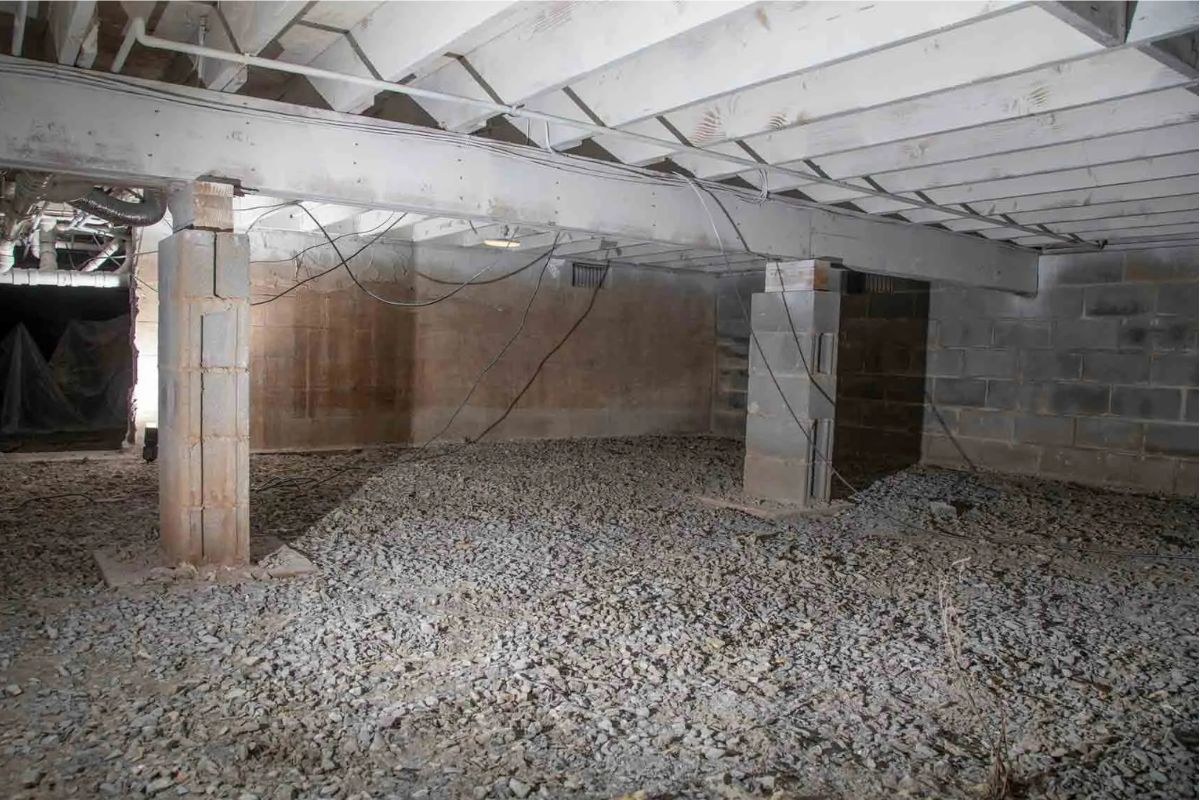
Most Shreveport-area pier and beam homes sit on block-and-base piers: concrete block stacks (sometimes brick in the oldest homes) on a poured footing pad, with a wood or concrete cap carrying the beam. Built right — footing below the active soil zone, mortared and plumb blocks, proper cap — they last for generations.
What goes wrong: footings poured too shallow let the clay’s shrink-swell cycle rock the pier out of plumb; dry-stacked blocks with no mortar shift; water deteriorates mortar over decades. A leaning pier no longer carries its share of the load, which overloads its neighbors.
Replacing a failed block pier means excavating, pouring a proper footing, stacking and mortaring new blocks, capping it, and letting it cure before it takes load. It is priced per pier — which is why the inspection’s pier count drives your quote.
Some homes use poured concrete piers or steel posts instead. The repair logic is the same — plumb it, footing it, shim to elevation — and the inspection identifies exactly what is under your house so the quote matches.
Call (318) 585-2003 – Free Inspection
Why Rural Caddo and Bossier Parish Homes Are a Special Case
Drive north from Shreveport into Blanchard, out toward Mooringsport, or east toward Haughton, and the housing stock changes: more pier and beam homes, more 1950s–1970s houses on block piers with minimal footings, more properties where the original builder cut corners that only show up fifty years later.
Rural homes tend to have two cost factors pulling in opposite directions. Access is usually easy — no zero-lot-line neighbors, room to stage equipment. But we more often find compounding problems: a settled pier line plus a rotted sill beam plus drainage never addressed, because nobody noticed the early warning signs. Well water and septic systems can also complicate drainage work.
None of this makes rural repair exotic — it is the same work we do across Caddo, Bossier, Webster, Lincoln, and DeSoto parishes every week. It just means the inspection tends to turn up more line items, and the quote reflects the full picture.
How to Repair a Pier and Beam Foundation Without Getting Ripped Off
Pier and beam work has a reputation problem, and it is not entirely unearned. Because the work happens in a crawl space most homeowners never enter, it is easy for a bad contractor to sell work you cannot verify. Here is how to protect yourself.
First, never hire anyone who will not go under the house. A quote written from the driveway is fiction — the contractor should come out of your crawl space dirty.
Second, ask for elevation readings, not adjectives. “The southwest corner is 1.8 inches low” is a measurement you can hold them to after the work is done.
Third, be suspicious of the upsell. Not every pier and beam problem needs new piers — many homes just need shimming. A contractor who recommends a full perimeter of steel piers for three settled block piers is selling, not diagnosing.
Fourth, get the warranty in writing. Ours is a 20-year structural warranty on qualifying repairs — ask every bidder to put their terms on paper with the same specificity.
Fifth, check that the company is local and reachable — foundation work sometimes needs a follow-up adjustment, and you want a company with a real address (ours is 6118 Fairfield Ave in Shreveport), not a storm-chaser with a P.O. box.
And take advantage of free inspections. Even if you get three quotes (which we recommend), you will compare real measurements instead of guesses. InterNACHI publishes crawl space inspection standards describing what a thorough under-house inspection covers — use it as a checklist.
Call (318) 585-2003 – Free Inspection
Frequently Asked Questions
How much does it cost to relevel a pier and beam house?
In the Shreveport area, a full pier and beam relevel typically costs $3,500 to $15,000 or more, depending on pier count, beam or joist replacement, and crawl space access. Small shimming jobs cost considerably less. A free inspection gives you an exact price.
What is the typical lifespan of a pier and beam foundation?
A well-built pier and beam foundation can last 75 to 100 years. In Louisiana, moisture, termites, and expansive clay shorten that lifespan — not the foundation type itself. Periodic releveling every few decades is normal maintenance.
How long does it take to fix a pier and beam foundation?
Most pier and beam repairs take one to five days. Shimming a few piers takes one to two days. A full house relevel takes three to four days, and jobs that include beam replacement can run four to five days. Homeowners stay in the house throughout.
What is shimming in pier and beam repair?
Shimming raises a settled beam back to level by jacking it up in small increments and inserting steel shims between the pier cap and the beam. Modern steel shims will not compress or rot like old wood shims, and each stack must be plumb and centered so load transfers straight to the footing.
What does “block and base” mean?
Block and base describes the most common pier type in Louisiana: a stack of concrete blocks (or brick in very old homes) sitting on a poured concrete footing pad, topped with a cap that carries the floor beam. When a block-and-base pier fails, it is rebuilt with a new footing, mortared blocks, and a solid cap.
Can sagging floors be fixed without replacing the foundation?
Yes. Sagging floors in a pier and beam home are usually fixed by shimming settled piers, sistering or replacing weakened beams and joists, or adding a pier where the span is too wide. The foundation itself is almost never replaced — it is releveled and repaired in place.
How much does foundation repair cost per pier?
For pier-and-beam homes, block-and-base pier replacements are typically priced per pier, and the inspection’s pier count drives your quote — but there is no honest flat rate to publish, since every job’s access and wood condition differ. Steel pier underpinning is quoted as a complete project ($3,500–$15,000+) rather than per pier, because depth and access vary too much. Any per-pier price given without an inspection is a guess.
Get a Free Under-House Inspection
Pier and beam problems do not fix themselves, and they do not stay the same price. The difference between a shimming job and a beam replacement is often just a few seasons of Louisiana moisture.
Call Pelican Foundation Repair at (318) 585-2003 for a free inspection. We will crawl your foundation, map your elevations, show you photos of what we find, and give you a written quote with real measurements — not guesses. We serve Shreveport, Bossier City, Blanchard, and the surrounding parishes Monday through Friday, 7:00 to 6:00, and Saturday 8:00 to 2:00. Ask us about crawl space repair while we are under there.
Pelican Foundation Repair
6118 Fairfield Ave, Shreveport, LA 71106, USA
318-585-2003
https://foundationrepairshreveport.com/