Slab Foundation Repair in Greenwood, LA: Methods, Signs, and Clay-Soil Factors
Slab foundation repair in Greenwood, LA fixes cracks, settlement, and uneven floors caused by Caddo Parish clay, using foam, mudjacking, or piers matched to the damage.
Slab foundation repair in Greenwood, LA starts with an expert inspection that measures how far the slab has settled, maps every crack, and checks drainage around the home. Small shrinkage cracks often need only sealing and monitoring, while settled or heaving slabs are leveled with foam, mudjacking, or piers, and the repair plan follows the cause, not the crack.
Greenwood sits in Caddo Parish, ZIP code 71033, on I-20 just west of Shreveport near the Texas line. Older homes and newer subdivisions alike sit on the same expansive clay that moves houses across the Shreveport area. When the clay soaks up rain it swells and pushes upward; when it dries out it shrinks and pulls away from the slab. A concrete slab has no crawl space to hide that movement, so every shift shows up in the floor, the walls, or the doors.
That is why a Greenwood slab post matters. The town already has guides for pier-and-beam homes, house leveling, and general foundation repair, but slab homes face a different set of problems and a different set of fixes. This guide covers the signs that mean your slab is moving, what the clay under Greenwood is doing to it, the repair methods that actually work here, and what drives the cost of the job.
Signs Your Greenwood Slab Needs Attention
A slab cannot be seen the way a pier-and-beam foundation can, so Greenwood homeowners have to read the house instead. Here are the seven signs that matter most.
- Cracks in the floor tile, especially diagonal cracks that cross several tiles.
- Cracks in interior walls, running up from door frames or across corners.
- Doors that stick, rub, or swing open on their own when the floor tilts.
- Floors that slope or feel uneven underfoot, or a marble that rolls on its own.
- Gaps where the baseboard has pulled away from the wall or the floor.
- Cracks in the brick veneer or exterior stucco, often in a stair-step pattern.
- Water pooling near the house after rain, or damp spots on the slab edge.
Cracks in Tile and Walls: What They Are Telling You
Tile is the best early warning a slab home has. A crack running in a straight line across several tiles is following a crack in the slab below, and a diagonal crack usually means one part of the slab has dropped.
Sticking Doors and Sloping Floors
When a slab settles at one corner, the door frames above it go out of square, and the doors start to stick or refuse to latch. A door that used to close with a light push and now needs a shoulder is telling you the frame has moved. A floor that slopes toward one corner means the slab underneath has dropped.
Exterior Cracks and Water Around the Slab
Walk the perimeter and look at the brick veneer and the exposed slab edge. A stair-step crack through the mortar joints means one section of the wall has dropped. Gaps where the soil has pulled away from the slab edge mean the clay has shrunk in a dry spell.
What Greenwood’s Clay Soil Does to a Slab
Greenwood’s clay is the root cause of most slab trouble in ZIP code 71033. The soil here is the same expansive clay that runs through Caddo Parish: it swells when it gets wet and shrinks when it dries, with enough force to lift and drop a concrete slab. A slab sits directly on that soil, so there is nothing to absorb the movement. When one side of the house gets more water than the other, the clay swells on the wet side and the slab tilts. When a long dry spell follows, the clay shrinks back and the slab can drop.
The Wet-Dry Cycle in Caddo Parish
The ArkLaTex runs on a wet-dry cycle, and the autumn of 2026 showed it plainly. The U.S. Drought Monitor map released Nov 19, 2026, with data valid Nov 17, showed 100 percent of Caddo Parish at least in Severe Drought, with 47 percent in Extreme Drought. Light rain around Nov 22 brought some relief, but a dry stretch pulls moisture out of the clay. Then the next heavy rain soaks the same soil and it swells back.
Heaving, Settlement, and Shrinkage: Three Different Moves
It helps to know which move your slab is making, because each one points to a different fix. Settlement is the slab sinking down, usually at one corner, when the soil under it washes out. Heaving is the opposite: wet clay swells beneath the slab and pushes it upward. Shrinkage is the clay pulling away from the slab edge in a dry spell, which leaves the edge unsupported. The LSU AgCenter publishes guidance on Louisiana clay soils.
Slab Foundation Repair Methods Used in Greenwood, LA
There is no single fix for a cracked slab. The right method depends on what the slab is doing and how far it has moved.
Foam Injection: Lifting a Settled Slab from Below
Foam injection pumps a lightweight foam under the slab through small drilled holes. The foam expands, fills the voids under the slab, and lifts the settled section back toward level. It works well where a slab has settled a modest amount. The holes are small and the job is usually done in a day. It suits a modest drop, not a slab that has sunk a long way.
Mudjacking: The Older Way to Lift a Slab
Mudjacking, also called slabjacking, pumps a cement-based grout under the slab to lift it back into place. It works on the same idea as foam: fill the void, lift the slab. The grout is heavier than foam and the holes it needs are larger, and it takes longer to cure. It suits a thick, heavy slab or a large outdoor area like a patio.
Push Piers and Helical Piers: Anchoring a Slab to Stable Soil
When a slab has settled deeply, piers are the answer. Steel push piers are driven through the slab and down through the clay until they reach firm soil, and the slab is then lifted and held on them. Helical piers screw into the ground, which suits softer or wetter soil. Piers last longest for serious settlement, because they carry the house past the moving clay. They cost more and take longer, but for a home whose corner has dropped, piers are often the only fix that holds. Our slab foundation repair service page lays out the methods Pelican Foundation Repair uses.
Epoxy Injection and Crack Sealing for Smaller Damage
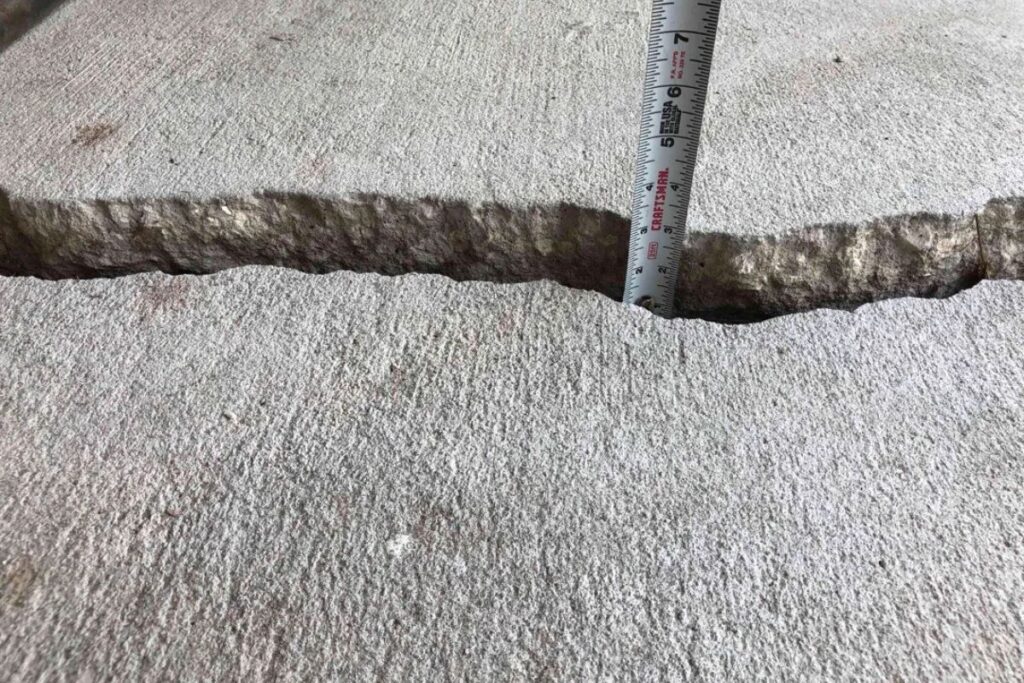
Not every slab crack needs lifting. A thin crack that has not moved in years, with a level floor and doors that close fine, is usually a shrinkage crack. Seal it with epoxy or a flexible sealant to keep water out, then watch it twice a year. A crack wider than a pencil, or one that keeps growing, is not a sealing job, and a specialist should measure it first.
Slab Leveling: Foam, Mudjacking, and Piers Compared
Choosing between foam, mudjacking, and piers comes down to how far the slab has moved and whether the soil problem is fixed.
| Method | Best for | How it works | Things to know |
|---|---|---|---|
| Foam injection | Modest settlement, interior floors | Lightweight foam pumped under the slab lifts it | Small holes, fast cure |
| Mudjacking | Large outdoor slabs, patios | Cement grout pumped under the slab lifts it | Heavier material, slower cure |
| Steel push piers | Deep settlement, dropped corner | Piers driven to firm soil carry the slab | Most lasting fix, bigger job |
| Helical piers | Soft or wet soil, lighter loads | Screw-like piers anchor into stable soil | Works where push piers cannot |
| Epoxy and sealing | Thin, stable shrinkage cracks | Epoxy bonds the crack, keeps water out | Only for cracks not growing |
How a Specialist Picks the Right Method
The choice starts with measurements, not with a sales pitch. A specialist measures floor elevations room by room, maps every crack by width and direction, and checks the drainage and soil moisture around the house. A slab that has dropped a little in one spot is a foam job. A slab that has dropped a long way at one corner points to piers. The method follows the measurements, and any honest repair plan should show you the readings that led to it. Our guide to slab foundation repair cost in Shreveport, LA covers the same cost drivers in plain terms.
What Affects Slab Repair Cost in Greenwood, LA
The cost of slab foundation repair in Greenwood, LA depends on how far the slab has moved, how big the area is, which method the fix needs, and whether the cause is still active. A small sealing job on one stable crack is a short visit. A foam lift on a single settled room is a bigger job. A pier job under a dropped corner is the largest of the three, because it means cutting the slab and driving piers to firm soil.
No honest figure exists before the home is seen, and your exact figure comes from a written estimate after an expert inspection. The U.S. Drought Monitor publishes the weekly drought maps that track the dry spells behind Greenwood’s clay movement. Our guide on how to fix a cracked slab foundation in Shreveport, LA covers the crack side of the job.
Keeping Your Greenwood Slab Steady After Repair
A repair is a reset, not a cure. What you do after it decides whether the slab stays level. The habits below keep a repaired slab steady.
- Keep gutters clear and downspouts running well away from the house.
- Walk the yard after heavy rain and look for puddles against the walls.
- Keep the soil grade sloping away from the foundation on all sides.
- Water the soil evenly in long dry spells so it does not shrink away from the slab edge.
- Keep large trees and shrubs planted away from the slab, or manage their watering.
- Recheck any sealed cracks twice a year, after the wet and dry seasons.
- Watch doors and floors for new sticking or sloping between visits.
Greenwood homeowners can find the full range of services on the services page, and the Greenwood, LA service area page covers what Pelican Foundation Repair does in ZIP code 71033. A well-repaired slab, looked after with steady moisture and good drainage, should hold its level for years. Qualifying repairs from Pelican Foundation Repair are backed by a 20-year structural warranty.
Frequently Asked Questions
How much does slab foundation repair cost in Greenwood, LA?
The cost depends on how far the slab has moved, how big the area is, and which method the fix needs. Your exact figure comes from a written estimate after an expert inspection.
What causes slab cracks in Greenwood, LA?
The main cause is the expansive clay under Caddo Parish, which swells when wet and shrinks when dry, pushing and pulling on the slab with every season. Poor drainage, plumbing leaks, and tree roots make it worse.
Can a cracked slab in Greenwood be repaired without piers?
Yes, when the movement is modest. Small stable cracks need only sealing, and a slab that has settled a little can often be leveled with foam or mudjacking. Piers are for deep settlement.
How do I know if my Greenwood slab is settling or just has a shrinkage crack?
A shrinkage crack is thin, stable, and the floor stays level and the doors close fine. Settlement shows up as sloping floors, sticking doors, and cracks that keep growing. An expert inspection settles the question.
How long does slab foundation repair take in Greenwood?
A sealing job takes a few hours, a foam or mudjacking lift usually takes a day, and a pier job takes longer because the slab has to be cut and the piers driven to firm soil.
Will slab repair fix my sticking doors and sloping floors?
Yes, when the repair lifts the slab back toward level. Doors that stuck because the frame went out of square usually close properly again, and floors that sloped toward a settled corner come back closer to flat.
How often should I check my slab in Greenwood, LA?
Recheck any sealed or repaired cracks twice a year, after the wet and dry seasons, and watch doors and floors between visits. Book an expert inspection when a new crack appears or a floor starts to slope.
Pelican Foundation Repair
6118 Fairfield Ave, Shreveport, LA 71106, USA
318-585-2003
https://foundationrepairshreveport.com/