 Skip to main content

7 Signs Your Slab Foundation Is Settling in Louisiana Clay
Slab foundation settlement in Louisiana shows up as wall cracks, sticking doors, sloping floors, and gaps in trim — all driven by the shrink-swell clay under your home.
Slab foundation settlement happens when the soil under your concrete slab shifts unevenly, letting parts of the slab sink while others stay put. In Louisiana’s expansive clay, the fix is almost never cosmetic: a free inspection measures how far things have moved, and piers driven to stable soil — not patching — stop the movement for good.
What Slab Foundation Settlement Actually Is
A slab foundation is a thick concrete pad poured directly on graded soil, with the house built on top. It works fine for decades when the ground stays put. The trouble starts when Louisiana clay does what it always does: swell with rain, shrink with drought, and do it unevenly across your home’s footprint.
Settlement becomes a problem when it’s differential: one section of the slab drops while the rest holds. Concrete is strong in compression but weak in bending, so a corner that loses support flexes and cracks, and everything above it — walls, door frames, tile, plumbing — flexes too. That’s why a soil problem shows up as a sticking door or a cracked tile long before you’d suspect the ground.
Uniform vs. differential settlement
If a whole house sank one inch evenly, you’d barely notice. Real-world settlement is differential: the corner near the downspout drops two inches while the middle holds, or the sun-baked side shrinks while the shaded side stays swollen. It’s the difference between sections, not the total drop, that breaks things.
Why Louisiana clay is the perfect setup
Northwest Louisiana sits on expansive clay, and the climate gives it every excuse to cycle: spring rains saturate the ground, summer heat bakes it dry, and Gulf-fed storms dump inches of water on cracked soil that can’t absorb it evenly. Neighborhoods like Broadmoor and South Highlands, plus low areas near Cross Lake and the Red River, combine clay with high water tables — the full recipe for a moving slab. InterNACHI, the home inspector association, documents how expansive soils damage foundations in exactly these conditions.
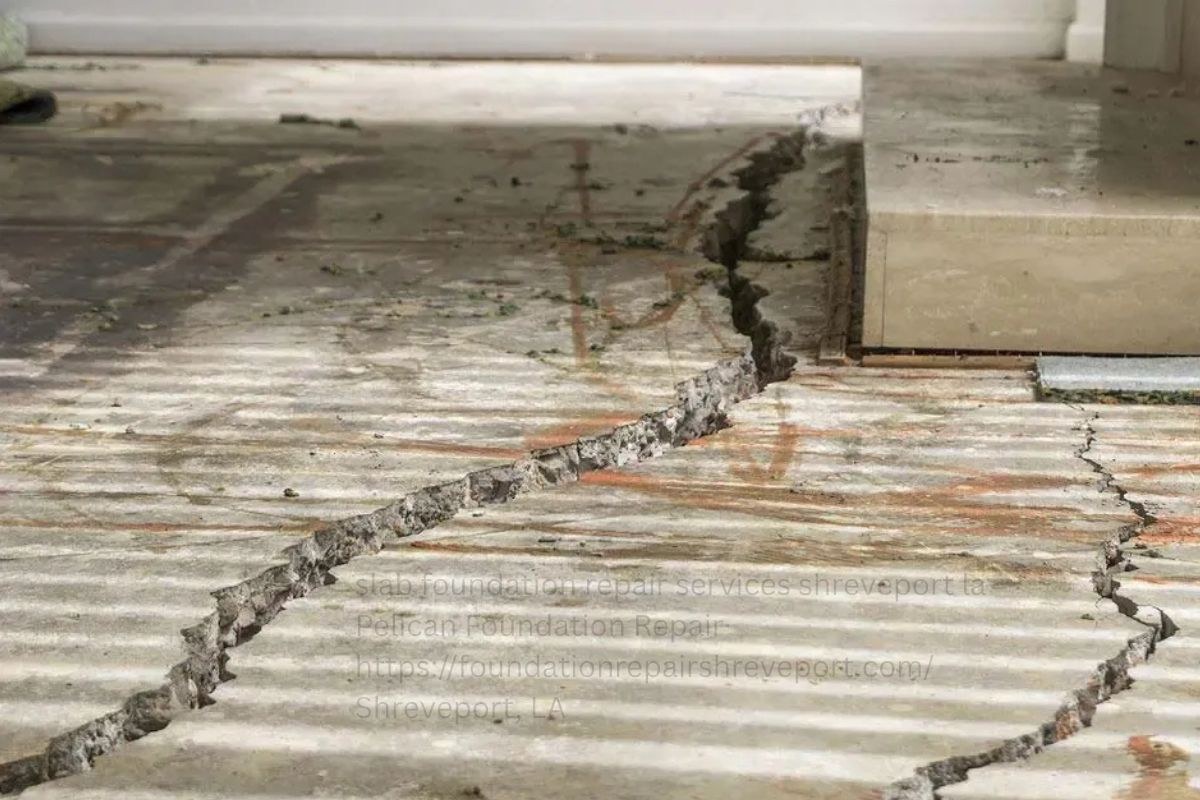
Signs 1–4: What You’ll Notice Inside the House
The first signs of slab foundation settlement almost always appear indoors, because the living space is where small movements become daily annoyances. If several of these show up together, the slab — not the doors or the paint — is the prime suspect.
1. Doors and windows that stick, jam, or won’t latch
A door is a precision instrument in a rectangular frame. When the slab shifts even slightly, the frame racks and the door starts rubbing, sticking, or refusing to latch — interior doors usually complain first. One sticky door in August humidity is normal in Louisiana. Three doors sticking in the same season is a foundation talking to you.
2. Cracks in drywall, especially at angles
Hairline vertical cracks at drywall seams are usually cosmetic. The ones that matter run diagonally from the top corners of doors and windows, or step horizontally along the wall — stress cracks from a slab that isn’t level anymore. Cracks that reopen after patching are the giveaway that movement is ongoing.
3. Floors that slope, sag, or feel uneven
On a slab you won’t get bouncy floors — the concrete is too rigid. Instead you get slope: a marble rolled on the tile reveals it, furniture rocks, or tile grout cracks in a line across the floor. Anything over about an inch of slope across a room deserves a professional elevation survey.
4. Gaps where trim, cabinets, and counters meet walls
Baseboards pulling from the wall, crown molding separating at corners, cabinets gapping from the wall — these happen when walls lean or drop relative to floors and ceilings. Caulk lines that keep splitting are the same story in miniature: the joint moves because the structure moves. Cosmetic fixes here are like repainting a car with a bent frame.
Signs 5–7: What You’ll See Outside the House
Step outside and the slab tells the same story in concrete and brick. Exterior signs are often easier to photograph and track over time — date your photos so you can show an inspector whether a crack is stable or growing.
5. Stair-step cracks in brick veneer or block
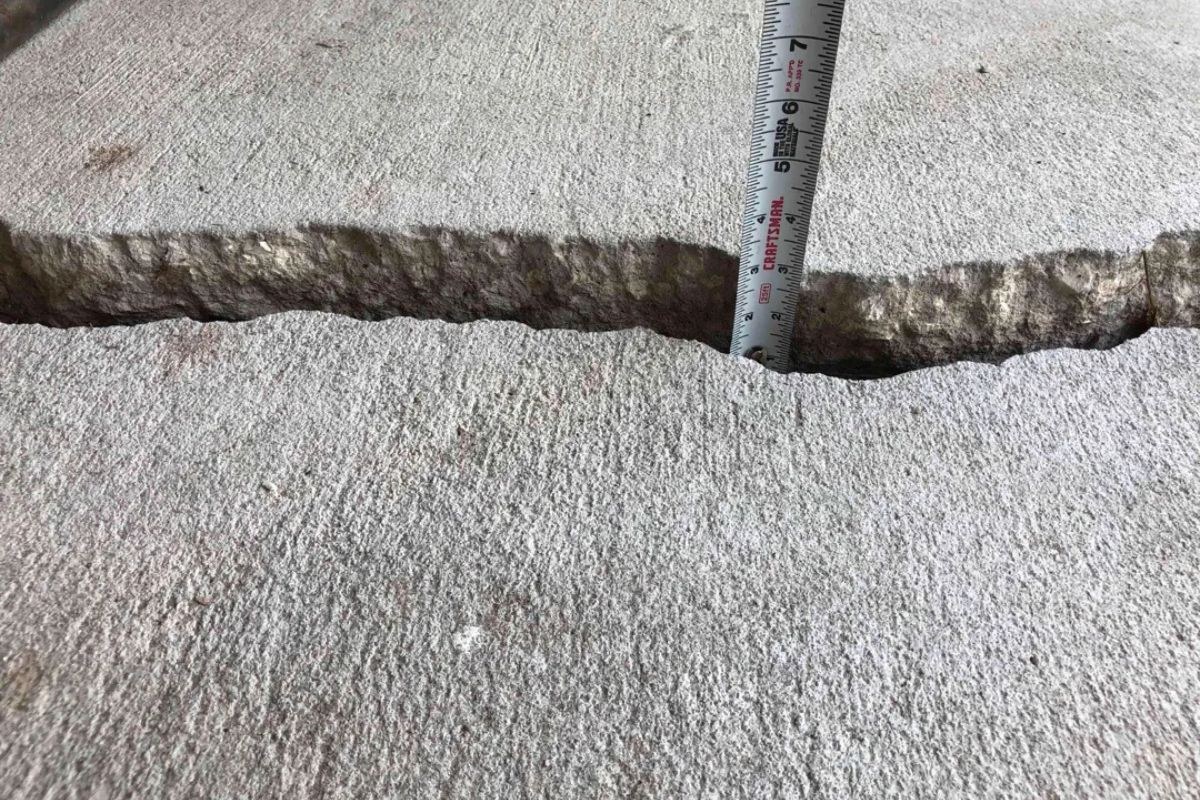
The signature exterior sign: cracks that zigzag through mortar joints in a staircase pattern. Brick doesn’t stretch, so when the slab edge beneath it drops, the mortar joints crack along the path of least resistance. Horizontal cracks and cracks wider than a quarter inch are more urgent than thin vertical ones. If the crack runs through the bricks themselves rather than just the mortar, the movement is significant — get it checked promptly.
6. Concrete cracking, tilting, or pulling away
Your slab doesn’t end at the walls. Driveways, patios, walkways, and pool decks are concrete poured on the same clay, and they telegraph what the soil is doing. Sections that tilt toward the house, crack in the same spot repeatedly, or separate from the foundation edge with a visible gap all mean the ground is moving. Pay special attention to concrete that now slopes toward the house — it’s funneling rainwater straight to your footings, which accelerates the cycle.
7. Water where it shouldn’t be — and soil gaps where it should
Two opposite clues, same cause. After rain, water pooling against the foundation or in one low corner of the yard means the ground has settled there. In dry weather, a visible gap between the soil and the slab edge means the clay has shrunk away from the concrete — the next heavy rain will pour straight into that gap and swell the soil unevenly. Gutters dumping water within a few feet of the slab make both problems worse. Downspouts should discharge at least 10 feet from the foundation.
Seeing one or two of these seven signs doesn’t automatically mean you need piers — but it does mean you need measurements. Our slab foundation repair service starts with a free inspection and a precision elevation survey, so you’re deciding based on inches, not anxiety.
Why “Foundation Settlement Repair” Searches Are Climbing
Search interest in “foundation settlement repair” has broken out as a rising query in Louisiana in recent research from October 2026 — and it makes sense once you know what drives it. Breakout searches don’t appear from nowhere; they appear when thousands of homeowners notice the same symptoms in the same season and start typing.
The sequence is predictable: a dry late summer shrinks the clay and opens soil gaps, then fall storms heave the ground unevenly. Doors stick, a drywall crack appears, and homeowners search for what they’re seeing. Rising search demand is a crowd-sourced early warning system — it reflects real settlement symptoms in real houses, on schedule with the soil cycle.
The practical takeaway: if you’re part of that search wave, you’re probably catching the problem at the right time. Early settlement — an inch or less of differential movement — is straightforward to stabilize. The expensive jobs are the ones where symptoms were watched for three years first. Searching is step one; a free inspection with actual elevation readings is step two.
What Happens If You Ignore Slab Settlement
Slab settlement doesn’t pause while you think about it. The clay keeps cycling every wet and dry season, and each cycle tends to widen the differences between the settled and stable sections. Here’s how the same problem looks early versus late:
| Stage | What You See | What It Takes to Fix |
|---|---|---|
| Early (under 1 inch of movement) | Hairline cracks, one sticky door, slight floor slope | Fewer piers, possible lift back to near-level; drainage fixes prevent recurrence |
| Moderate (1–2 inches) | Reopening cracks, multiple jammed windows, visible slope, brick stair-stepping | Full pier installation around affected areas; interior cosmetic repairs after stabilization |
| Advanced (over 2 inches) | Wide cracks, separated chimney, plumbing stress, doors that won’t close | Extensive piering, possible plumbing repairs, major cosmetic restoration |
One more reason not to wait: slab homes run water and sewer lines through or under the concrete, and a shifting slab can stress or break them. A slab leak under a settled section turns a foundation job into a foundation-plus-plumbing job.
Waiting also has a paperwork cost. Foundation movement that’s documented and repaired with a warranty is a selling point; movement that’s been ignored for years and shows up on a buyer’s inspection report is a negotiation weapon against you. Start with a free inspection from Pelican Foundation Repair — Monday through Saturday, 8:00 AM to 6:00 PM — and you’ll have real measurements either way.
How Slab Settlement Gets Fixed in Louisiana
There’s no single fix for a settling slab — the right method depends on how far it’s moved, what’s causing it, and what the slab supports. These are the approaches that work in Louisiana clay:
| Method | Best For | How It Works |
|---|---|---|
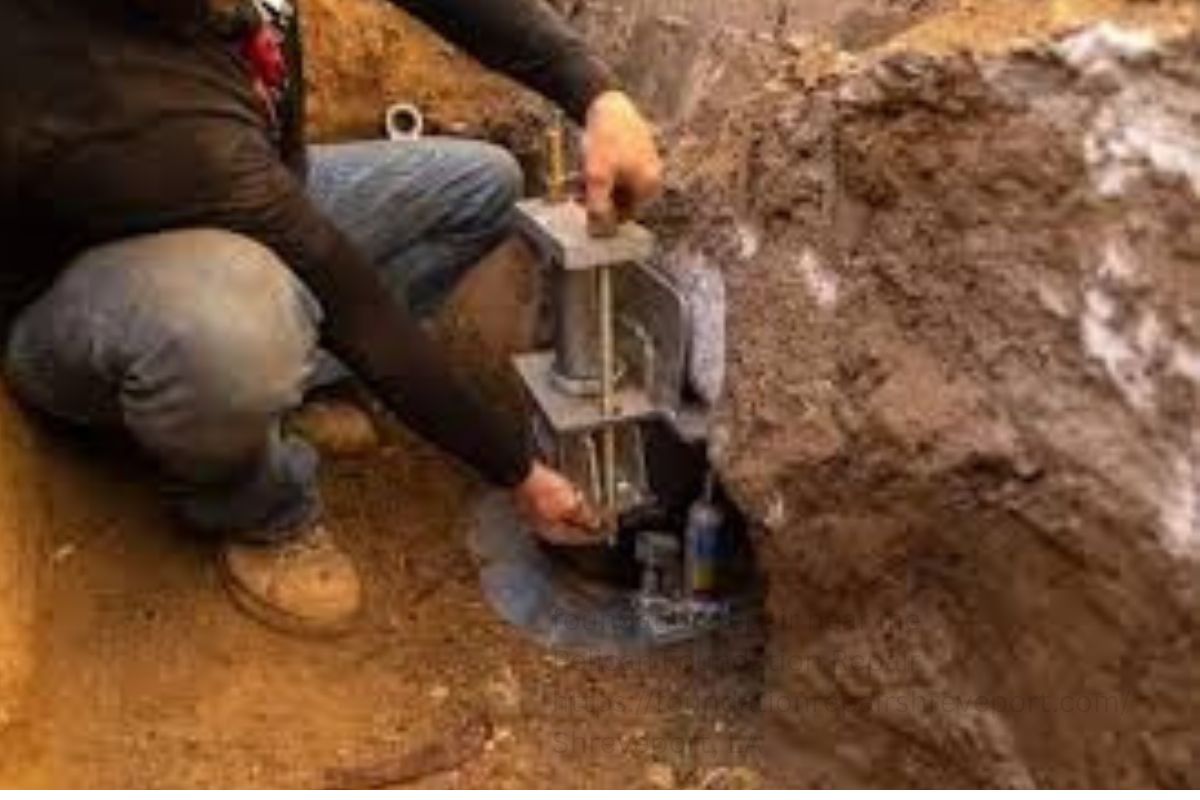
| Steel push piers | Settling slab sections, sinking corners | Steel pipe driven to load-bearing soil; slab weight transferred to piers and lifted toward level |
| Helical piers | Lighter loads, additions, tight access | Screw-like piers rotated into stable soil; faster, quieter install |
| Polyurethane foam lifting | Sunken concrete flatwork, minor slab voids | Expanding foam injected beneath concrete fills voids and lifts the slab |
| Drainage correction | Water-driven movement | Grading, downspout extensions, and drains keep water from cycling the clay |
What a proper repair plan includes
A trustworthy plan names the cause, stabilizes the structure with piers where the slab has lost support, and addresses the water management that keeps the soil cycling. Any bid that skips the cause is half a repair, and any bid without elevation readings is a guess — readings turn “the corner is sinking” into “the northeast corner is down 1.75 inches,” which is what a pier plan is built on.
How pier pricing works
Pier jobs are typically priced per pier, with most residential slab jobs landing in the $3,500–$15,000+ range depending on how many piers the settled area needs. More movement usually means more piers, which is the simplest argument for calling early. Our guide to slab foundation repair prices near you breaks down what drives the number up or down, and can a slab foundation be repaired answers the question almost every homeowner asks first.
Frequently Asked Questions
How can I tell if my slab is settling or if it’s just normal cracks?
Normal cosmetic cracks are thin, vertical, and don’t change. Settlement cracks are diagonal or stair-stepped, wider than a quarter inch, reopen after patching, or come with sticking doors and sloping floors. An elevation survey gives you the definitive answer in inches.
How much does it cost to fix a settling slab foundation in Louisiana?
Most residential pier jobs for settling slabs run $3,500 to $15,000 or more, depending on how many piers the settled area needs. Crack sealing alone runs $400 to $1,500 but won’t fix settlement. A free inspection with elevation readings produces a firm price.
Can a settling slab be lifted back to level?
Often, yes. Steel push piers can lift settled slab sections back toward level, though the goal is stabilization first and maximum safe lift second. Slabs that have sat settled for many years may not return to perfectly level, but they can be stabilized so the movement stops.
How long does slab foundation repair take?
A typical residential pier installation takes two to four days. Crack injection is usually a single day. Larger jobs that include drainage work can run a full week.
Will my floors and walls look normal after the repair?
Stabilization stops the movement, but existing cosmetic damage like drywall cracks usually needs separate repair after the slab is stable. Most contractors recommend waiting a few weeks after piers are installed before doing interior cosmetic work.
Does homeowners insurance cover foundation settlement?
Standard homeowners policies typically exclude foundation settlement caused by soil movement, which insurers classify as a maintenance issue. Sudden damage from a covered event like a plumbing leak may be covered. Check your policy and talk to your agent.
How do I keep my slab from settling again?
Manage water. Extend downspouts at least 10 feet from the slab, grade soil away from the house, and fix plumbing leaks promptly. In long dry spells, even consistent lawn watering near the foundation helps keep clay moisture stable. Piers plus drainage is the lasting combination.
Pelican Foundation Repair
6118 Fairfield Ave, Shreveport, LA 71106, USA
318-585-2003
https://foundationrepairshreveport.com/