Do You Need a Soil Test Before Foundation Repair in Shreveport?
Wondering if your foundation needs a soil test first? Here is when testing is worth the money in Shreveport, what it shows, and when a expert inspection is enough.
Most Shreveport homeowners do not need a soil test before foundation repair. A expert foundation inspection usually tells us enough to plan the repair. A soil test is worth it when the settlement is severe, the cause is unclear, an engineer is designing the repair, or you are building new. Otherwise, the inspection comes first.
If you have a crack in the wall, a door that sticks, or a floor that slopes toward one corner, the first question is not about the dirt. It is about what the house is doing right now, and a trained inspector can answer that in one visit. A soil test answers a different question: what is the ground doing, and how far down does the trouble go? This post explains what a soil test is, what it can and cannot tell you, and when it is worth paying for.
What a Soil Test Actually Is
A soil test, also called a geotechnical investigation, is a close look at the ground under and around your house. A geotechnical engineer or a licensed testing firm drills small holes, called borings, around the foundation, usually 15 to 30 feet deep, and pulls up soil samples from different depths.
Those samples go to a lab, where technicians measure clay content, moisture, and a number called the plasticity index, which tells you how much the soil swells when wet and shrinks when dry. The lab may also test bearing capacity, how much weight the soil can hold, and check the water table.
The engineer then writes a report with the results and recommendations, such as how deep piers should go or whether the soil needs moisture control.
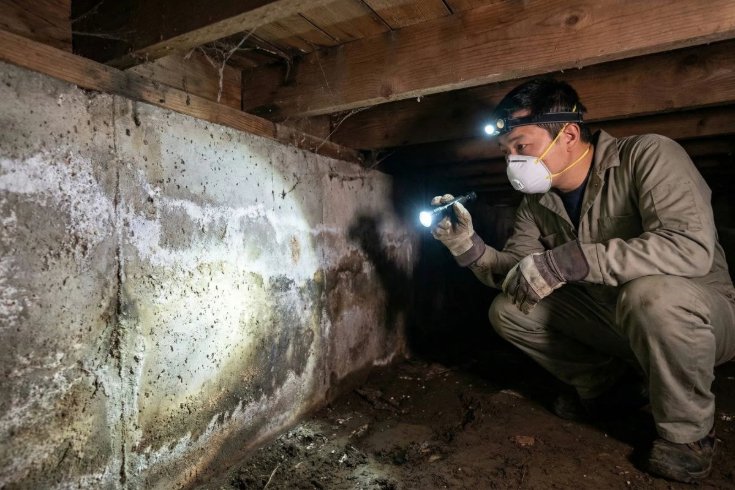
A soil test is not the same as a foundation inspection. A foundation inspection looks at the house itself: cracks, floor levels, doors that stick, and signs of movement. A soil test looks at the ground the house sits on. Most repairs only need the first one.
Pelican Foundation Repair does not perform soil testing or provide engineering. Our crews inspect foundations and carry out repairs. When a job needs a soil test, a licensed geotechnical engineer or testing firm does the testing, and we use their report to plan the repair.
What a Soil Test Tells You About Your Foundation
A soil test answers four questions that matter to a foundation in Shreveport: how much clay is in the soil, and how active is it? How wet is the soil at different depths? How deep does the soil keep moving before it reaches stable ground? And how much weight can the soil carry?
In Caddo and Bossier Parishes, the answer is often a lot of clay, and it is the active kind. Our clay swells when it soaks up rain and shrinks during a long dry spell. A lab test puts a number on that movement through the plasticity index, so an engineer knows whether the soil under your house is mildly or highly active.
The test also maps the active zone, the top layer of soil that swells and shrinks with the seasons. In northwest Louisiana that zone can run several feet deep. Piers must reach below it into stable soil, or the repair will move with the ground. That depth is one of the most useful numbers a soil test gives you.
A soil test can also flag water problems, such as a high water table or a layer of soil that holds water against the foundation. Heavy rain near the Red River or Cross Lake, poor grading, and clogged gutters can all push water toward a house, and wet clay pushes back.
For the full picture of how our local clay behaves, read our guide to expansive clay soil in Shreveport. For a free look at the mapped soil types under your own address, the USDA Web Soil Survey has soil maps for Caddo and Bossier Parishes at websoilsurvey.nrcs.usda.gov.
When a Soil Test Is Worth the Money
A soil test is worth it when the repair plan depends on numbers only a lab can give you. The list below covers the most common situations.
- Severe or uneven settlement: one side of the house has dropped several inches, or the movement is far worse in one corner.
- A puzzling cause: the cracks do not match the usual settlement pattern, and an inspection alone cannot say why the house is moving.
- An engineer-designed repair: a structural engineer is stamping the repair plan and needs lab data for pier depths and loads.
- New construction or a big addition: you are building on a lot with no history, and the footing design depends on what the soil can carry.
- A home purchase with red flags: you are buying a house with visible foundation problems and want hard data first.
- A repeat failure: a previous repair has moved again, and the crew needs to know if the soil, the water, or the pier depth is to blame.
A soil test also makes sense when a lender or an insurer asks for one, such as a loan approval on a house with foundation trouble or an insurance claim that needs lab data on the cause.
In each of these cases, the test pays for itself by keeping the repair from being a guess. A pier driven to the wrong depth or a drainage fix aimed at the wrong problem costs far more than the test. Our post on when an engineer report is required for foundation repair in Louisiana explains when the test is not optional.
When a Foundation Inspection Is Enough
Most foundation repairs in Shreveport do not need a soil test. A routine repair starts with a foundation inspection, and in most cases the inspection tells the crew everything they need to know.
During an inspection, a technician walks the inside and outside of the house, measures floor elevations, checks cracks for width and direction, looks at doors and windows that stick, and checks drainage and grading. That picture is usually clear enough to plan a repair: how many piers, where they go, and how deep they need to reach.
Think of it this way. If your house shows the classic signs of settlement in our clay — small to moderate cracks, a door that sticks in summer, a floor that slopes toward one corner — a soil test will not change the plan. The inspector already knows the soil is expansive clay.
A test also adds time. It takes days to schedule and weeks for lab results, while an inspection can be booked this week and a repair planned right after. If the house is settling and water is pooling by the foundation, waiting a month for lab numbers can let a small problem grow.
That is why our advice is simple: start with a foundation inspection, which we offer free. If the inspection turns up a severe, puzzling, or engineer-level problem, we will tell you a soil test is the right next step.
What Soil Testing Costs and How Long It Takes
Soil testing is priced by the job, based on how many borings are drilled, how deep they go, and which lab tests are run. The figures below are industry ranges from national cost guides, not Pelican prices, because Pelican does not perform soil testing. Get a written quote from the testing firm for your lot.
| What you are paying for | Typical industry range | What affects the price |
|---|---|---|
| Basic soil test, one or two borings with standard lab tests | (industry range) | Boring count, boring depth, lab tests ordered |
| Full geotechnical report, three or more borings with engineer review | (industry range) | Boring count, report depth, engineer stamp |
| Extra boring or deeper drilling | per boring (industry range) | Depth, soil hardness, site access |
| Added lab test or retest of a sample | per test (industry range) | Test type, sample count, lab turnaround |
| Engineer site visit and written recommendations | (industry range) | Travel, report length, follow-up questions |
A basic test with one or two borings suits a single-family home with a straightforward problem. A full report with three or more borings suits a severe case, a new build, or an engineer-designed repair. Deep borings and limited access cost more.
Timing runs in two parts. Drilling and sampling usually take one day on site. Lab results commonly come back in one to three weeks, and the engineer’s written report follows a few days after that. Plan on two to four weeks from drilling day to holding the report, longer if the lab is backed up.
For comparison, the repair itself is priced the usual way once the test is done. Pelican’s published ranges are for crack repairs, to for full pier jobs, with typical pier work between by pier count, and for concrete leveling at roughly per square foot. The test does not change those ranges, only how precisely the repair is planned.
How Soil Test Results Change the Repair Plan
A soil test changes the repair plan in practical ways, and each one can save you money or keep the repair from failing.
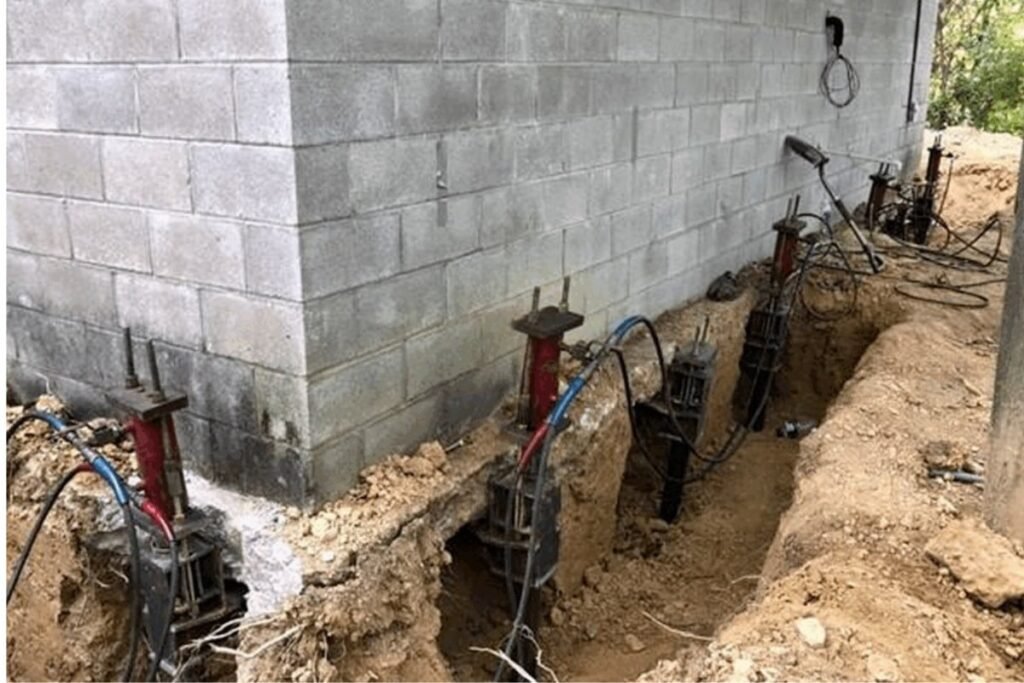
- Pier depth: the report shows where stable soil starts, so piers are driven to that depth instead of guessed.
- Pier type: very soft or very deep soil may call for helical piers instead of steel push piers, or the other way around.
- Drainage work: a high water table or a water-holding layer points to drainage fixes that stop the soil from swelling again.
- Moisture control: the report may call for steady soil moisture around the foundation, through grading, gutters, and watering in dry spells.
- Monitoring first: if the soil is still moving with the seasons, the engineer may ask for a few months of monitoring before the repair is designed.
Pier depth is the biggest one. A pier that stops inside the active clay layer will ride up and down with the seasons, and the house will keep moving. A pier that reaches stable soil below that layer stays put.
Drainage is the second. Shreveport’s summer dry spells shrink the clay and open gaps around the foundation, and the next heavy rain fills those gaps and swells the soil. A test that shows a water problem can shift the plan toward drainage correction alongside the piers, so the repair lasts. For the structural side of the job, see our structural repair service page, and visit the Pelican Foundation Repair homepage for the full picture.
None of this means every homeowner needs a test. It means the test is a tool, worth paying for when the job needs it and a waste when it does not. A expert inspection first, a test when the facts call for one, and a repair planned on real numbers: that is the order that serves a Shreveport homeowner best. Qualifying repairs carry our 20-year structural warranty, and homes in South Highlands, Broadmoor, Keithville, and Greenwood all sit on the same active clay.
Frequently Asked Questions
Do I need a soil test before foundation repair?
Usually not. Most Shreveport repairs are planned from a expert foundation inspection, which shows the crew enough to set pier count and depth. A soil test is needed when settlement is severe, the cause is unclear, an engineer is designing the repair, or you are building new.
What does a soil test show about my foundation?
It shows clay content and plasticity, moisture levels at depth, the depth of the active zone that swells and shrinks, and how much weight the soil can carry. Those numbers tell an engineer how deep piers must go and whether drainage or moisture control is needed.
How much does a soil test cost in Shreveport?
Industry ranges run roughly for a basic residential test and for a full geotechnical report with an engineer stamp. These are national industry ranges, not Pelican prices, since Pelican does not perform soil testing.
Who orders a soil test, and who does the testing?
You, your builder, or your engineer orders it, and a licensed geotechnical engineer or soil testing firm carries it out. Pelican does not perform soil testing. We inspect and repair foundations, and we use the testing firm’s report to plan the work.
How long does a soil test take?
Drilling and sampling take about one day on site. Lab results commonly take one to three weeks, and the engineer’s written report follows a few days later. Plan on two to four weeks from drilling day to report in hand.
Can a soil test tell me if my house will keep settling?
It can tell you whether the soil is still active and how much it is likely to move, but it cannot promise a date. If the clay under your home is highly active and water keeps reaching it, settlement can continue until drainage and moisture are controlled and the piers reach stable soil.
Will a soil test lower my foundation repair cost?
Sometimes. A test can keep a crew from driving piers to the wrong depth or fixing the wrong problem, which saves money on rework. But for a routine repair, the test adds cost without changing the plan, so a expert inspection first is cheaper.
Pelican Foundation Repair
6118 Fairfield Ave, Shreveport, LA 71106, USA
318-585-2003
https://foundationrepairshreveport.com/