Uneven Floors: Causes Beyond Foundation Settlement
Uneven floors do not always mean foundation trouble. Joists, subfloors, and framing cause many slopes, and each cause points to a different fix.
Uneven floors can come from foundation settlement, but they can also come from sagging joists, a rotted sill plate, or a poor subfloor, and the fix depends on which one it is. A floor that slopes toward the middle of a room usually points to the structure underneath rather than the foundation walls.
Most homeowners notice an uneven floor the same way: a marble rolls across the kitchen, a chair wobbles on a spot that used to be flat, or a door starts rubbing the frame. The worry that follows is understandable, because foundation settlement is the cause everyone has heard of. But settlement is only one item on a longer list, and jumping straight to piers can mean paying for the wrong repair.
In Shreveport homes, the list is even longer than usual. Expansive clay soil, humid summers, and a housing stock that ranges from pre-war pier-and-beam cottages in Highland to newer slab homes in Shreve Island and Southern Hills all produce different floor problems. This guide walks through the common causes beyond settlement, how to tell them apart, and what each repair usually involves.
How to Tell Whether the Foundation Is Involved
Before worrying about any single cause, look at the pattern. Foundation settlement usually shows up as a floor that slopes in one consistent direction, often toward a corner or along one wall, and it rarely travels alone. You will often find matching clues: stair-step cracks in brick, doors and windows sticking on the same side of the house, or gaps where a wall meets the ceiling. When several of those signs point the same way, the foundation deserves a close look.
Structural causes behave differently. A floor that dips toward the middle of a room, bounces when you walk across it, or sags between supports usually points to the joists or beams underneath rather than the foundation walls. A floor that is uneven only in one small patch, or only where new flooring was laid, usually points to the subfloor or the installation itself. The pattern is the first clue, and it costs nothing to read.
A simple marble test helps. Set a marble on the floor in several spots and watch which way it rolls. If it always rolls the same direction across the whole house, settlement is on the table. If it rolls toward the center of each room, or only moves in one room, the structure underneath is the likelier suspect. Note what you find, because a contractor will ask exactly these questions at the inspection.
That said, patterns can overlap. A settling foundation can overload joists, and rotted wood can look like settlement from above. The honest answer in many homes is that two causes are working together, which is why an inspection that checks both the foundation and the framing underneath matters more than any single test you do yourself.
Sagging or Damaged Floor Joists
Joists are the horizontal beams that carry your floor, and they are the most common non-foundation cause of uneven floors. A joist can sag when its span is too long for its size, when a previous owner cut a notch for plumbing or wiring, or when years of heavy loads slowly bend it downward. In older Shreveport pier-and-beam homes, joists sometimes rest on supports that have shifted or rotted, which lets a whole section of floor drop a little at a time.
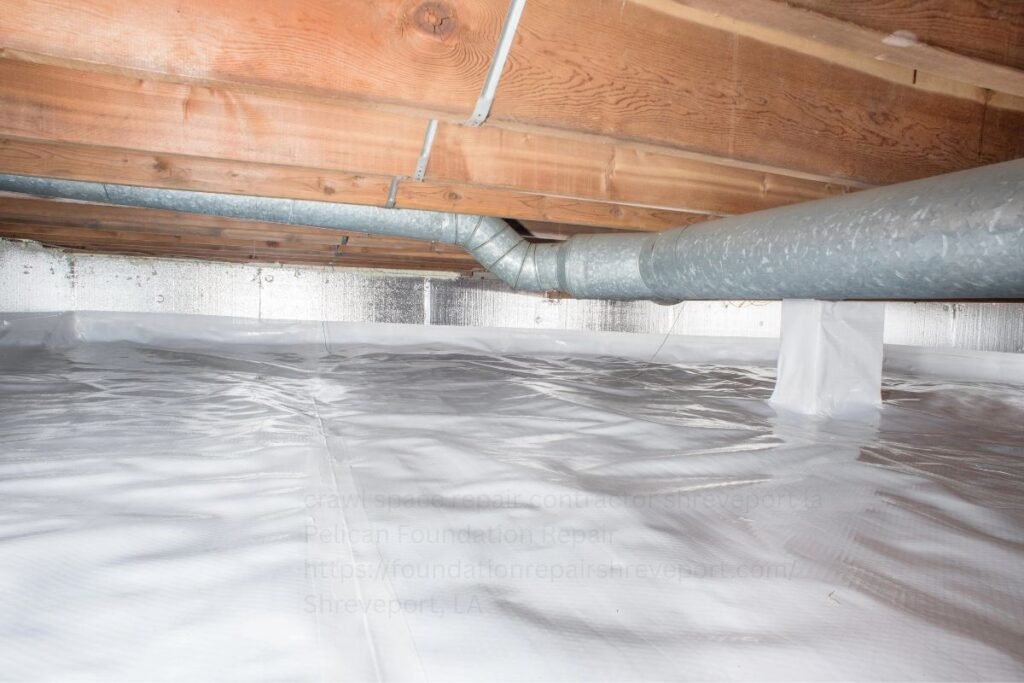
The classic sign is a floor that dips in the middle of a room and feels springy underfoot. You may also see the ceiling below bowing, or a long crack running along the wall where the floor meets it. In a pier-and-beam home, a look under the house often tells the story right away: a joist that has pulled away from its beam, a support post leaning, or wood that is dark and soft at the bearing point.
Repairs depend on how far the damage has gone. A joist that is simply undersized or slightly sagging can often be sistered, meaning a new joist is fastened alongside the old one to share the load. A joist that is rotted or split usually needs partial or full replacement, and the supports beneath it may need resetting or replacing at the same time. Both jobs are structural work, and both are normally done from the crawl space or basement side, not by tearing up the finished floor above.
Costs vary with access and the number of joists involved, but joist repairs are generally far less expensive than foundation piers. A single sistered joist is a modest job; a room full of replaced joists with new supports is a bigger one. The guide to how to tell if your house needs leveling covers the signs that point toward leveling rather than joist work, and the two are worth comparing before you commit to either.
Subfloor and Framing Problems
Not every uneven floor is a structural failure. Sometimes the problem sits right under your feet, in the subfloor itself. Subfloor panels can swell and warp after a plumbing leak or a long period of dampness, leaving a ridge or a soft spot that feels like a slope. Panels can also be installed with gaps, or fastened poorly, so they squeak and flex even though the joists below are sound. In these cases the floor looks uneven but the structure underneath is fine.
Framing mistakes cause a different kind of unevenness. A wall built slightly out of level, a joist installed a fraction high, or a remodel that changed load paths can leave a floor with a permanent tilt that has been there since construction. These floors often show no new cracks and no doors sticking, because nothing is moving; the floor was simply never flat. That history matters, because a floor that has been the same for twenty years needs a different conversation than a floor that changed last spring.
New flooring can also create the illusion of an uneven floor. Thick tile laid over an older subfloor, planks installed without leveling a dip first, or a transition strip set too high can all make a flat floor feel sloped. Before calling a contractor, check whether the unevenness follows the new flooring rather than the room itself. If the dip disappears under a rug line or matches a flooring seam, the flooring job is the likelier cause.
Subfloor repairs are usually the least disruptive fix on this list. A damaged panel can be cut out and replaced, a squeaking panel can be re-fastened, and a small dip can be leveled with compound before new flooring goes down. The key step is confirming the joists below are sound first, so the new subfloor does not inherit the old problem.
Moisture, Termites, and Rotted Wood
In northwest Louisiana, moisture is the quiet partner behind many uneven floors. Humid summers, heavy spring rains, and clay soil that holds water against the house keep crawl spaces damp for months at a time. Damp wood loses strength, and over years it can rot, soften, and compress under load. The floor above drops slowly, often by fractions of an inch a year, which is why the change feels gradual rather than sudden.
Termites add a second, faster path to the same result. Subterranean termites are active across Louisiana, and they eat wood from the inside out, so a sill plate or joist can look intact while it is hollow inside. Mud tubes on foundation walls, wood that sounds hollow when tapped, or a floor that suddenly feels soft in one area are all reasons to get a termite inspection alongside the structural one. Treating the insects without repairing the wood, or repairing the wood without treating the insects, both leave the job half done.
The sill plate deserves special attention here. It is the wood member that sits directly on the foundation wall and carries the whole frame above it, so when it rots, everything above it settles. A rotted sill plate can mimic foundation settlement almost exactly, with sloping floors and sticking doors, but the repair is woodwork, not piers. The sill plate repair guide explains how partial replacement works and when it is enough.
Prevention is mostly about water. Gutters that discharge away from the house, grading that slopes away from the walls, and a crawl space that stays dry do more for your floors than any single repair. The LSU AgCenter publishes Louisiana-specific guidance on expansive soils and home drainage, and it is a solid reference for why Shreveport ground behaves the way it does.
Uneven Floor Causes at a Glance
Use this table to match what you are seeing with the likeliest cause, then confirm it with an inspection before choosing a repair.
| Cause | What you usually notice | Typical fix | Urgency |
|---|---|---|---|
| Foundation settlement | Whole-house slope one direction, wall cracks, sticking doors | Piers or leveling, after diagnosis | High if movement is active |
| Sagging joists | Dip toward room center, springy or bouncy feel | Sistering or joist replacement | Moderate, sooner if worsening |
| Rotted sill plate or beams | Slope near walls, soft or hollow-sounding wood | Partial wood replacement, moisture fix | High if rot is spreading |
| Subfloor damage | Local soft spot, squeaks, ridge under flooring | Panel replacement, re-fastening | Low unless water is active |
| Framing or build error | Tilt unchanged for years, no new cracks | Often cosmetic leveling only | Low if stable |
What Repairs Usually Cost and How Long They Take
Costs depend on the cause, and that is exactly why the diagnosis comes first. Sistering a few joists or replacing a subfloor panel is typically a job measured in hundreds to low thousands of dollars and finished in a day or two. Replacing a rotted sill plate section, or reworking supports under a pier-and-beam home, is a larger job that can run into the low thousands and take several days. Foundation pier work, when it is genuinely needed, is the most expensive item on the list and can run well into five figures for a full perimeter job.
Be wary of any quote that prices piers before checking the crawl space. A contractor who never looks underneath cannot know whether the joists are sound, and a pier quote written without that check is a guess, not a diagnosis. A proper inspection measures floor elevations room by room, checks the framing below, and looks for moisture and termite signs, and it should leave you with a cause you can understand, not just a price.
Timing matters too. Active water damage and spreading rot get worse with every wet season, and a floor that is moving now will cost more to fix next year than it does today. A stable, long-standing tilt, on the other hand, can wait for a planned remodel. Ask the inspector which category your floor falls into, and get the answer in plain language before you decide.
For the foundation side of the question, the guide to signs of foundation settlement in Shreveport lists the wall-crack and door symptoms that point toward settlement, and the house leveling service page describes how leveling is actually done when settlement is confirmed. Pelican offers expert inspections across Shreveport, Bossier City, and the surrounding areas, and a expert inspection is the simplest way to sort the cause out.
When to Call a Professional Right Away
Some uneven floors can wait for a scheduled inspection, and some should not. Call promptly if any of these apply:
- The floor is moving over weeks, not years: fast change means active damage, not old settlement.
- A section feels soft or spongy underfoot: soft wood points to rot or termite damage spreading underneath.
- You find mud tubes or hollow-sounding wood: both are classic termite signs that need a pest inspection alongside the structural one.
- A door or window suddenly stops working: a fixture that worked for years and now sticks suggests something shifted recently.
Also call promptly if the slope comes with water: a damp crawl space, a musty smell that will not clear, or a visible leak near the affected area. Water is the engine behind most wood damage in Louisiana homes, and stopping it is part of the repair, not an afterthought. A contractor who only quotes the floor work and never asks about the water source is missing half the job.
What you should not do is try to jack or level a floor yourself with makeshift supports. Improper jacking can crack walls, break plumbing, and make a repairable floor worse, and it can also mask the real cause long enough for rot or termites to spread. Temporary screw jacks have their place in a professional repair, but they are not a homeowner fix for a sagging room.
The useful first step is the simplest one: document what you see, note when it changed, and book an inspection. A good inspector will walk the crawl space, measure the floors, and tell you whether you are looking at joists, wood, subfloor, or foundation, and what each path costs. That answer is what turns an uneven floor from a worry into a plan.
Frequently Asked Questions About Uneven Floors
Do uneven floors always mean foundation problems?
No. Sagging joists, rotted wood, subfloor damage, and framing errors all cause uneven floors without any foundation movement, and in many homes one of those is the real cause.
How can I tell if my uneven floor is foundation settlement?
Look for a consistent slope across the whole house plus matching signs such as stair-step brick cracks and sticking doors on the same side. A dip toward the middle of a room usually points to joists instead.
Can sagging floor joists be fixed without tearing up the floor?
Usually, yes. Sistering or replacing joists is normally done from the crawl space or basement side, so the finished floor above usually stays in place.
Are uneven floors dangerous?
Most uneven floors are a nuisance rather than an emergency, but a floor that is moving quickly, feels soft, or comes with water damage or termite signs should be inspected promptly, because the underlying damage can spread.
Does homeowners insurance cover uneven floor repair?
It depends on the cause. Sudden events such as a burst pipe are often covered, while long-term settlement, rot, and termite damage usually are not. Check your policy and ask your insurer about the specific cause found at inspection.
How much does it cost to fix an uneven floor?
Subfloor and joist repairs are often measured in hundreds to low thousands of dollars, while full foundation pier work can run well into five figures. The cause found at inspection decides where your job lands.
Should I get a expert inspection for an uneven floor?
Yes. An inspection measures floor elevations, checks the framing underneath, and identifies the cause before you pay for any repair, which keeps you from buying piers for a joist problem.
Pelican Foundation Repair
6118 Fairfield Ave, Shreveport, LA 71106, USA
318-585-2003
https://foundationrepairshreveport.com/