 Skip to main content

When Should You Get a Foundation Inspection? 7 Times It Matters Most
When should you get a foundation inspection? The most important times are before buying a home, when you notice warning signs like cracks or sticking doors, after severe weather or flooding, and before any major renovation. You should also schedule one if your home is more than ten years old and has never had an elevation survey, or if large trees near the house have been removed. A foundation inspection is quick, non-invasive, and — from us — completely free.
The simple rule: get an inspection any time something changes — a new crack, a home purchase, a big storm, a renovation — and at least once as a baseline if you have never had one. In Shreveport’s expansive clay soils, small settlement caught early is a small project; the same settlement ignored for five years can become a major one.
Call (318) 585-2003 – Free Inspection
📊 Foundation Inspections at a Glance
7 key times
When an inspection matters most
~1 hour
Typical inspection visit length
Free
Our inspection, no obligation
What a Foundation Inspection Actually Includes
Before we get to the seven situations, it helps to know what you are scheduling. A real foundation inspection is a structured evaluation, not a glance around the house. Here is what a thorough one covers:
- Interior walkthrough. The inspector checks every room for the classic symptoms: cracks in drywall and brick veneer, sticking doors and windows, sloping or bouncy floors, and gaps where walls meet ceilings or floors.
- Floor elevation survey. This is the heart of the inspection. Using a precision altimeter or digital level, the inspector takes elevation readings at dozens of points across the home and maps them. The resulting settlement map shows exactly where — and how much — the foundation has moved, down to fractions of an inch.
- Exterior examination. Foundation walls, brick veneer, mortar joints, and the slab edge or crawl space perimeter get checked for cracking, displacement, and water staining. Grading and drainage around the house are evaluated too, since water is the usual suspect.
- Crawl space or slab edge check. On pier-and-beam homes, the inspector evaluates the crawl space: piers, beams, joists, moisture, and vapor barrier. On slab homes, the visible slab edge and any accessible plumbing are checked.
- Written findings and plan. You receive a written summary with the elevation map, the inspector’s assessment of what is happening and why, and a recommended repair plan with pricing if work is needed. No plan, no pressure — sometimes the right answer is “monitor it and check again in a year.”
The whole visit usually takes about an hour, and nothing is invasive — no digging, no drilling, no damage. You can read more about what our foundation inspection includes before you book.
The 7 Times a Foundation Inspection Matters Most
Not every homeowner needs an inspection tomorrow. But these seven situations are when skipping one is genuinely risky — especially in northwest Louisiana, where the clay soil under Shreveport, Bossier City, and the surrounding parishes never sits still for long.
- Before you buy a home. This is the big one. A general home inspector looks at the whole house, but a foundation specialist reads the elevation story a generalist can miss. In older neighborhoods like Highland, South Highlands, Broadmoor, and Southern Hills, settlement is common enough that you want a specialist’s eyes — and elevation readings — before you commit. A $15,000 pier job discovered after closing is a brutal surprise; discovered before closing, it is a negotiation point.
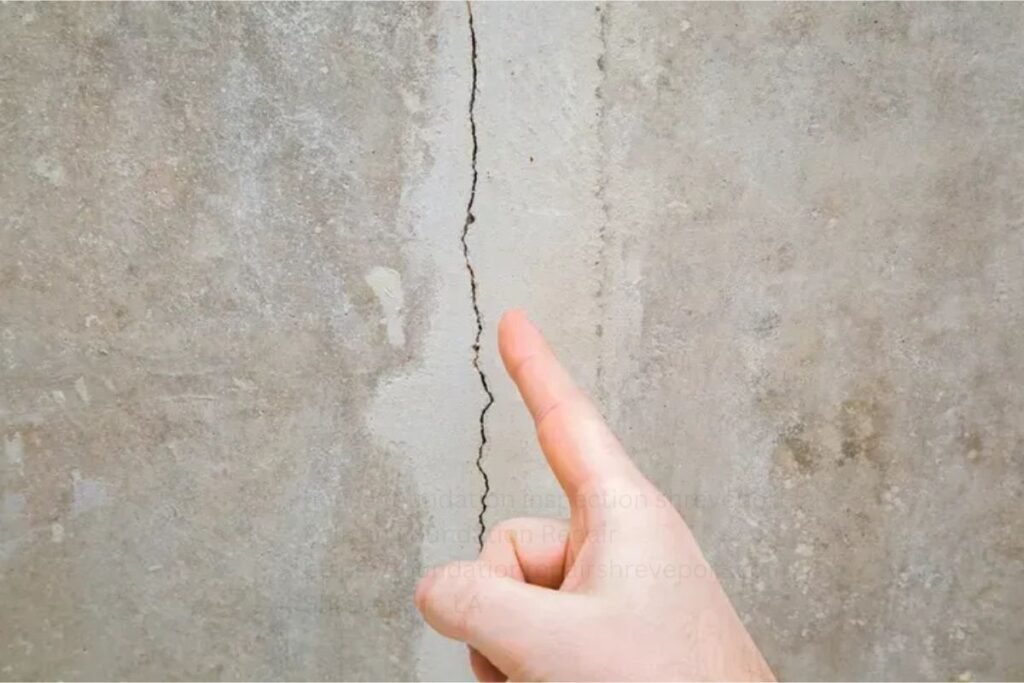
- When you notice warning signs. New cracks in walls or brick, doors that suddenly stick, floors that slope, gaps around window frames — any of these merit an inspection promptly. Compare what you are seeing against our rundown of signs of foundation settlement in Shreveport. One symptom might be cosmetic; a pattern of them is the foundation talking to you.
- After severe weather or flooding. Louisiana storms do more than damage roofs. Prolonged saturation followed by rapid drying — the classic Gulf South cycle — is exactly what makes expansive clay heave and shrink. If your area took heavy rain, or if water stood near your foundation, an inspection afterward catches movement while it is fresh.
- Before a major renovation or addition. Adding a second story, building an addition, or installing a pool changes the loads on your foundation and the drainage around it. Inspecting first tells you whether the existing foundation can handle the plan — and building on a settling foundation without knowing it is one of the most expensive mistakes in home improvement.
- When large trees are planted or removed near the house. Mature trees pull enormous amounts of moisture from clay soil; removing one suddenly changes the soil’s moisture balance, and the ground can heave as it rehydrates. Planting a thirsty species too close to the house does the reverse over time. Either change near the foundation — say within twenty feet — is worth an inspection a season later.
- After a long drought. Dry summers shrink Louisiana clay dramatically, and the soil pulling away from the foundation is when settlement accelerates. If the region just came through an extended dry spell and you are seeing new gaps between the soil and your foundation walls, that is the clay telling you it moved. An inspection measures how much.
- When your home has never had one. If your house is more than ten years old and no one has ever taken elevation readings, you are flying blind. A baseline inspection tells you where the foundation sits today, so any future change can be measured against something real instead of guessed at. Think of it as a health screening for your house.
If two or more of these apply to you — say, an older home in Caddo Parish plus a recent drought — do not wait for symptoms to get dramatic. The inspection is free, and the information is valuable either way.
Call (318) 585-2003 – Free Inspection
What Happens During the Inspection, Step by Step
Knowing the process takes the mystery out of it. Here is how a typical visit unfolds, from the knock on the door to the written report.
Arrival and interview (10 minutes)
The inspector asks what you have noticed — when the cracks appeared, which doors stick, whether there has been plumbing work or drainage changes. Your observations guide where they look hardest. Mention everything, even things that seem minor.
Interior survey (20 minutes)
Room by room, the inspector notes visible symptoms and takes elevation readings across the floor plan. On a typical Shreveport home this means dozens of data points. The readings are what separate a professional inspection from an opinion — they turn “the floor feels sloped” into “the northwest corner is 1.8 inches lower than the center.”
Exterior and drainage review (15 minutes)
Outside, the inspector examines the foundation walls, brick veneer, and grading. They are looking for the cause behind the interior symptoms: negative grading, gutter discharge problems, tree root influence, or visible foundation distress.
Crawl space or under-slab review (10–15 minutes)
On pier-and-beam homes, this means entering the crawl space to check piers, beams, joists, and moisture. On slab homes, the inspector examines the visible slab edge and looks for signs of under-slab plumbing issues.
Findings and written plan (same day or next day)
You get the elevation map, a plain-English explanation of what is happening, and — if repairs are warranted — a written quote. If the foundation is stable, you will hear that too. A trustworthy inspector is not afraid of the words “you don’t need anything right now.”
The InterNACHI foundation inspection standards at nachi.org describe what a complete structural evaluation should cover — a useful benchmark for judging any inspector’s thoroughness.
How to Read Your Inspection Report
The elevation map can look technical at first glance, but it tells a simple story. Here is how to interpret the key findings:
| What the report shows | What it usually means | Typical next step |
|---|---|---|
| Elevation differences under 0.5 inches | Normal variation; most homes are not perfectly level | Monitor; recheck in a year or two |
| Localized drop of 1–2 inches | Active or past settlement in one area | Targeted repair quote; check drainage |
| Differential over 2 inches | Significant settlement needing correction | Pier or leveling plan recommended |
| Hairline drywall cracks only | Often cosmetic or seasonal movement | Monitor; note if they grow |
| Stair-step brick cracks | Foundation movement at that wall | Inspect that section closely |
| Doors sticking on one side of the house | Racking from differential settlement | Elevation survey confirms extent |
| Water staining in crawl space | Drainage failure, not just settlement | Drainage correction alongside repair |
| No significant variation | Foundation currently stable | Keep the report as your baseline |
Two things to remember when reading the report. First, the numbers matter more than the narrative — elevation readings are objective, and they are what any second opinion will be based on. Second, ask the inspector to explain anything you do not understand. A good inspector welcomes questions; a rushed one who will not explain the map is a red flag.

Call (318) 585-2003 – Free Inspection
What Inspections Cost (and Why Ours Is Free)
Foundation inspection pricing varies. Some companies charge $200–$500 for a standalone inspection, particularly engineering firms whose report carries a professional stamp. Some contractors offer free inspections as part of their quoting process. Both models are legitimate — what matters is what you get.
Our inspections are free, with no obligation and no high-pressure sales visit. Here is why that model works for homeowners: the inspection is how a reputable contractor earns the repair job. A company confident in its diagnosis and pricing does not need to charge you for the privilege of quoting the work. The free inspection includes the full elevation survey, the written findings, and the repair plan — the same deliverables a paid inspection provides.
When comparing options, ask what is included regardless of price. A free “inspection” that is really a 15-minute sales pitch is worth less than nothing — it wastes your time and may scare you into work you do not need. Conversely, a paid inspection from a structural engineer makes sense for complex situations: commercial buildings, legal disputes, or unusual structural conditions. For a typical Shreveport home with suspected settlement, a thorough free inspection from an experienced foundation contractor is the right starting point. Our breakdown of foundation inspection costs goes deeper on when paying makes sense and when it does not.
One caution about “free” inspections
Free is only a good deal if the inspection is real. During the visit, watch for these signs that you are getting a sales pitch instead of an evaluation: no elevation readings taken, a quote produced in minutes without measurements, pressure to sign the same day, or a diagnosis delivered before the inspector has seen the crawl space. A real inspection takes about an hour and produces a written report. Anything much less than that deserves skepticism.
Red Flags: When an Inspection Is Really a Sales Pitch
Most foundation contractors in Shreveport are honest. But the industry has its share of high-pressure operators, and the inspection visit is where they work. Here is how to tell the difference between an evaluation and a pitch.
- No measurements. If the inspector never pulls out a level, altimeter, or measuring device, there is no inspection happening — only an opinion. Elevation readings are non-negotiable.
- Instant catastrophic diagnosis. “Your house is sinking and it is an emergency” — delivered within ten minutes, before a full survey — is a scare tactic. Real settlement is measured, not announced.
- Same-day signing pressure. Discounts that expire when the inspector leaves, “we have a crew in your neighborhood this week” urgency, or reluctance to leave the written quote with you are all pressure tactics. A $15,000–$30,000 decision deserves at least a night’s sleep.
- One solution for every house. A company that recommends the same pier system — or the same pier count — for every home is selling a product, not diagnosing a problem. Different soils and structures need different answers.
- No written report. Verbal-only findings cannot be verified, compared with a second opinion, or referenced later. Insist on the elevation map and findings in writing.
- Refusal to answer questions. “Trust me, I do this every day” is not an explanation. A professional explains the readings, the cause, and the proposed fix in terms you understand.
If an inspection leaves you feeling pressured rather than informed, get a second opinion before signing anything. The USGS information on usgs.gov about expansive soils is worth a read while you wait — understanding the geology behind your problem makes you much harder to scare.
Call (318) 585-2003 – Free Inspection
What to Do After the Inspection
The inspection gives you information; what you do with it depends on what it found. Here is how to handle each outcome.
If the foundation is stable
Congratulations — file the report where you can find it. That elevation map is now your baseline. If symptoms appear in the future, the next inspector can measure change against real numbers instead of guessing. Recheck in a couple of years, or sooner if something changes.
If minor settlement is found
Small, localized movement often calls for monitoring plus addressing the cause — usually drainage. Fix the gutters, correct the grading, manage the water, and recheck in six to twelve months. Many minor cases never progress once the water problem is solved. Do not let anyone sell you a full pier job for half an inch of variation.
If significant settlement is found
Get the written repair plan and then get a second quote. For structural work in the $8,000–$25,000+ range, two professional opinions are worth the time. Compare pier counts, layouts, methods, and — critically — warranty terms. A 20-year structural warranty on qualifying repairs is the kind of protection that should factor heavily into your choice of contractor.
In every case
Address drainage regardless of the structural findings. In northwest Louisiana, water management is foundation management — the expansive clay soils of Caddo and Bossier Parishes respond directly to moisture, and controlling it is the cheapest foundation protection you can buy.
Frequently Asked Questions
When should I get a foundation inspection?
Get one before buying a home, when you notice warning signs like cracks or sticking doors, after severe weather or flooding, before major renovations, when large trees near the house are removed, after a long drought, or if your home is over ten years old and has never been inspected.
How much does a foundation inspection cost?
Many foundation contractors, including us, offer inspections free with no obligation. Engineering firms may charge $200–$500 for a stamped structural report, which makes sense for complex cases like commercial buildings or legal disputes. For a typical home, a thorough free inspection is the right starting point.
How long does a foundation inspection take?
About an hour for a typical home. That includes the interior symptom check, the floor elevation survey, the exterior and drainage review, and the crawl space or slab edge evaluation. The written report with the elevation map usually follows the same day or the next day.
Should I get a foundation inspection before buying a house?
Yes — especially in Shreveport’s older neighborhoods, where settlement is common. A general home inspector is not a foundation specialist. A dedicated inspection with elevation readings can uncover a five-figure repair before you close, turning a nasty surprise into a negotiation point.
What is an elevation survey and why does it matter?
An elevation survey takes precise height readings at dozens of points across your floors and maps them, showing exactly where and how much the foundation has moved. It turns a vague feeling that a floor slopes into objective measurements — the foundation of every honest repair quote.
Do I need an inspection if I only see small hairline cracks?
Hairline cracks alone are often cosmetic or seasonal, but they are worth documenting with dated photos. If they grow, multiply, or appear alongside sticking doors or sloping floors, schedule an inspection. When in doubt, a free inspection costs you nothing but an hour.
What should I do if two inspectors disagree?
Compare their elevation readings first — measurements should roughly agree even if recommendations differ. Then compare the logic: which inspector explained the cause more convincingly? Be wary of the one pushing the bigger job without better evidence. A third opinion from a structural engineer can break the tie on complex cases.
Call (318) 585-2003 – Free Inspection
Get Your Free Foundation Inspection in Shreveport
Whether you are buying a home, seeing new cracks, or just realizing your house has never had an elevation survey, the next step is simple and free. Our inspection includes the full elevation map, a written assessment, and a repair plan if one is needed — with zero obligation and zero pressure.
Call Pelican Foundation Repair at (318) 585-2003, or visit Pelican Foundation Repair to schedule. We serve Shreveport and the surrounding region — see our service areas — and you can review all of our foundation repair services to understand what comes after the inspection.
Pelican Foundation Repair 6118 Fairfield Ave, Shreveport, LA 71106, USA 318-585-2003 https://foundationrepairshreveport.com/