Do You Have to Move Out During Foundation Repair?
Most homeowners never move out for foundation repair. Here is when you can stay, when you should leave, and what daily life looks like either way.
Usually you do not have to move out during foundation repair. Most pier and leveling work happens outside the house, and homeowners stay home while the crew works, with noise and vibration as the main disruption. Leave only for extensive structural work, plumbing disconnects, or a safety call by the crew.
It is the first question almost everyone asks, and it is a fair one. Foundation repair sounds like major surgery on a house, and major surgery sounds like you should not be living in the patient. But most foundation work is done from outside, under the house or around the edges, while life inside goes on.
That said, “you can stay” is not the same as “nothing changes.” The work is loud, the house shakes, and the water may be off for a stretch. This post covers when staying is easy, when leaving is the right call, what a normal workday feels like from inside, and the questions to ask your contractor before the crew arrives.
Why Most Foundation Repair Lets You Stay Home
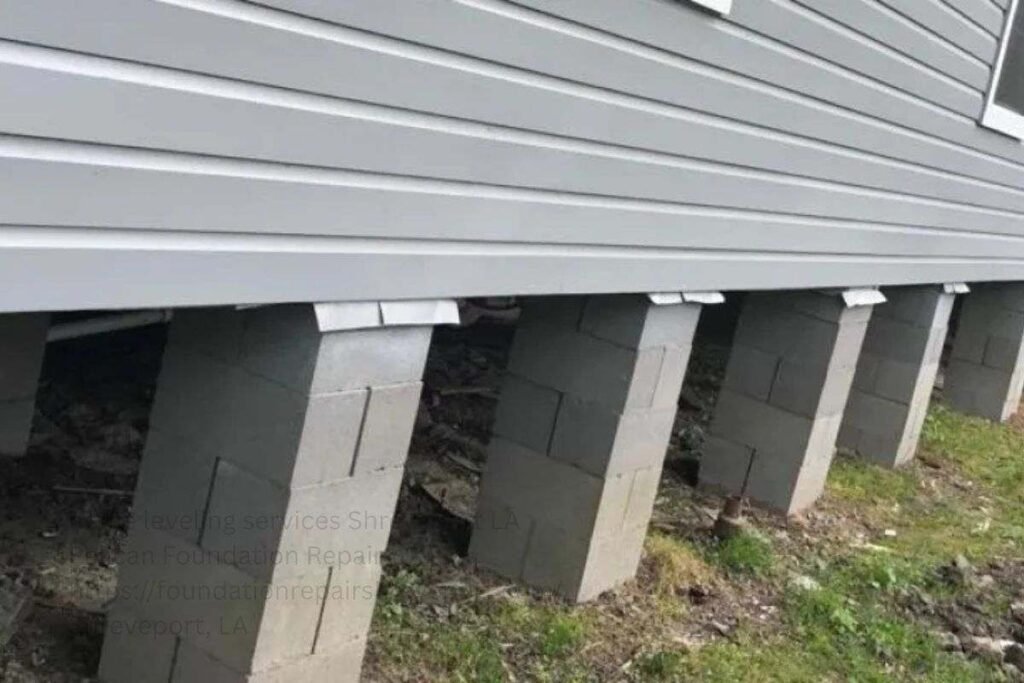
You can stay because the work happens outside your living space. Steel push piers and helical piers go in from pits dug around the perimeter, and the hydraulic jacks sit in those same pits. The crew works around the edges of the house, not through your living room, and inside you feel the vibration as piers are driven and the house is lifted.
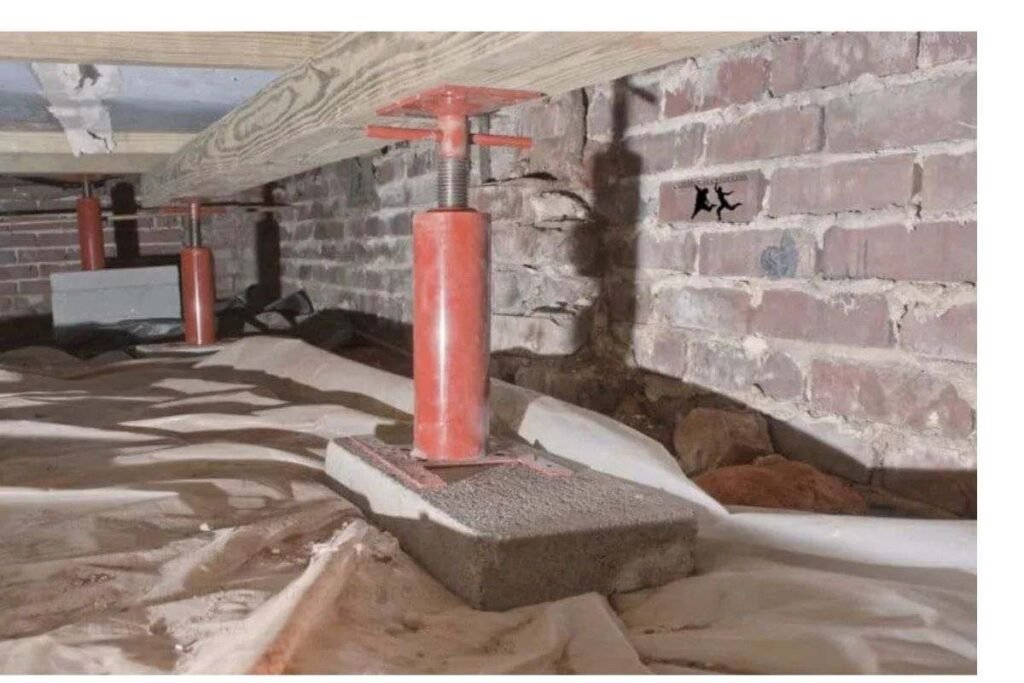
House leveling on a pier and beam home works the same way, from below rather than from outside. The crew works in the crawl space, adjusting or replacing piers, beams, and shims under the floor, while you live above it. Noise and vibration come through the floor, but the work never enters your rooms. Slab work is the exception: foam injection and mudjacking mean drilling small holes through the slab and pumping material underneath, so crew and equipment enter the rooms being lifted. Even then, it moves room by room.
Utilities are the other reason staying works. Water, power, and gas normally stay on during pier and leveling work, with brief interruptions rather than full-day shutoffs. Water may be off for a stretch while the crew checks the plumbing before and after a lift, since lifting moves the pipes, and in older homes a brittle pipe can crack. That is a known risk, and a good contractor keeps a plumber on call. See our post on whether you can live in the house during foundation repair, and for the timeline, our post on how long foundation repair takes.
When You Would Need to Move Out
There are real cases where leaving is the right call, and your contractor should name them first. The most common is extensive structural work: a partial foundation wall rebuild, a major beam replacement, or a job where the crew must open up large sections of the house to reach the damage. When floors are removed, walls are opened, or the house sits on temporary shoring, it is not a safe or comfortable place to live.
Plumbing is the second reason. If the repair means disconnecting water or sewer lines for more than a few hours, or if the lift is expected to break old cast-iron or clay pipes that must be replaced first, you may need to stay elsewhere until the plumbing is back. The same applies to gas: if a line near a pier must be moved or shut off, the house may be without heat or hot water, which matters more in a cold snap.
The third reason is safety, and it is the one the contractor decides, not you. If the inspection finds a wall or floor section unstable enough to be a collapse risk during the work, the crew will tell you to stay out until it is secured. This is rare. If your contractor tells you to leave for safety reasons, take it seriously, and ask for the reason in writing with the plan for making the house safe again. For the repair types, see our house leveling service and slab foundation repair service pages.
| Situation | Do you need to leave? | How long |
|---|---|---|
| Steel push pier or helical pier job | No, work is outside the house | Stay throughout, 2 to 5 days |
| House leveling, pier and beam home | No, work is in the crawl space | Stay throughout, 2 to 5 days |
| Slab foam injection or mudjacking | No, work moves room by room | Use other rooms while one is worked on |
| Partial wall rebuild or major beam work | Often yes, floors or walls are opened up | Days to a week, ask for the plan in writing |
| Plumbing or gas disconnected | Yes, if water or gas is off for a day or more | Until service is restored |
| Safety call by the crew | Yes, no choice in this case | Until the crew says the house is safe |
What Daily Life Looks Like While Crews Work
Staying home does not mean the days feel normal. The noise is the main disruption: hydraulic equipment, digging, and drilling are loud, and the sound carries through the floor and walls. Vibration can unsettle pets and small children and rattle dishes. If you work from home, plan calls around the noisiest hours, and if you have a baby who naps, ask the crew about the schedule so you can plan around them.
Dust is the second disruption. Digging and drilling stir it up even with the crew’s precautions, and if anyone in the house has dust sensitivity, keep the work rooms closed off and run an air purifier; the U.S. Environmental Protection Agency’s indoor air quality resources explain how airborne dust can affect breathing indoors. The crew should protect floors with drop cloths, or cover them yourself. Water is the third disruption: plan showers and laundry around it, fill a few jugs beforehand, and know where the water shutoff is, because water may be off for a stretch during the lift.
Access is the part people forget. The crew needs a clear path to the work area and a clear driveway for trucks. Move cars out of the driveway, unlock the gates, and keep children and pets away from open pits, hoses, and machinery. Dogs should stay inside or with a friend: open gates and pits are hazards, and a nervous dog is a risk to the crew. Keep cats in a closed room with food, water, and a litter box. Our checklist is in the post on how to prepare your home for foundation repair.
Special Cases: Kids, Pets, Elderly Family, and Working From Home
Children and elderly family change the calculation: noise, dust, and disruption hit them harder. A toddler who naps twice a day will not nap through hydraulic equipment, and an elderly parent with a heart condition or breathing trouble may find the dust and vibration genuinely stressful. The sensible plan is often a hybrid: stay home for the quieter phases, like the inspection and the backfill, and spend the noisiest days with family or at a hotel.
Pets need a plan of their own. Dogs used to a yard will be stressed by pits, equipment, and strangers, and can be a hazard to the crew if they get loose near an open pit. The safest option is a friend’s house, a kennel, or a closed room with the door shut. Cats are usually easier: they can stay in a closed room with food, water, and a litter box, away from the work areas and open crawl space hatches. Vibration can stress fish and birds too, so move tanks and cages to the quietest room.
Working from home is the most common special case, and it is manageable with a little planning. Ask the crew for the daily schedule the night before, and plan calls for the morning before the heavy work starts or the evening after it stops. A room on the far side of the house, with the door closed, is usually quiet enough for calls, and noise-canceling headphones do the rest. If you have video calls with clients, tell the crew: they will usually schedule the loudest work around your meetings if you ask the day before.
How to Decide: Questions to Ask Your Contractor
Decide whether to stay or leave before the crew arrives, and base it on your contractor’s answers, not guesswork. The most important question is the simplest: “Do I need to move out for any part of this job, and if so, when?” A contractor who has done this before will answer directly, because the answer is in the plan. If the answer is vague, or the contractor says “we will see on the day,” treat that as a warning sign and ask for the plan in writing.
Next, ask about the details that decide whether staying is comfortable. Which days will be loudest, and will the water be off, and for how long? Will the crew need access through the house, and will any rooms be unusable? What happens to the plumbing during the lift, and will a plumber be on call? What does the crew do at the end of each day: backfill the pits, secure the site, and leave the house safe overnight, or leave the site open until the job is done?
Finally, ask about the unexpected. What happens if a pipe breaks during the lift, and who pays for the plumber? What if the crew finds more damage than expected? What if the weather turns and the job runs long? A contractor who answers plainly is one you can trust, and one who dodges them is telling you something too. The answers should be in the written agreement, with the schedule, the price, and the warranty. Pelican Foundation Repair offers a 20-year structural warranty on qualifying repairs, and the agreement should say what it covers before the work starts.
- Ask directly: “Do I need to move out for any part of this job, and if so, when?”
- Ask which days will be loudest and whether water will be off, and for how long.
- Ask whether any rooms will be unusable and whether the crew needs access through the house.
- Ask what happens if a pipe breaks during the lift and who pays for the plumber.
- Ask how the site is secured each night so the house is safe to live in.
- Get the answers in the written agreement, with the schedule, price, and warranty.
Frequently Asked Questions
Do you have to move out during foundation repair?
Usually not. Most pier installation and house leveling work happens outside the house or in the crawl space, and homeowners stay in the home while the crew works. You would need to leave only for extensive structural work, plumbing disconnects, or a safety call by the crew.
How long does foundation repair take if I stay in the house?
Most pier and leveling jobs take two to five working days, and you can stay in the house for all of them. The noisiest days are usually the pier driving and the lift, and many homeowners plan to be out during working hours on those days and back in the evening.
Is it safe to sleep in the house during foundation repair?
Yes, in almost all cases. The crew secures the site at the end of each day, backfills or covers open pits, and leaves the house safe to live in overnight. If the crew tells you not to sleep in the house for safety reasons, take that seriously and ask for the reason in writing.
Will my water be turned off during foundation repair?
It may be off for a stretch during the lift, because lifting a house moves the pipes and the crew checks the plumbing before and after. Fill a few jugs before the work starts, plan showers and laundry around the schedule, and ask the crew in advance when the water will be off.
Can I work from home during foundation repair?
Yes, with planning. Ask the crew for the daily schedule the night before, plan calls for the quieter hours, and work from a room far from the crew with the door closed. Tell the crew about video calls with clients, and they will usually schedule the loudest work around your meetings if you ask the day before.
What about pets during foundation repair?
Keep dogs inside or with a friend, because open gates, pits, and equipment are hazards, and keep cats in a closed room away from the work areas with food, water, and a litter box. Move fish tanks and bird cages to the quietest room in the house, because vibration can stress fish and birds.
What should I do if my contractor says I need to move out?
Ask for the reason in writing and for the plan that covers it: which days, what work makes the house unlivable, and when you can return. If the reason is extensive structural work or a plumbing disconnect, plan for a few days elsewhere. If the reason is a safety call, take it seriously and follow the crew’s instructions.
Pelican Foundation Repair
6118 Fairfield Ave, Shreveport, LA 71106, USA
318-585-2003
https://foundationrepairshreveport.com/