Crawl Space Encapsulation Before Winter in Shreveport, LA: Why Now Beats January
Seal and dry your crawl space before the wet winter arrives, so winter rain does not sit under your house. Here is what to check and what encapsulation covers.
Yes, late fall is the best time to encapsulate a crawl space in Shreveport. Sealing the ground, closing the vents, and adding a dehumidifier before the wet winter keeps rain and damp air out from the start, instead of trapping moisture under the house all season.
Searches for “crawl space encapsulation near me” rose 150% across the United States in the past seven days, and the Shreveport metro index sat at 54. Homeowners want it sealed before the rain settles in.
Frost showed up this morning across the northern ArkLaTex, with a light freeze in south Arkansas at daybreak on Saturday, November 14. The Shreveport town low stayed near 41 to 42 degrees with no town freeze. Rain returns tonight and Sunday, November 15, with about 0.64 inches expected, and NOAA’s October 15 winter outlook favors above-normal rain for Louisiana from December through February, with a very strong El Nino in place. Seal it now, while it is still dry.
Why Winter Rain Hits a Shreveport Crawl Space So Hard
Shreveport winters are wet before they are cold, and that is what makes them hard on a crawl space. Gulf humidity hangs in the air, and our expansive clay soil holds water like a sponge once the rain starts. Yards in South Highlands and Broadmoor sit on the same clay, but slope and drainage decide which crawl space stays dry.
Winter rain does not drain fast here. The clay swells when it gets wet, and water pooling against a foundation wall finds its way through vents, gaps, and cracks into the crawl space. Once it is under the house, it has nowhere to go, so a puddle from one storm can still be sitting there when the next one arrives. Near Cross Lake and along the Red River, it shows up first.
That is why timing matters. Sealing a dry crawl space in November is straightforward work. Sealing a wet one in January means pumping water out and drying the soil first, while damp air rises through the floors all the while.
Cold Mornings Show the Problem Early
A cold morning is a useful test. When the air drops into the low 40s, warm damp air under the house meets cold ducts, pipes, and joists, and moisture condenses on them like sweat on a glass. That damp feeds mold staining and makes floors feel cold under bare feet. If floors feel colder on one side of the house, or a musty smell shows up on the first cold morning, the crawl space is telling you something. Listen now, while the fix is still a planned job.
What Crawl Space Encapsulation Actually Covers
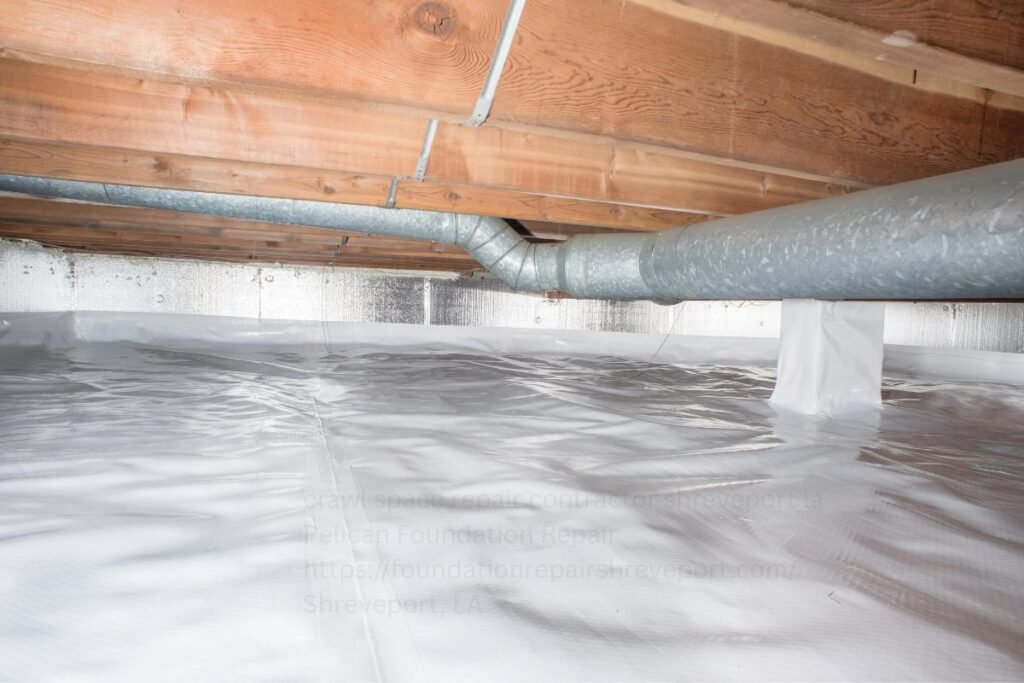
Crawl space encapsulation before winter in Shreveport means sealing the whole space as one system. A heavy vapor barrier covers the dirt floor and runs up the walls, with every seam sealed tight. The piers get wrapped, the vents get closed and sealed, and a dehumidifier keeps the air dry through the wet months. Done right, the ground under the house stays dry even when the yard is soaked.
| Part | What it does | Why it matters before winter |
|---|---|---|
| Vapor barrier on the ground | Blocks moisture rising from wet soil | Wet winter soil gives off damp air for months |
| Sealed seams and piers | Closes the gaps where damp air slips past the barrier | One open seam can undo a whole barrier |
| Closed and sealed vents | Stops cold, humid air from flowing under the house | Open vents act like open windows under your floors |
| Dehumidifier | Pulls moisture out of the sealed air day after day | The barrier stops new moisture; the dehumidifier handles the rest |
| Drainage and sump setup | Moves water that gets in back out again | A sealed space with no way out for water is a sealed puddle |
Encapsulation is not a structural repair, and it is not a fix for standing water on its own. Pooling water has to be dealt with first, and if joists or piers are damaged, a licensed structural engineer can confirm what needs repair before anything gets sealed up. The crawl space encapsulation service page lays out how Pelican approaches the full system.
What to Check First Before You Seal Anything
Sealing a crawl space over a problem traps the problem inside. A good look before the work starts takes less than an hour, and it decides whether encapsulation can start right away.
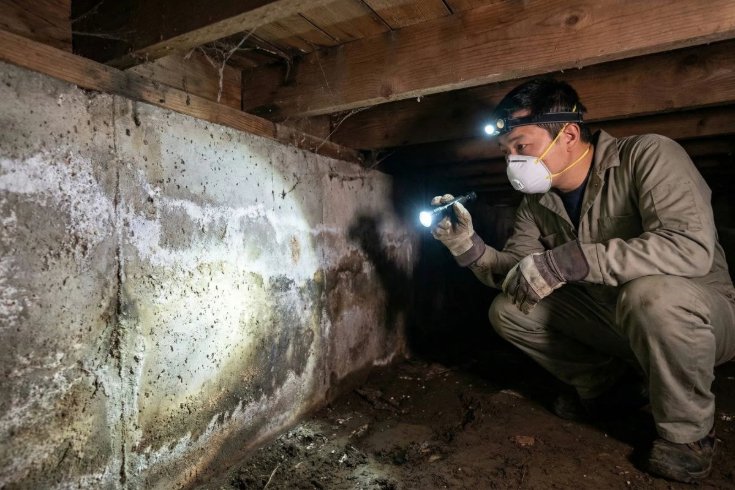
Start at the access door with a flashlight. Look for standing water first, then for the signs that water has been there before: dark stains on the piers, mud lines on the walls, and a vapor barrier that is torn or missing. Check the vents from inside and out; a vent stuck open, cracked, or missing its cover is an open door for cold, wet air. Then look up at the joists and subfloor for staining, soft spots, or a musty smell.
- Standing water or wet soil after rain.
- Open, broken, or missing vents, or vents with no covers.
- A torn or missing vapor barrier, or one pulled away from the walls.
- Water stains or mud lines on walls, piers, or joists.
- A musty smell stronger inside the crawl space than outside it.
- Gutters or downspouts dumping roof water at the foundation.
- Sagging insulation or soft, stained wood under the floors.
If you find standing water or soft, stained wood, do not seal over it. Get an expert inspection first, so the cause gets fixed before the barrier goes down. The crawl space repair service page covers the repairs that often come before encapsulation.
How a Winter-Ready Encapsulation Comes Together
A winter-ready encapsulation follows the same order on every house. First the crawl space gets dried out, and any standing water gets pumped away. Then the drainage gets fixed: gutters and downspouts get pointed away from the house, low spots near the foundation get regraded, and a sump setup goes in if the house needs one. Only then does the vapor barrier go down, seams sealed and piers wrapped, and the vents get closed and sealed.
The dehumidifier goes in last, sized to the space, with a drain line so it can run without anyone emptying a bucket. Then comes a final check: seams tight, vents sealed, the dehumidifier running, and the humidity dropping. A typical Shreveport home takes a few days, depending on size and how much drying and drainage work comes first.
Once it is done, the upkeep is simple, and it is different work from the install itself. Our guide to crawl space encapsulation maintenance covers what to check each season. Winterize the crawl space now, keep up the simple checks after, and it stays dry through the wettest months.
The Stack Effect: Why Winter Air Makes Crawl Space Moisture Worse
Warm air rises, and as it rises out through the top of a house in winter, it pulls replacement air in from below. That pull is called the stack effect, and the air it pulls in comes straight from the crawl space. In summer the pull is weak, because inside and outside air are close. In winter the pull is strong, because warm air rises fast and cold air rushes in to replace it.
That means damp crawl space air does not stay in the crawl space in winter. It gets pulled up through gaps around pipes, wires, and ductwork, into the rooms where your family lives. The floors feel cold because cold air is being drawn in below them, and the house smells musty because musty air is being drawn up through them. A dehumidifier in the living room cannot fix that, because the damp air keeps coming from below, all winter long.
- Cold floors in winter, even with the heat running.
- A musty smell indoors on cold, damp mornings.
- Condensation on windows or clammy air on the ground floor.
- Higher indoor humidity than the weather would suggest.
- Dust and odors that seem to rise through the floors.
Sealing the crawl space breaks that chain at the source. Close the vents, seal the ground, dry the air, and the stack effect starts pulling in dry air instead of damp air. Our post on the stack effect and crawl space moisture explains the airflow.
Drainage, Vents, and Dehumidifiers: The Support System
Encapsulation gets the attention, but drainage, vents, and dehumidifiers do quiet work. A downspout that dumps roof water at the foundation feeds the crawl space every time it rains, and no barrier can keep up with a steady supply of water from above. Extend the downspouts, check that the ground slopes away from the house, and clear gutters before the wet season.
Vents need a decision, not a guess. Open vents made sense when houses were built to breathe through the crawl space, but in a wet Louisiana winter they let cold, humid air flow straight under the floors. Closing and sealing them is part of the encapsulation, and it only works with the barrier and dehumidifier in place too. A sealed vent with no dehumidifier traps damp air inside, and a dehumidifier with open vents dries the whole neighborhood. The three parts work as a set, and our crawl space dehumidifier guide covers how to size one for your space.
When you are ready to move, start with the Pelican Foundation Repair homepage and book an expert inspection. A specialist will look at the crawl space, the drainage, and the vents together, and give you a written estimate naming the work, the materials, and what the 20-year structural warranty covers on qualifying repairs. The estimate depends on the size of the space, how much water is getting in, and how much drainage work comes first, which is why it follows an inspection and not a phone guess. For the weather picture behind the timing, the NWS Shreveport office page carries the local forecast and the NOAA Climate Prediction Center carries the seasonal outlooks.
Frequently Asked Questions
Should I encapsulate my crawl space before winter in Shreveport?
Yes, late fall is the best time. Sealing the ground, closing the vents, and adding a dehumidifier before the wet winter keeps rain and damp air out from the start. Doing it before the rain settles in is simpler work than doing it in January, when the crawl space may already be wet.
How much does crawl space encapsulation cost in Shreveport, LA?
It depends on the size of the crawl space, how much water is getting in, and how much drainage work comes first. A small, dry space is a simpler job than a large space with standing water. Your exact price comes from a written estimate after an expert inspection.
Can I encapsulate a crawl space that has standing water?
No, not until the water is dealt with first. Standing water has to be pumped out, the drainage fixed, and any damaged wood checked, before the vapor barrier goes down. Sealing over standing water traps it under the barrier, where it keeps feeding damp air all winter.
Do I need to close my crawl space vents in winter?
Yes, closing and sealing the vents is part of a full encapsulation, but only when the vapor barrier and dehumidifier are in place too. Open vents in a wet Louisiana winter let cold, humid air flow straight under the floors. A sealed vent with no dehumidifier traps damp air inside.
Will encapsulation stop musty smells in my house?
In most cases, yes, when the smell is coming from the crawl space. Winter air pulls damp crawl space air up through the floors, and sealing the ground, closing the vents, and drying the air breaks that chain at the source. If the smell stays, another source inside the house may be at fault.
How long does crawl space encapsulation take?
A typical Shreveport home takes a few days, depending on size and how much drying and drainage work comes first. The barrier, seams, and vents go in after the space is dry and the drainage is fixed, and a final check confirms the dehumidifier is running and the humidity is dropping.
When should I call a specialist about my crawl space?
Call when you see standing water, when vents are broken or missing, when floors feel cold or smell musty on winter mornings, or when a vapor barrier is torn or missing. Get an expert inspection to find out whether encapsulation can start right away or whether other work has to come first.
Pelican Foundation Repair
6118 Fairfield Ave, Shreveport, LA 71106, USA
318-585-2003
https://foundationrepairshreveport.com/