 Skip to main content

Crawl Space Dehumidifier vs Encapsulation: Do You Need Both?
A dehumidifier dries crawl space air, while encapsulation seals the space itself. In humid Shreveport, most homes need both—here is how to figure out what your crawl space really needs.
For most Shreveport homes, yes—you need both. A dehumidifier controls the air, but it cannot stop Gulf moisture, rain runoff, and ground vapor from entering an open crawl space. Encapsulation seals the space first, then the dehumidifier keeps humidity in the safe zone. Either one alone usually falls short in Louisiana.
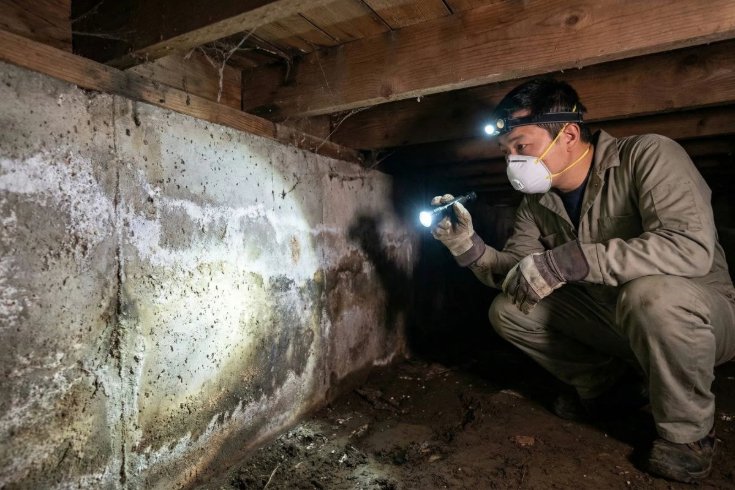
What a Crawl Space Dehumidifier Actually Does
A crawl space dehumidifier is a rugged, compact unit built to run in tight, damp spaces. It pulls water vapor out of the air and drains it away through a hose or condensate pump. Think of it as climate control for the air under your house.
These units are not the same as the portable dehumidifier you might run in a bedroom. Crawl space models are made for low clearances, cooler air, and long run times. A good unit is sized to the square footage of your crawl space so it can keep up on the muggiest August afternoon.
How It Works
Warm, damp air gets drawn into the unit. Inside, cold coils condense the moisture into water, which flows out through a drain line. The drier air is then pushed back into the crawl space. Over a few days of steady running, the relative humidity under your home drops into a safer range.
The target most pros aim for is keeping relative humidity below 60 percent. Above that line, mold growth, wood rot, and musty smells get a foothold. The LSU AgCenter notes that the key to preventing mold and decay fungi is proper moisture management—and a dehumidifier is one of the most direct tools for it.
Placement matters. The unit should sit on a level spot near the center of the crawl space, away from the access door, with its drain line routed to a sump pump or daylight drain. It also needs a dedicated outlet so it is not sharing a circuit with a sump pump or heat tape.
What a Dehumidifier Cannot Do
Here is the honest part. A dehumidifier treats the air, not the sources of moisture. It cannot stop groundwater from seeping through a foundation wall. It cannot close open vents that funnel humid outside air under your house. And it cannot dry a crawl space that takes on standing water every time it rains.
In an open, vented crawl space—the kind found under many older homes in Highland, Broadmoor, and Cedar Grove—a dehumidifier works overtime. It is trying to dry the outdoors, because every vent is an open door to Gulf humidity. The unit runs constantly, wears out faster, and never quite wins.
- It dries air, but it does not seal air leaks or open vents.
- It removes vapor, but it does not stop liquid water intrusion.
- It helps against mold-friendly humidity, but it does not remove mold that is already growing.
That is why a dehumidifier alone is often a half-measure in northwest Louisiana. It is a strong second step, but a weak first one.
What Crawl Space Encapsulation Actually Does
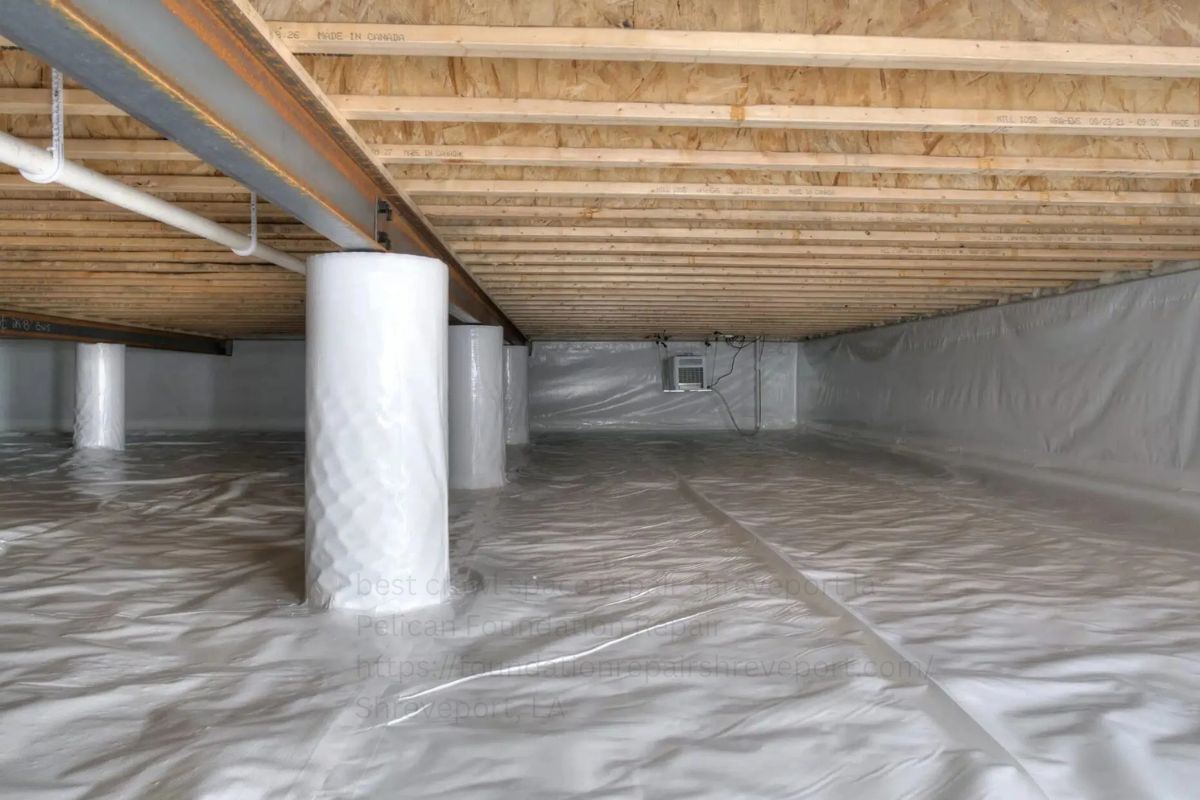
Encapsulation seals the crawl space off from the ground and the outside air. Heavy-duty vapor barrier sheeting covers the floor and gets sealed up the foundation walls. Vents are closed off, seams are taped, and the space is isolated from the damp earth and humid Louisiana air around it.
The result is a clean, dry, semi-conditioned space that behaves more like a short basement than a dirt pit. Ductwork, pipes, and floor joists all live in far kinder conditions afterward.
The Main Layers of an Encapsulation
A proper encapsulation has several parts working together. The ground gets covered with thick, reinforced vapor barrier—lapping up piers and walls so no bare earth is left exposed. The foundation walls get sealed with barrier material too, and every seam is taped airtight.
Vents to the outside are sealed shut. Any gaps around pipes, wires, and the access door get closed. If the crawl space takes on water, a sump pump and interior drainage go in first, because sealing a space that floods is a recipe for trapped water.
Our team at Pelican Foundation Repair designs each system around the home. You can read more about our crawl space encapsulation services to see what a full system includes.
What Changes Once the Space Is Sealed
Sealing cuts off the two biggest moisture sources: ground vapor rising from the soil and humid air pouring through vents. Indoor humidity in the living space often drops. Musty smells fade. Floors feel less clammy in summer, and the HVAC does not have to fight as hard.
But encapsulation alone does not actively dry the air. A sealed crawl space still holds some trapped moisture, and small amounts of humidity still migrate through concrete walls. That leftover humidity is exactly what a dehumidifier is built to handle. This is why the two are usually installed as a pair, not as rivals.
Dehumidifier vs Encapsulation: Side by Side
It helps to see the two options next to each other. Neither is “better” in the abstract—they solve different halves of the same moisture problem. The question is which half your crawl space is losing.
| Factor | Dehumidifier Only | Encapsulation + Dehumidifier |
|---|---|---|
| What it fixes | Humid air inside the crawl space | Moisture sources and the air, together |
| Open vents | Left open—humid air keeps pouring in | Sealed shut and airtight |
| Ground vapor | Still rising from bare soil | Blocked by sealed vapor barrier |
| Standing water | Not addressed—unit can be damaged | Handled with drainage and sump pump first |
| Energy use | Runs harder in a leaky, vented space | Runs less in a sealed space |
| Mold risk | Reduced, but surfaces still get damp | Much lower—sources are cut off |
The table tells the story. A dehumidifier manages symptoms. Encapsulation removes causes. Together, they give you a dry, stable space that stays dry without the equipment straining.
Cost is the obvious follow-up question. A dehumidifier alone costs less up front, while full encapsulation is a bigger project. But many Shreveport homeowners find they spend the dehumidifier money twice: once for the unit, and again for the encapsulation they end up needing anyway. If you are worried about mold in your crawl space, treating only the air is usually not enough.
Do You Need Both in Shreveport?
Short answer: in most cases, yes. Shreveport sits in the heart of Gulf humidity. Summers are long and saturated, spring brings heavy rain seasons, and our drought-then-deluge cycles keep the expansive clay soil around your foundation in constant motion. Open vents that might “work fine” in a drier state are a liability here.
Walk through neighborhoods like South Highlands, Broadmoor, and Highland, and you will see plenty of raised homes with vented crawl spaces built decades ago. Those vents were designed on the theory that outside air would dry the space out. In Caddo Parish, the outside air is the wettest thing around for half the year. Venting a crawl space here is like trying to dry a sponge with a wet towel.
The soil makes it worse. The shrink-swell clay under much of Shreveport—from 71106 near our Fairfield Avenue office out to 71118 and across the river in Bossier Parish—holds water against foundation walls after storms. That moisture wicks through concrete and evaporates into the crawl space, day after day. No dehumidifier can outrun a constant feed of ground vapor.
Then there is the Red River and Cross Lake effect. Low-lying areas near the water table stay damp longer after rain. If your crawl space sits in one of these zones, encapsulation is not a luxury—it is the only way to break the cycle. The LSU AgCenter has long advised covering crawl space ground with plastic sheeting and managing moisture at the source, because humid Louisiana air alone is enough to feed mold.
There is one more local angle worth knowing. InterNACHI’s crawl space inspection guidance lists ground moisture evaporation, bulk water intrusion, and condensation from humid air as the three main moisture sources. A sealed, dehumidified crawl space addresses all three. You can review their crawl space inspection standards to see what trained inspectors look for.
When a Dehumidifier Alone Is Enough
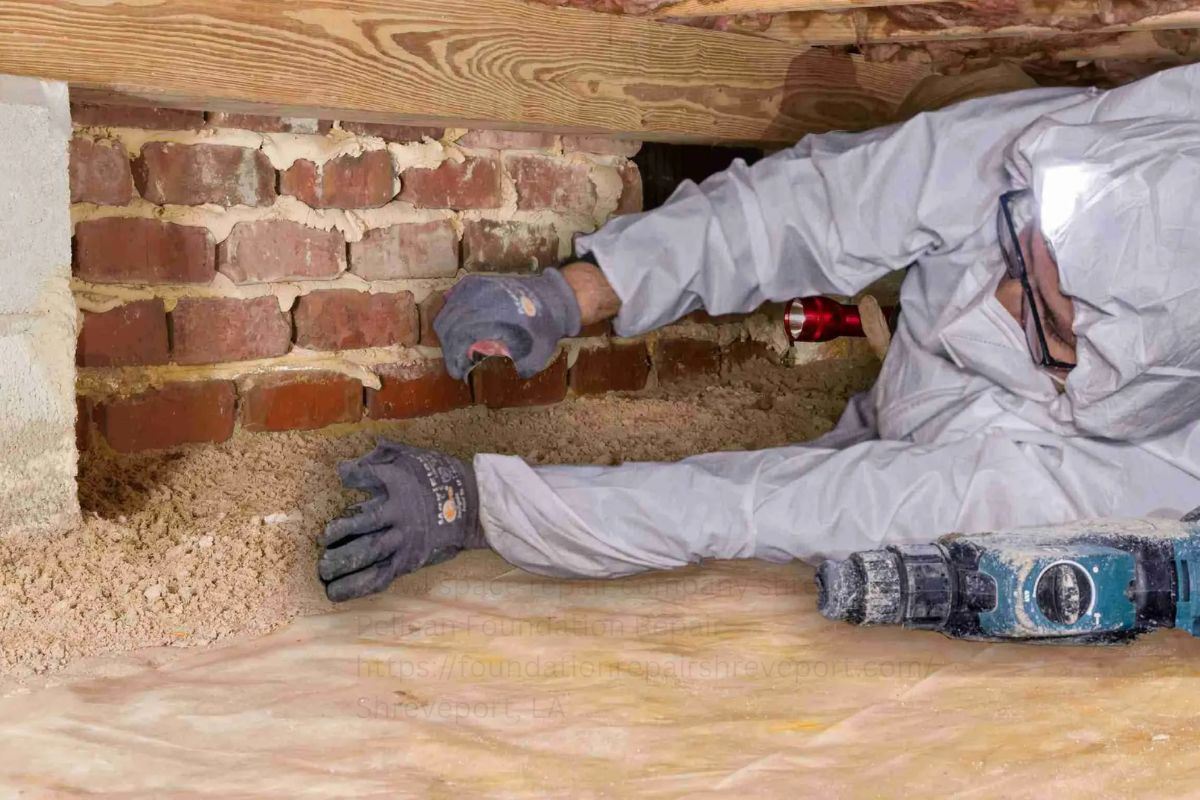
There are real cases where a dehumidifier by itself does the job. If your crawl space already has a sealed ground cover in good shape, vents that are closed or minimal, and no history of standing water, a dehumidifier may be all you need to pull humidity down into the safe zone.
Newer homes with partial moisture protection sometimes fit this bill. So do homes on higher ground with good grading, where rainwater runs away from the foundation instead of toward it. If the space smells fine, the wood looks clean, and a humidity reading hovers just above 60 percent, a standalone unit can close the gap.
The honest test is simple: run the dehumidifier for a few weeks and watch the readings. If humidity holds steady below 60 percent and the unit cycles normally, you are in good shape. If it runs nonstop and the numbers barely budge, the space is telling you it needs sealing first. Our guide to encapsulation vs. a simple vapor barrier explains why a thin sheet of plastic alone rarely finishes the job.
Signs Your Crawl Space Needs Attention Now
Some warning signs mean you should not wait for the next rainy season. If you spot any of these, get under the house—or better yet, get someone under there who knows what to look for.
- Musty smells indoors, especially when the AC kicks on. Crawl space air migrates upstairs through gaps around pipes and ducts.
- Standing water or mud in the crawl space after rain. This needs drainage work before anything else.
- Sagging or bouncy floors above the crawl space, which can mean moisture-softened joists.
- Visible mold or mildew on joists, subfloor, or insulation. The LSU AgCenter’s mold guidance stresses that moisture control is the real fix.
- Condensation on ductwork or pipes in summer—a sign the air down there is saturated.
- Pest activity, since damp crawl spaces attract termites, roaches, and rodents.
Any one of these is reason enough for a free inspection. Catching moisture damage early is always cheaper than repairing rotted framing later. We will come out, take real readings, and tell you straight whether a dehumidifier, encapsulation, or both is the right call for your home.
Frequently Asked Questions
Do I really need both a dehumidifier and encapsulation?
In most Shreveport homes, yes. Encapsulation seals out ground vapor and humid outside air, and the dehumidifier handles the leftover humidity trapped inside. Each one covers the weakness of the other, and together they keep the space reliably below 60 percent relative humidity.
Can I just run a dehumidifier in a vented crawl space?
You can, but it will struggle. Open vents let Gulf humidity pour in as fast as the unit removes it, so the dehumidifier runs constantly and wears out sooner. Sealing the vents—full encapsulation—is what lets the unit actually win.
Will encapsulation alone keep my crawl space dry without a dehumidifier?
It gets you most of the way there. Encapsulation blocks the big moisture sources, but some humidity still migrates through concrete walls and gets trapped inside. A dehumidifier polishes off that remainder and keeps readings stable through the muggiest months.
How do I know which one my crawl space needs first?
Look at the sources. Standing water, bare dirt, and open vents point to encapsulation first. A sealed space with clean wood and humidity hovering just over 60 percent may only need a dehumidifier. A free inspection with real humidity readings takes the guesswork out.
Does encapsulation help with mold that is already there?
Encapsulation stops the moisture that feeds mold, but existing growth should be remediated first. Sealing mold inside without cleaning it traps the problem. Any good contractor addresses visible mold and damaged wood before the vapor barrier goes down.
What humidity level should I aim for under my house?
Keep relative humidity below 60 percent, and ideally in the 45 to 55 percent range. Above 60 percent, mold, dust mites, and wood decay get comfortable. A simple hygrometer in the crawl space lets you check the number anytime.
How much does encapsulation cost compared to just a dehumidifier?
A dehumidifier costs less up front, while full encapsulation is a larger project priced by the size and condition of the space. Because every crawl space is different, we price both options during a free inspection so you can compare real numbers for your home instead of guessing.
Pelican Foundation Repair
6118 Fairfield Ave, Shreveport, LA 71106, USA
318-585-2003
https://foundationrepairshreveport.com/