Slab Foundation Repair in Minden, LA: Methods, Signs, and Clay-Soil Factors
Minden slab foundations face a slow, quiet problem: clay soil that swells and shrinks with the seasons. This guide covers the signs, the repair methods, and what to do next.
Slab foundation repair in Minden, LA usually starts with an expert inspection that finds why the slab moved, then a repair method matched to the cause, such as foam injection, mudjacking, or steel push piers. Most slab problems here trace back to clay soil under the house that shifts with wet and dry weather.
Signs Your Minden Slab Is Moving
A slab foundation is a thick concrete pad poured right on the ground, with the house sitting on top. When the soil under that pad shifts, the slab moves with it, and the house shows the strain in small ways first.
Cracks in the Slab and the Floor
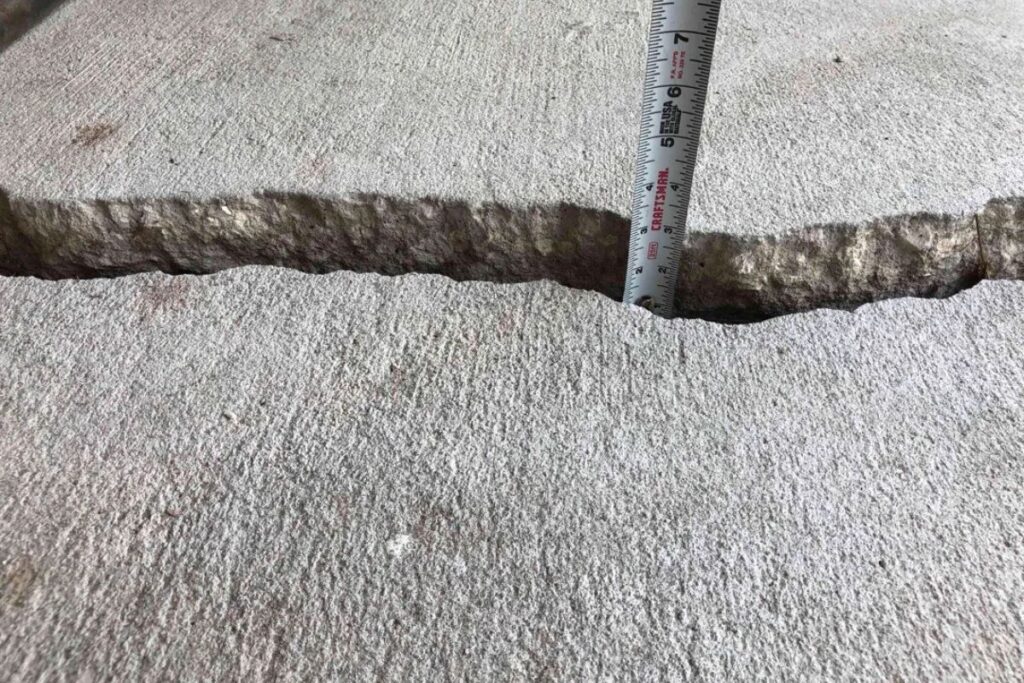
The most direct sign is a crack you can see in the concrete. Look at the slab in the garage or pull back a rug, and a crack running across the floor is worth a closer look. Thin hairline cracks are common as concrete cures and ages, and a stable line unchanged in a year is often nothing to worry about. The cracks that matter are wide enough to catch a fingernail, keep growing, or come back after you patch them. If one side sits higher than the other, or you can fit a coin into the gap, get it checked.
Doors, Windows, and Walls That Shift
When a slab moves, the whole house rides along, and doors and windows are usually the first to complain. A bedroom door that used to swing shut now needs a push, and a kitchen window sticks in the same corner every summer. Humidity does swell wood in Louisiana, but a door that sticks in the same spot through wet and dry months points to the house itself moving. Look at the walls too: cracks running from a door frame toward the ceiling, or baseboards pulling away from the wall, are classic signs. Cracked grout or loose tiles in a straight path often follow a slab crack below.
- Cracks across the slab floor, in the garage, or under pulled-back flooring.
- A crack where one side of the slab sits higher than the other.
- Doors or windows that stick in the same spot, season after season.
- Diagonal cracks from door or window corners toward the ceiling.
- Baseboards or trim pulling away from the wall.
- Cracked tile or grout lines following a straight path across a room.
- Floors that slope, feel uneven, or bounce underfoot.
Why Minden Clay Soil Is Hard on Slabs
Minden sits in Webster Parish on the same kind of expansive clay soil that causes foundation trouble across northwest Louisiana. Expansive clay acts like a sponge: it swells when it soaks up water and shrinks when it dries out, and it does both in the same year. A slab poured on that soil rides the swell and the shrink, and over time the movement adds up. Older neighborhoods near downtown Minden and the Germantown Colony Museum often have slabs poured decades ago, when drainage standards were looser.
Webster Parish Clay, Wet Winters, and Hot Summers
North Louisiana weather gives clay soil a hard workout. Winter and early spring bring steady rain that keeps the ground wet for weeks, and the clay swells and pushes up on the slab. Then summer heat dries the top layer of soil hard, and the clay shrinks and pulls away, leaving gaps underneath. The National Weather Service office in Shreveport tracks rain and drought for the region. See the National Weather Service Shreveport page for current local conditions. Houses near Lake Bistineau and the low ground east of town feel the wet side hardest.
Older Homes, Older Slabs, and Drainage That Never Got Fixed
Minden has a lot of older housing stock, and many of those houses were built before modern drainage habits were common. Gutters that dump water beside the slab, a yard that slopes toward the house, and flower beds piled against the foundation all keep one side wetter than the other. When one side swells and the other dries, the slab twists, and that twist is what cracks walls and floors. A 1960s or 1970s slab in the 71055 ZIP code with no drainage work since then deserves a careful look.
How Slab Foundation Repair Works in Minden
There is no single fix for every slab problem, because the right fix depends on why the slab moved. A slab that settled into a gap needs lifting. A slab that cracked from soil movement needs the crack sealed. A slab that keeps sinking needs support driven down to stable ground. A good repair starts with finding the cause, then picks the method that fits it.
| Method | How it works | Best for | What to expect |
|---|---|---|---|
| Polyurethane foam injection | Foam injected through small holes expands under the slab and lifts it toward level | Sunken or uneven slabs, voids under concrete, garage floors and patios | Small holes, fast cure, usable the same day |
| Mudjacking | A cement slurry pumped through drilled holes fills voids and raises the concrete | Larger settled areas, driveways, and slabs needing a heavier fill | Larger holes than foam, heavier material, longer cure time |
| Steel push piers | Steel piers driven through the slab to stable soil or bedrock, then the slab is lifted onto them | Slabs that keep sinking, heavy settlement on one side | More involved work, done in sections |
| Epoxy injection | Epoxy injected into a crack bonds the concrete back together and seals it against water | Cracks needing sealing and bonding where the slab has not settled | A clean, narrow repair that seals the crack but does not lift the slab |
Polyurethane Foam and Mudjacking: Lifting a Sunken Slab
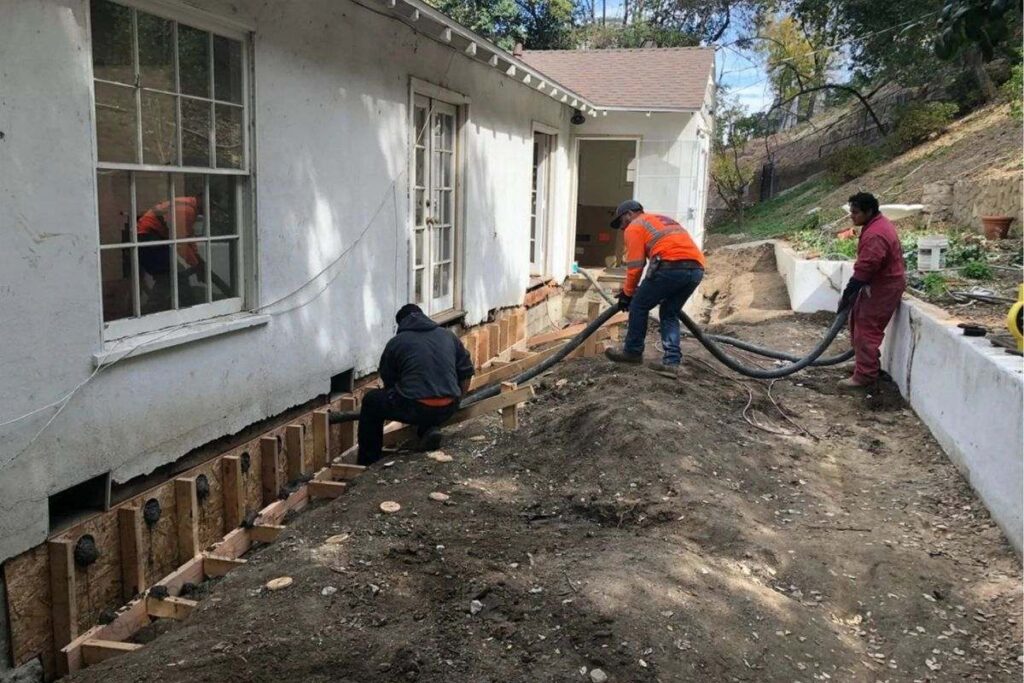
Foam injection and mudjacking do the same basic job in different ways: they fill the empty space under a settled slab and push it back up. Foam is the lighter, quicker option. The crew drills small holes, injects the foam, and watches the slab rise as the foam expands and hardens. Mudjacking uses a heavier cement slurry through larger holes, and it suits bigger settled areas. For a closer look at how these two methods compare on a real job, see our guide to how to fix a cracked slab foundation. The lift is done a little at a time, with the crew checking the level as they go.
Steel Push Piers: Support When the Soil Keeps Moving
When a slab keeps sinking, lifting it is not enough, because the soil underneath will just give way again. That is when steel push piers come in. The crew drives steel piers through the slab and down past the shifting clay to a layer that stays put, then the slab is lifted onto the piers and held there. It is the most involved of the four methods, and it deals with the cause, not just the symptom. For a full rundown of pier work, the slab foundation repair service page lays out how piers fit into a slab repair plan.
What Slab Repair Costs in Minden
Every homeowner asks what slab repair costs, and the honest answer is that it depends on the job, because no two slabs move for the same reason or by the same amount. A single cracked slab with no settlement is a small job, while a house that has sunk on one side and needs piers under a whole corner is a large one. The method matters too: sealing a crack takes far less time and material than driving piers, and foam work and mudjacking sit in between. Your exact cost comes from a written estimate after an expert inspection.
Cost Drivers That Change the Estimate
The biggest driver is the cause. A slab that settled because of a void under the concrete is a different job from a slab that is sinking because the clay keeps shrinking, and the fix for the second one takes more work. The second driver is how far the slab has moved. A small amount of settlement is a small lift; several inches is a bigger one, and the crew may need to work in stages. Access matters too: a slab under a garage floor is easy to reach, while one under a finished living room takes more care. Drainage adds to the scope when it is part of the problem, since water kept away from the slab keeps the repair from failing again.
- The cause: a void, shrinking clay, or poor drainage each point to a different fix.
- How far the slab has moved, and how much of the house is affected.
- The repair method: epoxy sealing, foam or mudjacking, or steel push piers.
- Access to the slab, and whether finished floors are in the way.
- Whether drainage work, grading, or gutter changes are needed too.
- The size of the house and the number of areas needing work.
What an Expert Inspection Looks Like in Minden
An expert inspection is the step that keeps a slab repair from being a guess. The specialist walks the house, inside and out, looking for the pattern behind the signs: where the cracks run, which doors stick, which way the floors slope, and how water moves around the house.
What the Specialist Checks
The inspection starts outside. The specialist walks the full perimeter of the house, looking at the slab edge where it meets the ground, the grade of the yard, the gutters and downspouts, and any place where water pools after rain. Inside, floor levels are checked room by room, cracks are measured and photographed, and doors and windows are tested. In the garage, the bare slab shows cracks with nothing hiding them. A licensed structural engineer may be brought in when the movement is severe or a lender asks for an engineering report.
What You Get in Writing
After the visit, you should get written findings: what moved, why it likely moved, and what repair method fits. The written estimate that follows should name the method, the areas to be worked on, the expected timeline, and the warranty terms. A buyer will want to see it later, and a repair with records reads very differently from one with none. For background on what a full inspection covers across the area, see our post on foundation repair in Minden, LA. If the slab is stable and the cracks are only cosmetic, the specialist should say so plainly.
Urgent Signs vs Signs You Can Watch in Minden
Not every slab sign needs a crew this week. Some need one now, and some need a photo, a date, and a recheck in a few months. A crack that appeared overnight after heavy rain, a floor that dropped suddenly underfoot, or water coming into the house through a slab crack are all call-now signs. A hairline crack unchanged in a year, or a door that sticks only in the wettest weeks, can be watched.
- Call now: a crack that appeared suddenly after heavy rain, or one that grows week to week.
- Call now: a floor that dropped suddenly, a leaning wall, or water entering through a slab crack.
- Call now: a door that worked yesterday and will not close today, or a chimney pulling away.
- Watch: a hairline crack unchanged in a year, with a photo and a date for the file.
- Watch: a door that sticks only in the wettest weeks, rechecked after the next dry spell.
- Always: keep a dated photo and a short note for every sign, and check it again in three to six months.
For a broader look at slab jobs across the region, see our post on slab foundation repair cost in Shreveport, LA. The Minden, LA service area page covers the towns and neighborhoods Pelican serves around Webster Parish, and the Pelican Foundation Repair homepage shows the full range of services.
Frequently Asked Questions
How do I know if my slab foundation in Minden needs repair?
Look for cracks across the slab floor, doors or windows that stick in the same spot, diagonal cracks from door corners, baseboards pulling away, and floors that slope or feel uneven. If several signs show up together, book an expert inspection.
What causes slab foundation problems in Minden, LA?
Expansive clay soil under the slab is the main cause. It swells when it soaks up winter rain and shrinks when it dries in summer heat, and that yearly swing moves the slab. Poor drainage and gutters that dump water beside the slab make the movement worse on one side.
What is the best method to repair a slab foundation in Minden?
It depends on the cause. Foam or mudjacking lifts a sunken slab back toward level, steel push piers support a slab that keeps sinking, and epoxy injection seals a crack where the slab has not settled. An expert inspection finds the cause first.
How long does slab foundation repair take in Minden?
Most slab jobs take a day or two, depending on the method and how much of the house is affected. Foam work often finishes in a day, while pier work takes longer because it is done in sections. Your written estimate should include the expected timeline.
How much does slab foundation repair cost in Minden, LA?
The cost depends on the cause, the repair method, how far the slab has moved, and the size of the house. A single crack seal is a small job, while piers under a settled corner are a larger one. Your exact cost comes from a written estimate after an expert inspection.
Can I live in my house during slab foundation repair?
Often yes, because most slab work happens at floor level or outside the house. The crew will tell you if a room must stay clear or if water will be off for a short time. Ask for the plan in writing, with dates and a contact name, before the work starts.
Will slab cracks come back after repair?
They can, if the cause is not fixed along with the crack. That is why a good repair plan also looks at drainage and soil moisture around the slab. When the cause is handled, the slab should stay stable.
Pelican Foundation Repair
6118 Fairfield Ave, Shreveport, LA 71106, USA
318-585-2003
https://foundationrepairshreveport.com/