 Skip to main content

Can Helical Piers Lift a House Back to Level?
Can helical piers lift a house back to level? Yes — that is exactly what they are made for — but the honest answer comes with a footnote: they usually lift a house back toward level, not to a laser-perfect plane. In the Shreveport area, most residential lifts recover 1 to 4 inches of settlement — typically enough to close the gaps above doors and windows, straighten a leaning chimney, and put the structure back on ground that will not move again. Whether your home can be lifted the full distance it settled depends on the soil under the house, how long it has been moving, and how much the structure itself has twisted over the years.
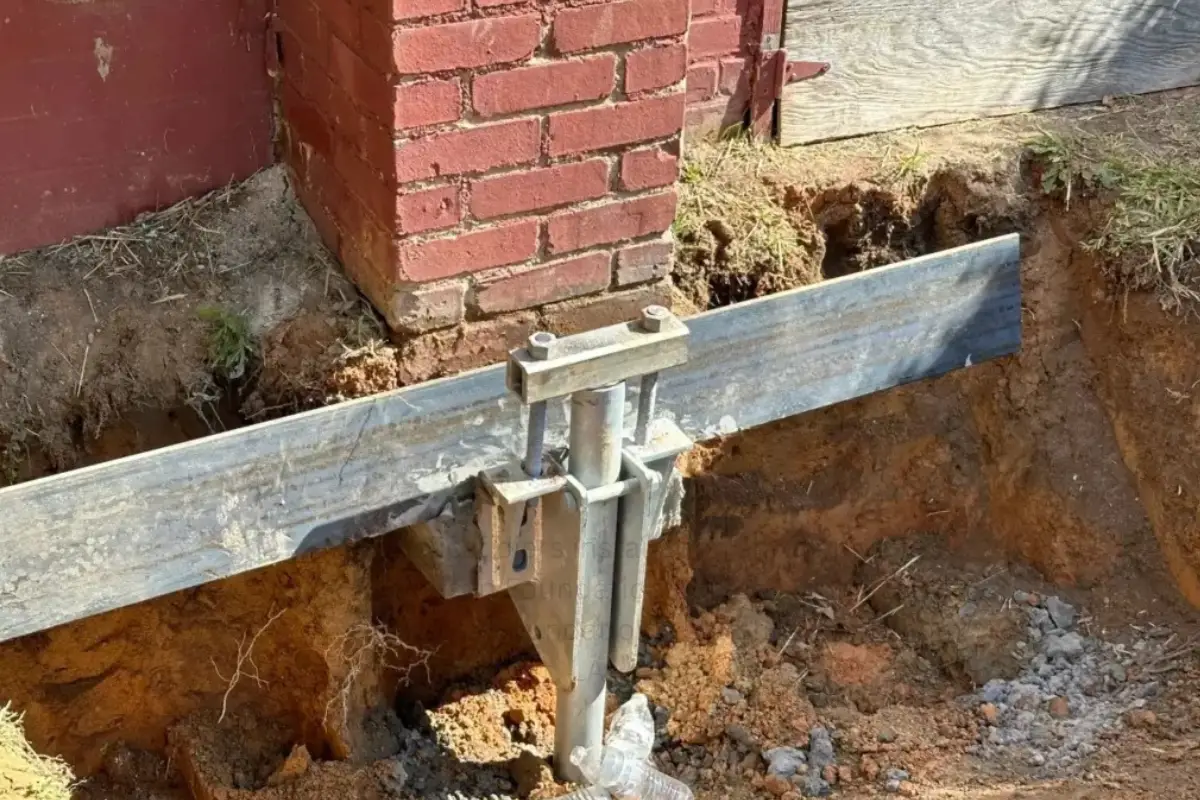
Here is the plain-English version. A helical pier is a steel shaft with screw-like plates on the end. A crew turns it deep into the ground — past the unstable surface clay into firm, load-bearing soil — then attaches a bracket to your foundation and uses a hydraulic jack to transfer the home’s weight onto the pier. From there, the crew lifts in small, controlled increments while watching the structure with levels and gauges.
The short version: helical piers stabilize a settling foundation and lift it in small, measured steps — usually 1 to 4 inches — until the structure is as close to level as it can safely go. Total cost in Shreveport typically runs $12,000 to $30,000 for a full piering job, and most installs finish in 2 to 4 days. A free on-site inspection is the only way to know how much lift your home can realistically get.
Call (318) 585-2003 – Free Inspection
📊 Helical Pier Lifting at a Glance
1–4 in
Typical lift achieved on a settled home
$1,500–$2,500
Typical cost per pier, installed
2–4 days
Average duration for a residential job
How Much Lift Is Actually Realistic?
Set the expectation in inches, not feet. Most homes in Shreveport and Bossier City settle 1 to 4 inches on the low side before anyone calls. Recovering that full distance is the goal, and crews usually get it — or get close enough that doors swing freely, windows latch, and gaps in the brickwork close up.
What limits the lift is rarely the piers themselves. A helical pier can physically push hard, but the house is not a rigid block — it is wood, brick, and mortar that have been bending slowly for years. Push too far, too fast, and something gives: a brittle mortar joint cracks, a tile floor pops, or a water line under the slab stresses. Good crews lift in fractions of an inch at a time, checking the structure constantly, and they stop at the point where the home is stable and as level as it can be reached safely.
Soil plays a part too. Across Caddo Parish and Bossier Parish, the top layer is expansive clay that swells when wet and shrinks in dry spells. Helical piers are driven below that active zone into stable soil, which is why they hold the lift long-term — the LSU AgCenter at lsuagcenter.com publishes research on how Louisiana’s clay soils behave.
How the Lift Actually Works, Step by Step
First comes the inspection: the contractor measures the settlement with a precision level, maps which corners dropped and by how much, and decides where piers go — roughly every 6 to 8 feet along the settled foundation wall.
Next, the crew digs small pits to expose the footing, then uses a hydraulic drive head to screw each pier into the ground. They monitor torque — the resistance the pier meets — because rising torque means the plates have reached strong, load-bearing soil, sometimes 10 to 30 feet down depending on the lot.
Then the brackets go on, the jacks are set, and the lift begins. Weight transfers from the soil to the piers first — that is the stabilization — then the crew lifts in tiny increments, often a quarter inch at a time, while someone inside watches doors, drywall, and existing cracks. When the home reaches its best safe position, the brackets are locked off and the pits are backfilled. Most homes stay fully livable throughout.
Call (318) 585-2003 – Free Inspection
Why Some Houses Cannot Be Fully Leveled
Every honest foundation contractor has had to tell a homeowner: “We can stabilize this and lift most of it, but we should not chase the last half inch.” Here are the common reasons a full return to level is not on the table.
- The structure has taken a permanent set. A house that settled slowly over 15 or 20 years has wood framing that bent and stayed bent. Lift the foundation and some of that twist remains in the framing — the foundation can be level while a floor upstairs still has a gentle wave in it.
- Brick and mortar are brittle. Older brick homes in neighborhoods like Highland and Broadmoor can have mortar joints that crumble if pushed aggressively. A careful crew stops lifting before the cure becomes worse than the disease.
- Plumbing and utilities are at risk. Water and sewer lines under a slab have limited flex. Lifting more than the lines can tolerate can crack a drain line — which is why reputable crews recommend a plumbing test after a significant lift.
- Heave complicates the picture. Some Shreveport homes have one corner that settled while another actually rose from clay swelling. You cannot “un-heave” a high corner with piers, so the crew levels relative to the high point instead of to true level.
- Interior finishes hide the truth. Remodeled homes with new tile, granite, and rigid flooring tolerate less movement than original finishes. The lift plan has to respect what is inside the house.
None of this means the repair fails — a home stabilized on piers and lifted 2.5 of its 3 settled inches is a success. Our breakdown of helical pier limitations covers the honest downsides so you can weigh them before signing.
What a Helical Pier Job Costs in Shreveport
Pier work is priced per pier, and the per-pier cost covers the pier itself, the bracket, the excavation, the drive time, and the lift. In the Shreveport market, a typical installed helical pier runs $1,500 to $2,500. Most single-story homes need 8 to 14 piers; larger or two-story homes, or homes settled on two sides, can need 15 to 25.
| Cost item | Typical Shreveport range | Notes |
|---|---|---|
| Per helical pier, installed | $1,500–$2,500 | Includes pier, bracket, excavation, and lift |
| Typical single-story home (8–14 piers) | $12,000–$30,000 | Most common residential range |
| Larger or two-story home (15–25 piers) | $25,000–$50,000 | More piers and deeper drives |
| Engineering evaluation, if required | $400–$800 | Sometimes needed for permits or complex cases |
| Post-lift plumbing test | $200–$500 | Recommended after significant lifts |
Depth is the biggest cost variable most homeowners do not expect: 12 feet to stable soil is straightforward, while a 25-foot drive costs more per pier. A free inspection with elevation measurements should give you a pier count and a firm written price. Our helical pier cost guide breaks down what moves the number.
Call (318) 585-2003 – Free Inspection
Helical Piers vs. Steel Push Piers for Lifting
These are the two main underpinning systems, and homeowners often hear both names. Both can lift a house. The difference is how they get into the ground and which soil conditions suit each one.
| Factor | Helical piers | Steel push piers |
|---|---|---|
| How they install | Screwed in with a drive head; torque-verified | Pushed in with hydraulic force against the home’s weight |
| Best soil conditions | Softer or variable soils; lighter structures | Heavy structures over deep firm soil |
| Installation footprint | Smaller equipment, less vibration | Needs the home’s weight for resistance |
| Lift control | Precise, incremental; capacity known from torque | Precise, incremental; capacity proven by driving force |
| Typical use around Shreveport | Porches, additions, lighter one-story homes | Full perimeter lifts on heavier brick homes |
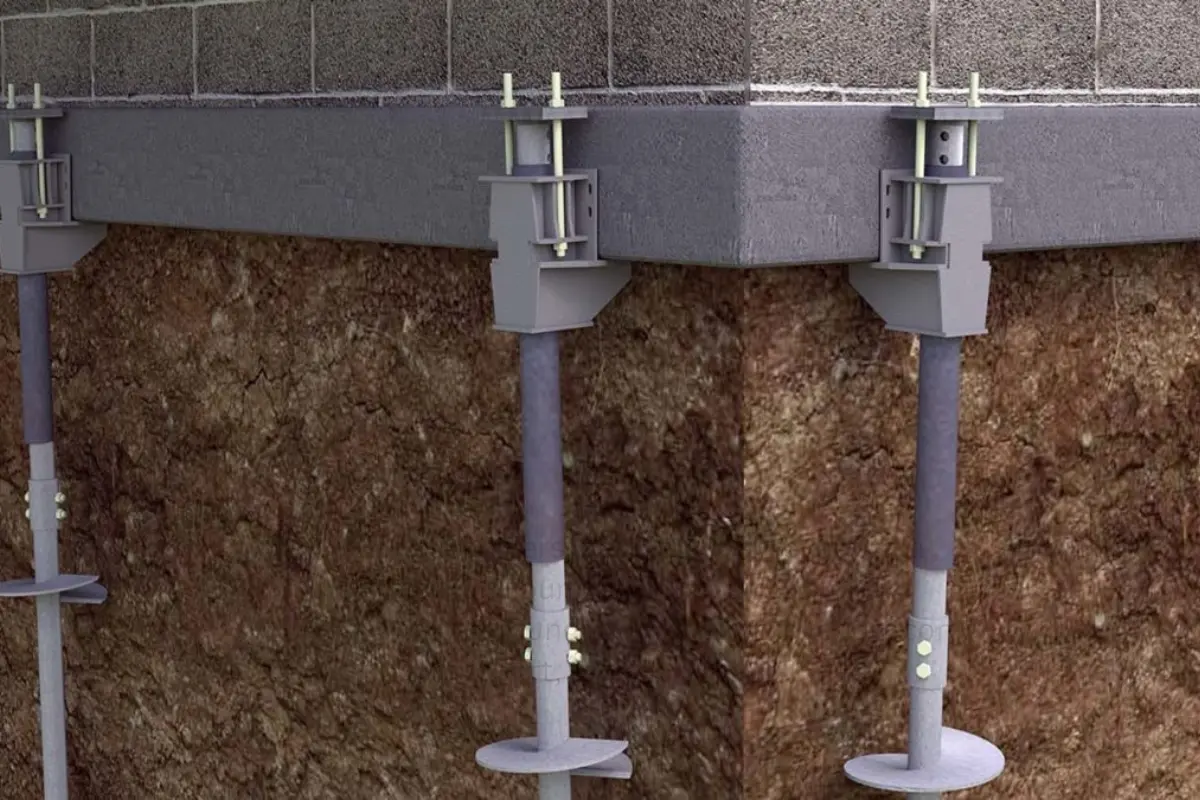
For many Shreveport-area homes on clay, either system can do the job — the right pick depends on soil conditions, the home’s weight, and access. Our steel push pier installation page explains that system in detail.
Red Flags: Promises No Honest Contractor Makes
Pier work is a big check to write. Walk away — or get a second opinion — if you hear any of these:
- “We will get it perfectly level, guaranteed.” No one can guarantee perfect level on a settled structure. The honest promise is maximum safe lift and permanent stabilization.
- A firm price with no elevation survey. If nobody measured how far each corner dropped, the pier count is a guess. Real quotes start with real measurements.
- “We can lift it today, no engineering needed” on a severe case. Straightforward jobs do not need an engineer, but a house that dropped 5 inches or has major structural damage deserves one.
- Pressure to sign before the inspection report is written. A reputable company leaves you the measurements, the pier map, and the price in writing and lets you think.
- No written warranty. Quality pier work carries a long written structural warranty — we offer a 20-year structural warranty on qualifying repairs. Verbal promises mean nothing.
- Cash-only, no permit talk. Legitimate contractors handle the paperwork and put the scope in writing: pier count, locations, depths, lift target, and warranty terms.
Call (318) 585-2003 – Free Inspection
Frequently Asked Questions
Can helical piers really lift a whole house?
Yes. The piers are driven into stable soil below the active clay zone, brackets are attached to the foundation, and hydraulic jacks lift the structure in small increments — most residential lifts recover 1 to 4 inches of settlement.
How many inches can helical piers lift a house?
Most homes see 1 to 4 inches of lift on the settled side. The safe maximum depends on the structure: brittle brick, old plumbing, and framing that has taken a permanent set can all limit how far a careful crew should push.
Will the lift crack my walls or break plumbing?
Minor cosmetic cracking in drywall is common during any lift and is usually easy to patch. Serious damage is rare with an experienced crew because they lift slowly and monitor constantly. A plumbing test after a significant lift is a smart precaution.
How much do helical piers cost per pier in Shreveport?
Typically $1,500 to $2,500 per pier installed. Most single-story homes need 8 to 14 piers, putting full jobs in the $12,000 to $30,000 range. Deeper drives to reach stable soil push costs toward the higher end.
How long does it take to lift a house with helical piers?
Most residential jobs finish in 2 to 4 days, and the lift itself usually takes a single day. You can typically stay in the home the whole time.
Are helical piers or push piers better for lifting?
Both lift effectively. Helical piers suit softer or variable soils and lighter structures, with smaller equipment and torque-verified capacity. Push piers suit heavier homes where the structure’s weight provides driving resistance. Soil conditions decide.
Will my house settle again after helical piers?
Not from the original cause. The piers bypass the unstable surface clay and bear on deep stable soil, so seasonal shrinking and swelling no longer move the foundation. That is the whole point of underpinning versus surface fixes.
Do I need to move out during the lift?
Usually not. The work happens outside along the foundation and the lift takes hours, not days — expect equipment noise and slight vibration during pier driving.
Call (318) 585-2003 – Free Inspection
Get a Free Foundation Lift Assessment in Shreveport
The only way to know how much lift your home can safely get — and what it will cost — is an inspection with real elevation measurements. Our free assessment maps every low spot, gives you a pier count and written price, and includes a 20-year structural warranty on qualifying repairs.
Call Pelican Foundation Repair at (318) 585-2003, or visit Pelican Foundation Repair to schedule. We install helical and push pier systems across the metro — see our service area list and our full foundation repair services.
Pelican Foundation Repair 6118 Fairfield Ave, Shreveport, LA 71106, USA 318-585-2003 https://foundationrepairshreveport.com/