 Skip to main content

How to Repair a Crumbling Cinder Block Foundation Wall
A crumbling cinder block wall is a foundation losing its strength one grain at a time. This guide covers why block walls deteriorate, how professionals repair them, and what it costs in Shreveport.
Repairing a crumbling cinder block wall starts with finding the moisture or pressure causing the damage. Then the repair matches the decay: tuckpointing for failed mortar, parging and sealing for surface spalling, wall anchors for bowing, or a partial rebuild for walls too far gone. Catch it early and the fix is small.
Why Cinder Block Walls Crumble
Cinder block does not fail all at once. It deteriorates in stages, and each stage has a cause. Understanding the pathway matters, because the right repair depends on how far down the path your wall has gone.
It usually starts with water. Rain soaks the soil against the foundation, and the block wicks that moisture up like a sponge. In Shreveport, where heavy spring storms are followed by long humid summers, block walls rarely get a chance to fully dry out. Constant dampness softens the mortar joints first. Then the faces of the blocks themselves start to flake and fall away — that flaking has a name, spalling, and once it starts, it feeds on itself.
The Deterioration Pathway, Step by Step
First the mortar weakens. Joints that were rock-hard when the house was built turn sandy and crumbly to the touch. Then water finds its way deeper, and the block faces begin to spall, shedding thin layers. Next comes the structural stage: the wall loses thickness, bows inward under soil pressure, or develops stair-step cracks along the mortar lines. A wall at the final stage is not just ugly — it is losing its ability to hold up the house.
Hydrostatic pressure speeds everything up. When our expansive clay saturates after a big rain, it swells and pushes against the wall while water presses through every pore. Homes on low ground near Cross Lake or along the Red River see this worst, but any Shreveport home with poor drainage can develop it.
Mortar Failure vs Block Failure
Here is the distinction that decides your repair. If the blocks are still solid and only the mortar joints are crumbling, you are looking at a repointing job — very fixable. If the blocks themselves are soft, flaking, or breaking apart in your hand, the wall material is failing and the repair gets bigger. A free inspection sorts this out in minutes, and it changes the quote completely.
Spotting the Warning Signs Early
Your foundation wall is talking to you. You just have to know the language. Walk your crawl space or the outside of your foundation twice a year and look for these specific signs.
What Crumbling Looks Like in Real Life
Flaking or peeling block faces, like the wall is shedding its skin. Mortar joints you can scrape out with a fingernail. White powdery deposits — efflorescence — which means water is moving through the wall and leaving minerals behind. Damp spots that never dry. And the big one: any inward bowing or stair-step cracking, which means the wall is structurally compromised, not just cosmetically rough.
When Crumbling Becomes Urgent
Surface spalling on a straight, solid wall is a repair-soon situation. Bowing, bulging, or stair-step cracks are a repair-now situation. A bowing block wall can fail suddenly under a heavy rain load, and when block walls fail, they do not crack politely — sections can collapse inward. If you see bowing, do not wait for the next storm season to find out what happens.
The Screwdriver Test
Here is a simple check anyone can do. Press a flat screwdriver firmly against a mortar joint and then against the face of a block. Sound mortar resists. Failing mortar crumbles and powders. Sound block feels like rock. Deteriorating block dents and flakes. If either one gives way easily, you have your answer — and it is time for a professional look.
How Professionals Repair Crumbling Block Walls
The repair always follows the diagnosis. Fix the moisture or pressure problem first, then repair the wall itself — doing it the other way means the new work crumbles just like the old. Here are the methods, from lightest to heaviest.
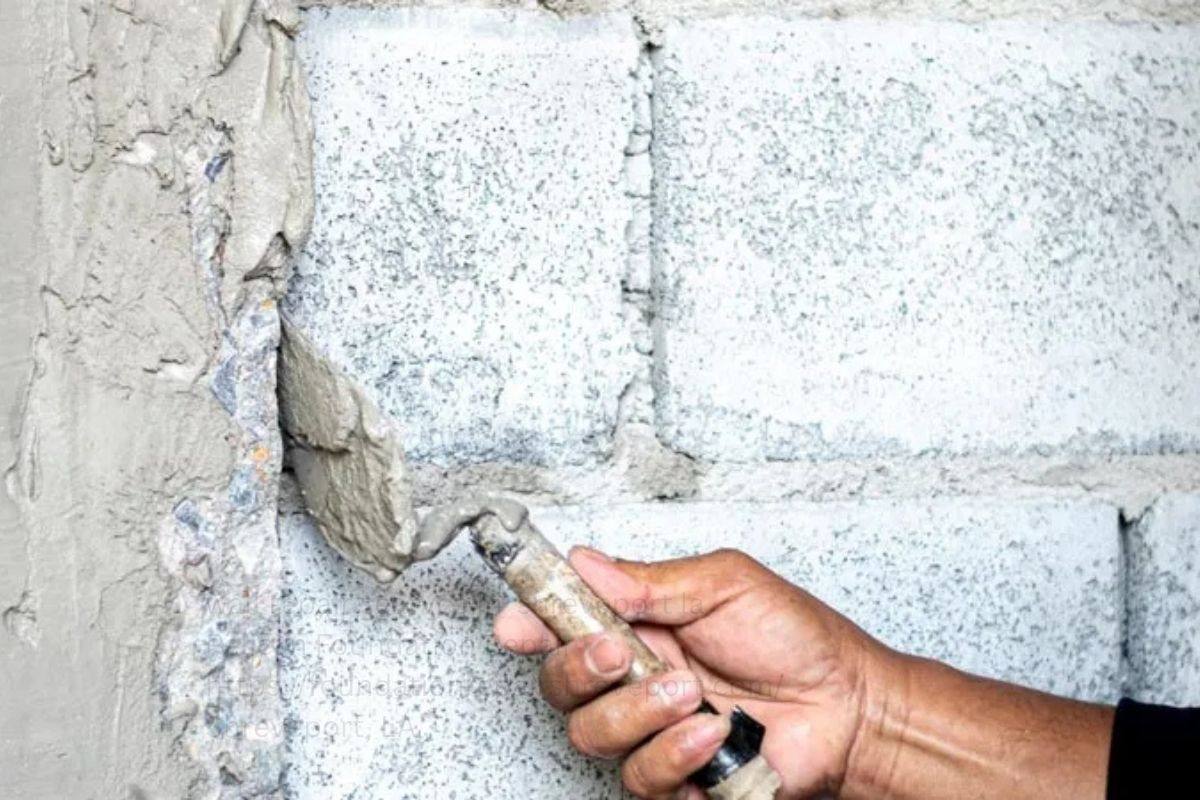
Tuckpointing: Rebuilding the Mortar Joints
Tuckpointing — also called repointing — is the standard fix when the blocks are solid but the mortar has failed. The crew grinds out the old, sandy mortar to a proper depth, cleans the joints, and packs in fresh mortar matched to the wall. Done right, it restores the wall’s weather resistance and much of its strength. It is precise, dusty work, and it is the most common repair we do on aging block foundations in neighborhoods like Highland and Broadmoor.
Parging and Sealing: Protecting Spalled Surfaces
When block faces are spalling but the wall is still structurally sound, parging adds a protective skin. A coat of mortar is troweled over the wall surface, sealing the pores against further water entry. After parging, a waterproof masonry sealer keeps the Gulf humidity and driving rain from restarting the cycle. Parging is cosmetic armor — it protects the wall, but it cannot fix a wall that is bowing or structurally failing underneath.
| Wall condition | Repair method | What it accomplishes |
|---|---|---|
| Failed mortar, solid blocks | Tuckpointing | Restores joints, weather resistance, and strength |
| Surface spalling, wall still straight | Parging plus masonry sealer | Seals the surface against further water damage |
| Bowing under soil pressure | Wall anchors or steel bracing | Straightens and holds the wall against pressure |
| Blocks disintegrating or collapsed sections | Partial wall rebuild | Replaces failed wall with new, properly built masonry |
When the Wall Needs Anchors or a Partial Rebuild
Some walls are past tuckpointing. When hydrostatic pressure from saturated clay has pushed a wall inward, the fix has to fight that pressure, not just patch the surface. That is where anchors and rebuilds come in.
Wall Anchors and Steel Bracing
Wall anchors connect the bowing wall to stable soil outside the home through steel plates and rods, and they can gradually pull a wall back toward straight. Steel I-beam bracing does the same job from inside, bracing the wall against the floor framing above. Both systems counteract the exact force — swollen, waterlogged clay — that bent the wall in the first place.
Partial Rebuilds: Starting Fresh Where It Failed
When blocks are disintegrating or a section has collapsed, the honest fix is a rebuild. The failed section comes down in stages while temporary shoring carries the load, then new block goes up with proper mortar, reinforcement, and drainage behind it. A rebuilt section, done to modern standards, will outlast the original wall around it.
For more on our approach, see our wall repair service page and our guide to cinder block foundation wall repair. If the damage includes an actual breach, our article on how to repair a hole in a concrete wall covers that scenario. And the Pelican Foundation Repair homepage has our full service list for Shreveport and Bossier Parish.
What Crumbling Wall Repair Costs in Shreveport
Cost follows the deterioration pathway. The earlier you catch it, the smaller the bill. Tuckpointing a section of wall is a modest job. Anchoring a bowing wall or rebuilding a collapsed section is a major one.
Small masonry repairs like crack repairs typically run $400–$1,500. Full structural jobs involving piers, anchors, or rebuilds usually run $3,500–$15,000 or more, depending on the wall length, how far the damage has spread, and what is causing it. The moisture problem behind the wall — drainage, grading, gutters — is usually quoted separately, and skipping it is the most expensive mistake you can make.
| Repair scope | Typical range | What drives it |
|---|---|---|
| Crack and mortar repairs | $400–$1,500 | Wall length and joint condition |
| Wall anchors or bracing | Mid-range structural job | Wall length, anchor count, soil access |
| Partial wall rebuild | $3,500–$15,000+ | Section size, shoring needs, drainage work |
One honest warning: any quote that covers only the wall and ignores the water is a quote for doing the job twice. Make sure your estimate addresses drainage, or the new mortar will be crumbling on the same schedule as the old.
Keeping It From Happening Again
The best wall repair is the one you never need. Since water causes nearly all block deterioration in Louisiana, prevention is mostly about water management. Keep gutters clean and extend downspouts at least several feet from the foundation. Grade the soil so it slopes away from the house on all sides. Do not let mulch or flower beds pile against the block — they trap moisture right where it does the most harm.
Check your flood exposure too. FEMA’s flood maps let you look up your Shreveport address and see your official flood zone, which tells you how seriously to take drainage and waterproofing. And the LSU AgCenter offers Louisiana-specific guidance on managing soil moisture and drainage around homes, written for our climate and our clay.
Finally, make the twice-a-year wall walk a habit — once after the spring storm season, once before it. Five minutes with a flashlight and a screwdriver catches deterioration at the tuckpointing stage instead of the rebuild stage. That habit alone can save you thousands.
Frequently Asked Questions
Can a crumbling cinder block wall be repaired, or does it need replacing?
Most crumbling block walls can be repaired. Failed mortar gets tuckpointed, spalled surfaces get parged and sealed, and bowing walls get anchors or bracing. Full replacement is only needed when the blocks themselves are disintegrating or sections have collapsed. A free inspection tells you which stage your wall is at.
What causes cinder block foundation walls to crumble?
Water is the main cause. Moisture wicks into the block, softens the mortar joints, and causes the block faces to flake and spall. In Shreveport, heavy rains saturate our expansive clay, which swells and pushes against the wall while water presses through it. Poor drainage, missing gutters, and soil piled against the wall all speed up the damage.
How much does it cost to repair a crumbling block wall?
It depends on how far the deterioration has gone. Small crack and mortar repairs typically run $400–$1,500, while anchor systems or partial rebuilds usually run $3,500–$15,000 or more. Drainage corrections are often quoted separately. An on-site inspection is the only way to get an accurate number for your wall.
Is tuckpointing enough for a crumbling foundation wall?
Tuckpointing is enough when the blocks are still solid and only the mortar has failed. It is not enough when the blocks themselves are soft and flaking, or when the wall is bowing inward. Those conditions need parging, anchors, or a partial rebuild. The screwdriver test — pressing a screwdriver into the mortar and the block face — gives you a quick read on which one you are dealing with.
How long does a repaired block wall last?
A properly repaired wall with the moisture problem fixed can last for decades. Tuckpointed joints, parged surfaces, and anchored walls all hold up well when water is kept away from the foundation. What shortens the life of any repair is ignoring drainage — new mortar in front of the same old water problem will deteriorate on the same timeline.
Can I repair a crumbling cinder block wall myself?
Minor surface patching is DIY-friendly, but structural wall repair is not. Tuckpointing a foundation wall, installing anchors, or rebuilding sections involves load-bearing masonry and soil pressure that can be dangerous to get wrong. If the wall is bowing, cracking in stair-steps, or losing chunks of block, call a professional. Pelican’s inspections are free.
Will a crumbling foundation wall affect my home’s value?
Yes. Visible foundation deterioration worries buyers and home inspectors, and it often shows up in inspection reports during a sale. The good news is that documented professional repair — especially with a warranty — turns a red flag into a selling point. Fix it before you list, not after the buyer’s inspector finds it.
Pelican Foundation Repair
6118 Fairfield Ave, Shreveport, LA 71106, USA
318-585-2003
https://foundationrepairshreveport.com/