 Skip to main content

Diagonal Foundation Cracks: What They Tell You About Your Home
Diagonal cracks at your doors and windows mean part of your foundation is settling faster than the rest. Here is how to read them — and when to call.
What causes diagonal cracks in a foundation? Differential settlement — one section of your home sinking faster than the rest — twists the frame and tears drywall and brick at 45 degrees. A stable hairline crack is usually cosmetic; one wider than 1/4 inch, still growing, or paired with a sticking door means calling a professional.
Why Cracks Go Diagonal
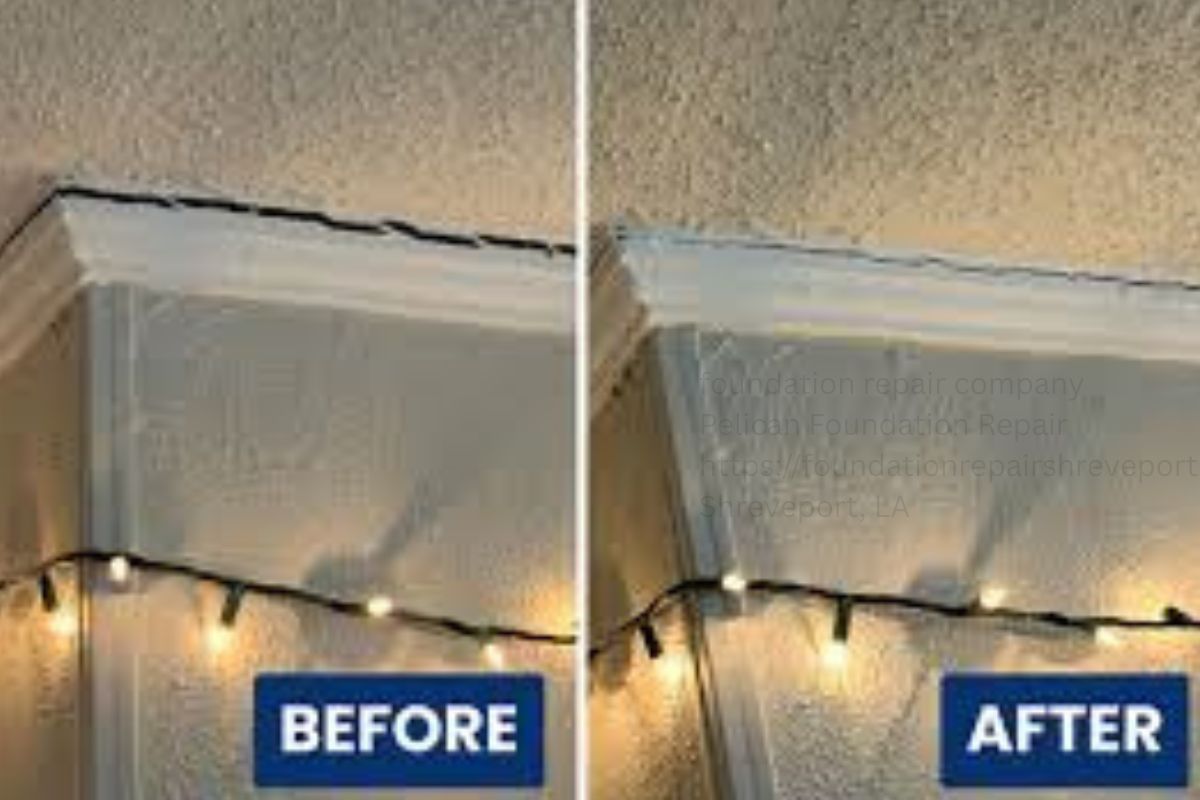
Concrete and drywall are strong when forces push straight down on them. They are weak when forces twist them — and that twisting is exactly what a diagonal crack records. When one corner of your home sinks even a fraction of an inch more than the rest, the frame above it racks like a parallelogram, and the rigid surfaces tear along the diagonal where the stress concentrates.
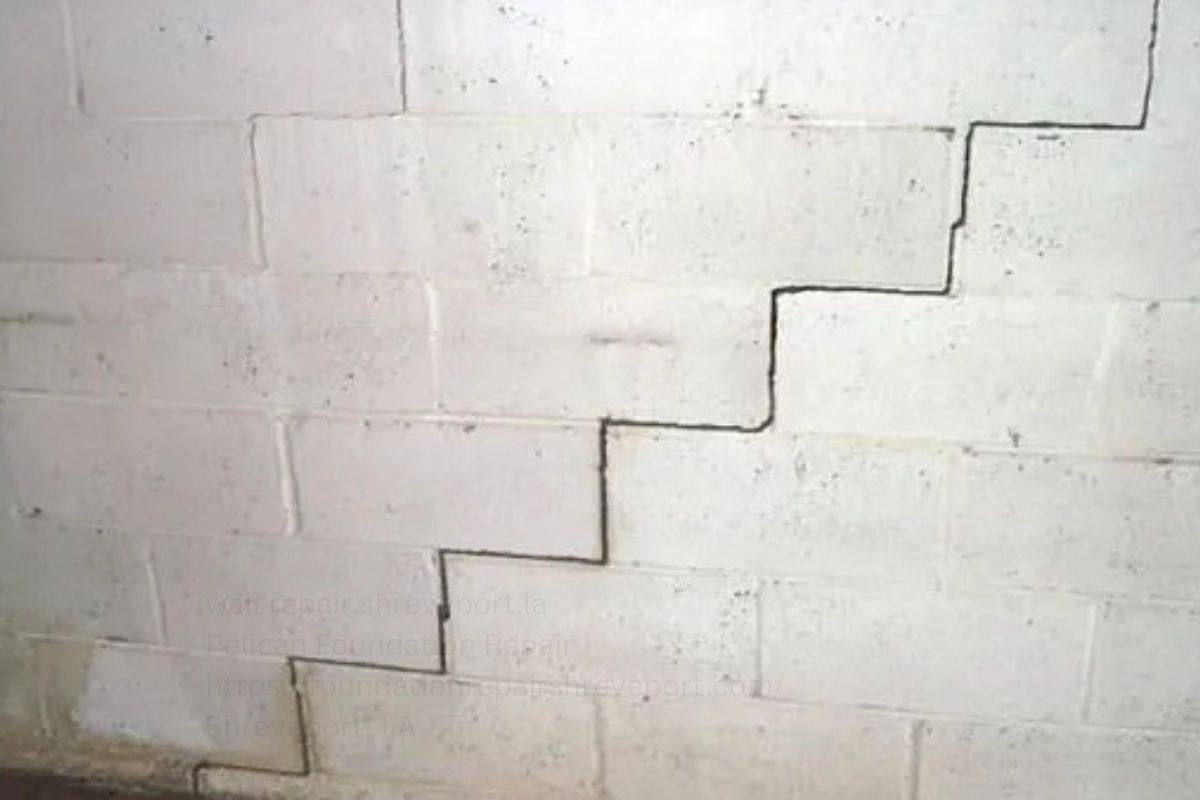
That’s why diagonal cracks almost always start at the weakest points in a wall: the corners of doors and windows, where the opening interrupts the structure. In brick veneer they show up as stair-step cracks zigzagging through the mortar joints. On a poured foundation wall they slash from a top corner downward. In drywall they fan out from the upper corners of door frames — the crack every homeowner in Shreveport recognizes, because our clay soil keeps producing them.
The one-word cause: unevenness
Every diagonal crack is a story about uneven support. If the whole house settled evenly, you’d see sticking doors but few cracks. Diagonal cracks mean the settlement is differential — one part moving relative to another — and the bigger the difference, the wider the crack. A uniform crack pattern points to a uniform cause; a single growing diagonal crack points to one spot losing support.
Diagonal vs. Vertical vs. Horizontal: Reading the Shape
Crack shape is a diagnostic tool. Pros read it the way a mechanic reads an engine sound — here’s the quick translation:
| Crack Shape | What It Usually Means | Urgency |
|---|---|---|
| Hairline vertical | Normal concrete shrinkage or minor uniform settlement | Low — monitor seasonally |
| Diagonal (45 degrees) | Differential settlement — one section sinking faster than the rest | Medium to high — measure and watch closely |
| Stair-step in mortar | Same as diagonal — settlement tracking through brick veneer | Medium to high — length matters |
| Horizontal | Lateral soil pressure pushing the wall inward | High — get a professional look soon |
Vertical cracks deserve their own discussion — most are harmless shrinkage, but some aren’t. See our guide to vertical foundation crack repair for the full breakdown. Horizontal cracks are the ones that keep foundation contractors up at night; our article on horizontal foundation crack repair explains the bowing-wall mechanics behind them.
The Width Rules of Thumb
Shape tells you the type of problem; width tells you the size. These are rules of thumb, not engineering specs — but they match what working foundation contractors actually use in the field:
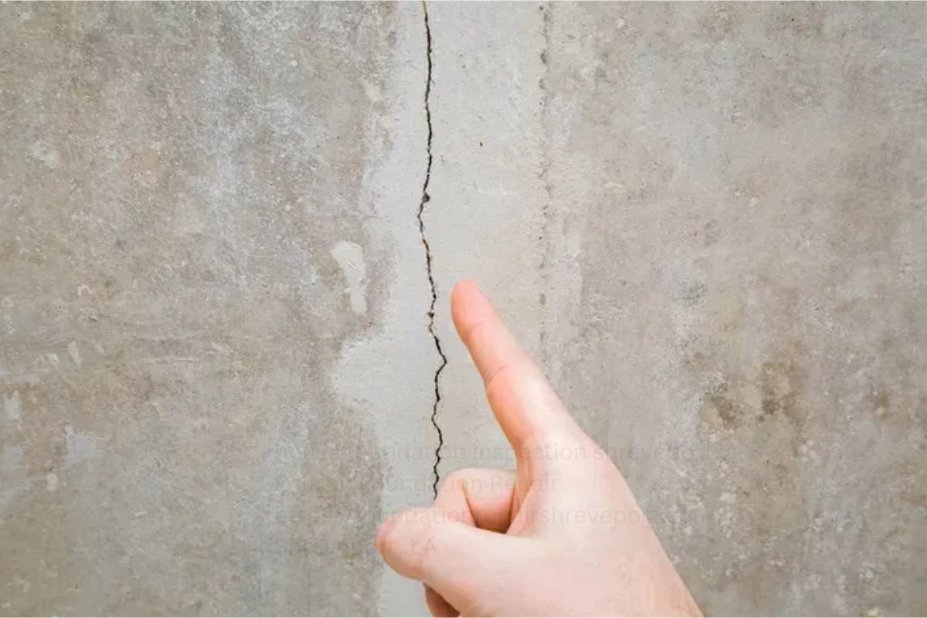
- Under 1/16 inch (hairline): almost always cosmetic. Shrinkage, paint, minor thermal movement. Photograph it, date the photo, and check again in six months.
- 1/16 to 1/8 inch: worth watching. If it hasn’t changed through a full wet-dry cycle, it’s stable. Mark both ends with a pencil so any growth is obvious.
- 1/8 to 1/4 inch: the gray zone. A stable crack here is often still cosmetic; a growing one is telling you the settlement is active. This is where monitoring pays for itself.
- Over 1/4 inch: call a professional. At this width the foundation is moving, not the paint — and the wider it gets, the more expensive the fix.
- Any width with vertical offset: if one side of the crack sits higher or sticks out farther than the other, the wall is shearing. Call regardless of width.
A handy field trick: a standard credit card is about 1/32 inch thick, and a pencil is roughly 1/4 inch across. If a pencil fits in the crack, you’re at the call-a-pro threshold. InterNACHI’s inspection standards note that inspectors flag cracks wider than 1/4 inch or showing displacement as material defects — which lines up with what Louisiana contractors see in the field. For the full picture on crack types, the InterNACHI library has solid reference material on residential foundation inspection.
When watching is the right call
A hairline diagonal crack that hasn’t changed in a year, in a house with no other symptoms — doors swing fine, floors feel level, no new gaps at the chimney — is a crack you watch, not a crack you pay to fix. Sealing it with caulk or patch for appearance is fine, as long as you keep the dated photos and check it after the next big wet-dry swing.
When waiting costs you money
The expensive mistake is watching a crack that’s actually growing. Settlement doesn’t pause while you think about it: a 1/8-inch crack that becomes a 1/2-inch crack over two years can be the difference between a simple monitoring-and-seal job and a pier installation. If the pencil marks you made last spring are now inside the crack, stop watching and start calling.
How to Monitor a Crack Like a Pro
Monitoring sounds passive, but done right it’s a real diagnostic method. Here’s the procedure:
- Photograph it with a reference: hold a ruler or coin next to the crack so the photo shows scale. Same angle, same lighting, every time.
- Mark the ends: draw a thin pencil line across each end of the crack and write the date beside it. Growth shows up as the crack extending past your marks.
- Measure the width: crack gauges are cheap, but a set of feeler gauges from an auto parts store works too. Record the widest point to the nearest 1/16 inch.
- Check on a schedule: after every major weather swing — the end of the dry summer, the end of the wet spring — plus any time you notice a new symptom elsewhere.
- Log symptoms together: note the crack alongside door behavior, floor feel, and any new gaps. A crack that’s stable while a door starts sticking is still telling you something.
Bring that log to any inspection. If you’d like one from us, Pelican Foundation Repair offers free foundation inspections Monday through Saturday, 8:00 AM to 6:00 PM — a contractor who sees dated photos and measurements can tell in minutes whether they’re looking at seasonal noise or active settlement.
What Causes the Settlement Behind Diagonal Cracks
Diagonal cracks are the symptom; settlement is the disease. Around Shreveport, the usual suspects are:
- Expansive clay cycling: Caddo and Bossier Parish clay swells in wet months and shrinks in dry ones. The shrink-swell cycle is the number one driver of differential settlement in northwest Louisiana.
- Poor drainage on one side: a downspout dumping at one corner, or a yard sloping toward the house on the north side only, keeps one section of soil wetter than the rest. Uneven moisture means uneven movement.
- Plumbing leaks: a slow leak under the slab washes out soil on one side of the house — see our slab leak guide for how that plays out.
- Tree roots: mature oaks in South Highlands and Highland drink astonishing amounts of water, drying the soil on their side of the house and shrinking it away from the foundation.
- Construction on fill: homes built on poorly compacted fill dirt — common in newer subdivisions around Benton, Haughton, and Stonewall — settle as the fill consolidates, often unevenly.
- Additions on different footings: a sunroom or garage added years later on shallower footings moves at a different rate than the original house, and the crack appears right at the seam.
Notice the pattern: almost every cause is a water problem wearing a different hat. Fix the water, and the settlement usually slows or stops — which is why a good foundation inspection always includes a look at your grading and downspouts, not just your cracks.
How Diagonal Cracks Get Repaired
The repair follows the diagnosis, not the crack. Two houses with identical-looking diagonal cracks can need completely different work:
Stable crack: seal it and move on
If monitoring proves the crack hasn’t moved in a full year and there’s no other symptom, epoxy injection welds the concrete back together or polyurethane foam seals out water. For drywall, it’s patch, tape, and paint. The fix is cosmetic and structural at once — but only because the movement already stopped on its own.
Active settlement: stabilize first, seal second
A crack that’s still growing means the foundation is still moving, and no injection will hold against soil that keeps shifting. Steel push piers or helical piers transfer the foundation’s weight to stable, load-bearing soil and can lift the settled section back toward level. Only after the structure is stabilized does crack sealing make sense — otherwise you’re paying for the same repair twice. Our foundation crack repair team handles both sides: the diagnosis that tells you which camp you’re in, and the repair that matches.
The water fix that protects the repair
Whichever structural route you take, the water problem that caused the settlement gets fixed alongside it — grading corrected, downspouts extended at least 10 feet out, any plumbing leak repaired. A pier job without drainage correction is a repair waiting to fail, because the clay will just cycle again.
Frequently Asked Questions
What causes diagonal cracks in a foundation?
Differential settlement — one section of the foundation sinking faster than the rest — twists the frame and tears walls at 45 degrees. The settlement itself is usually driven by uneven soil moisture: expansive clay cycling, poor drainage on one side, plumbing leaks, or tree roots drying one area.
Are diagonal cracks worse than vertical cracks?
Usually, yes. A hairline vertical crack is often just concrete shrinkage. A diagonal crack means the structure is racking from uneven support, which is a structural question rather than a cosmetic one. That said, a stable hairline diagonal crack with no other symptoms is still usually fine to monitor.
When should I worry about a diagonal crack?
Worry when it’s wider than 1/4 inch, keeps growing past your pencil marks, shows vertical offset between the two sides, or comes with a sticking door, sloping floor, or chimney gap. Any one of those is worth a professional inspection.
Can I just fill a diagonal crack myself?
You can seal a stable, hairline crack for appearance with caulk or patch — but only after monitoring proves it isn’t moving. Filling an active crack hides the evidence without stopping the cause, and you’ll be filling it again next year. If it’s growing, get a diagnosis first.
How do I monitor a foundation crack?
Photograph it with a ruler for scale, mark both ends with a pencil and the date, measure the widest point, and re-check after every major weather swing. Bring the dated log to any inspection — it turns a guess into a diagnosis.
Do diagonal cracks mean my house is sinking?
They mean part of it is moving relative to the rest — which is a form of sinking, yes, but localized. A free inspection with elevation readings will show exactly which section is low and by how much, turning worry into measured inches.
How are diagonal cracks from settlement repaired?
Stabilize first, seal second. Active settlement gets steel push piers or helical piers to transfer the load to stable soil; then the crack is sealed with epoxy or polyurethane. The water problem behind the settlement — drainage, leaks, grading — gets fixed alongside it.
Pelican Foundation Repair
6118 Fairfield Ave, Shreveport, LA 71106, USA
318-585-2003
https://foundationrepairshreveport.com/