
White Powder on Basement Walls: What Efflorescence Means
White powder on a basement wall is usually efflorescence: mineral salts left behind when water moves through concrete and dries. It signals moisture, and the water source matters most.
Efflorescence is the white, powdery salt deposit left on a basement wall when water passes through concrete or masonry and evaporates. It is not mold, and it is rarely dangerous on its own. It does mean water is reaching the wall, so the right fix is to find and stop the water, not just brush the powder away.
If you have run a hand along a basement wall in Shreveport and come away with chalky white dust on your fingers, you have probably met efflorescence. It shows up as a pale film, a fuzzy patch, or a crust like frost. Homeowners often scrub it off, paint over it, or assume it is mold. None of those solves the problem, because the powder is only the last step in a chain that starts with water on the other side of the wall. This guide covers what it is, what causes it, and how to stop it.
What Efflorescence Actually Is
Concrete and masonry are not waterproof. They are full of tiny pores, and water moves through them slowly. As it travels, it dissolves mineral salts naturally present in the concrete, the mortar, and the soil behind the wall. When the water reaches the inside face and evaporates, it leaves those salts behind as a white deposit. That deposit is efflorescence.
The idea is simple: water in, salts out. The powder is mostly harmless: it does not eat the wall like rot, and it releases no spores like mold. But it proves water has moved through the wall, which matters in Shreveport, where expansive clay swells and shrinks and Gulf humidity keeps below-grade walls damp for months.
True full basements are uncommon in Shreveport, where most homes sit on slabs or pier-and-beam foundations. The same white powder appears on partial basements, below-grade garage walls, crawl-space foundation walls, and split-level lower walls. Any wall with soil against its outside face can develop it.
It looks different from wall to wall: a faint haze, a fluffy crust, or streaks from a crack or joint. The pattern is evidence: streaks point to a crack, a band near the floor to water rising from below, patches high on the wall to a leak above. Photograph it before cleaning.
What Causes Efflorescence on Interior Basement Walls
Every case needs three things: water, soluble salts, and evaporation on the inside face of the wall. The salts are already in the concrete and soil, so water is the variable that matters. In northwest Louisiana, water reaches a below-grade wall through a handful of routes, and most homes have more than one at work.
The most common route is water pressing against the outside of the wall. When soil stays saturated after heavy rain, water seeps through pores and hairline cracks: hydrostatic pressure in plain terms, water seeking its own level. Poor grading makes it worse, as ground sloping toward the house or a downspout dumping beside the foundation keeps soil wet far longer than it should. In Shreveport neighborhoods from Highland to South Highlands, flat lots hide grading problems until the wall shows white powder.
A second route is water rising from below: summer clay shrinks away from the foundation, rain fills the gap against the footing, and the wall wicks water upward, leaving salts near the floor. A third route is condensation on a cool wall. A fourth is a leak, a cracked line or gutter joint spilling behind the wall, which leaves a narrow, repeated stain in one place.
- Roof water: gutters that overflow or downspouts that end beside the wall keep the soil wet against the foundation.
- Grading: ground that slopes toward the house sends every rain toward the wall instead of away from it.
- Soil movement: expansive clay in Caddo Parish shrinks in drought and swells in rain, opening and closing paths for water.
- Plumbing: a slow leak behind or below a wall leaves a repeated white stain in one spot.
- Humidity: Gulf Coast air condensing on cool walls adds surface moisture all summer.
- Missing waterproofing: older walls built with little or no exterior coating let water pass through more easily.
The fix follows the route. A downspout problem is a ten-minute fix, grading is a weekend of dirt work, and a wall that never dries needs a drainage or waterproofing answer. Cleaning without naming the route guarantees the powder returns with the next wet spell.
Efflorescence vs Mold: How to Tell Them Apart
Homeowners often confuse efflorescence with mold. Both appear as patches on damp walls, but they are different problems with different fixes. The simplest test needs no tools: rub a little deposit between your fingers. Efflorescence feels dry, chalky, and gritty, like fine salt, and crumbles to dust. Mold feels soft, fuzzy, or slimy, and smears. A second test uses water: efflorescence dissolves, because it is salt. Mold does not.
Color helps, though it is not proof alone. Efflorescence is white, pale gray, or light tan. Mold is usually black, green, dark brown, or gray-green, in irregular colonies, and often smells musty. Efflorescence follows water paths and has no smell. A musty patch, or one growing on wood or drywall rather than bare concrete, should be treated as a possible mold problem and checked.
The table below sums up the differences a homeowner can check without opening the wall.
| Clue | Efflorescence | Mold |
|---|---|---|
| Color | White, pale gray, or light tan | Black, green, dark brown, or gray-green |
| Feel | Dry, chalky, gritty; crumbles to dust | Soft, fuzzy, or slimy; smears when rubbed |
| Water test | Dissolves in a drop of water | Does not dissolve |
| Smell | No smell | Often musty |
| Where it grows | Bare concrete, block, brick, and mortar | Concrete, drywall, wood, paper, and fabric |
| What it means | Water is moving through the wall | Sustained dampness plus organic material |
Both point to moisture, so finding one should prompt a look for the other: a wall can carry efflorescence on bare block and mold on the wood sill above it. When in doubt, do not scrape a large patch dry. Wet it lightly, wear a mask and gloves, and ask a professional. A expert foundation inspection in Shreveport can separate a salt problem from a mold problem and trace the water behind either one.
When White Powder Is a Warning Sign
Light efflorescence alone is a maintenance note, not an emergency. A faint haze after a wet winter that brushes off easily usually means the wall is breathing moisture, and the fix may be as simple as gutters and grading. Some patterns deserve a closer look.
Watch how much appears and how fast it returns: a light dusting once a year is one thing, but a thick crust rebuilding within weeks means a steady water supply. Watch where it appears, a band near the floor or salts blooming from a crack, and what comes with it: damp spots that stay dark, blistering paint, or crumbling mortar.
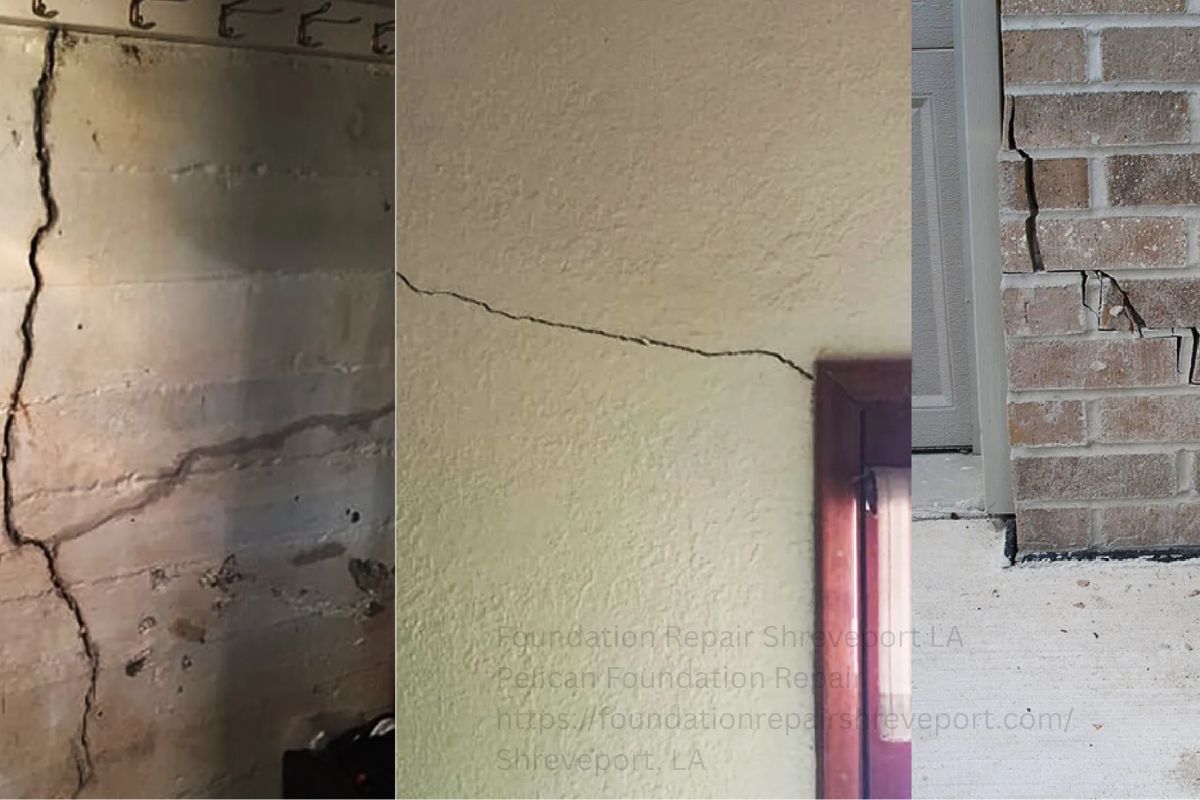
The clearest warning is efflorescence paired with movement: a new horizontal crack, a stair-step crack, a wall leaning or bowing, or a sloping floor. Water and soil movement travel together in expansive clay, and a wall under pressure can both leak and move. In that case the wall needs a structural look before any waterproofing work.
- Watch and maintain: faint haze, slow return, no damp spots, no cracks, no smell.
- Get it checked soon: thick crusts, fast return after cleaning, blistering paint, crumbling mortar, or a wall that stays damp.
- Get it checked now: powder plus new cracks, bowing or leaning, sticking doors, or sloping floors.
- Photograph first: date-stamped photos of the pattern help any inspector trace the water source.
Most white patches do not hide a failing foundation, but a lot of powder, fast, with company, is worth believing.
How to Clean Efflorescence Off Basement Walls
Cleaning is straightforward, and a light case is safe for a homeowner to handle. Remove the salts without driving more water into the wall, use as little liquid as possible, and never seal the wall until the water source is handled: a coating over an active leak traps moisture and peels off.
Start with a stiff dry brush, working top down, and vacuum the dust as you go, wearing a mask and eye protection. For a stubborn crust, dampen lightly, scrub, rinse sparingly, and let the wall dry fully. A mild vinegar solution, about one part vinegar to ten parts water, can help on bare concrete: test a hidden patch first, rinse well, and keep vinegar off finished surfaces and metal. Avoid strong acids unless a professional directs the work.
Do not paint over efflorescence, attack soft mortar with a wire brush, or pressure-wash an interior wall. Check the same spot after the next heavy rain: a fast return means the cleaning treated the symptom, not the source.
Cleaning steps in order
Brush dry, vacuum, scrub lightly damp only where needed, rinse sparingly, and dry fully. Photograph the pattern before you start. If the deposit is large, the wall is finished, or mold may be present, stop and get a professional opinion first.
Stopping Efflorescence for Good: Fix the Water First
A lasting fix works from the outside in, cheapest cause first. Clean the gutters, carry downspouts several feet from the house, and find where water ponds after a storm. A downspout ending at the wall can keep soil saturated for days. Regrading so soil falls away from the house is often the most effective step, and costs far less than any interior system.
Next, look at what the wall needs. Basement waterproofing in Shreveport ranges from interior drainage and sump systems to exterior membranes, and the choice depends on where the water comes from. An interior system collects water at the inside face and sends it to a sump pump. An exterior membrane stops water before it enters. The difference between interior and exterior basement waterproofing matters, because each solves a different path, and a home with a high water table may need both. The guide to waterproofing a basement wall from the inside explains what interior work can and cannot do alone.
Inside, control humidity too. A dehumidifier draining to a sink or sump reduces condensation on cool walls all summer. Keep stored items off the floor and away from the wall, and do not finish a below-grade wall with ordinary drywall until the moisture is solved. Where signs of drainage problems around the foundation are present, fixing drainage usually does more than any product on the wall.
What about cost? Cleaning is nearly free, and gutter and grading work typically runs from a few hundred dollars into the low thousands. Crack repair commonly falls in the range; larger waterproofing systems cost more by linear feet and access. Those are planning figures, not quotes. Pelican offers expert inspections, and a written report naming the water source beats any product promise.
Be wary of any pitch promising one coating will end efflorescence forever. Coatings belong on a dry, prepared wall, but no coating fixes a gutter, a grade, or a water table. Water control first, wall repair second, coatings last. Follow that order and the powder usually stays gone. Authoritative moisture guidance is published by the LSU AgCenter and the American Concrete Institute.
Frequently Asked Questions About Efflorescence on Basement Walls
Is efflorescence dangerous?
Efflorescence itself is not dangerous. It is mineral salt, not mold, and it does not release spores or toxins. It matters because it proves water is moving through the wall, and the water can cause damage over time.
Is white powder on a basement wall always efflorescence?
Mostly, but not always. White powder that feels chalky and dissolves in water is usually efflorescence. White or gray growth that feels fuzzy, smells musty, or grows on wood and drywall is more likely mold and should be checked.
Can I just paint over efflorescence?
No. Paint and ordinary sealers trap moisture behind the coating, so they blister and peel, and the salts come back at the edges. Fix the water source first, let the wall dry, and only then consider a coating.
How do I clean efflorescence off a basement wall?
Brush it off dry with a stiff brush, vacuum the dust, and scrub lightly damp only where needed. A mild vinegar solution can help stubborn deposits on bare concrete. Rinse sparingly, dry the wall fully, and wear a mask and eye protection.
Does efflorescence mean my foundation is failing?
Not by itself. Efflorescence means water is reaching the wall, which is common. It becomes a structural concern when it appears with new cracks, a bowing or leaning wall, or sloping floors. Those combinations need an inspection.
Why does efflorescence keep coming back after I clean it?
It returns because the water supply was not stopped. Cleaning removes the salts that have already formed, but new water keeps carrying new salts through the wall. The fix is gutters, grading, drainage, or waterproofing, depending on the source.
Can efflorescence appear on crawl space walls too?
Yes. Crawl space foundation walls and partial basement walls show the same white deposits for the same reason: water moving through concrete or block and evaporating inside. The same water-first approach applies.
Should I get an inspection for white powder on my basement wall?
Yes, if the deposit is heavy, returns quickly, or appears with damp spots, cracks, or a musty smell. Pelican offers expert inspections, and an inspector can trace the water source before you spend money on cleaning or coatings.
Pelican Foundation Repair
6118 Fairfield Ave, Shreveport, LA 71106, USA
318-585-2003
https://foundationrepairshreveport.com/