Skip to main content

How Deep Do Helical Piers Go? Depth, Soil & Load Explained
Most residential helical piers in the Shreveport area end up 10 to 25 feet deep. But there is no fixed depth stamped on a box — a helical pier goes as deep as it needs to reach stable, load-bearing soil, and the installer knows it has arrived by measuring torque, not by watching a tape measure. That is why two homes on the same street can end up with piers at very different depths.
If you are comparing quotes or just trying to understand what a contractor is proposing, the depth number matters less than you think. What matters is whether the pier is bearing on soil strong enough to hold your home’s weight. Below, we explain how depth is decided, why Shreveport’s clay makes it vary, and what to ask before you sign anything.
What a Helical Pier Actually Is
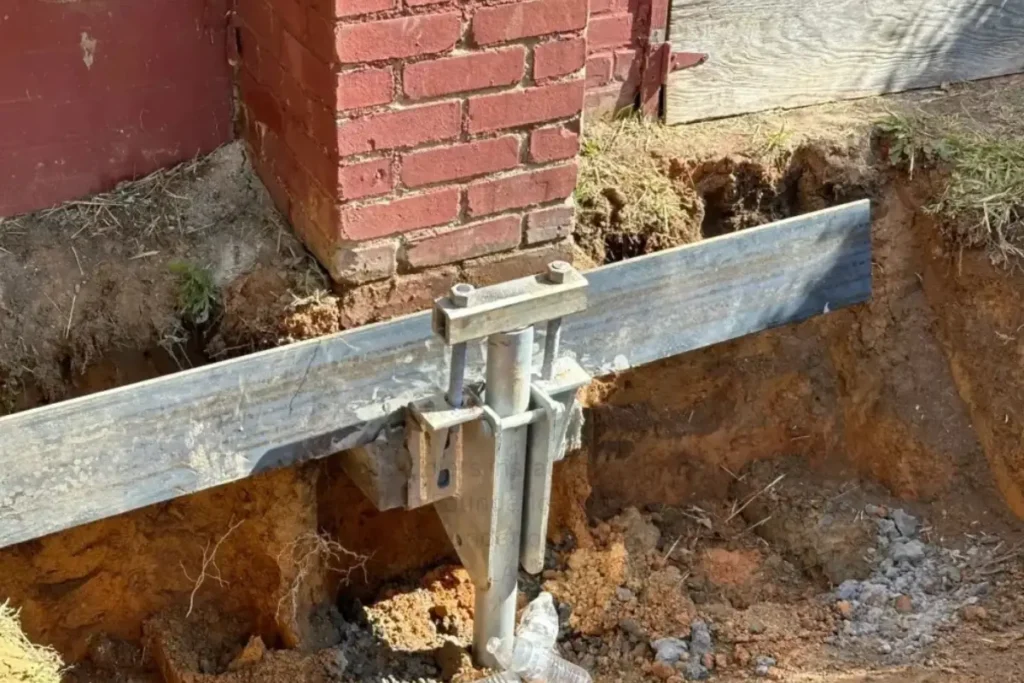
A helical pier looks like a giant steel screw. It has a square or round steel shaft with one or more helix-shaped plates welded near the bottom. A hydraulic drive head spins the pier into the ground, and the helix plates pull it downward the way a wood screw pulls into lumber. Steel brackets then connect the top of each pier to your foundation, transferring the weight of the house down through the pier to solid soil far below the troublesome surface layers.
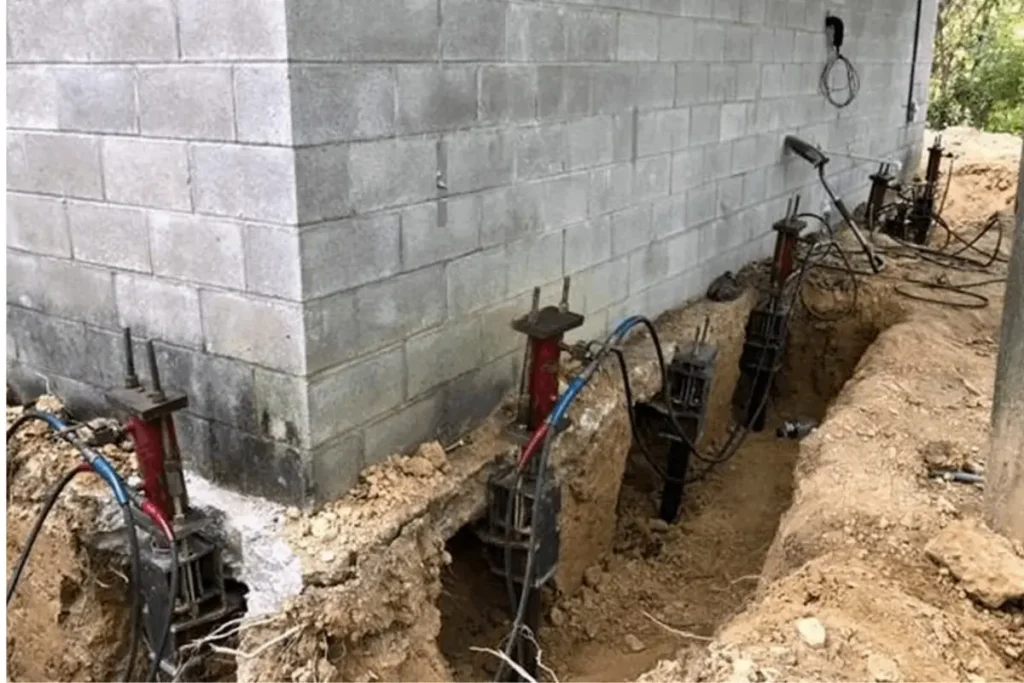
Helical piers are used to stabilize sinking or settling foundations and, in the right conditions, to lift them back toward level. They are a popular choice in northwest Louisiana because they can be installed in tight spots around a home, they work in the wet clay soils common in Caddo and Bossier Parishes, and they reach load-bearing depth without the heavy excavation a concrete pier would need. You can read more about the method on our pier installation service page.
Depth Is Decided by Soil, Not a Tape Measure
Here is the key idea most homeowners miss: the goal is never “go 20 feet.” The goal is “reach soil strong enough to carry this house.” Near the surface in Shreveport, the soil is usually soft, expansive clay that swells with rain and shrinks in drought — exactly the layer causing the settlement in the first place. A pier that stopped in that layer would just ride up and down with the seasons along with everything else.
So the installer keeps driving the pier deeper until the helix plates bite into a denser, more stable stratum — compacted clay, sandy clay, or another load-bearing layer. On one side of a house that might happen at 12 feet; on the other side, where an old drainage swale left softer fill, it might take 22 feet. Same house, same day, different depths. That variation is normal and expected, and any contractor who promises an exact depth before drilling is guessing.
This soil-first approach is also why reputable installers care more about the ground under your specific home than about what worked at your neighbor’s house. Soil in neighborhoods like Southern Hills, Ellerbe Road, or out toward Keithville can change a lot over short distances because of old creek beds, fill dirt from development, and pockets of especially expansive clay.
Why Shreveport Clay Makes Depth Vary So Much
Expansive clay is the main reason pier depth is unpredictable in our area. The upper layer — often the top 6 to 12 feet — is the “active zone” where moisture changes make the soil swell and shrink. Below that, conditions settle down. But how deep the active zone runs depends on local drainage, tree roots pulling moisture out, and the soil’s history.
| Soil Condition | What It Means | Typical Pier Depth |
|---|---|---|
| Stable native clay, good drainage | Load-bearing stratum relatively shallow | 10–15 ft |
| Deep expansive clay, poor drainage | Active zone runs deeper before stabilizing | 18–25 ft |
| Old fill dirt from development | Loose, uncompacted material near surface | 15–25+ ft |
| Near creek beds or low-lying lots | Soft, saturated soils extend downward | 20–30 ft |
| Heavier structure (brick, two-story) | More load needs stronger bearing | Deeper within the 10–25 ft band |
These are typical bands, not promises. The only honest way to know your depth is to drive the piers and read the soil’s response as it happens.
Torque: How Installers Know They’ve Gone Deep Enough
If depth is not fixed, how does the crew know when to stop? They watch torque — the rotational resistance the drive head feels as it turns the pier. Soft soil offers little resistance, so torque stays low. As the helix plates reach denser, stronger soil, torque climbs. When it reaches the minimum value the engineer specified for your home’s load, the pier is at bearing depth.
Think of it like driving a screw into a wall: it spins freely through drywall, then bites hard when it hits a stud. That bite is torque telling you something solid is there. Installers record the final torque for every pier, and those readings are your proof that each pier is actually carrying load — not just sitting in dirt. Ask your contractor to show you the torque readings when the job is done. A good crew keeps them as a matter of course.
This is also why helical piers are verifiable in a way some other methods are not. Each pier has a number attached to it: the torque at which it was set. If a pier never reaches the required torque at a reasonable depth, that tells the engineer something important about the soil — and the plan gets adjusted rather than buried and forgotten.
What Else Affects How Deep Piers Go
Soil is the biggest factor, but a few others matter:
- The weight of your home. A two-story brick home in Broadmoor puts far more load on each pier than a single-story frame cottage. Heavier loads need stronger bearing, which sometimes means going a little deeper to find it.
- Helix plate size and count. Larger or multiple helix plates grab more soil, which can reach the required capacity at a shallower depth. The engineer picks the configuration based on your soil and load.
- How far the foundation has settled. In severe settlement cases, the soil near the surface is often disturbed and weaker, pushing bearing depth down.
- Trees and drainage. Big trees pull moisture from clay and deepen the active zone. Poor drainage keeps upper soils soft and saturated. Both can add feet to the final depth.
- Local soil borings. Some projects start with a geotechnical boring — a soil sample taken at depth — so the engineer can estimate bearing depth before work begins. It is not required for every home, but it takes guesswork out of the plan on tricky lots.
Depth also affects cost, since deeper piers use more steel. If you want to understand the money side, see our article on helical pier installation cost for realistic Shreveport-area ranges.
One more thing worth knowing: the depth of each pier is recorded on the job paperwork, pier by pier. When you get competing quotes, ask each contractor how they determine depth — the good answer is always some version of “we drive to torque in load-bearing soil.” If a quote lists a single fixed depth for every pier before anyone has tested your soil, that contractor is pricing a guess, not an engineered plan. The soil under a home in Ellerbe, a home in Greenacres, and a home out in Stonewall can each tell a different story, and the pier depths should reflect that.
Helical Piers vs. Push Piers on Depth
Homeowners often ask how helical piers compare to steel push piers, which are driven straight down by hydraulic pressure using the weight of the house as resistance. Both aim for the same thing — stable, load-bearing soil — but they get there differently. Helical piers screw in and verify capacity with torque at every pier. Push piers are driven until they hit refusal or reach a target pressure.
In practice, both systems land in a similar depth band in northwest Louisiana — usually somewhere in that 10-to-25-foot range for residential work. The right choice depends on your soil, your foundation type, and access around the home, not on which one “goes deeper.” If lifting the settled areas back toward level is part of your plan, read can helical piers lift a house to see what is realistic. For background on deep foundation principles, the Federal Highway Administration publishes engineering guidance on driven foundation systems, and our homepage has an overview of how we approach pier work in Shreveport and Bossier City.
Frequently Asked Questions
How deep do helical piers go for a house?
For most homes in the Shreveport area, helical piers end up 10 to 25 feet deep. The exact depth depends on where stable, load-bearing soil is found under your specific home, which the installer verifies by measuring torque during installation.
Can helical piers go too deep?
Not really in a practical sense — deeper is generally fine as long as torque readings confirm bearing capacity. What you want to avoid is piers that stop too shallow, in the soft expansive clay that caused the settlement. That is why torque verification matters more than the depth number.
Do deeper piers cost more?
Yes, usually. Deeper piers need more steel shaft sections and more installation time, so cost per pier rises with depth. That is one reason quotes should be based on your soil and engineering plan rather than a flat per-pier price with no site evaluation.
How do I know the piers went deep enough?
Ask for the torque readings. Every pier should have a recorded final torque that meets or exceeds the engineer’s minimum for your home’s load. Those numbers are your proof that each pier is bearing on strong soil.
Why did my neighbor’s piers go deeper than mine?
Soil varies a lot over short distances in northwest Louisiana — old fill, creek beds, drainage differences, and tree roots all change where stable soil starts. Different depths on nearby homes are completely normal.
Do helical piers work in Louisiana clay soil?
Yes — they are one of the better options for expansive clay because they bypass the unstable surface layer entirely and bear on deeper, stable soil. The key is driving past the active zone where seasonal swelling and shrinking happen.
Can helical piers lift my house back to level?
In many cases, yes — once piers reach load-bearing soil, hydraulic jacks can lift the settled foundation back toward its original position. The amount of lift depends on the structure’s condition and how long it has been settling. We offer free inspections across Shreveport and Bossier City, Monday through Saturday, 8:00 AM to 6:00 PM, to evaluate what is possible for your home.
Pelican Foundation Repair
6118 Fairfield Ave, Shreveport, LA 71106, USA
318-585-2003
https://foundationrepairshreveport.com/